


Header wrap question


Thread Starter
B*a*n*n*e*d
Joined: Jun 2004
Posts: 7,213
Likes: 0
From: nowhere, ms, usa
 Header wrap question
How many feet will I require to wrap one DC header?
Any tips or tricks would be nice. I did hear that you soak it in water before wrapping. Have yet to comfirm this.
If anyone has some black header wrap for sale ...let me know.
Thanks
E.Honda
Any tips or tricks would be nice. I did hear that you soak it in water before wrapping. Have yet to comfirm this.
If anyone has some black header wrap for sale ...let me know.
Thanks
E.Honda

Honda-Tech Member
Joined: Nov 2003
Posts: 3,421
Likes: 23
From: The South
Re: (E.Honda)
<TABLE WIDTH="90%" CELLSPACING=0 CELLPADDING=0 ALIGN=CENTER><TR><TD>Quote, originally posted by E.Honda »</TD></TR><TR><TD CLASS="quote">Story I was given was that when it dried it shrank up slightly making it real tight fit and easy to manage.</TD></TR></TABLE>
yeah I don't have a personal expierence with it but the things I have read about involved the wrap retaining moisture and rusting headers faster, to me it seems like a give take relationship, your header may rust a lil quicker, but your engine bay will stay cooler.
gl
yeah I don't have a personal expierence with it but the things I have read about involved the wrap retaining moisture and rusting headers faster, to me it seems like a give take relationship, your header may rust a lil quicker, but your engine bay will stay cooler.
gl

Honda-Tech Member
Joined: Nov 2001
Posts: 3,492
Likes: 0
From: San Jose, CA, USA
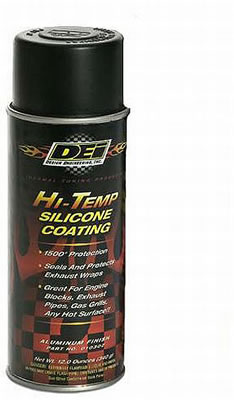
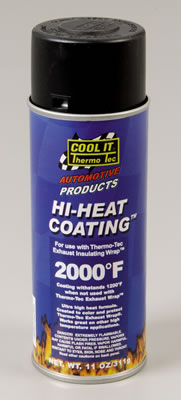
The amount of wrap you'll need will depend on your particular header, but it's a good idea to buy an extra roll in addition to what you think you'll need. Most manufacturers will give you an estimate on how many linear feet you'll need based on the diameter of your primaries. Yes, it is recommended to soak the wrap in water before hand, both to make it more pliable and easy to work with, and to reduce the discomfort of working with fiberglass. I've never noticed if the wrap shrinks afterwords, but then again, I've never put it on dry. Any moisture in the wrap will burn off during the first heat cycle. You might also want to consider using a spray-on coating that most manufacturers offer in order to prolong the life of the wrap. Be sure to get enough ties/clamps for the number of tubes you're wrapping. I've always used the strap style fasteners, and they've always worked well for me. I've never used the snap clips, but they seem harder to use. Some people also use common hose clamps, although their width may make it hard to get into tight spaces or bends. Also, be prepared for a nice smell when you start the car for the first time.
Thread Starter
B*a*n*n*e*d
Joined: Jun 2004
Posts: 7,213
Likes: 0
From: nowhere, ms, usa
Re: (inspyral)
<TABLE WIDTH="90%" CELLSPACING=0 CELLPADDING=0 ALIGN=CENTER><TR><TD>Quote, originally posted by inspyral »</TD></TR><TR><TD CLASS="quote">The amount of wrap you'll need will depend on your particular header, but it's a good idea to buy an extra roll in addition to what you think you'll need. Most manufacturers will give you an estimate on how many linear feet you'll need based on the diameter of your primaries. Yes, it is recommended to soak the wrap in water before hand, both to make it more pliable and easy to work with, and to reduce the discomfort of working with fiberglass. I've never noticed if the wrap shrinks afterwords, but then again, I've never put it on dry. Any moisture in the wrap will burn off during the first heat cycle. You might also want to consider using a spray-on coating that most manufacturers offer in order to prolong the life of the wrap. Be sure to get enough ties/clamps for the number of tubes you're wrapping. I've always used the strap style fasteners, and they've always worked well for me. I've never used the snap clips, but they seem harder to use. Some people also use common hose clamps, although their width may make it hard to get into tight spaces or bends. Also, be prepared for a nice smell when you start the car for the first time.</TD></TR></TABLE>
Thanks.
The header is a DC header on a b16a2.
I never heard of this spray coating though....Any idea on what it is called?
Thanks.
The header is a DC header on a b16a2.
I never heard of this spray coating though....Any idea on what it is called?
Trending Topics
Honda-Tech Member
Joined: Nov 2001
Posts: 3,492
Likes: 0
From: San Jose, CA, USA
Thread Starter
B*a*n*n*e*d
Joined: Jun 2004
Posts: 7,213
Likes: 0
From: nowhere, ms, usa
Re: Header wrap question (E.Honda)
<TABLE WIDTH="90%" CELLSPACING=0 CELLPADDING=0 ALIGN=CENTER><TR><TD>Quote, originally posted by E.Honda »</TD></TR><TR><TD CLASS="quote">How many feet will I require to wrap one DC header?
Any tips or tricks would be nice. I did hear that you soak it in water before wrapping. Have yet to comfirm this.
If anyone has some black header wrap for sale ...let me know.
Thanks
E.Honda</TD></TR></TABLE>
Any tips or tricks would be nice. I did hear that you soak it in water before wrapping. Have yet to comfirm this.
If anyone has some black header wrap for sale ...let me know.
Thanks
E.Honda</TD></TR></TABLE>

Honda-Tech Member
Joined: May 2006
Posts: 2,788
Likes: 0
From: NB, Canada
Re: (egsleepercivic)
<TABLE WIDTH="90%" CELLSPACING=0 CELLPADDING=0 ALIGN=CENTER><TR><TD>Quote, originally posted by egsleepercivic »</TD></TR><TR><TD CLASS="quote">
yeah I don't have a personal expierence with it but the things I have read about involved the wrap retaining moisture and rusting headers faster, to me it seems like a give take relationship, your header may rust a lil quicker, but your engine bay will stay cooler.
gl </TD></TR></TABLE>
I don't understand how an exhaust manifold that operates at like 800 degrees can trap moisture.
yeah I don't have a personal expierence with it but the things I have read about involved the wrap retaining moisture and rusting headers faster, to me it seems like a give take relationship, your header may rust a lil quicker, but your engine bay will stay cooler.
gl </TD></TR></TABLE>
I don't understand how an exhaust manifold that operates at like 800 degrees can trap moisture.
Honda-Tech Member
Joined: May 2006
Posts: 2,788
Likes: 0
From: NB, Canada
Re: Header wrap question (Padawan)
<TABLE WIDTH="90%" CELLSPACING=0 CELLPADDING=0 ALIGN=CENTER><TR><TD>Quote, originally posted by Padawan »</TD></TR><TR><TD CLASS="quote">I would highly suggest leaving it unwrapped or having it professionally coated. </TD></TR></TABLE>
Howcome?
Howcome?

Darth ModerVader
Joined: Jan 2001
Posts: 11,539
Likes: 1
From: Mustafar
Re: Header wrap question (gibsanez)
<TABLE WIDTH="90%" CELLSPACING=0 CELLPADDING=0 ALIGN=CENTER><TR><TD>Quote, originally posted by gibsanez »</TD></TR><TR><TD CLASS="quote">
Howcome?</TD></TR></TABLE>
Because the exhaust wrap can damage the header or reduce its lifespan, while a proper professional coating (inside and out) will actually protect the header, extend its life, and reduce underhood temperatures.
Howcome?</TD></TR></TABLE>
Because the exhaust wrap can damage the header or reduce its lifespan, while a proper professional coating (inside and out) will actually protect the header, extend its life, and reduce underhood temperatures.
Honda-Tech Member
Joined: May 2006
Posts: 2,788
Likes: 0
From: NB, Canada
Re: Header wrap question (Padawan)
<TABLE WIDTH="90%" CELLSPACING=0 CELLPADDING=0 ALIGN=CENTER><TR><TD>Quote, originally posted by Padawan »</TD></TR><TR><TD CLASS="quote">
Because the exhaust wrap can damage the header or reduce its lifespan, while a proper professional coating (inside and out) will actually protect the header, extend its life, and reduce underhood temperatures. </TD></TR></TABLE>
What about the wrap will reduce the lifespan?
edit - nvm, found a half decent link
http://www.centuryperformance.....html
Because the exhaust wrap can damage the header or reduce its lifespan, while a proper professional coating (inside and out) will actually protect the header, extend its life, and reduce underhood temperatures. </TD></TR></TABLE>
What about the wrap will reduce the lifespan?
edit - nvm, found a half decent link
http://www.centuryperformance.....html

Honda-Tech Member
Joined: Feb 2005
Posts: 1,364
Likes: 0
From: Heinola, Finland
Re: Header wrap question (gibsanez)
Moisture would boil out when the manifold gets hot.
What the problem is, with carbon steel (most non stainless manifolds etc) will burn out the carbon due to higher temperatures and you will get what is called thermal corrosion.
Doesnt affect heavy gauge tube headers that much.
I'm using wrap because of hoses and stuff that go near the turbo manifold. Thus I'd like to have some additional security.
What the problem is, with carbon steel (most non stainless manifolds etc) will burn out the carbon due to higher temperatures and you will get what is called thermal corrosion.
Doesnt affect heavy gauge tube headers that much.
I'm using wrap because of hoses and stuff that go near the turbo manifold. Thus I'd like to have some additional security.

Junior Member
Joined: Mar 2008
Posts: 17
Likes: 0
From: Cumming, Georgia, USA
I had a stainless steel 4-2-1 header that I wrapped about a year ago. About a month ago, I started hearing an exhaust leak comming from the front of the engine. I thought it was the header gasket at first, since I had reused it like three times. Anyways, after changing the gasket the leak was still there. It turns out that the wrap had kept so much heat in the headers that the welds where the primaries come together had cracked all the way around. It would have been much louder had the wrap not muffled it some. I got my brother to MIG weld it back together. If you plan on wrapping your headers, you must take into consideration the affects it will have on the lifespan of the header, welds in particular. If you have a mild steel header, like the DC sports Ceramic coated headers, this will be worse and happen much sooner.

Honda-Tech Member
Joined: Nov 2007
Posts: 173
Likes: 0
From: NC, United States
Re: (rogue55.rm)
I wrote this article for this topic.
Heat is the back bone of your engine making power with out it your engine would be a big paper weight. Been able to harness the heat in you engine is a great way to improve power, VE and overall efficiency of your engine. This is why the tuning of A/F ratio has such an impact on power. It all has to do with the increase of heat inside the combustion camber. The leaner the A/F mix the hotter it is going to be. Obviously to lean is bad! But you get what im trying to say. When the spark plug ignites the A/F mixture in the cylinders it is the rapid increase in heat which causes the pressure rise in the cylinder which in turn pushes the piston down. 1/3 of the heat generated is used to create work to rotate you crank, 1/3 of the heat is dissipated into the piston crown, cylinder walls and cylinder head and the last 1/3 is expelled out your engine through the exhaust, That is the beauty of a turbo charger been able to harness the 1/3 of wasted heat and turn it into power. The more heat that is trapped in the correct places the more power you can make.
Ceramic Coatings
For instance, Ceramic Coatings on the piston tops, valves, turbo exhaust
housing, manifold and downpipe, intake manifold, boost piping are great ways to stop heat from dissipating off or into these components. Coatings on your turbo parts will increase turbo spool as there is more heat to generate more work on the exhaust turbine. Coatings on your piston tops and valves will increase the amount of heat expelled out your exhaust system due to the fact that less heat will be absorbed into the metal which in turn again creates more spool on the turbo. It also allows you to run closer piston to bore clearance due to less heat in the piston and less expansion of it. Coating the inside and outside of the intake manifold and using a hondata intake gasket is another great way to improve power. As im sure we all know cooler air is denser which is good for making more power. The reason for this is that when the denser air mixes with the fuel and is ignited the air and fuel molecules are packed closer together which allows for a more stable burn rate and better flame propagation. Then on the other side of the scale if you have a hot intake charge when the fuel is mixed with the air it will evaporate into smaller droplets thus increase the burn rate of the A/F mix when ignited. Fast burn rates can become unstable very quickly! Basically you want the A/F charge to burn slowly and steadily from the center of the combustion chamber to the combustion chamber walls. If not there is an increased chance of detonation and pre-ignition. I have seen tests done on completely stock engines ceramic coating certain components and increasing horsepower by 8%– 12% you take that to your 400HP turbo motor and you are looking at 40 – 50hp plus the added benefit of decreased under hood temps, intake temps, component wear, corrosion resistance, fuel economy.
Heat Wraps
And yes you should wrap your manifold and downpipe and get a turbo heat bag for the exhaust housing. The downside to wrapping these components is the increased
corrosion it will create due to it trapping water. Ceramic coating is the better option but I guess it’s what your wallet can afford. I could go on about this subject for ever. It basically boils down to the basics of controlling heat, making it go where you want it to and keeping it away from what you want it not to get to. There are so many little simple things people, can do to improve the thermodynamics of there engines if they just look at there setup and think about it!! There are plenty books that are dedicated to this topic which can be found under thermodynamics of an internal combustion engine. Well I hope you enjoyed this article. More to come!!
Heat is the back bone of your engine making power with out it your engine would be a big paper weight. Been able to harness the heat in you engine is a great way to improve power, VE and overall efficiency of your engine. This is why the tuning of A/F ratio has such an impact on power. It all has to do with the increase of heat inside the combustion camber. The leaner the A/F mix the hotter it is going to be. Obviously to lean is bad! But you get what im trying to say. When the spark plug ignites the A/F mixture in the cylinders it is the rapid increase in heat which causes the pressure rise in the cylinder which in turn pushes the piston down. 1/3 of the heat generated is used to create work to rotate you crank, 1/3 of the heat is dissipated into the piston crown, cylinder walls and cylinder head and the last 1/3 is expelled out your engine through the exhaust, That is the beauty of a turbo charger been able to harness the 1/3 of wasted heat and turn it into power. The more heat that is trapped in the correct places the more power you can make.
Ceramic Coatings
For instance, Ceramic Coatings on the piston tops, valves, turbo exhaust
housing, manifold and downpipe, intake manifold, boost piping are great ways to stop heat from dissipating off or into these components. Coatings on your turbo parts will increase turbo spool as there is more heat to generate more work on the exhaust turbine. Coatings on your piston tops and valves will increase the amount of heat expelled out your exhaust system due to the fact that less heat will be absorbed into the metal which in turn again creates more spool on the turbo. It also allows you to run closer piston to bore clearance due to less heat in the piston and less expansion of it. Coating the inside and outside of the intake manifold and using a hondata intake gasket is another great way to improve power. As im sure we all know cooler air is denser which is good for making more power. The reason for this is that when the denser air mixes with the fuel and is ignited the air and fuel molecules are packed closer together which allows for a more stable burn rate and better flame propagation. Then on the other side of the scale if you have a hot intake charge when the fuel is mixed with the air it will evaporate into smaller droplets thus increase the burn rate of the A/F mix when ignited. Fast burn rates can become unstable very quickly! Basically you want the A/F charge to burn slowly and steadily from the center of the combustion chamber to the combustion chamber walls. If not there is an increased chance of detonation and pre-ignition. I have seen tests done on completely stock engines ceramic coating certain components and increasing horsepower by 8%– 12% you take that to your 400HP turbo motor and you are looking at 40 – 50hp plus the added benefit of decreased under hood temps, intake temps, component wear, corrosion resistance, fuel economy.
Heat Wraps
And yes you should wrap your manifold and downpipe and get a turbo heat bag for the exhaust housing. The downside to wrapping these components is the increased
corrosion it will create due to it trapping water. Ceramic coating is the better option but I guess it’s what your wallet can afford. I could go on about this subject for ever. It basically boils down to the basics of controlling heat, making it go where you want it to and keeping it away from what you want it not to get to. There are so many little simple things people, can do to improve the thermodynamics of there engines if they just look at there setup and think about it!! There are plenty books that are dedicated to this topic which can be found under thermodynamics of an internal combustion engine. Well I hope you enjoyed this article. More to come!!
Honda-Tech Member
Joined: May 2006
Posts: 2,788
Likes: 0
From: NB, Canada
Re: (steven_highet)
<TABLE WIDTH="90%" CELLSPACING=0 CELLPADDING=0 ALIGN=CENTER><TR><TD>Quote, originally posted by steven_highet »</TD></TR><TR><TD CLASS="quote">I wrote this article for this topic.
</TD></TR></TABLE>
Please explain how you trap water against a manifold that operates at like 800 degrees, unless you wash your engine bay down with the hose every night or something
</TD></TR></TABLE>
Please explain how you trap water against a manifold that operates at like 800 degrees, unless you wash your engine bay down with the hose every night or something
Honda-Tech Member
Joined: Nov 2007
Posts: 173
Likes: 0
From: NC, United States
Re: (gibsanez)
Yeah but your manifold isn’t constantly at that temperature. Yeah when it is there will be no water on it for sure. It’s the other time in between that is the problem. You gonna tell me just cause a manifold operates at a high temp that it doesn’t corrode? Now im talking about the long term effect heat wrapping can have on your manifold. If you were to take a stock manifold, a heat wrapped manifold and a ceramic coated manifold and run then like that for a year believe me the heat wrapped one would look the worst outta all of them!
Honda-Tech Member
Joined: May 2006
Posts: 2,788
Likes: 0
From: NB, Canada
Re: (steven_highet)
<TABLE WIDTH="90%" CELLSPACING=0 CELLPADDING=0 ALIGN=CENTER><TR><TD>Quote, originally posted by steven_highet »</TD></TR><TR><TD CLASS="quote">Yeah but your manifold isn’t constantly at that temperature. Yeah when it is there will be no water on it for sure. It’s the other time in between that is the problem. You gonna tell me just cause a manifold operates at a high temp that it doesn’t corrode? Now im talking about the long term effect heat wrapping can have on your manifold. If you were to take a stock manifold, a heat wrapped manifold and a ceramic coated manifold and run then like that for a year believe me the heat wrapped one would look the worst outta all of them!</TD></TR></TABLE>
I completely agree that header wrap is bad, i even posted a link explaining why.
What i don't agree with, is the "moisture" thing. OK, obviously you are correct in saying that your manifold isn't constantly at that temperature.
But if it's not at that temperature, that must mean you aren't driving, right? Well if you aren't driving your car, how is your header supposed to get wet? Do you have a hood?
I completely agree that header wrap is bad, i even posted a link explaining why.
What i don't agree with, is the "moisture" thing. OK, obviously you are correct in saying that your manifold isn't constantly at that temperature.
But if it's not at that temperature, that must mean you aren't driving, right? Well if you aren't driving your car, how is your header supposed to get wet? Do you have a hood?
 Re: (gibsanez)
<TABLE WIDTH="90%" CELLSPACING=0 CELLPADDING=0 ALIGN=CENTER><TR><TD>Quote, originally posted by gibsanez »</TD></TR><TR><TD CLASS="quote">
But if it's not at that temperature, that must mean you aren't driving, right? Well if you aren't driving your car, how is your header supposed to get wet? Do you have a hood?</TD></TR></TABLE>
when it rains outside your header can still get wet even if you aren't driving. Like the morning dew or fog. Or just moisture in the air caused by the rain and/or hot weather. In wisconsin during the summer it is super humid outside unlike in arizona or nevada where it's hot but dry. You get that feeling like your ***** are glued to your boxers because it's so god damn moist and humid outside.
Modified by KENetics1 at 6:39 PM 3/28/2008
But if it's not at that temperature, that must mean you aren't driving, right? Well if you aren't driving your car, how is your header supposed to get wet? Do you have a hood?</TD></TR></TABLE>
when it rains outside your header can still get wet even if you aren't driving. Like the morning dew or fog. Or just moisture in the air caused by the rain and/or hot weather. In wisconsin during the summer it is super humid outside unlike in arizona or nevada where it's hot but dry. You get that feeling like your ***** are glued to your boxers because it's so god damn moist and humid outside.
Modified by KENetics1 at 6:39 PM 3/28/2008
Honda-Tech Member
Joined: May 2006
Posts: 2,788
Likes: 0
From: NB, Canada
Re: (KENetics1)
<TABLE WIDTH="90%" CELLSPACING=0 CELLPADDING=0 ALIGN=CENTER><TR><TD>Quote, originally posted by KENetics1 »</TD></TR><TR><TD CLASS="quote">
when it rains outside your header can still get wet even if you aren't driving. Like the morning dew or fog. Or just moisture in the air caused by the rain and/or hot weather. In wisconsin during the summer it is super humid outside unlike in arizona or nevada where it's hot but dry. You get that feeling like your ***** are glued to your boxers because it's so god damn moist and humid outside.
</TD></TR></TABLE>
So the theory is that fog/dew/humid weather is what's ruining wrapped headers? I'm sorry, but that's a really weak theory.
Read the link I posted. It makes WAY more sense than the idea of fog rotting out wrapped manifolds.
when it rains outside your header can still get wet even if you aren't driving. Like the morning dew or fog. Or just moisture in the air caused by the rain and/or hot weather. In wisconsin during the summer it is super humid outside unlike in arizona or nevada where it's hot but dry. You get that feeling like your ***** are glued to your boxers because it's so god damn moist and humid outside.
</TD></TR></TABLE>
So the theory is that fog/dew/humid weather is what's ruining wrapped headers? I'm sorry, but that's a really weak theory.
Read the link I posted. It makes WAY more sense than the idea of fog rotting out wrapped manifolds.
Honda-Tech Member
Joined: May 2006
Posts: 2,788
Likes: 0
From: NB, Canada
Re: (KENetics1)
<TABLE WIDTH="90%" CELLSPACING=0 CELLPADDING=0 ALIGN=CENTER><TR><TD>Quote, originally posted by KENetics1 »</TD></TR><TR><TD CLASS="quote">i don't know if it would ruin a header either i was just trying to state how moisture could get in the header wrap without actually coming into contact with water.</TD></TR></TABLE>
If a header was wrapped tight enough, the minuscule amount of moisture that got in wouldn't make a bit of difference, compared to the damage the extra heat does.
Thanks for the idea of where the mystery moisture is coming from though
Header wrap does not "trap moisture" and cause headers to rust out. OK people? IT's NOT THE MOISTURE, IT'S THE HEAT
http://www.centuryperformance.....html
http://www.centuryperformance.....html
http://www.centuryperformance.....html
http://www.centuryperformance.....html
http://www.centuryperformance.....html
If a header was wrapped tight enough, the minuscule amount of moisture that got in wouldn't make a bit of difference, compared to the damage the extra heat does.
Thanks for the idea of where the mystery moisture is coming from though
Header wrap does not "trap moisture" and cause headers to rust out. OK people? IT's NOT THE MOISTURE, IT'S THE HEAT
http://www.centuryperformance.....html
http://www.centuryperformance.....html
http://www.centuryperformance.....html
http://www.centuryperformance.....html
http://www.centuryperformance.....html
Re: (gibsanez)
woops accidently deleted my post instead of editing. I was just trying to add that reading about the step header design was a good read on the same page.


Thread
Thread Starter
Forum
Replies
Last Post
ericstambaugh07
Honda Prelude
6
May 27, 2007 06:15 PM
