


Ebdyn Block Posts, a horror story


Thread Starter
Honda-Tech Member
Joined: Sep 2004
Posts: 77
Likes: 0
From: Fort Myers, FL, USA
 Ebdyn Block Posts with sleeve failure
So heres my story....
I built a b16a3 block using Endyn 9:1 pistons, Eagle rods and Endyn block posts, the engine was blueprinted and block posts installed at a supurb machine shop. The engine was broken in properly under various loads at varios RPMs on my Dyno Dynamics Dyno. We ran 10 PSI and made 280 whp with the AFRs around 11:1 at WOT with EGT's never exeeding 1550 degrees (About 2 in from head)
This is the result after 1000 miles:
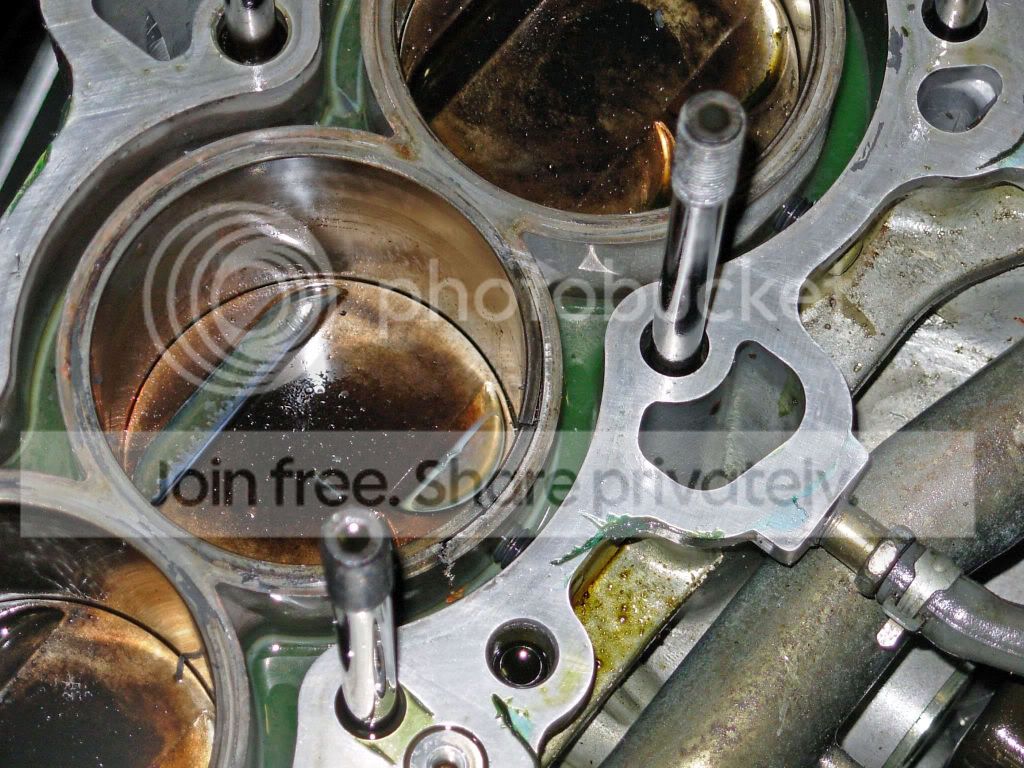
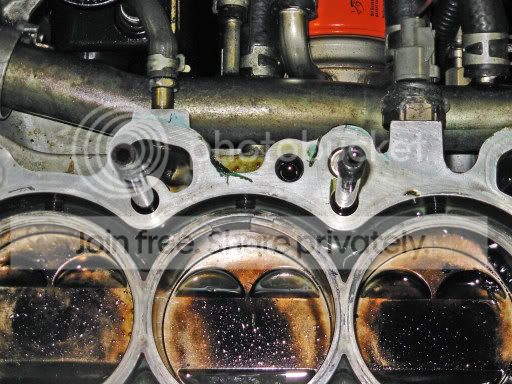
It is clearer seeing it in person, but the block posts don't spread the load adequitly, most of the load applied to the sleeve is absorbed by only the tiny area provided by the block post (As compared to a block guard which spreads it out).
I would apreciate your input on why you think this happened, I don't mind being wrong so if you see something I don't PLEASE point it out.
BTW This engine was assembled by me with great attention to detail and every torque spec was adhered to. The block posts were installed by the machine shop with direction coming directly from Larry at Endyn.
I WOULD LIKE TO MAKE IT CLEAR THAT THIS IS NOT AN ATTACK ON ENDYN!!!
This is an attempt to understand what happened, I love Endyns pistons and will continue to use them in the future.
Thank you
Modified by swapdohc at 4:51 PM 5/8/2006
I built a b16a3 block using Endyn 9:1 pistons, Eagle rods and Endyn block posts, the engine was blueprinted and block posts installed at a supurb machine shop. The engine was broken in properly under various loads at varios RPMs on my Dyno Dynamics Dyno. We ran 10 PSI and made 280 whp with the AFRs around 11:1 at WOT with EGT's never exeeding 1550 degrees (About 2 in from head)
This is the result after 1000 miles:
It is clearer seeing it in person, but the block posts don't spread the load adequitly, most of the load applied to the sleeve is absorbed by only the tiny area provided by the block post (As compared to a block guard which spreads it out).
I would apreciate your input on why you think this happened, I don't mind being wrong so if you see something I don't PLEASE point it out.
BTW This engine was assembled by me with great attention to detail and every torque spec was adhered to. The block posts were installed by the machine shop with direction coming directly from Larry at Endyn.
I WOULD LIKE TO MAKE IT CLEAR THAT THIS IS NOT AN ATTACK ON ENDYN!!!
This is an attempt to understand what happened, I love Endyns pistons and will continue to use them in the future.
Thank you
Modified by swapdohc at 4:51 PM 5/8/2006


Thread Starter
Honda-Tech Member
Joined: Sep 2004
Posts: 77
Likes: 0
From: Fort Myers, FL, USA
Re: (Combustion Contraption)
I noticed that as well, but I believe that the poor combustion in #3 was caused by the process of the sleeve cracking.
The flame propagation through that combustion chamber was effected by the cracked sleeve before it failed. I did a compression test the day before this happened and that cyinder was low by about 15 PSI, this surely got worse before sleeve failure which would help to cause the incomplete/uneven burning of fuel through lower cylinder pressures. The cylinders, #3 in particular, were burning coolant before failure as well (As reported by the driver behind me when the sleeve failed), this would also contribute to a incomplete burn. The rest of the cylinders have a much better burn pattern and also were not as heavily steam cleaned before and during the failure.
This happened at 7000ish rpms and shut down the motor immedietly. There was no fuel delivery failure nor any signs of a lean condition or detonation, including on the plugs so I don't believe the tune or fuel delivery failure was a factor.
The flame propagation through that combustion chamber was effected by the cracked sleeve before it failed. I did a compression test the day before this happened and that cyinder was low by about 15 PSI, this surely got worse before sleeve failure which would help to cause the incomplete/uneven burning of fuel through lower cylinder pressures. The cylinders, #3 in particular, were burning coolant before failure as well (As reported by the driver behind me when the sleeve failed), this would also contribute to a incomplete burn. The rest of the cylinders have a much better burn pattern and also were not as heavily steam cleaned before and during the failure.
This happened at 7000ish rpms and shut down the motor immedietly. There was no fuel delivery failure nor any signs of a lean condition or detonation, including on the plugs so I don't believe the tune or fuel delivery failure was a factor.


Honda-Tech Member

Joined: Jul 2004
Posts: 5,957
Likes: 0
From: nothing is real unless it is observed
At 10 psi and 280 whp it is most likely your tuning is to blame for the failure. Look at the stuff Evans Tuning is able to pull off with stock blocks and manage to keep them together. What is the Block Bore?
Trending Topics
Thread Starter
Honda-Tech Member
Joined: Sep 2004
Posts: 77
Likes: 0
From: Fort Myers, FL, USA
Re: (crixzc)
Why would 280 whp @ 10psi point to a tuning problem? You need to take into considerstion that this was tuned on a Dyno Dynamics Dyno, which reads 14%-16% lower than our local Dynojet 224x, which would put the dynojet HP # around 320WHP. You also need to take into consideration that the compression is 9:1 which will yield a lower hp to boost ratio than a stock engine which is 10+:1 compression.
I have tuned many b-series cars and have had no problems at all, but NONE of them were block posted, this is why I am questioning the block posts. The cracks in the sleeve all start in the imediate area around the block post which tells me that the load created by the block post was too concentrated on the sleeve.
So please explain to me why the tune is suspect as I do not want to have this problem again.
I have tuned many b-series cars and have had no problems at all, but NONE of them were block posted, this is why I am questioning the block posts. The cracks in the sleeve all start in the imediate area around the block post which tells me that the load created by the block post was too concentrated on the sleeve.
So please explain to me why the tune is suspect as I do not want to have this problem again.

Honda-Tech Member
Joined: Jan 2003
Posts: 10,170
Likes: 3
From: So Cal
Re: (crixzc)
<TABLE WIDTH="90%" CELLSPACING=0 CELLPADDING=0 ALIGN=CENTER><TR><TD>Quote, originally posted by crixzc »</TD></TR><TR><TD CLASS="quote">At 10 psi and 280 whp it is most likely your tuning is to blame for the failure. Look at the stuff Evans Tuning is able to pull off with stock blocks and manage to keep them together. What is the Block Bore?</TD></TR></TABLE>
This wasnt a stock block. it was posted.
This wasnt a stock block. it was posted.


Honda-Tech Member
Joined: Aug 2002
Posts: 1,068
Likes: 0
Re: (stizzit)
And when the sleeve spreads the first line of pressure is going to be at the posts.
<TABLE WIDTH="90%" CELLSPACING=0 CELLPADDING=0 ALIGN=CENTER><TR><TD>Quote, originally posted by stizzit »</TD></TR><TR><TD CLASS="quote">A little detonation and boom ... the block posts will do nothing for you if you're detonating. </TD></TR></TABLE>
<TABLE WIDTH="90%" CELLSPACING=0 CELLPADDING=0 ALIGN=CENTER><TR><TD>Quote, originally posted by stizzit »</TD></TR><TR><TD CLASS="quote">A little detonation and boom ... the block posts will do nothing for you if you're detonating. </TD></TR></TABLE>
Thread Starter
Honda-Tech Member
Joined: Sep 2004
Posts: 77
Likes: 0
From: Fort Myers, FL, USA
Re: (vtecmissle)
I found the culprit!!!!
I got in touch with my machine shop and went over the build, it turns out that he over-torqued the block posts. He put them to 4 in/lbs instead of 2 in/lbs, believe it or not that was enough to crack the sleeve.
BTW I own a shop, own my own dyno and have tuned more Hondas than I can remember, there was no signs of detonation on the plugs, pistons, bearings or datalogs.
I got in touch with my machine shop and went over the build, it turns out that he over-torqued the block posts. He put them to 4 in/lbs instead of 2 in/lbs, believe it or not that was enough to crack the sleeve.
BTW I own a shop, own my own dyno and have tuned more Hondas than I can remember, there was no signs of detonation on the plugs, pistons, bearings or datalogs.


Thread
Thread Starter
Forum
Replies
Last Post
