


Borg Warner and Porsche develop NEW Variable Vane Turbo!


Thread Starter
El Chico


Joined: Dec 1999
Posts: 101,494
Likes: 1
From: The Deep Web
 Borg Warner and Porsche develop NEW Variable Vane Turbo!
For the new 997 Turbo of course. You guys MAY or may not remember the Aerodyne turbo's that got discontinued a few years back for cooling and reliability issues.
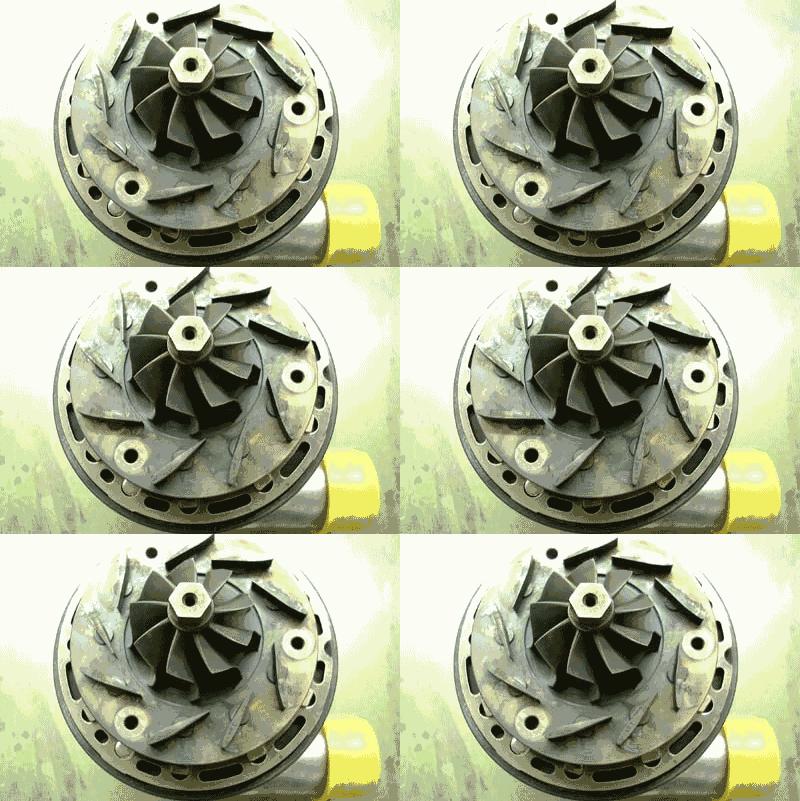
For those completely clueless so far, the VVT's change surface area of the turbine wheel to effectively give you a zero lag application. This story reads kind of funny to me because it sounds like both sides with be variable, which will mean no lag and the potential for GOBS of boost tuneable on the fly.
Anywho, onto the story:
http://www.autoblog.com/entry/1234000257069829/
<TABLE WIDTH="90%" CELLSPACING=0 CELLPADDING=0 ALIGN=CENTER><TR><TD>Quote, originally posted by Autoblog.com »</TD></TR><TR><TD CLASS="quote">
November 16 of this year marked the day a century ago that Dr. Alfred Buchi received the first patent for an exhaust gas turbocharger. Porsche will be celebrating the turbo’s 100-year anniversary a little late when it introduces the next 911 Turbo sometime next year with Variable Turbine Geometry. This technology allows the angle of the compressor’s turbine blades to continually adjust. While some diesel engines have enjoyed this technology since the Nineties, the higher exhaust gas temperatures created by gasoline engines necessitated the creation of new heat-resistant materials to handle the hotness. Porsche and Borg Warner Turbo Systems were able to overcome the heat issue and have developed a VTG turbo system that will be incorporated into the next 911 Turbo. The VTG turbo will allow Porsche’s flat-six to mimic a twin-turbo setup with a much broader torque curve and more flexible powerband than a standard single turbo could provide on its own. Power ratings for the new VTG turbo engine haven’t been released and probably won’t be until the new 911 Turbo surfaces sometime next year.
</TD></TR></TABLE>

For those completely clueless so far, the VVT's change surface area of the turbine wheel to effectively give you a zero lag application. This story reads kind of funny to me because it sounds like both sides with be variable, which will mean no lag and the potential for GOBS of boost tuneable on the fly.
Anywho, onto the story:
http://www.autoblog.com/entry/1234000257069829/
<TABLE WIDTH="90%" CELLSPACING=0 CELLPADDING=0 ALIGN=CENTER><TR><TD>Quote, originally posted by Autoblog.com »</TD></TR><TR><TD CLASS="quote">
November 16 of this year marked the day a century ago that Dr. Alfred Buchi received the first patent for an exhaust gas turbocharger. Porsche will be celebrating the turbo’s 100-year anniversary a little late when it introduces the next 911 Turbo sometime next year with Variable Turbine Geometry. This technology allows the angle of the compressor’s turbine blades to continually adjust. While some diesel engines have enjoyed this technology since the Nineties, the higher exhaust gas temperatures created by gasoline engines necessitated the creation of new heat-resistant materials to handle the hotness. Porsche and Borg Warner Turbo Systems were able to overcome the heat issue and have developed a VTG turbo system that will be incorporated into the next 911 Turbo. The VTG turbo will allow Porsche’s flat-six to mimic a twin-turbo setup with a much broader torque curve and more flexible powerband than a standard single turbo could provide on its own. Power ratings for the new VTG turbo engine haven’t been released and probably won’t be until the new 911 Turbo surfaces sometime next year.
</TD></TR></TABLE>

Honda-Tech Member
Joined: Nov 2003
Posts: 3,711
Likes: 0
From: South Florida
I have been following this for 4 years now. along with BMW's variable ratio transmission. this is an important breakthrough in the turbo community. although I cant help but wonder if it wont see the light of day in regards to the aftermarket because of cost. then again people buy $4k HKS t51R's. good find casey.

Honda-Tech Member
iTrader: (1)
Joined: Mar 2003
Posts: 3,215
Likes: 3
From: I drink Seafoam and poo into catch cans, USA
Re: (Boostage)
Both sides would have to be variable. EDiT....IT isn't, just improved on the old design.
They already have the VNT turbos on the 89 daytona or whatever it was called. It was only variable on the turbine side. It was only a t25 capable of 250-280whp.
This one should be a variable geometry turbo where both sides have movable vanes.
Man I love these turbo's, there is so much innovation coming out now on turbo dynamics, its cool!!
They already have the VNT turbos on the 89 daytona or whatever it was called. It was only variable on the turbine side. It was only a t25 capable of 250-280whp.
This one should be a variable geometry turbo where both sides have movable vanes.
Man I love these turbo's, there is so much innovation coming out now on turbo dynamics, its cool!!
Thread Starter
El Chico
Joined: Dec 1999
Posts: 101,494
Likes: 1
From: The Deep Web
Re: (Boostage)
<TABLE WIDTH="90%" CELLSPACING=0 CELLPADDING=0 ALIGN=CENTER><TR><TD>Quote, originally posted by Boostage »</TD></TR><TR><TD CLASS="quote">Porsche didnt patent this right?</TD></TR></TABLE>
I'm sure they will share the patent with Borg Warner.
Although the design isn't really new. Like I said, Aerodybe was already making them. Corky Bell was putting them on an NSX and getting boost at idle. There were people hydrolocking motors because of these things.
I'm sure they will share the patent with Borg Warner.
Although the design isn't really new. Like I said, Aerodybe was already making them. Corky Bell was putting them on an NSX and getting boost at idle. There were people hydrolocking motors because of these things.
Honda-Tech Member
Joined: Nov 2003
Posts: 3,711
Likes: 0
From: South Florida
Re: (Knightsport)
yeah that is a bit much, definatly dont want positive pressure at idle. I guess if we get the chance to run these we do what we do now, which is to run turbos way bigger than we need. 

Honda-Tech Member
Joined: Aug 2001
Posts: 8,613
Likes: 1
From: Naples, Fl, USA
Re: (Knightsport)
<TABLE WIDTH="90%" CELLSPACING=0 CELLPADDING=0 ALIGN=CENTER><TR><TD>Quote, originally posted by Knightsport »</TD></TR><TR><TD CLASS="quote">
I'm sure they will share the patent with Borg Warner.
Although the design isn't really new. Like I said, Aerodybe was already making them. Corky Bell was putting them on an NSX and getting boost at idle. There were people hydrolocking motors because of these things.</TD></TR></TABLE>
Yep, the Aeromotive Corky speaks of so highly in his book, I remember that thing although I only recall it being variable on the turbine end.
I'm sure they will share the patent with Borg Warner.
Although the design isn't really new. Like I said, Aerodybe was already making them. Corky Bell was putting them on an NSX and getting boost at idle. There were people hydrolocking motors because of these things.</TD></TR></TABLE>
Yep, the Aeromotive Corky speaks of so highly in his book, I remember that thing although I only recall it being variable on the turbine end.
Trending Topics
Thread Starter
El Chico
Joined: Dec 1999
Posts: 101,494
Likes: 1
From: The Deep Web
Re: (VTC_CiViC)
<TABLE WIDTH="90%" CELLSPACING=0 CELLPADDING=0 ALIGN=CENTER><TR><TD>Quote, originally posted by VTC_CiViC »</TD></TR><TR><TD CLASS="quote">
Yep, the Aeromotive Corky speaks of so highly in his book, I remember that thing although I only recall it being variable on the turbine end.</TD></TR></TABLE>
It was only variable vane on the hot side.
Yep, the Aeromotive Corky speaks of so highly in his book, I remember that thing although I only recall it being variable on the turbine end.</TD></TR></TABLE>
It was only variable vane on the hot side.


Member
Joined: Feb 2004
Posts: 2,451
Likes: 1
From: Pearl City, HI, USA
Re: (Everyones Hero)
Nothing new. The Garrett GT-xx-V series turbos are all variable vane. It's nothing you would want to use in a custom application. The variable vane system requires you to very specifically match a turbo to the application, and in all cases it ends up being a turbo which is much smaller than people here are accustomed to using. The way it works is by altering the vane angle, you can alter the efficiency of the turbo. To limit boost, you drop efficiency until the turbo peters out. The turbo will spool faster than a non-vane turbo, but it will still have lag.



Joined: Aug 2003
Posts: 1,205
Likes: 0
Re: (Boostage)
Compressor A/R is almost always .7 because the A/R has very little effect on it. The writer does not know what they are saying and got caught misusing jargon: the compressor's (meaning the turbo's) turbine is what is variable or much more simply put the turbine is variable.
Having a variable compressor is not something you are going to see.
Having a variable compressor is not something you are going to see.

Honda-Tech Member
Joined: Feb 2002
Posts: 9,455
Likes: 3
From: I heart tool, US
Yeah, I would think that the vains in the compressor would vastly KILL the efficency. I also can't really see why that would be beneficial in any sense.
However, the technology in the turbine, is awsome. I would love to see this technology make a very powerful sports car using a super small engine that gets great cruising gas mileage.
However, the technology in the turbine, is awsome. I would love to see this technology make a very powerful sports car using a super small engine that gets great cruising gas mileage.

Honda-Tech Member
Joined: Jun 2003
Posts: 9,555
Likes: 0
From: NYC bitchessss
Re: (Bryson)
<TABLE WIDTH="90%" CELLSPACING=0 CELLPADDING=0 ALIGN=CENTER><TR><TD>Quote, originally posted by Bryson »</TD></TR><TR><TD CLASS="quote"> I would love to see this technology make a very powerful sports car using a super small engine that gets great cruising gas mileage. </TD></TR></TABLE>
why? ur gonna buy a porsche as ur DD? lol
jk i would if i had the $$
</TD></TR></TABLE>why? ur gonna buy a porsche as ur DD? lol
jk i would if i had the $$
Honda-Tech Member
Joined: Feb 2002
Posts: 9,455
Likes: 3
From: I heart tool, US
Re: (m R g S r)
<TABLE WIDTH="90%" CELLSPACING=0 CELLPADDING=0 ALIGN=CENTER><TR><TD>Quote, originally posted by m R g S r »</TD></TR><TR><TD CLASS="quote">
why? ur gonna buy a porsche as ur DD? lol
jk i would if i had the $$ </TD></TR></TABLE>
lol...NO.
I have always wanted to see someone make a decently sized sports car with like a 1.3l turbocharged engine. Just think of it this way... 280WHP, a torque curve like a V8, and gets 40mpg cruising... . Whether or not that would be possible, and reliable would be the question. But this vain technology would surely help.
why? ur gonna buy a porsche as ur DD? lol
jk i would if i had the $$
</TD></TR></TABLE>lol...NO.
I have always wanted to see someone make a decently sized sports car with like a 1.3l turbocharged engine. Just think of it this way... 280WHP, a torque curve like a V8, and gets 40mpg cruising...
. Whether or not that would be possible, and reliable would be the question. But this vain technology would surely help.
Thread Starter
El Chico
Joined: Dec 1999
Posts: 101,494
Likes: 1
From: The Deep Web
Re: (beepy)
<TABLE WIDTH="90%" CELLSPACING=0 CELLPADDING=0 ALIGN=CENTER><TR><TD>Quote, originally posted by beepy »</TD></TR><TR><TD CLASS="quote">Nothing new. The Garrett GT-xx-V series turbos are all variable vane. It's nothing you would want to use in a custom application. The variable vane system requires you to very specifically match a turbo to the application, and in all cases it ends up being a turbo which is much smaller than people here are accustomed to using. The way it works is by altering the vane angle, you can alter the efficiency of the turbo. To limit boost, you drop efficiency until the turbo peters out. The turbo will spool faster than a non-vane turbo, but it will still have lag.</TD></TR></TABLE>
Echo?
It was already covered that this is not new. Infact it's 1980's technology.
The turbo's will have VERY LITTLE lag.
In some cases the original Aerodyne was causing positive manifold pressure at idle and causing hydro lock.
You won't see lag near ANYTHING we have now with this technology.
Echo?
It was already covered that this is not new. Infact it's 1980's technology.
The turbo's will have VERY LITTLE lag.
In some cases the original Aerodyne was causing positive manifold pressure at idle and causing hydro lock.
You won't see lag near ANYTHING we have now with this technology.
Member
Joined: Feb 2004
Posts: 2,451
Likes: 1
From: Pearl City, HI, USA
Re: (Boostage)
<TABLE WIDTH="90%" CELLSPACING=0 CELLPADDING=0 ALIGN=CENTER><TR><TD>Quote, originally posted by Boostage »</TD></TR><TR><TD CLASS="quote">what moves the vanes?</TD></TR></TABLE>
A wastegate actuator.
<TABLE WIDTH="90%" CELLSPACING=0 CELLPADDING=0 ALIGN=CENTER><TR><TD>Quote, originally posted by Knightsport »</TD></TR><TR><TD CLASS="quote">Echo?
It was already covered that this is not new. Infact it's 1980's technology.
The turbo's will have VERY LITTLE lag.
In some cases the original Aerodyne was causing positive manifold pressure at idle and causing hydro lock.
You won't see lag near ANYTHING we have now with this technology.
</TD></TR></TABLE>
While lag will be somewhat less in a VVT than in a non-vane, it will still be significant if you use a large turbo. I can create a zero-lag turbo system right now, but nobody will buy it because it won't be able to support the HP people are after.
No gasoline engine in the world will make boost at idle. If it isn't making vacuum it will not idle. Period. By their very nature gasoline engines will intake air and fuel until the load on the engine is equal to the instantaneous torque generated in the engine. This is either done by increasing load or decreasing generated torque, as in idling. It is of course possible to make boost at idle speeds, but only if engine load is huge, at which time it isn't at idle, by definition.
I also don't understand how a turbo could cause hydrolock. Forced hydrolock very rarely occurs in engines, and the only times I have heard of it without accidental water intake were in nitromethane engines, where the AFR is like 1:1.
Modified by beepy at 7:25 PM 11/29/2005
A wastegate actuator.
<TABLE WIDTH="90%" CELLSPACING=0 CELLPADDING=0 ALIGN=CENTER><TR><TD>Quote, originally posted by Knightsport »</TD></TR><TR><TD CLASS="quote">Echo?
It was already covered that this is not new. Infact it's 1980's technology.
The turbo's will have VERY LITTLE lag.
In some cases the original Aerodyne was causing positive manifold pressure at idle and causing hydro lock.
You won't see lag near ANYTHING we have now with this technology.
</TD></TR></TABLE>
While lag will be somewhat less in a VVT than in a non-vane, it will still be significant if you use a large turbo. I can create a zero-lag turbo system right now, but nobody will buy it because it won't be able to support the HP people are after.
No gasoline engine in the world will make boost at idle. If it isn't making vacuum it will not idle. Period. By their very nature gasoline engines will intake air and fuel until the load on the engine is equal to the instantaneous torque generated in the engine. This is either done by increasing load or decreasing generated torque, as in idling. It is of course possible to make boost at idle speeds, but only if engine load is huge, at which time it isn't at idle, by definition.
I also don't understand how a turbo could cause hydrolock. Forced hydrolock very rarely occurs in engines, and the only times I have heard of it without accidental water intake were in nitromethane engines, where the AFR is like 1:1.
Modified by beepy at 7:25 PM 11/29/2005


Thread
Thread Starter
Forum
Replies
Last Post
RACEPAK
Forced Induction
18
Jan 22, 2008 05:50 PM
borg, borgwarner, exhaust, garrett, honda, hydrolocking, patent, porsche, reliable, technology, turbo, turbocharged, turbocharger, vane, variable, vein, warner
