


SLEEVING PROCESS AT ERL PERFORMANCE


Thread Starter
Joined: Dec 2003
Posts: 159
Likes: 0
From: In, US
 SLEEVING PROCESS AT ERL PERFORMANCE
We want to give you all an insider look into some of the steps and process that go into each sleeved block here at ERL. ERL might be higher on the price but we feel that the quality of machine work and the personal attention spent on each block is unsurpassed. We all want to know why we are paying more for something and hopefully this will give you a better understanding of what all goes into each block. Each one of our steps and processes are done for a specific reason and has shown to help in the strength and reliability of the block.
We start by removing the stock sleeves and stress relieving the block before we machine it for our Superdeck 1 sleeves. After stress relieving it we put the block onto a fixture and put it into the Haas CNC machine where we do all of the decking and boring for the sleeves. Important to note is that the block does not come off this fixture until all CNC machine work is completed on that block to insure unmatched precision machining.

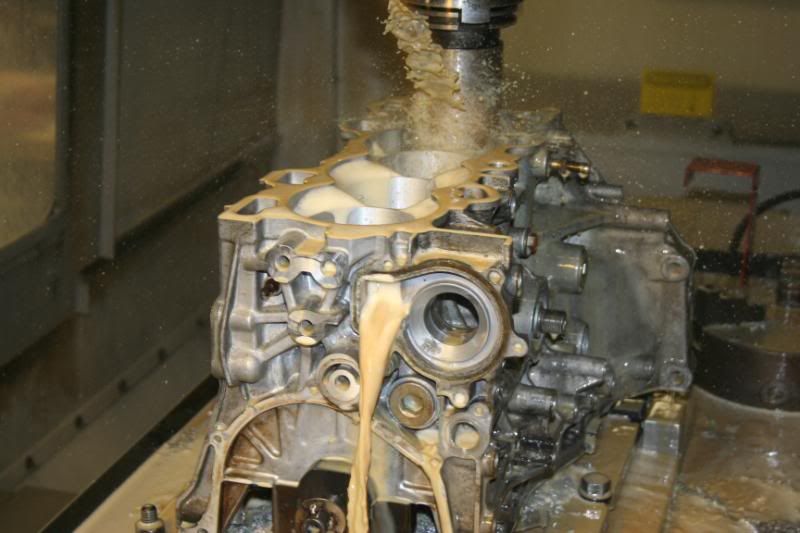
After installing the Superdeck 1 system we will then put it back into the machine for the second and final machining process. We begin by using a Probe and touch the top surface of the block. This tells the machine exactly where the block is located in the machine for exact machining to the .0001. To put into perspective of how much a .0001 would be is like taking a piece of hair, cutting it in half and then cutting that half ten more times. We then will machine the block and the head of the sleeves to insure a perfect fit into the block evenly. We run an endmill around the head of the sleeve and around the periphery of the block. This allows us to get an exact fit of the block guard evenly all the way around the block and the head of the sleeve, unlike the fitment you would get by just hammering in an off the shelf block guard you just bought off ebay where it distorts the cylinders once hammered in. After the block guard is installed we then run an endmill in the top of the block guard to machine the coolant groove. Now that the blockguard is installed we will deck the top of the sleeves. We leave the sleeves .002 higher than the actual deck of the block. This is called step decking the block and what it does is act like an o-ring seal. The last process is boring the sleeves several thousands smaller then the desired finish cylinder bore.


Now that sleeves are installed in the block it's off to the honing station. We begin by grinding the caps. We grind the top side of the caps first to get them flat so when we grind the bottom side of the caps (the side of the cap that sits on the block) we know that we are grinding a true flat surface. We grind .003 off both sides of the caps. By doing this it allows us to have material to align hone the main journals and keep the factory journal size. Go to our website and check out our Tech-Briefs about align boring and honing.
http://www.erlperformance.com/tech-briefs
After the caps are ground and put back onto the block we heat cycle the block to help stress relieve it and it helps seat the main caps back onto the block before align honing. After heating the block we then will stress relieve it once more now that sleeves are installed and the main caps are back onto the block. Later we will re-torque the main studs and align hone the block. After align honing the block we move on to the cylinder hone. We hold a .0002 tolerance on both align and cylinder hone. This is the same thickness as the average persons hair.


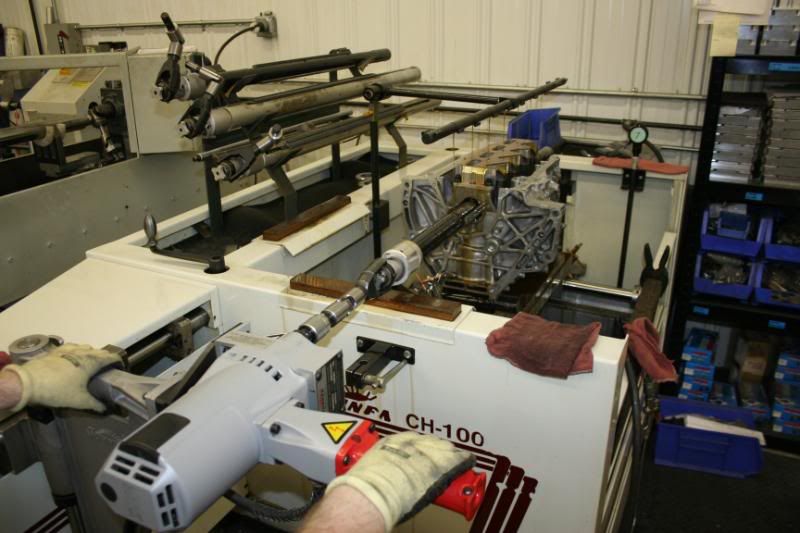
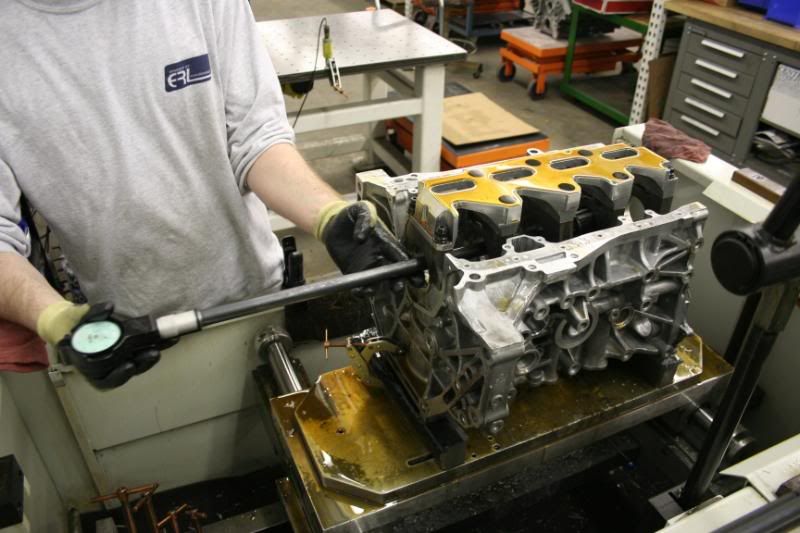
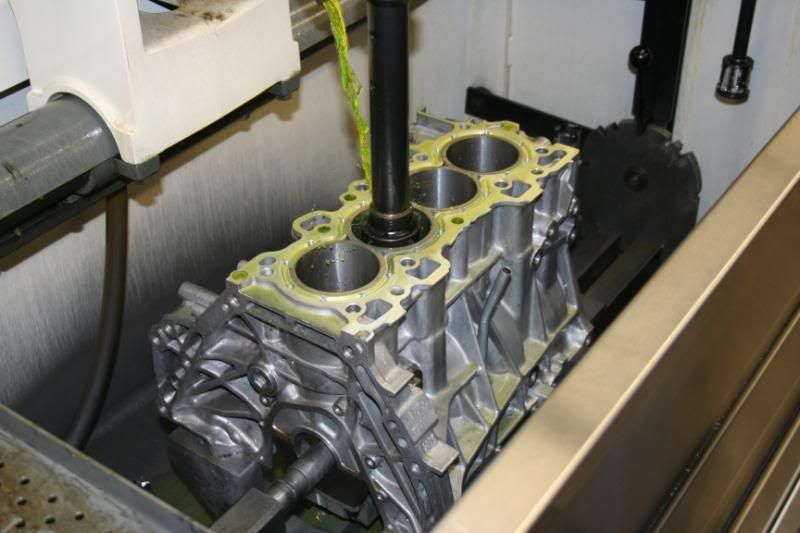

After all of the machine work is done we remove all of the plugs from the block so we can flush out all of the oil and coolant passages and brush them to get any chips out. We clean the block thoroughly in the solvent tank and then blow out any of the chips that might be left in it and the solvent off of it.


Now it's on to the last process and that's a final wipe down, coating of WD-40 and off to the clean room if we are going to assemble it or off to shipping to get bagged and boxed up for shipping.


We hope you've enjoyed the inside look into what all goes into a sleeved ERL block. Feel free to ask any questions and check out our website at www.erlperformance.com for different short block packages and pricing that best suites your application.
We start by removing the stock sleeves and stress relieving the block before we machine it for our Superdeck 1 sleeves. After stress relieving it we put the block onto a fixture and put it into the Haas CNC machine where we do all of the decking and boring for the sleeves. Important to note is that the block does not come off this fixture until all CNC machine work is completed on that block to insure unmatched precision machining.
After installing the Superdeck 1 system we will then put it back into the machine for the second and final machining process. We begin by using a Probe and touch the top surface of the block. This tells the machine exactly where the block is located in the machine for exact machining to the .0001. To put into perspective of how much a .0001 would be is like taking a piece of hair, cutting it in half and then cutting that half ten more times. We then will machine the block and the head of the sleeves to insure a perfect fit into the block evenly. We run an endmill around the head of the sleeve and around the periphery of the block. This allows us to get an exact fit of the block guard evenly all the way around the block and the head of the sleeve, unlike the fitment you would get by just hammering in an off the shelf block guard you just bought off ebay where it distorts the cylinders once hammered in. After the block guard is installed we then run an endmill in the top of the block guard to machine the coolant groove. Now that the blockguard is installed we will deck the top of the sleeves. We leave the sleeves .002 higher than the actual deck of the block. This is called step decking the block and what it does is act like an o-ring seal. The last process is boring the sleeves several thousands smaller then the desired finish cylinder bore.
Now that sleeves are installed in the block it's off to the honing station. We begin by grinding the caps. We grind the top side of the caps first to get them flat so when we grind the bottom side of the caps (the side of the cap that sits on the block) we know that we are grinding a true flat surface. We grind .003 off both sides of the caps. By doing this it allows us to have material to align hone the main journals and keep the factory journal size. Go to our website and check out our Tech-Briefs about align boring and honing.
http://www.erlperformance.com/tech-briefs
After the caps are ground and put back onto the block we heat cycle the block to help stress relieve it and it helps seat the main caps back onto the block before align honing. After heating the block we then will stress relieve it once more now that sleeves are installed and the main caps are back onto the block. Later we will re-torque the main studs and align hone the block. After align honing the block we move on to the cylinder hone. We hold a .0002 tolerance on both align and cylinder hone. This is the same thickness as the average persons hair.
After all of the machine work is done we remove all of the plugs from the block so we can flush out all of the oil and coolant passages and brush them to get any chips out. We clean the block thoroughly in the solvent tank and then blow out any of the chips that might be left in it and the solvent off of it.
Now it's on to the last process and that's a final wipe down, coating of WD-40 and off to the clean room if we are going to assemble it or off to shipping to get bagged and boxed up for shipping.
We hope you've enjoyed the inside look into what all goes into a sleeved ERL block. Feel free to ask any questions and check out our website at www.erlperformance.com for different short block packages and pricing that best suites your application.


 Re: SLEEVING PROCESS AT ERL PERFORMANCE
Hey that's my block.. What a process.. Thanks so much for the block, it looks wonderful.. I can't wait to get this bad boy assembled. Thanks Sean/Seth and ERL.. Why in the world is this in the performance marketplace?
Trending Topics


Honda-Tech Member
Joined: Sep 2003
Posts: 857
Likes: 0
From: land of the free
Re: SLEEVING PROCESS AT ERL PERFORMANCE
If my block does not need an align hone will it need it after you guys sleeve it? reason i'm asking is I would like to keep the stock specs and use the stock main bolts. not arp studs,I dont think they are needed for big power.

Honda-Tech Member
Joined: Jul 2007
Posts: 120
Likes: 0
From: Panama, PA, Panama
Re: SLEEVING PROCESS AT ERL PERFORMANCE
On your web page there's only two options on rods (mahle), Can you offer a full short block B20 89x84.5 with CP Pistons SC7121X and some other rod? Like Carrillo Pro-A or Crower Maxi Light or Brian Crower sportman light weight?

Thread
Thread Starter
Forum
Replies
Last Post
