


redoing brake lines? first timer, pointers please!


Thread Starter
Honda-Tech Member
Joined: Mar 2004
Posts: 1,103
Likes: 0
From: champaign, il, usa
 brake line tuck? first timer, pointers please!
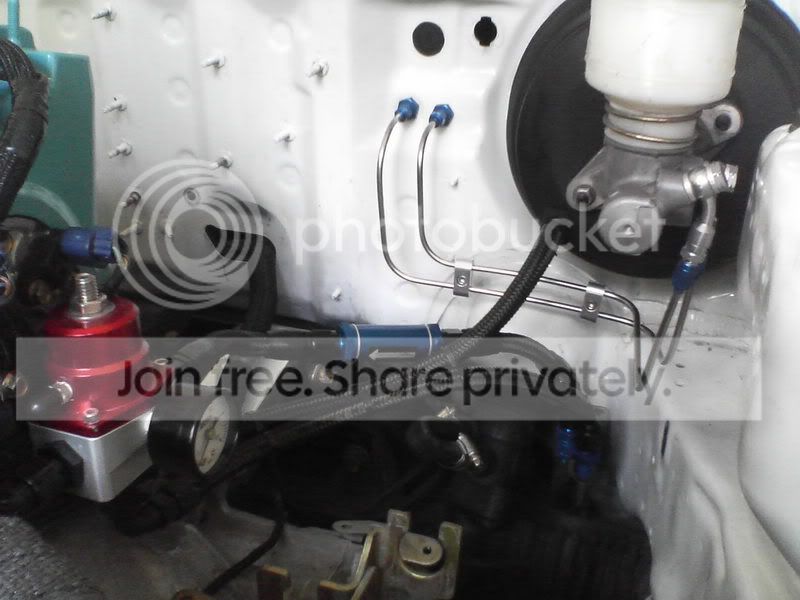
this is a first time redoing my brake lines. I am shaving my engine bay and plan on doing a proportional valve tuck. i was wondering what size of hardline should i use. do the left and right front hardline have to have equal length? what about the rear. also is it bad to hard to long of a line? or is it better to keep it short as possible?
Modified by LilCivic04 at 5:17 AM 6/7/2007
Modified by LilCivic04 at 5:17 AM 6/7/2007


Honda-Tech Member
Joined: Aug 2004
Posts: 569
Likes: 0
From: IA, US
Re: brake line tuck? first timer, pointers please! (LilCivic04)
<TABLE WIDTH="90%" CELLSPACING=0 CELLPADDING=0 ALIGN=CENTER><TR><TD>Quote, originally posted by LilCivic04 »</TD></TR><TR><TD CLASS="quote">this is a first time redoing my brake lines. I am shaving my engine bay and plan on doing a proportional valve tuck. i was wondering what size of hardline should i use. do the left and right front hardline have to have equal length? what about the rear. also is it bad to hard to long of a line? or is it better to keep it short as possible?
Modified by LilCivic04 at 5:17 AM 6/7/2007</TD></TR></TABLE>
If you plan to use the same sized honda fittings to the master cylinder and the proportioning valve, you will want to run 3/16" stainless steel tubing. The length of each line is of little concern, it's the amount of volume change and how much your master cylinder can provide. If you use 3/16" hardline and nice braided stainless soft line to the caliper you will be fine. The hardest part will be bending the new line to run to the rears, but its possible to utilize the existing rear lines and just rebend the portion thats needed to reach to the relocated proportioning valve. Keep in mind that the new line will have to use a double flare it you plan to use the stock type fittings. They sell double flaring tools for about $50, but they are pretty cheap and are difficult to get a perfect flare that won't leak. Your best bet is to bend the lines up how you want them, slip the fittings over the line and have a local race shop flare the tube with a nice hydraulic double flare tool ($300).
Modified by LilCivic04 at 5:17 AM 6/7/2007</TD></TR></TABLE>
If you plan to use the same sized honda fittings to the master cylinder and the proportioning valve, you will want to run 3/16" stainless steel tubing. The length of each line is of little concern, it's the amount of volume change and how much your master cylinder can provide. If you use 3/16" hardline and nice braided stainless soft line to the caliper you will be fine. The hardest part will be bending the new line to run to the rears, but its possible to utilize the existing rear lines and just rebend the portion thats needed to reach to the relocated proportioning valve. Keep in mind that the new line will have to use a double flare it you plan to use the stock type fittings. They sell double flaring tools for about $50, but they are pretty cheap and are difficult to get a perfect flare that won't leak. Your best bet is to bend the lines up how you want them, slip the fittings over the line and have a local race shop flare the tube with a nice hydraulic double flare tool ($300).
Honda-Tech Member
Joined: Aug 2004
Posts: 569
Likes: 0
From: IA, US
Re: brake line tuck? first timer, pointers please! (Andy R)
At home i've got links to the company i purchased all my metric fittings from, since they are pretty hard to find. I'll post them up later tonight.

Junior Member
Joined: May 2006
Posts: 364
Likes: 1
From: East Falmouth, MA, USA
Re: brake line tuck? first timer, pointers please! (LilCivic04)
<TABLE WIDTH="90%" CELLSPACING=0 CELLPADDING=0 ALIGN=CENTER><TR><TD>Quote, originally posted by LilCivic04 »</TD></TR><TR><TD CLASS="quote">what about the length of the lines? does the left and right have to equal the same length? </TD></TR></TABLE>
Of course not, although its a common misconception.
Volume of the line doesn't matter in the slightest... Remember, the fluid is not really compressible, so if you push 1cc of fluid into the line at one end, it'll come out as 1cc at the other. If the system is properly bled, your MC and prop valves will push XXpsi and XXcc's of brake fluid to the front brakes, and less to the rears, regardless of line length. OE lines aren't the same length left and right, the left is very short, and the right is longer. The thing to make sure is that your lines are not kinked (i.e. properly bent) and that there aren't any weird high spots for air to get stuck (dont run it up 6", then have a 90* bend going down) best of luck
Of course not, although its a common misconception.
Volume of the line doesn't matter in the slightest... Remember, the fluid is not really compressible, so if you push 1cc of fluid into the line at one end, it'll come out as 1cc at the other. If the system is properly bled, your MC and prop valves will push XXpsi and XXcc's of brake fluid to the front brakes, and less to the rears, regardless of line length. OE lines aren't the same length left and right, the left is very short, and the right is longer. The thing to make sure is that your lines are not kinked (i.e. properly bent) and that there aren't any weird high spots for air to get stuck (dont run it up 6", then have a 90* bend going down)
best of luck
Trending Topics

Honda-Tech Member
Joined: May 2004
Posts: 4,849
Likes: 0
From: BAY AREA/OC
Re: brake line tuck? first timer, pointers please! (sharkytm)
is it possible to run stainless steel braided lines all the way? or will there be too much flexing within the lines to hold the pressure? this is with use of a 1" master cylinder.
Junior Member
Joined: May 2006
Posts: 364
Likes: 1
From: East Falmouth, MA, USA
Re: brake line tuck? first timer, pointers please! (null.)
<TABLE WIDTH="90%" CELLSPACING=0 CELLPADDING=0 ALIGN=CENTER><TR><TD>Quote, originally posted by null. »</TD></TR><TR><TD CLASS="quote">is it possible to run stainless steel braided lines all the way? or will there be too much flexing within the lines to hold the pressure? this is with use of a 1" master cylinder. </TD></TR></TABLE>
I'd think it'd be cost prohibitive, but I don't see a reason why it wouldn't work... it'd just be kinda pointless.
I'd think it'd be cost prohibitive, but I don't see a reason why it wouldn't work... it'd just be kinda pointless.
Honda-Tech Member
Joined: May 2004
Posts: 4,849
Likes: 0
From: BAY AREA/OC
Re: brake line tuck? first timer, pointers please! (sharkytm)
<TABLE WIDTH="90%" CELLSPACING=0 CELLPADDING=0 ALIGN=CENTER><TR><TD>Quote, originally posted by sharkytm »</TD></TR><TR><TD CLASS="quote">
I'd think it'd be cost prohibitive, but I don't see a reason why it wouldn't work... it'd just be kinda pointless.</TD></TR></TABLE>
i would find it easier to route and assemble, rather than bending the hard line to fit into place and then flaring it afterwards for the fittings.
I'd think it'd be cost prohibitive, but I don't see a reason why it wouldn't work... it'd just be kinda pointless.</TD></TR></TABLE>
i would find it easier to route and assemble, rather than bending the hard line to fit into place and then flaring it afterwards for the fittings.

Junior Member
Joined: Nov 2002
Posts: 613
Likes: 0
From: Chandler, AZ, USA
Re: brake line tuck? first timer, pointers please! (Andy R)
<TABLE WIDTH="90%" CELLSPACING=0 CELLPADDING=0 ALIGN=CENTER><TR><TD>Quote, originally posted by Andy R »</TD></TR><TR><TD CLASS="quote">If you plan to use the same sized honda fittings to the master cylinder and the proportioning valve, you will want to run 3/16" stainless steel tubing.
Keep in mind that the new line will have to use a double flare it you plan to use the stock type fittings. They sell double flaring tools for about $50, but they are pretty cheap and are difficult to get a perfect flare that won't leak. Your best bet is to bend the lines up how you want them, slip the fittings over the line and have a local race shop flare the tube with a nice hydraulic double flare tool ($300).</TD></TR></TABLE>
I don't believe this is correct (about double-flaring). Stainless steel is too brittle to double-flare, so it has to be single-flared. Only mild steel can be double flared.
Keep in mind that the new line will have to use a double flare it you plan to use the stock type fittings. They sell double flaring tools for about $50, but they are pretty cheap and are difficult to get a perfect flare that won't leak. Your best bet is to bend the lines up how you want them, slip the fittings over the line and have a local race shop flare the tube with a nice hydraulic double flare tool ($300).</TD></TR></TABLE>
I don't believe this is correct (about double-flaring). Stainless steel is too brittle to double-flare, so it has to be single-flared. Only mild steel can be double flared.
Honda-Tech Member
Joined: Aug 2004
Posts: 569
Likes: 0
From: IA, US
Re: brake line tuck? first timer, pointers please! (dwolsten)
<TABLE WIDTH="90%" CELLSPACING=0 CELLPADDING=0 ALIGN=CENTER><TR><TD>Quote, originally posted by dwolsten »</TD></TR><TR><TD CLASS="quote">
I don't believe this is correct (about double-flaring). Stainless steel is too brittle to double-flare, so it has to be single-flared. Only mild steel can be double flared.
</TD></TR></TABLE>
I double flared my 3/16" stainless steel lines without any problems so far.
I don't believe this is correct (about double-flaring). Stainless steel is too brittle to double-flare, so it has to be single-flared. Only mild steel can be double flared.
</TD></TR></TABLE>
I double flared my 3/16" stainless steel lines without any problems so far.

Honda-Tech Member
Joined: Nov 2002
Posts: 123
Likes: 0
From: Arlington
Yes you can double flare SS lines.
Use only a hydraulic line flare tool. Do not use a screw type tool. It will rip apart your SS line. Make sure you use a tubing bender so you don't have any restriction within the line. Do not use a spring type either. They are not recommended for this type of app.
Yeah a hyd.line flare tool is expensive but is extremely cheap compared to loosing brakes when driving and dealing with the aftermath.
I'm pitching my complex ABS on my DA and using ABS from a DC2R. I'm also using it to make the shart lines at the wheels for the TL 4 pot brembo calipers. I finally found a good 16X7 wheel that clears them.
You lines do not need to be the same length as OEM. But you will notice a firmer pedal with SS lines and 3 an hoses at the wheels than running the entire system with 3 an hoses. Make sure you also make small tabbed brackets to bolt them to the chassis. Under the severe pressures they are subjected to they will flex and possibly break if not done like so. Sheet metal screws are not recommended to hold these tabs on either. If you plan on making new holes to these tabs use blind hole rivet nuts or nut serts from http://www.sherex.com
Once you make your lines and finish bleed the brake lines and have a completed brake system. Spray wash the lines with soap and water. Then use brake cleaner and compressed air to dry out the water and spray a generous amount of leak tracing powder on them. Drive it around for several days while inspecting the fluid level and the lines to inspect for leaks. Even the smallers leak will develop into a large one eventually due to its pressures so you may have to redo a few ends/fittings. Usually you will be fine but I have run into a couple every now and then that leaked on me.
-Joe
Use only a hydraulic line flare tool. Do not use a screw type tool. It will rip apart your SS line. Make sure you use a tubing bender so you don't have any restriction within the line. Do not use a spring type either. They are not recommended for this type of app.
Yeah a hyd.line flare tool is expensive but is extremely cheap compared to loosing brakes when driving and dealing with the aftermath.
I'm pitching my complex ABS on my DA and using ABS from a DC2R. I'm also using it to make the shart lines at the wheels for the TL 4 pot brembo calipers. I finally found a good 16X7 wheel that clears them.
You lines do not need to be the same length as OEM. But you will notice a firmer pedal with SS lines and 3 an hoses at the wheels than running the entire system with 3 an hoses. Make sure you also make small tabbed brackets to bolt them to the chassis. Under the severe pressures they are subjected to they will flex and possibly break if not done like so. Sheet metal screws are not recommended to hold these tabs on either. If you plan on making new holes to these tabs use blind hole rivet nuts or nut serts from http://www.sherex.com
Once you make your lines and finish bleed the brake lines and have a completed brake system. Spray wash the lines with soap and water. Then use brake cleaner and compressed air to dry out the water and spray a generous amount of leak tracing powder on them. Drive it around for several days while inspecting the fluid level and the lines to inspect for leaks. Even the smallers leak will develop into a large one eventually due to its pressures so you may have to redo a few ends/fittings. Usually you will be fine but I have run into a couple every now and then that leaked on me.
-Joe


Honda-Tech Member
Joined: Aug 2004
Posts: 569
Likes: 0
From: IA, US
Re: (LilCivic04)
My car is apart right now for roll cage construction and body/paint. But basically my configuration is:
2g CRX chassis
Integra 1" master cylinder/booster
Front S2000 Calipers/Rotors
Rear DA calipers/rotors
3/16" SS hardline
Goodridge SS flex line kit
Run master cylinder lines to firewall bulkhead AN fittings to 40/40 prop valve inside cabin. Run front lines back through another set of bulkhead AN fittings to wheel wells. Run rears from prop valve to rear wheel wells. Done
For cutting, you can use your standard tube cutter, but make sure you debur and camfer your ends before flaring. Like mentioned above, you really want to stay away from the cheap flaring tools as it will likely lead to leaks. Have a race shop use their hydraulic flaring tool to finish it up for you. If you shoot the **** with them for a while they will probably do it for free or a 12'er of beer. Beats paying $300 for a tool and having someone experienced to operate it.
2g CRX chassis
Integra 1" master cylinder/booster
Front S2000 Calipers/Rotors
Rear DA calipers/rotors
3/16" SS hardline
Goodridge SS flex line kit
Run master cylinder lines to firewall bulkhead AN fittings to 40/40 prop valve inside cabin. Run front lines back through another set of bulkhead AN fittings to wheel wells. Run rears from prop valve to rear wheel wells. Done
For cutting, you can use your standard tube cutter, but make sure you debur and camfer your ends before flaring. Like mentioned above, you really want to stay away from the cheap flaring tools as it will likely lead to leaks. Have a race shop use their hydraulic flaring tool to finish it up for you. If you shoot the **** with them for a while they will probably do it for free or a 12'er of beer. Beats paying $300 for a tool and having someone experienced to operate it.

Honda-Tech Member
Joined: Jun 2006
Posts: 343
Likes: 0
From: Oakville, Ont, Canada
A trick i normally use to prevent the lines from exterior corrosion is flare one end and put shrink tubing down the otherside. You can buy shrink tubing in rolls that would be more then enough for one brake line. This is going over board a tad but better that then corrosion! Plus is looks better! Running brakes lines is not a hard task but it just gets annoying when it comes to routing the line.
Thread Starter
Honda-Tech Member
Joined: Mar 2004
Posts: 1,103
Likes: 0
From: champaign, il, usa
Re: brake line tuck? first timer, pointers please! (LilCivic04)
i was speaking to a local hydraulic shop and they said that they carry brake lines in nickel steel or something. they said it was soft enough you can bend it by hand and its used for brake line for trucks. hes says its one of the best in the market and they come in a roll. what do you guys think?

 [/QUOTE]
