


Is this a rod bearing failure?


Thread Starter
Honda-Tech Member
Joined: Jul 2013
Posts: 145
Likes: 0
 Is this a rod bearing failure?
So my car makes this very weird rattle noise from what I think is cylinder one when the car gets to ~2000 rpm. I looked it up online and found a video of a civic with a similar noise that does in fact have failed rod bearing. I fear the worst and think I have the same issue...  The first video is the one I found and the second video is the one I took of my car. The noise is only heard in the rpm range of 2k-2.5k
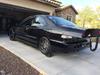
My car:
The first video is the one I found and the second video is the one I took of my car. The noise is only heard in the rpm range of 2k-2.5kMy car:
Last edited by dwashy21; Apr 30, 2014 at 11:27 PM.


DO IT ON ALL FOURS
Joined: Sep 2007
Posts: 7,632
Likes: 15
From: IN Your Mind
Re: Is this a rod bearing failure?
That doesn't sound like rod knock at all. Something is vibrating. Next time you make a movie trying to diagnose a car don't move the camera around like a lunatic. It is hard to focus on sound and surroundings to be able to thoroughly help. I notice your A/C line vibrate a ton when the noise happens.
Thread Starter
Honda-Tech Member
Joined: Jul 2013
Posts: 145
Likes: 0
Re: Is this a rod bearing failure?
That doesn't sound like rod knock at all. Something is vibrating. Next time you make a movie trying to diagnose a car don't move the camera around like a lunatic. It is hard to focus on sound and surroundings to be able to thoroughly help. I notice your A/C line vibrate a ton when the noise happens.
I don't know if I'd classify it as rocks in a can, it sounds more like a bad exhaust rattle kind of sound
NOTE: The AC belt is disconnected in the video and currently
Last edited by dwashy21; Apr 30, 2014 at 04:58 PM. Reason: More information
Trending Topics
Thread Starter
Honda-Tech Member
Joined: Jul 2013
Posts: 145
Likes: 0
Re: Is this a rod bearing failure?
Would the sound a bad rod bearing makes be the same as the one rod knock would be? Or are they one in the same
The noise is only heard in the rpm range of 2k-2.5k
The noise is only heard in the rpm range of 2k-2.5k
Last edited by dwashy21; Apr 30, 2014 at 05:14 PM.


Honda-Tech Member
Joined: Aug 2010
Posts: 2,686
Likes: 1
From: Maryland
Re: Is this a rod bearing failure?
Does not sound like a rod bearing. To satisfy your own curiosity and rule it out, have your buddy hold the engine at the rpm the noise occurs at. Then one at a time disconnect and reconnect each plug wire. If your noise goes away then you've found your bad rod bearing.
For example, hold engine at x rpm, disconnect plug wire 1, noise is still there so plug it back in. Disconnect plug wire 2, noise goes away, plug it back in and noise comes back. Repeat a few times to confirm if you think you find the problem cylinder. Normally pulling the plug wire will stop the rod from knocking because you are removing the load from the cylinder. Think of it as a power balance test, but you're listening for that noise to go away and come back when you disconnect and reconnect a plug wire.
EDIT: Well...I just watched that first video you posted and it illustrates exactly what I was trying to explain Lololol
For example, hold engine at x rpm, disconnect plug wire 1, noise is still there so plug it back in. Disconnect plug wire 2, noise goes away, plug it back in and noise comes back. Repeat a few times to confirm if you think you find the problem cylinder. Normally pulling the plug wire will stop the rod from knocking because you are removing the load from the cylinder. Think of it as a power balance test, but you're listening for that noise to go away and come back when you disconnect and reconnect a plug wire.
EDIT: Well...I just watched that first video you posted and it illustrates exactly what I was trying to explain Lololol
Thread Starter
Honda-Tech Member
Joined: Jul 2013
Posts: 145
Likes: 0
Re: Is this a rod bearing failure?
Does not sound like a rod bearing. To satisfy your own curiosity and rule it out, have your buddy hold the engine at the rpm the noise occurs at. Then one at a time disconnect and reconnect each plug wire. If your noise goes away then you've found your bad rod bearing.
For example, hold engine at x rpm, disconnect plug wire 1, noise is still there so plug it back in. Disconnect plug wire 2, noise goes away, plug it back in and noise comes back. Repeat a few times to confirm if you think you find the problem cylinder. Normally pulling the plug wire will stop the rod from knocking because you are removing the load from the cylinder. Think of it as a power balance test, but you're listening for that noise to go away and come back when you disconnect and reconnect a plug wire.
EDIT: Well...I just watched that first video you posted and it illustrates exactly what I was trying to explain Lololol
For example, hold engine at x rpm, disconnect plug wire 1, noise is still there so plug it back in. Disconnect plug wire 2, noise goes away, plug it back in and noise comes back. Repeat a few times to confirm if you think you find the problem cylinder. Normally pulling the plug wire will stop the rod from knocking because you are removing the load from the cylinder. Think of it as a power balance test, but you're listening for that noise to go away and come back when you disconnect and reconnect a plug wire.
EDIT: Well...I just watched that first video you posted and it illustrates exactly what I was trying to explain Lololol
Yes, this is what I need to do. I had to park my car earlier and unplugged the wire from cylinder one and no dice. I thought that was the one that was failing but tomorrow I will do this fully to see what the issue could be.
So vibration, eh? What could possibly be vibrating? Maybe an engine mount? I know the drivers side upper is pretty messed up (torn completely) and I've got a replacement at O'Reilly coming in tomorrow that I'll be installing.
Last edited by dwashy21; Apr 30, 2014 at 08:03 PM. Reason: Profanity


Thread Starter
Honda-Tech Member
Joined: Jul 2013
Posts: 145
Likes: 0
Re: Is this a rod bearing failure?
No I don't think that's it. I tested for a bad rod bearing by pulling each plug wire one at a time. This is a d16z6 and there was no effect on rattle noise with any of the cylinders during the test. Check out the OP I added better videos, one from inside and one from outside where I do the test.
Thread Starter
Honda-Tech Member
Joined: Jul 2013
Posts: 145
Likes: 0
Re: Is this a rod bearing failure?
Took off the power steering belt and tested again for the noise and it's still there so the power steering pump is good
Last edited by dwashy21; May 1, 2014 at 05:13 PM.
Thread Starter
Honda-Tech Member
Joined: Jul 2013
Posts: 145
Likes: 0
Re: Is this a rod bearing failure?
Just realized in the second video I didn't show the test for cylinders numbered 3 and 4. FYI I did actually test all four and there was no change in the sound with any of them
Thread Starter
Honda-Tech Member
Joined: Jul 2013
Posts: 145
Likes: 0
Re: Is this a rod bearing failure?
Does my timing belt seem too loose here or does this look alright? I know one side of the timing belt is supposed to have a little more slack in it, would that be the left side here?
Could it be my camshaft knocking or a bad valve I'm hearing? I'd really like to get this resolved soon so I can move on with my turbo build

B*a*n*n*e*d
Joined: Dec 2008
Posts: 12,028
Likes: 5
if it does it after the car has warmed up its a bad bearing... likely a tensioner bearing ..you can pull them and look at them .. the one that is bad will have a grease mark where the grease is leaking out of it ... possibly alt or ac bearing if you have ac
Thread Starter
Honda-Tech Member
Joined: Jul 2013
Posts: 145
Likes: 0
Re: Is this a rod bearing failure?
Thanks for the response! So the only bearings that could be making that noise on the pulley side of the motor is the idler/tensioner, alternator pulley/bearing, and the ac pulley/bearing? I don't think it's the alternator one because it seems like the sound is coming from the motor itself and the AC belt is not on so it couldn't be that.
Could it be the water pump going out?
To pull the tensioner pulley I have to remove the lower timing cover don't I?
Could it be the water pump going out?
To pull the tensioner pulley I have to remove the lower timing cover don't I?
Last edited by dwashy21; May 5, 2014 at 03:03 PM.
B*a*n*n*e*d
Joined: Dec 2008
Posts: 12,028
Likes: 5
Re: Is this a rod bearing failure?
Yeah, it could be the water pump going out.
First warm the car up til it starts making the sound, then quickly take off the serpentine belts. Then spin the pulleys and see if it feels rough or makes the sound.
If they both seem fine then you will need to pull the timing belts. Yes, this involves pulling the timing covers and the belts. Set it to TDC and then loosen the tensioner bolt, push the tensioner in, tighten it gently(while there is slack on the belts which allows you to remove them) then remove the belts. Then remove the tensioners and look at them. If it's not hot anymore you probably won't be able to tell by spinning it. If it's failing, and I have had one fail recently, it should have a grease line around where the sealed portion is. This should tell you it's bad as the grease has leaked out. If they both look clean then it could be the water pump, however it might be best to just replace the bearings anyhow. This would be a good time to look at both belts and see if they need replacing. You could just get a timing belt kit by Gates which will include both belts and the two tensioner bearings and the water pump.
After putting the belts back on, tensioning the belts is easy. You set it to tdc, then turn the crank counterclockwise so that it moves 3 teeth on the CAMSHAFT. Then loosen the tensioner bolt which will allow the springs to pull the tensioner to the correct spot. Then tighten the tensioner bolt and you are done. Keep in mind that you don't want to overtighten the tensioner bolt. I did, and this is why my tensioner bearing failed before.
First warm the car up til it starts making the sound, then quickly take off the serpentine belts. Then spin the pulleys and see if it feels rough or makes the sound.
If they both seem fine then you will need to pull the timing belts. Yes, this involves pulling the timing covers and the belts. Set it to TDC and then loosen the tensioner bolt, push the tensioner in, tighten it gently(while there is slack on the belts which allows you to remove them) then remove the belts. Then remove the tensioners and look at them. If it's not hot anymore you probably won't be able to tell by spinning it. If it's failing, and I have had one fail recently, it should have a grease line around where the sealed portion is. This should tell you it's bad as the grease has leaked out. If they both look clean then it could be the water pump, however it might be best to just replace the bearings anyhow. This would be a good time to look at both belts and see if they need replacing. You could just get a timing belt kit by Gates which will include both belts and the two tensioner bearings and the water pump.
After putting the belts back on, tensioning the belts is easy. You set it to tdc, then turn the crank counterclockwise so that it moves 3 teeth on the CAMSHAFT. Then loosen the tensioner bolt which will allow the springs to pull the tensioner to the correct spot. Then tighten the tensioner bolt and you are done. Keep in mind that you don't want to overtighten the tensioner bolt. I did, and this is why my tensioner bearing failed before.
Thread Starter
Honda-Tech Member
Joined: Jul 2013
Posts: 145
Likes: 0
Re: Is this a rod bearing failure?
Perfect. I'll have to do this next week or weekend since I'm gonna be busy with finals until then.
I'll go ahead and replace the belt and all the pulleys too since it's probably time that got done. You mentioned that there are two tensioner bearings, does that mean that there are two tensioner pulleys or does the single tensioner utilize two bearings?
Also, while I'm at it would it be worth getting an adjustable cam gear? Keep in mind I should have this motor boosted in a month or two
I'll go ahead and replace the belt and all the pulleys too since it's probably time that got done. You mentioned that there are two tensioner bearings, does that mean that there are two tensioner pulleys or does the single tensioner utilize two bearings?
Also, while I'm at it would it be worth getting an adjustable cam gear? Keep in mind I should have this motor boosted in a month or two

Thread
Thread Starter
Forum
Replies
Last Post