When you click on links to various merchants on this site and make a purchase, this can result in this site earning a commission. Affiliate programs and affiliations include, but are not limited to, the eBay Partner Network.
Background:
LS/VTEC Turbo
Built bottom end w/ 9:1 pistons
The car was running a bit rough so I decided to do a compression test, these are the results of the dry and wet tests performed:
So obviously this doesn't look good, cylinder #1 being the focus of attention.
I decided not to spend $100 on a leak-down tester so I fashioned up my own using some of the components from my compression tester:
Results of the leak-down test:
100 psi, each cylinder set precisely to TDC prior to testing.
Cylinder #1: 100% leak with all air exiting through the exhaust valves.
Cylinder #2: 60% leak exiting through exhaust valves.
Cylinder #3: 80% leak exiting through exhaust valves.
Cylinder #4: 70% leak exiting through spark plug hole of cylinder #3
From what I can tell the head needs to come off and the exhaust valves need to be thoroughly inspected. Before I go to those lengths, I figure it can't hurt to ask some of you fine folks for your opinions on the matter.
Any advice from anyone that has experienced similar circumstances?
You engine was never meant to be turbocharged, and you have experienced one of the downfalls of any turbo car: Excessive exhaust valve temperature.
Getting good flow on the intake side is a lot simpler, but on the exhaust side, you really need a cooled valve (IE sodium cooled) or a larger seat width to dissipate the heat.
Your numbers suggest a very loose cylinder to bore clearance. (IE worn out pistons/rings/bore) Given the variance in your measurements, I would start with a disassembly of the block and inspect #1 for damage. Even at 9:1, you should have more than 95psi. A competent machinist will be able to deduce valve leakage by examining your valves.
History of the engine and the tune you are using would be helpful.
It can indicate a few things. One, the rings are good, bore is loose. No matter how much oil you add, it will seal up at most, a little better. Piston to bore clearance that is excessive does not mean the rings are bad. The gap will be considerably higher in this situation and will show lower compression. You could have a bit of both. What is really needed here, is a how and when.
Your exhaust cam could even be off as well (cam gear slip). I cant tell you what until you tell us what you have done, and when it started.
How many miles on the rebuild, what was done, when did this start. You need to provide as much good information as possible. If you have other information, provide it as speculation.
The head removal went very smoothly and as you will see from the photos there is no real obvious physical damage.
I confirmed that many of the exhaust valves are not seating properly and the head has some warpage.
Head:
Block:
Next I will disassemble the rest of the head and do some serious research into which valvetrain components to replace.
Maybe while I've got all this extra space in the engine bay I will finally delete this damn power steering and perhaps the non-working abs system too if I get ambitious. Oh and it's a perfect time to install this hasport rear motor mount I have kicking around.



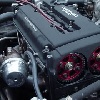
 Results from leak down test


