


Why is speaker wire in strands instead of solid copper (home AC wire)?


Thread Starter
Joined: Sep 2002
Posts: 339
Likes: 0
From: Boise, Idaho, 83703
 Why is speaker wire in strands instead of solid copper (home AC wire)?
I was just wondering what the benefit of strands in speaker wire is rather than a solid copper wire. Anybody know for SURE??? thanks.

Honda-Tech Member
Joined: Mar 2002
Posts: 1,689
Likes: 0
From: OC or I.E
Re: Why is speaker wire in strands instead of solid copper (home AC wire)? (HtwentytwO)
Well I know for computer networking IE: cat5 , 5e and 6 the pairs are twiested to reduce attenuation (sp?)

Joined: Dec 2001
Posts: 1,380
Likes: 0
Re: Why is speaker wire in strands instead of solid copper (home AC wire)? (HtwentytwO)
the flexibility of the wires. with a strand, its hard to bend it and such. try running say a 4 gauge of solid wire through a tight spot. not as easy as stranded wires. 

Junior Member
Joined: Sep 2002
Posts: 638
Likes: 0
From: Pittsburgh, PA, USA
Re: Why is speaker wire in strands instead of solid copper (home AC wire)? (HtwentytwO)
Electricity travels on the surface of the wire therefore the higher that strand count, the greater the surface area, the more conductive the wire.


Honda-Tech Member
Joined: May 2001
Posts: 1,116
Likes: 0
From: Upstate, NY, USA
Re: Why is speaker wire in strands instead of solid copper (1BlackHatch)
<TABLE WIDTH="90%" CELLSPACING=0 CELLPADDING=0 ALIGN=CENTER><TR><TD>Quote, originally posted by 1BlackHatch »</TD></TR><TR><TD CLASS="quote">Electricity travels on the surface of the wire therefore the higher that strand count, the greater the surface area, the more conductive the wire.</TD></TR></TABLE>
yes! this is why.
yes! this is why.

Honda-Tech Member
Joined: Jul 2002
Posts: 593
Likes: 0
From: Lost Wages Nevada USA
Re: Why is speaker wire in strands instead of solid copper (1BlackHatch)
<TABLE WIDTH="90%" CELLSPACING=0 CELLPADDING=0 ALIGN=CENTER><TR><TD>Quote, originally posted by 1BlackHatch »</TD></TR><TR><TD CLASS="quote">Electricity travels on the surface of the wire therefore the higher that strand count, the greater the surface area, the more conductive the wire.</TD></TR></TABLE>
Amen bruvva! Electricity travels along the surface, this is called skin effect. The theory is: the more surfaces there are, the more current can be carried.
I've had this discussion with all sorts of engineers. I haven't gotten a solid answer in many years as to whether the really fine strand stuff is a whole lot better than the not so fine.
I once used house wiring from Home Depot to do a truck stereo. It was very loud and clear sounding. The cost for wiring was very cheap.
Amen bruvva! Electricity travels along the surface, this is called skin effect. The theory is: the more surfaces there are, the more current can be carried.
I've had this discussion with all sorts of engineers. I haven't gotten a solid answer in many years as to whether the really fine strand stuff is a whole lot better than the not so fine.
I once used house wiring from Home Depot to do a truck stereo. It was very loud and clear sounding. The cost for wiring was very cheap.
Trending Topics

Joined: Nov 2001
Posts: 1,081
Likes: 0
From: Greenville, SC, USA
Re: Why is speaker wire in strands instead of solid copper (koco)
It's better to use a flexible wire in a high-vibration environment like your car. If you didn't; they may break requiring you to replace wire.

Honda-Tech Member
Joined: Aug 2000
Posts: 2,175
Likes: 1
From: sixfourseven
Re: Why is speaker wire in strands instead of solid copper (home AC wire)? (HtwentytwO)
Mainly for flexiblity. The skin effect is true, but supposively it occurs at inaudible frequencies way beyond 20KHz.
Honda-Tech Member
Joined: Jul 2002
Posts: 593
Likes: 0
From: Lost Wages Nevada USA
Re: Why is speaker wire in strands instead of solid copper (PupaScoopa)
<TABLE WIDTH="90%" CELLSPACING=0 CELLPADDING=0 ALIGN=CENTER><TR><TD>Quote, originally posted by PupaScoopa »</TD></TR><TR><TD CLASS="quote">It's better to use a flexible wire in a high-vibration environment like your car. If you didn't; they may break requiring you to replace wire.</TD></TR></TABLE>
Have you ever tried to fatigue a piece of 12 ga. romex copper wire from a house? They are as likely to break as your brake line or less likely. Copper is a flexible metal even in solid form.
Have you ever tried to fatigue a piece of 12 ga. romex copper wire from a house? They are as likely to break as your brake line or less likely. Copper is a flexible metal even in solid form.

New User
Joined: Apr 2001
Posts: 3,129
Likes: 0
From: Los Angeles, CA, USA
Re: Why is speaker wire in strands instead of solid copper (dc24me)
<TABLE WIDTH="90%" CELLSPACING=0 CELLPADDING=0 ALIGN=CENTER><TR><TD>Quote, originally posted by dc24me »</TD></TR><TR><TD CLASS="quote">Mainly for flexiblity. The skin effect is true, but supposively it occurs at inaudible frequencies way beyond 20KHz.
</TD></TR></TABLE>
I have heard it only occurs at high freqs also. You beat me to this.
</TD></TR></TABLE>
I have heard it only occurs at high freqs also. You beat me to this.
New User
Joined: Apr 2001
Posts: 3,129
Likes: 0
From: Los Angeles, CA, USA
Re: Why is speaker wire in strands instead of solid copper (vteg)
The net has cost me sleep again. I found a couple of good references on this.
In a nutshell the skin effect is caused by inductance in the speaker wire. After viewing http://www.audioholics.com/tec...2.htm and http://www.st-andrews.ac.uk/~w....html it seems that skin effect is so negligible there is no point in being concerned. The first page calculates a .14 db loss with 10' 12 awg solid wire at 20khz.
Judging by this statement by the second author we all experience this anyway.
Solid core (i.e. just one strand of conductor per wire)
Stranded wire (a bundle of thin strands of conductors)
Litz wire (as stranded but with insulation between the individual strands)
In practice, most of the multi-strand wires used for audio purposes have no insulation on the individual strands. This means they do not behave like a Litz wire. In stranded wires without insulation between the individual strands charge may cross from strand to strand. Hence current will tend to preferentially flow near the skin of the bundle of wires, just as it does with a single solid conductor of similar overall diameter. Hence when the strands are thin but in electrical contact with their neighbours we can expect the effect of internal impedance to be similar to that of a solid wire of a diameter similar to the bundle of strands.
In a nutshell the skin effect is caused by inductance in the speaker wire. After viewing http://www.audioholics.com/tec...2.htm and http://www.st-andrews.ac.uk/~w....html it seems that skin effect is so negligible there is no point in being concerned. The first page calculates a .14 db loss with 10' 12 awg solid wire at 20khz.
Judging by this statement by the second author we all experience this anyway.
Solid core (i.e. just one strand of conductor per wire)
Stranded wire (a bundle of thin strands of conductors)
Litz wire (as stranded but with insulation between the individual strands)
In practice, most of the multi-strand wires used for audio purposes have no insulation on the individual strands. This means they do not behave like a Litz wire. In stranded wires without insulation between the individual strands charge may cross from strand to strand. Hence current will tend to preferentially flow near the skin of the bundle of wires, just as it does with a single solid conductor of similar overall diameter. Hence when the strands are thin but in electrical contact with their neighbours we can expect the effect of internal impedance to be similar to that of a solid wire of a diameter similar to the bundle of strands.
Honda-Tech Member
Joined: Aug 2000
Posts: 2,175
Likes: 1
From: sixfourseven
Re: Why is speaker wire in strands instead of solid copper (vteg)
Thanks for the link.
Gotta love pscyhoacoustics. Did you see the post on carsound.com to that link about someguy asking about breaking in his mega buck speaker cables? He was claiming the midrange was muddy sounding for the first hour and then it sounded unbelieveable? The electrons must have started speeding up or something.
Gotta love pscyhoacoustics. Did you see the post on carsound.com to that link about someguy asking about breaking in his mega buck speaker cables? He was claiming the midrange was muddy sounding for the first hour and then it sounded unbelieveable? The electrons must have started speeding up or something.
New User
Joined: Apr 2001
Posts: 3,129
Likes: 0
From: Los Angeles, CA, USA
Re: Why is speaker wire in strands instead of solid copper (dc24me)
<TABLE WIDTH="90%" CELLSPACING=0 CELLPADDING=0 ALIGN=CENTER><TR><TD>Quote, originally posted by dc24me »</TD></TR><TR><TD CLASS="quote">Thanks for the link.
Gotta love pscyhoacoustics. Did you see the post on carsound.com to that link about someguy asking about breaking in his mega buck speaker cables? He was claiming the midrange was muddy sounding for the first hour and then it sounded unbelieveable? The electrons must have started speeding up or something.
</TD></TR></TABLE>
Haha. Did RC rip him one?
Gotta love pscyhoacoustics. Did you see the post on carsound.com to that link about someguy asking about breaking in his mega buck speaker cables? He was claiming the midrange was muddy sounding for the first hour and then it sounded unbelieveable? The electrons must have started speeding up or something.
</TD></TR></TABLE>
Haha. Did RC rip him one?


Honda-Tech Member
Joined: Mar 2001
Posts: 3,650
Likes: 0
From: Ft. Worth, TX
Re: Why is speaker wire in strands instead of solid copper (dc24me)
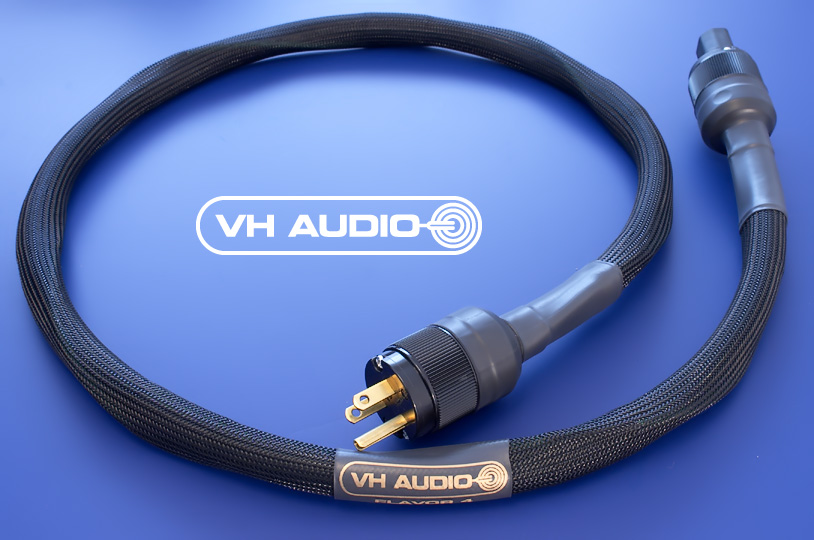
Man if you guys think that's bad, have you seen the new trend of "audiophile power cables" for home audio stuff?
http://www.venhaus1.com/diymains.html
http://www.audioasylum.com/aud....html
I'm really considering starting another business just to cater to these idiots. It sounds even easier than trying to convince people that the "electric supercharger" actually works!
A quote from this psychoacoustical genius:
"My prior design based on the Belden 83802 wire sounded very, very good. However, the more I thought about it, the more I realized that certain parameters could be tweaked, and I could produce an even better sounding power cord."
http://www.venhaus1.com/diymains.html
http://www.audioasylum.com/aud....html
I'm really considering starting another business just to cater to these idiots. It sounds even easier than trying to convince people that the "electric supercharger" actually works!
A quote from this psychoacoustical genius:
"My prior design based on the Belden 83802 wire sounded very, very good. However, the more I thought about it, the more I realized that certain parameters could be tweaked, and I could produce an even better sounding power cord."
New User
Joined: Apr 2001
Posts: 3,129
Likes: 0
From: Los Angeles, CA, USA
Re: Why is speaker wire in strands instead of solid copper (HatchbackComeback)
<TABLE WIDTH="90%" CELLSPACING=0 CELLPADDING=0 ALIGN=CENTER><TR><TD>Quote »</TD></TR><TR><TD CLASS="quote"> Posted by Lak (A) on August 11, 2003 at 16:15:17
In Reply to: VH Audio Flavor 4 powercord. posted by Joseph 2 on August 11, 2003 at 13:43:29:
Joseph,
I just received my 4’ Flavor #4 power cord today. I plan on burning it in on my refrigerator for ten days prior to doing any real listening. Of course I could not pass up the opportunity to put it on my transport just for a few hours to hear what it sounded like right out of the box.
Initially I’m very impressed, seems to have good bass, mids and high extension with quickness ***without being a Bandwidth Limiter***. I’ll know a lot more after I listen to it after the “compressor burn-in”.</TD></TR></TABLE>
That is too funny.
In Reply to: VH Audio Flavor 4 powercord. posted by Joseph 2 on August 11, 2003 at 13:43:29:
Joseph,
I just received my 4’ Flavor #4 power cord today. I plan on burning it in on my refrigerator for ten days prior to doing any real listening. Of course I could not pass up the opportunity to put it on my transport just for a few hours to hear what it sounded like right out of the box.
Initially I’m very impressed, seems to have good bass, mids and high extension with quickness ***without being a Bandwidth Limiter***. I’ll know a lot more after I listen to it after the “compressor burn-in”.</TD></TR></TABLE>
That is too funny.
Honda-Tech Member
Joined: Mar 2001
Posts: 3,650
Likes: 0
From: Ft. Worth, TX
Re: Why is speaker wire in strands instead of solid copper (vteg)
hehe! what's even better is this : it's a diy cable....meaning he only has to do half the work he normally would. He orders it, cuts it, packs/ships it. For your several hundred dollars, you still get to put it together! haha!
I think I saw there that he sells pre-made cables, but I'm sure most guys do it themselves. That way they still have the illusion that they are saving money. Me, I buy a standard two prong power cable for fifty cents wholesale. Funny thing is, mine still sounds the same as theirs
I think I saw there that he sells pre-made cables, but I'm sure most guys do it themselves. That way they still have the illusion that they are saving money. Me, I buy a standard two prong power cable for fifty cents wholesale. Funny thing is, mine still sounds the same as theirs

Honda-Tech Member
Joined: Feb 2004
Posts: 2,562
Likes: 0
Re: Why is speaker wire in strands instead of solid copper (1BlackHatch)
<TABLE WIDTH="90%" CELLSPACING=0 CELLPADDING=0 ALIGN=CENTER><TR><TD>Quote, originally posted by 1BlackHatch »</TD></TR><TR><TD CLASS="quote">Electricity travels on the surface of the wire therefore the higher that strand count, the greater the surface area, the more conductive the wire.</TD></TR></TABLE>  plus its easier to bend
plus its easier to bend

Honda-Tech Member
Joined: Nov 2000
Posts: 352
Likes: 0
From: Fort Washington, MD, USA
Re: Why is speaker wire in strands instead of solid copper (HatchbackComeback)
Being an audiophile is the same as any other hobby. People who don't believe in it will not see the worth in it.....just like people don't understand why people tweak there cars when it's just used to get from point A to B. Same goes for cars in general. Is a Lexus ES300 really that much better than a Camry that's $10K cheaper?
Most audiophiles probably suffer from a obsessive compulsive disorder - this why I believe there are so many tweak products (i.e. cable elevators, exotic cables, etc.) that result in psychoacoustic-based results rather than something measurable. I used to suffer from this audiophile disorder until I performed controlled blind tests on my own and discovered that these products don't make a noticeable difference. I started to spend my money on something more worthwhile (more CDs, DVDs, video games, etc.).
Most audiophiles probably suffer from a obsessive compulsive disorder - this why I believe there are so many tweak products (i.e. cable elevators, exotic cables, etc.) that result in psychoacoustic-based results rather than something measurable. I used to suffer from this audiophile disorder until I performed controlled blind tests on my own and discovered that these products don't make a noticeable difference. I started to spend my money on something more worthwhile (more CDs, DVDs, video games, etc.).

Honda-Tech Member
Joined: Jan 2002
Posts: 5,143
Likes: 1
From: Beavertown, OR
Re: Why is speaker wire in strands instead of solid copper (vteg)
<TABLE WIDTH="90%" CELLSPACING=0 CELLPADDING=0 ALIGN=CENTER><TR><TD>Quote, originally posted by vteg »</TD></TR><TR><TD CLASS="quote">The net has cost me sleep again. I found a couple of good references on this.
In a nutshell the skin effect is caused by inductance in the speaker wire. After viewing http://www.audioholics.com/tec...2.htm and http://www.st-andrews.ac.uk/~w....html it seems that skin effect is so negligible there is no point in being concerned. The first page calculates a .14 db loss with 10' 12 awg solid wire at 20khz.
Judging by this statement by the second author we all experience this anyway.
Solid core (i.e. just one strand of conductor per wire)
Stranded wire (a bundle of thin strands of conductors)
Litz wire (as stranded but with insulation between the individual strands)
In practice, most of the multi-strand wires used for audio purposes have no insulation on the individual strands. This means they do not behave like a Litz wire. In stranded wires without insulation between the individual strands charge may cross from strand to strand. Hence current will tend to preferentially flow near the skin of the bundle of wires, just as it does with a single solid conductor of similar overall diameter. Hence when the strands are thin but in electrical contact with their neighbours we can expect the effect of internal impedance to be similar to that of a solid wire of a diameter similar to the bundle of strands.</TD></TR></TABLE>
The first link is a waste of time. The second link the guy has a better understanding. Anyone that is concerned with skin affect in audio is a nut and should seek phyciatric treatment. The inductance and capacitance of the wire will contribute a WAY larger loss then the skin affect will.
Modified by nsxxtreme at 9:06 PM 3/12/2004
In a nutshell the skin effect is caused by inductance in the speaker wire. After viewing http://www.audioholics.com/tec...2.htm and http://www.st-andrews.ac.uk/~w....html it seems that skin effect is so negligible there is no point in being concerned. The first page calculates a .14 db loss with 10' 12 awg solid wire at 20khz.
Judging by this statement by the second author we all experience this anyway.
Solid core (i.e. just one strand of conductor per wire)
Stranded wire (a bundle of thin strands of conductors)
Litz wire (as stranded but with insulation between the individual strands)
In practice, most of the multi-strand wires used for audio purposes have no insulation on the individual strands. This means they do not behave like a Litz wire. In stranded wires without insulation between the individual strands charge may cross from strand to strand. Hence current will tend to preferentially flow near the skin of the bundle of wires, just as it does with a single solid conductor of similar overall diameter. Hence when the strands are thin but in electrical contact with their neighbours we can expect the effect of internal impedance to be similar to that of a solid wire of a diameter similar to the bundle of strands.</TD></TR></TABLE>
The first link is a waste of time. The second link the guy has a better understanding. Anyone that is concerned with skin affect in audio is a nut and should seek phyciatric treatment. The inductance and capacitance of the wire will contribute a WAY larger loss then the skin affect will.
Modified by nsxxtreme at 9:06 PM 3/12/2004
New User
Joined: Apr 2001
Posts: 3,129
Likes: 0
From: Los Angeles, CA, USA
Re: Why is speaker wire in strands instead of solid copper (HondaDriver4Life)
<TABLE WIDTH="90%" CELLSPACING=0 CELLPADDING=0 ALIGN=CENTER><TR><TD>Quote, originally posted by HondaDriver4Life »</TD></TR><TR><TD CLASS="quote">Being an audiophile is the same as any other hobby. People who don't believe in it will not see the worth in it.....just like people don't understand why people tweak there cars when it's just used to get from point A to B.
.</TD></TR></TABLE>
We have dynos to tell if the tweaking was worth the trouble though.
If I could sell power cables for 10000% markup I would
.</TD></TR></TABLE>
We have dynos to tell if the tweaking was worth the trouble though.
If I could sell power cables for 10000% markup I would
Honda-Tech Member
Joined: Nov 2000
Posts: 352
Likes: 0
From: Fort Washington, MD, USA
Re: Why is speaker wire in strands instead of solid copper (vteg)
<TABLE WIDTH="90%" CELLSPACING=0 CELLPADDING=0 ALIGN=CENTER><TR><TD>Quote, originally posted by vteg »</TD></TR><TR><TD CLASS="quote">
We have dynos to tell if the tweaking was worth the trouble though.</TD></TR></TABLE>
Even if a dyno shows a 5hp gain......can you feel it or does it just make one feel better about his/her purchase? People not into fixing up their cars are still going to question was the 5hp gain worth $250, $500, etc. My point is that a hobby will make sense to those who believe in it and not to others who don't.
BTW, you can do the same thing as VenHaus. He's just using commerically available materials, created buzz on audiophile forums and provided a way to buy his "hyped-up" cables.
There's a lot more awareness these days to the "snake oil" in the cable industry. As a result people have taken advantage of this change in thought. Companies such as BetterCables.com, CobaltCable.com, RiverCable.com (and the list goes on) are advocating against exotic cable manufacturers but are just as guilty in marking up their offerings which are mostly made from Belden and Canare stock.
The best advice I can give is to do research and make your own cables.
We have dynos to tell if the tweaking was worth the trouble though.</TD></TR></TABLE>
Even if a dyno shows a 5hp gain......can you feel it or does it just make one feel better about his/her purchase? People not into fixing up their cars are still going to question was the 5hp gain worth $250, $500, etc. My point is that a hobby will make sense to those who believe in it and not to others who don't.
BTW, you can do the same thing as VenHaus. He's just using commerically available materials, created buzz on audiophile forums and provided a way to buy his "hyped-up" cables.
There's a lot more awareness these days to the "snake oil" in the cable industry. As a result people have taken advantage of this change in thought. Companies such as BetterCables.com, CobaltCable.com, RiverCable.com (and the list goes on) are advocating against exotic cable manufacturers but are just as guilty in marking up their offerings which are mostly made from Belden and Canare stock.
The best advice I can give is to do research and make your own cables.
Honda-Tech Member
Joined: Jan 2002
Posts: 5,143
Likes: 1
From: Beavertown, OR
Re: Why is speaker wire in strands instead of solid copper (HondaDriver4Life)
If you are that concerened with the skin affect use larger wire. Now you will eliminate your skin effect but your inductance and capacitance losses have gone up a few orders of magnitude. In other words a waste of time, I would be more concerened with the inductance and capacitance of the wire. All wire has an upper limit to what it is able to transmit. Copper is good for up in the infared frequency ranges. Obviously length plays a role as well.
IMO skin effect in audio is a waste of time, your speakers are not that sensitive. If you were to take the losses from the skin affect and play back only the losses. You wouldn't even hear it.
Modified by nsxxtreme at 10:23 AM 3/13/2004
IMO skin effect in audio is a waste of time, your speakers are not that sensitive. If you were to take the losses from the skin affect and play back only the losses. You wouldn't even hear it.
Modified by nsxxtreme at 10:23 AM 3/13/2004

Thread
Thread Starter
Forum
Replies
Last Post
