


500hp 10,000rpm b16a2 css block or darton MID sleeves


Thread Starter
Honda-Tech Member
Joined: Nov 2018
Posts: 79
Likes: 0
 500hp 10,000rpm b16a2 css block or darton MID sleeves
I want to build a b16a2 that will make about 500hp but rev to 10,000rmp. I know it's kinda dumb to make it rev to 10,000rmp but I want to. My question is which would be able to handle that rpm reliably a css block with stock sleeves or darton mid wet sleeves? I don't really want to make a whole lot more power than 500hp because I still want it to be a street car but I want to take it to the track too(road race, autocross, circle track). Yes, I'll have forged internals, high rev valve springs and it'll be turbo; I'll have a wavetrac lsd in a gsr transmission, and an exedy twin disc clutch.



Thread Starter
Honda-Tech Member
Joined: Nov 2018
Posts: 79
Likes: 0
Re: 500hp 10,000rpm b16a2 css block or darton MID sleeves
I don't want it to be dead reliable like a stock motor, I want it not break if I want to rev it to 10,000rmp. I know it wouldn't really make power past 9,000rmp and I wouldn't rev it to 10,000 very often.

Honda-Tech Member
Joined: Jan 2013
Posts: 3,816
Likes: 451
From: Texas
Re: 500hp 10,000rpm b16a2 css block or darton MID sleeves
Don't think the flaming is really necessary. OP is acknowledging that it's a bit counter intuitive to build an engine around an RPM goal, but the heart wants what the heart wants.
CSS will be fine as far as high RPM is concerned, and you can save some money in that process versus going with sleeves. With sleeves, you also have to be more mindful of who's installing them, as an improper installation will result in shifting/dropping of the sleeve.
Yes, make sure you go ALL OUT with your valvetrain. Get a good turbo camshaft, like the GSC T1 (recommended) or Kelford so you'll still be making power that high in the band. You'll also need a good flowing tubular exhaust manifold (such as a mini-ram) and a turbo that will support the exhaust flow (for your power goals and a 1.6L, probably something around a GTX3076 or something). A Skunk2 Ultra Street intake would likely be ideal, but a Victor-X would also work.
Get the best H beam rod you can find that supports ARP 625 rod bolts. Make certain you have the proper valvetrain for your cams.
It will be imperitive that you get the ENTIRE rotating assembly balanced, and an aftermarket harmonic damper (like the ATI damper) will be needed.
CSS will be fine as far as high RPM is concerned, and you can save some money in that process versus going with sleeves. With sleeves, you also have to be more mindful of who's installing them, as an improper installation will result in shifting/dropping of the sleeve.
Yes, make sure you go ALL OUT with your valvetrain. Get a good turbo camshaft, like the GSC T1 (recommended) or Kelford so you'll still be making power that high in the band. You'll also need a good flowing tubular exhaust manifold (such as a mini-ram) and a turbo that will support the exhaust flow (for your power goals and a 1.6L, probably something around a GTX3076 or something). A Skunk2 Ultra Street intake would likely be ideal, but a Victor-X would also work.
Get the best H beam rod you can find that supports ARP 625 rod bolts. Make certain you have the proper valvetrain for your cams.
It will be imperitive that you get the ENTIRE rotating assembly balanced, and an aftermarket harmonic damper (like the ATI damper) will be needed.
Thread Starter
Honda-Tech Member
Joined: Nov 2018
Posts: 79
Likes: 0
Re: 500hp 10,000rpm b16a2 css block or darton MID sleeves
Don't think the flaming is really necessary. OP is acknowledging that it's a bit counter intuitive to build an engine around an RPM goal, but the heart wants what the heart wants.
CSS will be fine as far as high RPM is concerned, and you can save some money in that process versus going with sleeves. With sleeves, you also have to be more mindful of who's installing them, as an improper installation will result in shifting/dropping of the sleeve.
Yes, make sure you go ALL OUT with your valvetrain. Get a good turbo camshaft, like the GSC T1 (recommended) or Kelford so you'll still be making power that high in the band. You'll also need a good flowing tubular exhaust manifold (such as a mini-ram) and a turbo that will support the exhaust flow (for your power goals and a 1.6L, probably something around a GTX3076 or something). A Skunk2 Ultra Street intake would likely be ideal, but a Victor-X would also work.
Get the best H beam rod you can find that supports ARP 625 rod bolts. Make certain you have the proper valvetrain for your cams.
It will be imperitive that you get the ENTIRE rotating assembly balanced, and an aftermarket harmonic damper (like the ATI damper) will be needed.
CSS will be fine as far as high RPM is concerned, and you can save some money in that process versus going with sleeves. With sleeves, you also have to be more mindful of who's installing them, as an improper installation will result in shifting/dropping of the sleeve.
Yes, make sure you go ALL OUT with your valvetrain. Get a good turbo camshaft, like the GSC T1 (recommended) or Kelford so you'll still be making power that high in the band. You'll also need a good flowing tubular exhaust manifold (such as a mini-ram) and a turbo that will support the exhaust flow (for your power goals and a 1.6L, probably something around a GTX3076 or something). A Skunk2 Ultra Street intake would likely be ideal, but a Victor-X would also work.
Get the best H beam rod you can find that supports ARP 625 rod bolts. Make certain you have the proper valvetrain for your cams.
It will be imperitive that you get the ENTIRE rotating assembly balanced, and an aftermarket harmonic damper (like the ATI damper) will be needed.
Trending Topics
Honda-Tech Member
Joined: Jan 2013
Posts: 3,816
Likes: 451
From: Texas
Re: 500hp 10,000rpm b16a2 css block or darton MID sleeves
thank you, I also found out I should get a secondary timing belt tensioner. I'm planning on supertech high rev valve springs. Thanks for the cam suggestion and turbo sugsuggestion. I was planning on going with eagle h beam rods with arp 2000 bolts, why should I go with arp 625 bolts?
The 625's will be less likely to stretch, back out, or break at those upper limits. A rod cap separating from the big end means a tanked engine.
Thread Starter
Honda-Tech Member
Joined: Nov 2018
Posts: 79
Likes: 0
Re: 500hp 10,000rpm b16a2 css block or darton MID sleeves
Rod bolts are under a lot of stress in the rotating assembly, especially when you're revving to the moon and back at 10K, and with decent power behind it to boot. 500hp is still well within the limits of the ARP 2000, but for your goals with the ultra high revving (especially for longer duration like road race, HPDE, or even autocross where the engine is experiencing higher revs longer than just a straight drag sprint) this is one area I'd go "all out" in. That's assuming you spend a lot of your time in that 8K-10K range.
The 625's will be less likely to stretch, back out, or break at those upper limits. A rod cap separating from the big end means a tanked engine.
The 625's will be less likely to stretch, back out, or break at those upper limits. A rod cap separating from the big end means a tanked engine.

Honda-Tech Member
Joined: Apr 2018
Posts: 3,716
Likes: 349
Re: 500hp 10,000rpm b16a2 css block or darton MID sleeves
Serious question: Do more than a tiny handful of these types of threads actually yield a built engine with the hp goal?
My guess is virtually none.
My guess is virtually none.
Thread Starter
Honda-Tech Member
Joined: Nov 2018
Posts: 79
Likes: 0
Re: 500hp 10,000rpm b16a2 css block or darton MID sleeves
honestly idk, mine will eventually my tuner will be helping me he has built a couple engines like the one I'm going to.
Honda-Tech Member
Joined: Apr 2018
Posts: 3,716
Likes: 349
Re: 500hp 10,000rpm b16a2 css block or darton MID sleeves
Thread Starter
Honda-Tech Member
Joined: Nov 2018
Posts: 79
Likes: 0
Re: 500hp 10,000rpm b16a2 css block or darton MID sleeves




O.G. triple O.G.

Joined: Dec 2003
Posts: 6,418
Likes: 329
From: south of Charlotte
Re: 500hp 10,000rpm b16a2 css block or darton MID sleeves
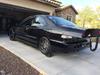
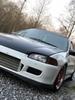
Ill be buying and building this engine part by part but I've done a couple builds in the past on stock internals 8k rmp b20b, and turbo b16a2. The b20 wasn't worth dynoing and my b16 made 225hp and 160ftlbs on 8psi. When I build it and Dyno it I'll come back and post my Dyno sheets but that'll be in 2 or 3 years.

Thread
Thread Starter
Forum
Replies
Last Post