


Dseries Block Notching


Thread Starter
Honda-Tech Member
Joined: May 2012
Posts: 57
Likes: 0
From: Ohio
 Dseries Block Notching
Hey guys I need to notch my block to fit bigger rods. A local performance shop told me how to do it but i would like to see some pics if you have some available please post. Thanx.
D16y8, YCP vitaras with P2P0 I Beam rods
D16y8, YCP vitaras with P2P0 I Beam rods
 Re: Dseries Block Notching
Try searching next time.
http://www.theoldone.com/articles/d_...building_tips/
http://www.theoldone.com/articles/d_...building_tips/
Thread Starter
Honda-Tech Member
Joined: May 2012
Posts: 57
Likes: 0
From: Ohio
Re: Dseries Block Notching
Try searching next time.
http://www.theoldone.com/articles/d_...building_tips/
http://www.theoldone.com/articles/d_...building_tips/

Who is Mr Robot?
iTrader: (2)
Joined: Jul 2004
Posts: 21,474
Likes: 10
From: ATL - Where the Pimps and Players dwell
Thread Starter
Honda-Tech Member
Joined: May 2012
Posts: 57
Likes: 0
From: Ohio
Re: Dseries Block Notching
ok guys i get it, maybe i could have searched more..... Or maybe what i had found was not all i was looking for. I will be sure to be more specific what i am exactly looking for next time. But no worries i found what i was looking for.
Trending Topics

Honda-Tech Member
Joined: Nov 2008
Posts: 3,379
Likes: 0
From: Birmingham, UK
Re: Dseries Block Notching

Thread Starter
Honda-Tech Member
Joined: May 2012
Posts: 57
Likes: 0
From: Ohio
Re: Dseries Block Notching
Well thanks for a respectable post, and thats what i was finding was people just hacking hunks of metal out of there block. I didnt want to do that i was trying to find good measurements to base my notching off of and do it properly not just do some hack job. I see others CNC'ing but no measurements givin.
Who is Mr Robot?
iTrader: (2)
Joined: Jul 2004
Posts: 21,474
Likes: 10
From: ATL - Where the Pimps and Players dwell
Re: Dseries Block Notching
Cnc'ing is a little over kill. A quicker and slightly cleaner way.to do it is take a Dremel tool with a carbide cutter head.
First figure out a rough but close amount to remove (you won't get it the first time) then take a sharpie or layout dye and coat each side of the sleeve with it. Then take a pick or an awl and mark where you want to cut. This way you have a semi permanent template.
Remove as much material as you marked from both sides.clean it up if it's rough then simply slide a piston onto a rod (no rings) hand tighten a rod to crank (fingers if possible)throw some oil on the mains then carefully lay the crank in the block.
This should give you a good idea of just how much you need to.remove
because if you just eyeball it and remove too much you can weaken/damage a sleeve or punch through the water jacket
First figure out a rough but close amount to remove (you won't get it the first time) then take a sharpie or layout dye and coat each side of the sleeve with it. Then take a pick or an awl and mark where you want to cut. This way you have a semi permanent template.
Remove as much material as you marked from both sides.clean it up if it's rough then simply slide a piston onto a rod (no rings) hand tighten a rod to crank (fingers if possible)throw some oil on the mains then carefully lay the crank in the block.
This should give you a good idea of just how much you need to.remove
because if you just eyeball it and remove too much you can weaken/damage a sleeve or punch through the water jacket
Thread Starter
Honda-Tech Member
Joined: May 2012
Posts: 57
Likes: 0
From: Ohio
Re: Dseries Block Notching
Cnc'ing is a little over kill. A quicker and slightly cleaner way.to do it is take a Dremel tool with a carbide cutter head.
First figure out a rough but close amount to remove (you won't get it the first time) then take a sharpie or layout dye and coat each side of the sleeve with it. Then take a pick or an awl and mark where you want to cut. This way you have a semi permanent template.
Remove as much material as you marked from both sides.clean it up if it's rough then simply slide a piston onto a rod (no rings) hand tighten a rod to crank (fingers if possible)throw some oil on the mains then carefully lay the crank in the block.
This should give you a good idea of just how much you need to.remove
because if you just eyeball it and remove too much you can weaken/damage a sleeve or punch through the water jacket
First figure out a rough but close amount to remove (you won't get it the first time) then take a sharpie or layout dye and coat each side of the sleeve with it. Then take a pick or an awl and mark where you want to cut. This way you have a semi permanent template.
Remove as much material as you marked from both sides.clean it up if it's rough then simply slide a piston onto a rod (no rings) hand tighten a rod to crank (fingers if possible)throw some oil on the mains then carefully lay the crank in the block.
This should give you a good idea of just how much you need to.remove
because if you just eyeball it and remove too much you can weaken/damage a sleeve or punch through the water jacket
Thread Starter
Honda-Tech Member
Joined: May 2012
Posts: 57
Likes: 0
From: Ohio
Re: Dseries Block Notching
To see my build click >>. https://honda-tech.com/forums/forced-induction-16/95-supercharged-hatch-project-3067275/
Who is Mr Robot?
iTrader: (2)
Joined: Jul 2004
Posts: 21,474
Likes: 10
From: ATL - Where the Pimps and Players dwell
Re: Dseries Block Notching
You can tape off the cylinder walls if you're that worried
i normally just coat the cylinders in a small mount of oil to give them surface protection.. Once you do the bulk of the material removal with the dremel take a small file and break all of the edges
this gives them a small raised edge to remove the rough high spots. It doesn't take a super steady hand, just be sure to make small even, controlled passes
it will take you a good long time to do it with a file.
Then blow out the cylinders, hit it with brake cleaner then take a lint free cloth, soak it in atf then wipe down the cylinder walls. The detergents in the atf get that last little bit of dirt and grease off of the cylinder walls
i normally just coat the cylinders in a small mount of oil to give them surface protection.. Once you do the bulk of the material removal with the dremel take a small file and break all of the edges
this gives them a small raised edge to remove the rough high spots. It doesn't take a super steady hand, just be sure to make small even, controlled passes
it will take you a good long time to do it with a file.
Then blow out the cylinders, hit it with brake cleaner then take a lint free cloth, soak it in atf then wipe down the cylinder walls. The detergents in the atf get that last little bit of dirt and grease off of the cylinder walls
Thread Starter
Honda-Tech Member
Joined: May 2012
Posts: 57
Likes: 0
From: Ohio
Re: Dseries Block Notching
You can tape off the cylinder walls if you're that worried
i normally just coat the cylinders in a small mount of oil to give them surface protection.. Once you do the bulk of the material removal with the dremel take a small file and break all of the edges
this gives them a small raised edge to remove the rough high spots. It doesn't take a super steady hand, just be sure to make small even, controlled passes
it will take you a good long time to do it with a file.
Then blow out the cylinders, hit it with brake cleaner then take a lint free cloth, soak it in atf then wipe down the cylinder walls. The detergents in the atf get that last little bit of dirt and grease off of the cylinder walls
i normally just coat the cylinders in a small mount of oil to give them surface protection.. Once you do the bulk of the material removal with the dremel take a small file and break all of the edges
this gives them a small raised edge to remove the rough high spots. It doesn't take a super steady hand, just be sure to make small even, controlled passes
it will take you a good long time to do it with a file.
Then blow out the cylinders, hit it with brake cleaner then take a lint free cloth, soak it in atf then wipe down the cylinder walls. The detergents in the atf get that last little bit of dirt and grease off of the cylinder walls

Honda-Tech Member

Joined: Feb 2003
Posts: 9,820
Likes: 12
From: schooling kids in ny, usa
Re: Dseries Block Notching
i used a dremel and didnt have any issues. i kept the rpm low and went a little bit at a time. clean it out religiously and it will be ok. i had to notch my girdle much more than i had to notch the block itself. left all my clearances at about 1/8" between the rod and anything it could hit. sorry i dont have pics it was 4 years ago already
Who is Mr Robot?
iTrader: (2)
Joined: Jul 2004
Posts: 21,474
Likes: 10
From: ATL - Where the Pimps and Players dwell
Re: Dseries Block Notching
Yea a lot of material has to be removed from the girdle. A bit more than the block. Just be careful because you can remove too much and hit the oil passages

Honda-Tech Member
Joined: May 2012
Posts: 99
Likes: 1
Re: Dseries Block Notching
Dremel quicker? Not so sure about that bud.
A sharp file owns a block if pressure is applied.
What you do is, rotate the crank with rod in place so the it hooks the sleeve.
Then you trace of the rod on the block and then file away
A sharp file owns a block if pressure is applied.
What you do is, rotate the crank with rod in place so the it hooks the sleeve.
Then you trace of the rod on the block and then file away
Who is Mr Robot?
iTrader: (2)
Joined: Jul 2004
Posts: 21,474
Likes: 10
From: ATL - Where the Pimps and Players dwell
Re: Dseries Block Notching
With the optional carbide metal bits you can buy its a lot quicker. I had to port and gasket match our ls7 oil pans dry sump passages. Tried first with high quality files... Took a fraction of the time condo it withe dremel and the proper bit
Thread Starter
Honda-Tech Member
Joined: May 2012
Posts: 57
Likes: 0
From: Ohio
Re: Dseries Block Notching
I will post pics I did the main portion with a file and finished up with a light abrasive grinding stone to take off all sharp edges so it won't cause cracks
Thread Starter
Honda-Tech Member
Joined: May 2012
Posts: 57
Likes: 0
From: Ohio
Re: Dseries Block Notching
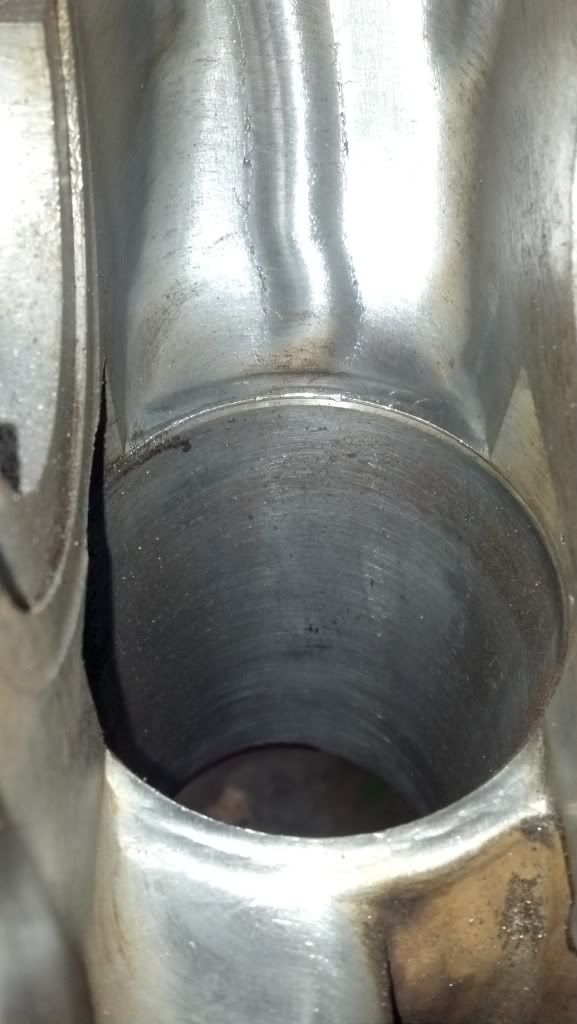
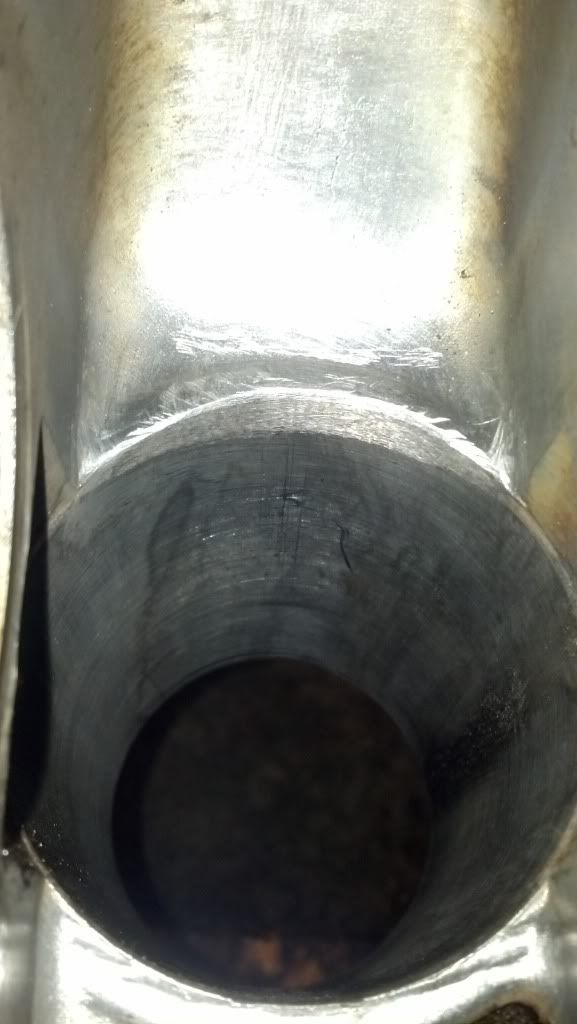
Here is a before and after. Everything turned out awesome I have roughly 55 thousands clearance. Didn't have to notch the crank girdle everything spins super smooth!
Who is Mr Robot?
iTrader: (2)
Joined: Jul 2004
Posts: 21,474
Likes: 10
From: ATL - Where the Pimps and Players dwell
Re: Dseries Block Notching
you didnt have to notch the girdle?
and thats all you had to notch? what rods are you running? almost every forged rod requires a notched girdle and significantly more material to be removed
and thats all you had to notch? what rods are you running? almost every forged rod requires a notched girdle and significantly more material to be removed


