


Welding Newb: ?'s on Tack Welding sheet metal for firewall holes. [ Pics included. ]


Thread Starter
Honda-Tech Member
Joined: Feb 2008
Posts: 832
Likes: 1
From: Chicago, IL
 Welding Newb: ?'s on Tack Welding sheet metal for firewall holes. [ Pics included. ]
I wanted the Welding Gurus to chime in on this one. I'm not really a newb when it comes to welding. I took a welding class this fall semester and had tried out stick welding, oxyfuel, and mig welding.
I got me a hands on a welder from my buddy, it's a flux core one not Gas powered with Argon but whatever I think this will do.
Here are a couple of shots what I wanted to weld close shut.
outside shot/engine bay.

interior side.
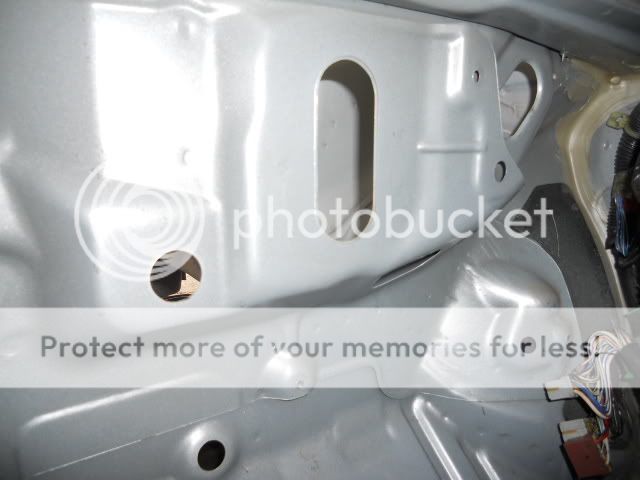
Since I'm going to use plugs for the 3 bigger almost oval shaped kinda looking holes, I only wanted to weld the one on the right shut(engine bay view) and smothen it out with bondo on the outside. Then repaint it over with a base coat.
Would the flux core welder do just fine ?
What Size sheet metal should I get ? 1/16" ? 3/16"
Here are a couple of shots of the welder at maximum amperage while I was practicing on a rotor this morning.

The other one was the big a** hole all the way on the passenger side underneath the cowl. I want to weld that one shut close on the interior side as well because I am afraid water will trap itself inside there and start leaking, and then maybe add some
seam sealer around the weld just to ensure a proper seal. Here is the picture of the hole I am talking about.


You can see it better from the interior side.
Before I start welding I know I have to sand down the area I have to weld. Which is going to be on the interior side. Now I was talking to a older journeyman at the shop from work who did a lot of welding and said to get this crimp flange tool or whatever
it's called, it's mainly used for body work when welding sheet metal over something. What it does it creates an offset so it sits the sheet metal over the area where you want to weld at flush, I just can't remember the name of it. Is this tool necessary for this type of project.
I got me a hands on a welder from my buddy, it's a flux core one not Gas powered with Argon but whatever I think this will do.
Here are a couple of shots what I wanted to weld close shut.
outside shot/engine bay.
interior side.
Since I'm going to use plugs for the 3 bigger almost oval shaped kinda looking holes, I only wanted to weld the one on the right shut(engine bay view) and smothen it out with bondo on the outside. Then repaint it over with a base coat.
Would the flux core welder do just fine ?
What Size sheet metal should I get ? 1/16" ? 3/16"
Here are a couple of shots of the welder at maximum amperage while I was practicing on a rotor this morning.
The other one was the big a** hole all the way on the passenger side underneath the cowl. I want to weld that one shut close on the interior side as well because I am afraid water will trap itself inside there and start leaking, and then maybe add some
seam sealer around the weld just to ensure a proper seal. Here is the picture of the hole I am talking about.
You can see it better from the interior side.
Before I start welding I know I have to sand down the area I have to weld. Which is going to be on the interior side. Now I was talking to a older journeyman at the shop from work who did a lot of welding and said to get this crimp flange tool or whatever
it's called, it's mainly used for body work when welding sheet metal over something. What it does it creates an offset so it sits the sheet metal over the area where you want to weld at flush, I just can't remember the name of it. Is this tool necessary for this type of project.

Honda-Tech Member
Joined: May 2009
Posts: 469
Likes: 1
Re: Welding Newb: ?'s on Tack Welding sheet metal for firewall holes. [ Pics included
there are several ways you can do this. The tool you are referring too will make a flange on your patch that will make it a bit easier for you to weld. If you have not done much sheet metal work I would recommend this way. you could also just cut a piece that fits into the hole and tack weld slowly all the way around it and then grind the weld back down. If you look at most of your body panels they will have the flange with several holes in it and then those holes are rosette welded to join the two panels. Either way just make sure to go slowly and keep the heat down to minimize warping. If you burn through the metal stop and take a break, and come back later. It can be frustrating at times so i would recommend getting some 22awg metal and practicing the types of welds you will be doing before actually welding on your car.
Thread Starter
Honda-Tech Member
Joined: Feb 2008
Posts: 832
Likes: 1
From: Chicago, IL
Re: Welding Newb: ?'s on Tack Welding sheet metal for firewall holes. [ Pics included
22awg metal ? is that like the strength of the sheet metal ?
And describe this rosette weld a little bit more in detail if you could. Thanks.
And describe this rosette weld a little bit more in detail if you could. Thanks.
Honda-Tech Member
Joined: May 2009
Posts: 469
Likes: 1
Re: Welding Newb: ?'s on Tack Welding sheet metal for firewall holes. [ Pics included
http://www.unc.edu/~rowlett/units/sc...heetmetal.html
http://www.mig-welding.co.uk/plug-weld.htm
Read some more on the welding website as well for some more information. The first link is a conversion chart for the metal thicknesses. You can look up the 22 awg thickness metal sheet on that webpage. Honda sheet metal is usually around that thickness so it will make it easier on you getting the same material to make your patch panels.
http://www.mig-welding.co.uk/plug-weld.htm
Read some more on the welding website as well for some more information. The first link is a conversion chart for the metal thicknesses. You can look up the 22 awg thickness metal sheet on that webpage. Honda sheet metal is usually around that thickness so it will make it easier on you getting the same material to make your patch panels.

Honda-Tech Member
Joined: Nov 2001
Posts: 8,651
Likes: 3
From: Dallas, Tejas
Re: Welding Newb: ?'s on Tack Welding sheet metal for firewall holes. [ Pics included
Do NOT use fluxcore for sheetmetal. Do NOT USE FLUXCORE FOR SHEETMETAL.
TRUST me, been there, done that. When I was first starting out I was thinking all these guys saying don't fluxcore for sheetmetal just didn't know what they were talking about, or just weren't patient enough, or didn't have good form etc. So I learned the hard way.
If you do not want to take my advice (and I would highly suggest you use a shielding gas), I would recommend welding a thick plate instead of sheetmetal into those panels.
Do like 1/8" or so (or whatever the next step smaller is, can't remember the gauge), and focus the weld to the 1/8" plate, not to the sheetmetal. That way the plate can absorb the heat instead of the sheetmetal. So basically you need to weld the plate to the sheetmetal, not the sheetmetal to the plate if that makes sense.
Do a series of small welds all around the thicker plate (focusing the heat/weld onto the plate, not onto your Honda sheetmetal). Weld, pause, Weld, pause, Weld, pause.
On each pause move your gun to the outside edge of the weld you just made. Through your helmet you'll weld again immediately when you see the orange puddle cool down. So basically as soon as you see the orange weld cool, move to the edge of it and weld, then again etc. You'll get a rhythm going.
If you try to just weld all the way around the perimeter it will get too hot too fast and I absolutely promise you that you'll blow a huge hole in the Honda sheetmetal.
TRUST me, been there, done that. When I was first starting out I was thinking all these guys saying don't fluxcore for sheetmetal just didn't know what they were talking about, or just weren't patient enough, or didn't have good form etc. So I learned the hard way.
If you do not want to take my advice (and I would highly suggest you use a shielding gas), I would recommend welding a thick plate instead of sheetmetal into those panels.
Do like 1/8" or so (or whatever the next step smaller is, can't remember the gauge), and focus the weld to the 1/8" plate, not to the sheetmetal. That way the plate can absorb the heat instead of the sheetmetal. So basically you need to weld the plate to the sheetmetal, not the sheetmetal to the plate if that makes sense.
Do a series of small welds all around the thicker plate (focusing the heat/weld onto the plate, not onto your Honda sheetmetal). Weld, pause, Weld, pause, Weld, pause.
On each pause move your gun to the outside edge of the weld you just made. Through your helmet you'll weld again immediately when you see the orange puddle cool down. So basically as soon as you see the orange weld cool, move to the edge of it and weld, then again etc. You'll get a rhythm going.
If you try to just weld all the way around the perimeter it will get too hot too fast and I absolutely promise you that you'll blow a huge hole in the Honda sheetmetal.

OG Fabricator
Joined: Feb 2005
Posts: 1,864
Likes: 1
From: Burlington, Ont., Canada
Re: Welding Newb: ?'s on Tack Welding sheet metal for firewall holes. [ Pics included
try using a piece of copper behind the spot you are welding if you are having trouble burning holes. the metal won't stick to the copper, so you can push it right against the sheet to help absorb some of the heat and prevent holes. just be aware it is going to get toasty.
Thread Starter
Honda-Tech Member
Joined: Feb 2008
Posts: 832
Likes: 1
From: Chicago, IL
Re: Welding Newb: ?'s on Tack Welding sheet metal for firewall holes. [ Pics included
Thanks a lot guys for the advice. The pictures for my welding is in my build thread in appearance and build threads on the main page.
I think I did okay.
I think I did okay.
Trending Topics

Honda-Tech Member
Joined: Sep 2010
Posts: 219
Likes: 0
From: Wisco
Re: Welding Newb: ?'s on Tack Welding sheet metal for firewall holes. [ Pics included
nice, Ill fly over there tomorrow. what time will you be picking me up from the airport? have a panda ready for me, i never go to china to buy welding supplies unless im holding a panda.

B*a*n*n*e*d
Joined: Dec 2009
Posts: 1,371
Likes: 1
Re: Welding Newb: ?'s on Tack Welding sheet metal for firewall holes. [ Pics included
FLuxcore works just fine for sheet metal if you go slow and do small tacks criss crossed and Weir posted a good technique, Ive always used brass behind but copper would work just as good I suppose

Honda-Tech Member
Joined: Dec 2004
Posts: 175
Likes: 0
From: Chicago, IL
Re: Welding Newb: ?'s on Tack Welding sheet metal for firewall holes. [ Pics included
Cut the piece to fit in the hole with as little gap as possible around the sides. It'll take some trial and error to get it right. Use a few magnets to hold it in place and flush, and tack weld it.
Then, as stated above, use a copper or brass block behind the panel if you can...it'll prevent burning holes or ugly pieces of wire sticking through.
Then, as stated above, use a copper or brass block behind the panel if you can...it'll prevent burning holes or ugly pieces of wire sticking through.

Thread
Thread Starter
Forum
Replies
Last Post
