


primering my Car..


Thread Starter
Junior Member
Joined: Aug 2006
Posts: 691
Likes: 0
 primering my Car..
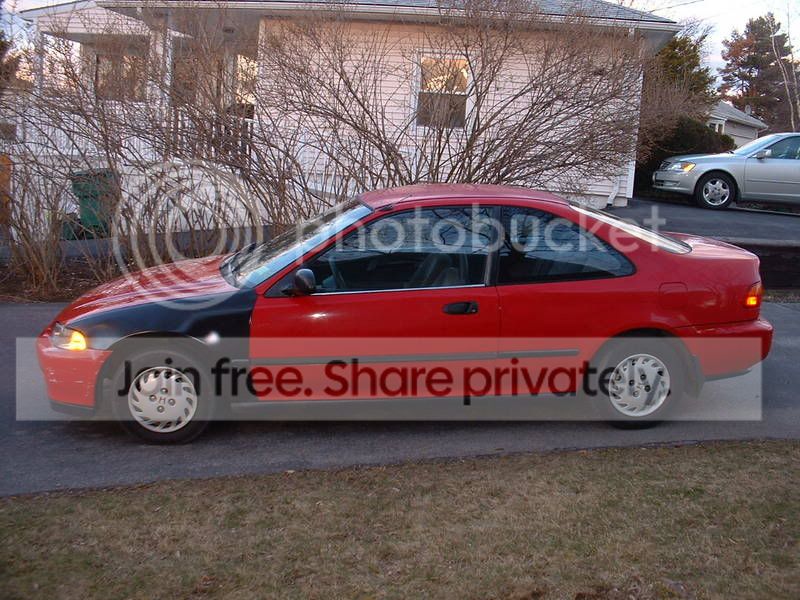
I have a 88' civic hatch. and it has slight body dmg here and there and i want to primer it and start to try and fix the body dmg..
SO whats the fastest way to primer my car?
what grade of sand paper is best to use?
what type of primer?? graphite black? i think thats the color i see most car gets primered.. i dont want it that hidious grey color. no no no
well any help will be much appreciated.
 Brandon
SO whats the fastest way to primer my car?
what grade of sand paper is best to use?
what type of primer?? graphite black? i think thats the color i see most car gets primered.. i dont want it that hidious grey color. no no no
well any help will be much appreciated.
Brandon

Thread Starter
Junior Member
Joined: Aug 2006
Posts: 691
Likes: 0
Re: (kiddcarbuff)
<TABLE WIDTH="90%" CELLSPACING=0 CELLPADDING=0 ALIGN=CENTER><TR><TD>Quote, originally posted by kiddcarbuff »</TD></TR><TR><TD CLASS="quote">mask it off.
use 80 grit 200 grit 400 800 then CLEAN w/ wax and grease remover then prime it. if u are rattle canning it then try to find sometihng with good coverage and can act as a sealer</TD></TR></TABLE>
Yea i was going to just use can spray.
anyone know of good spray Primer spray paint that will come out like a flat black?
use 80 grit 200 grit 400 800 then CLEAN w/ wax and grease remover then prime it. if u are rattle canning it then try to find sometihng with good coverage and can act as a sealer</TD></TR></TABLE>
Yea i was going to just use can spray.
anyone know of good spray Primer spray paint that will come out like a flat black?

Trending Topics

Honda-Tech Member
Joined: Mar 2004
Posts: 722
Likes: 0
From: Williamston, SC, USA
Re: (chris c)
<TABLE WIDTH="90%" CELLSPACING=0 CELLPADDING=0 ALIGN=CENTER><TR><TD>Quote, originally posted by chris c »</TD></TR><TR><TD CLASS="quote">80 grit...lol
might as well sand w/ a cheese grater...
</TD></TR></TABLE>
I agree but you could at least posted something helpful, check the link below, there should be some information that will help.
https://honda-tech.com/zero...age=1
might as well sand w/ a cheese grater...
</TD></TR></TABLE>
I agree but you could at least posted something helpful, check the link below, there should be some information that will help.
https://honda-tech.com/zero...age=1

Trial User
Joined: Mar 2007
Posts: 109
Likes: 0
From: melbourne, fl, unitedstates
Re: primering my Car.. (sirhavok)
heres something helpful 80 grit is way too coars, especially for a spray can primer. you would have to use a high build primer to fill the scratches. and remember these spray can primers are laquer wich means they they are **** thin, dont last long, and dont react well with todays urathane paint.

Honda-Tech Member
Joined: Jan 2005
Posts: 9,813
Likes: 0
From: Look hard, VA, United States
Re: (kiddcarbuff)
<TABLE WIDTH="90%" CELLSPACING=0 CELLPADDING=0 ALIGN=CENTER><TR><TD>Quote, originally posted by kiddcarbuff »</TD></TR><TR><TD CLASS="quote">i ALWAYS use 80 when srtipping paint then work up to 800 then lay primer. idk. its how my dad did it so i picked that up as well.</TD></TR></TABLE>Ouch i always start with 120 but people do it diffrent ways and thats all that matters is the way you feel best using

Honda-Tech Member
Joined: Nov 2004
Posts: 400
Likes: 0
From: biberach
Re: (John M)
using 80 or 120 on good paint makes more work than one needs. if you have good paint w/ good adheasion why take it off? seriously, 320 is all you need. take the shine off so you have a 'mechanical bite' for the fresh material. i'd go 180 or 220 on the areas where i'd be using filler.

Honda-Tech Member
Joined: Feb 2005
Posts: 424
Likes: 0
From: USA
Re: primering my Car.. (sirhavok)
<TABLE WIDTH="90%" CELLSPACING=0 CELLPADDING=0 ALIGN=CENTER><TR><TD>Quote, originally posted by sirhavok »</TD></TR><TR><TD CLASS="quote">I have a 88' civic hatch. and it has slight body dmg here and there and i want to primer it and start to try and fix the body dmg..
SO whats the fastest way to primer my car?
what grade of sand paper is best to use?
what type of primer?? graphite black? i think thats the color i see most car gets primered.. i dont want it that hidious grey color. no no no
well any help will be much appreciated.
Brandon </TD></TR></TABLE>
The primer color is associated with the color that the person is going to put on their car. For instance, "red" is a bright color so you don't want to darken the color so a white primer or cream color primer is applied so it won't darken the color contrast. Also the color of the primer is to blend in when you have chips or scratches on the car. You don't want to see white spots on a blue car right?
SO whats the fastest way to primer my car?
what grade of sand paper is best to use?
what type of primer?? graphite black? i think thats the color i see most car gets primered.. i dont want it that hidious grey color. no no no
well any help will be much appreciated.
Brandon </TD></TR></TABLE>The primer color is associated with the color that the person is going to put on their car. For instance, "red" is a bright color so you don't want to darken the color so a white primer or cream color primer is applied so it won't darken the color contrast. Also the color of the primer is to blend in when you have chips or scratches on the car. You don't want to see white spots on a blue car right?

Honda-Tech Member
Joined: Nov 2005
Posts: 1,421
Likes: 0
From: Wouldnt you like to know
Re: (kiddcarbuff)
<TABLE WIDTH="90%" CELLSPACING=0 CELLPADDING=0 ALIGN=CENTER><TR><TD>Quote, originally posted by kiddcarbuff »</TD></TR><TR><TD CLASS="quote">i ALWAYS use 80 when srtipping paint then work up to 800 then lay primer. idk. its how my dad did it so i picked that up as well.</TD></TR></TABLE>
woah. 800 is too fine to spray primer over. Especially if its a epoxy primer. For primers I spray over 180- 320 sometimes. For spraying sealer or base, usually sand to 600. And for blending I sand 600-800 wet and with a gold scuff pad....i would go on more about the primer color, but im already late so ill do it later.
woah. 800 is too fine to spray primer over. Especially if its a epoxy primer. For primers I spray over 180- 320 sometimes. For spraying sealer or base, usually sand to 600. And for blending I sand 600-800 wet and with a gold scuff pad....i would go on more about the primer color, but im already late so ill do it later.

Honda-Tech Member
Joined: Jun 2004
Posts: 243
Likes: 0
From: GAP, PA, United States
Re: (swappedcx)
i would recommend buying something like ppg's dp50lf primer sand the car down with 320 and prime it, it is made to go over bare metal and paint so it will give you a good foundation for your paint job.

Honda-Tech Member
Joined: Oct 2002
Posts: 400
Likes: 0
Re: (kiddcarbuff)
<TABLE WIDTH="90%" CELLSPACING=0 CELLPADDING=0 ALIGN=CENTER><TR><TD>Quote, originally posted by kiddcarbuff »</TD></TR><TR><TD CLASS="quote">mask it off.
use 80 grit 200 grit 400 800 then CLEAN w/ wax and grease remover then prime it. if u are rattle canning it then try to find sometihng with good coverage and can act as a sealer</TD></TR></TABLE>
Anyone got any recommendations for a good primer/sealer? Tried looking around a bit and didnt really see anything. Went to the paint store, didnt specifcally ask for sealer then but they recommended Evercoat G2 primer even tho I told them I had some rust spots and needed to sand down to metal in those spots. That will be fine over the sanded old paint as well right? Need a dark coating for the base coat.
Thanks!
Janos
use 80 grit 200 grit 400 800 then CLEAN w/ wax and grease remover then prime it. if u are rattle canning it then try to find sometihng with good coverage and can act as a sealer</TD></TR></TABLE>
Anyone got any recommendations for a good primer/sealer? Tried looking around a bit and didnt really see anything. Went to the paint store, didnt specifcally ask for sealer then but they recommended Evercoat G2 primer even tho I told them I had some rust spots and needed to sand down to metal in those spots. That will be fine over the sanded old paint as well right? Need a dark coating for the base coat.
Thanks!
Janos

Honda-Tech Member
Joined: Dec 2003
Posts: 689
Likes: 0
Re: (Janos Lin)
RM Diamont DP26 Primer/sealer, its tintable as a sealer. If you prime and prep it nice without any break through to bare metal, filler, ect, I would recommend a black ground coat instead of sealing over a primed surface(for any dark color). Also be aware this thread doesn't contain the best advice, I usually prime over 320 sometimes 500 for a small repair, sensitive substrate/ material.
Honda-Tech Member
Joined: Oct 2002
Posts: 400
Likes: 0
Re: (powerflow)
<TABLE WIDTH="90%" CELLSPACING=0 CELLPADDING=0 ALIGN=CENTER><TR><TD>Quote, originally posted by powerflow »</TD></TR><TR><TD CLASS="quote">RM Diamont DP26 Primer/sealer, its tintable as a sealer. If you prime and prep it nice without any break through to bare metal, filler, ect, I would recommend a black ground coat instead of sealing over a primed surface(for any dark color). Also be aware this thread doesn't contain the best advice, I usually prime over 320 sometimes 500 for a small repair, sensitive substrate/ material. </TD></TR></TABLE>
So you're saying that I shouldn't put sealer over primer? I do need to go down to metal in some places to remove minor rust. For those I'm assuming I need to use a etching primer and then primer/sealer over that because I dont want to have any bleed through from the factory paint.
Janos
</TD></TR></TABLE>So you're saying that I shouldn't put sealer over primer? I do need to go down to metal in some places to remove minor rust. For those I'm assuming I need to use a etching primer and then primer/sealer over that because I dont want to have any bleed through from the factory paint.
Janos

Joined: Mar 2007
Posts: 9
Likes: 0
From: dover, de, usa
Re: (Janos Lin)
hmmmmmm
i think that description is a little misleading
if you are starting off with a straight car and good paint
you shouldn't start with 80 grit
and you shouldnt sand new parts anymore then necessary
Bare metal is always the biggest culpret to popping and rust
when you are working at home and not in a paint booth
if you have original paint without rust then just scuff it and prime it
you should start with 200 black wet sand paper
and then apply the primer
and then wet sand the primer surfacer with 400
use wax and grease remover
then apply at least 2 full coats of your color paint
and clear if needed (if its not a single stage)
then if you are crazy
wet sand out the orange peal in the clear
with 1000 grit and use swirl remover compound polish to get a nice shine
There are a few different types of Primer
there is etching rust inhibitor primer that can be used on bare metal
Also if you have bare metal you must use Metal Prep Liquid on it within an hour of it being bare or you will need to re sand and then apply metal prep and then primer
there is Primer Surfacer
this is for filling small chips and allowing you to sand to a level surface
there is primer sealer
which is good if you have different paint types and you need to have a
impenetrable surface between
It is used when you paint lacquer over enamel paint or you get wrinkles but
it can also be used for other reasons
there is also some crazy clear primer out now
i think its really just clear
there is also
Flexible primer for painting bumpers and plastic parts
and you can add Flex agent liquid to primer and topcoats
and there is special primer for aluminum
and of all these types there is enamel and lacquer based primers
I like the lacquer myself
those primer types should get you through most types of applications
Oh also
paint in a spray can is garbage
use it to paint your mailbox
or your engine
i think that description is a little misleading
if you are starting off with a straight car and good paint
you shouldn't start with 80 grit
and you shouldnt sand new parts anymore then necessary
Bare metal is always the biggest culpret to popping and rust
when you are working at home and not in a paint booth
if you have original paint without rust then just scuff it and prime it
you should start with 200 black wet sand paper
and then apply the primer
and then wet sand the primer surfacer with 400
use wax and grease remover
then apply at least 2 full coats of your color paint
and clear if needed (if its not a single stage)
then if you are crazy
wet sand out the orange peal in the clear
with 1000 grit and use swirl remover compound polish to get a nice shine
There are a few different types of Primer
there is etching rust inhibitor primer that can be used on bare metal
Also if you have bare metal you must use Metal Prep Liquid on it within an hour of it being bare or you will need to re sand and then apply metal prep and then primer
there is Primer Surfacer
this is for filling small chips and allowing you to sand to a level surface
there is primer sealer
which is good if you have different paint types and you need to have a
impenetrable surface between
It is used when you paint lacquer over enamel paint or you get wrinkles but
it can also be used for other reasons
there is also some crazy clear primer out now
i think its really just clear
there is also
Flexible primer for painting bumpers and plastic parts
and you can add Flex agent liquid to primer and topcoats
and there is special primer for aluminum
and of all these types there is enamel and lacquer based primers
I like the lacquer myself
those primer types should get you through most types of applications
Oh also
paint in a spray can is garbage
use it to paint your mailbox
or your engine
Honda-Tech Member
Joined: Dec 2003
Posts: 689
Likes: 0
Re: (Janos Lin)
<TABLE WIDTH="90%" CELLSPACING=0 CELLPADDING=0 ALIGN=CENTER><TR><TD>Quote, originally posted by Janos Lin »</TD></TR><TR><TD CLASS="quote">
So you're saying that I shouldn't put sealer over primer? I do need to go down to metal in some places to remove minor rust. For those I'm assuming I need to use a etching primer and then primer/sealer over that because I dont want to have any bleed through from the factory paint.
Janos</TD></TR></TABLE>
I'm not saying what you shouldn't do at all, I just made a recommendation. Quality automotive primer is suitable and designed to be applied over bare metal, filler, ect. A damaged repair area can be basically metal worked, filled/ glazed, primed, prepped and ready for base coat.
So you're saying that I shouldn't put sealer over primer? I do need to go down to metal in some places to remove minor rust. For those I'm assuming I need to use a etching primer and then primer/sealer over that because I dont want to have any bleed through from the factory paint.
Janos</TD></TR></TABLE>
I'm not saying what you shouldn't do at all, I just made a recommendation. Quality automotive primer is suitable and designed to be applied over bare metal, filler, ect. A damaged repair area can be basically metal worked, filled/ glazed, primed, prepped and ready for base coat.

Thread
Thread Starter
Forum
Replies
Last Post
