


Engine builders... check out my used internals


Thread Starter
Honda-Tech Member
Joined: Jan 2002
Posts: 1,822
Likes: 1
From: Colorado Springs, CO, USA
 Engine builders... check out my used internals
First let me tell the story of this motor.
GSR 81mm benson sleeves
standard ACL bearings
full-race/manley rods
CP pistons 9:1
LS crank, GSR head
This motor has been pulling 10's in my SFWD car down the 1/4 for 2 years (probably mid 550whp range on average), all assembled in my garage. I only used plastigauge to check clearances. I didn't stretch the rod bolts, I only torqued them.
The story:
just before I did the teardown, I had a photoshoot with the car. Long story short, the car had a lot of fuel in the oil and was driven for ~10 miles that way. I checked the oil when the car got home (that's what I get for letting my wife drive it) and it was 3 quarts high (from the gas in the oil). I changed the oil, warmed up the car, and changed the oil again. There were enough small shavings on the magnetic drainplug to be concerned (not a ton but enough for me to want to check out the bearings). I drove the car around 20 miles after these 2 oil changes (no boost).
The results are this teardown:


My thoughts: the splotchyness on the rod bearings arefrom the gas in the oil causing a lack of proper lubrication.
I'm wondering if the wear on the mains and especially the thrust washers are indicating a clearance problem. Crank end-play off a bit?
I can't feel any problems in the inside of the rod (where the bearing sits) so I'm hoping a simple hone of the rods can take care of this one.
I can feel a little drag with my fingernail of one cylinder, but I'm planning on going bigger bore this time anyway. I don't know what caused that though; a tight cylinder-to-wall clearance perhaps?
GSR 81mm benson sleeves
standard ACL bearings
full-race/manley rods
CP pistons 9:1
LS crank, GSR head
This motor has been pulling 10's in my SFWD car down the 1/4 for 2 years (probably mid 550whp range on average), all assembled in my garage. I only used plastigauge to check clearances. I didn't stretch the rod bolts, I only torqued them.
The story:
just before I did the teardown, I had a photoshoot with the car. Long story short, the car had a lot of fuel in the oil and was driven for ~10 miles that way. I checked the oil when the car got home (that's what I get for letting my wife drive it) and it was 3 quarts high (from the gas in the oil). I changed the oil, warmed up the car, and changed the oil again. There were enough small shavings on the magnetic drainplug to be concerned (not a ton but enough for me to want to check out the bearings). I drove the car around 20 miles after these 2 oil changes (no boost).
The results are this teardown:
My thoughts: the splotchyness on the rod bearings arefrom the gas in the oil causing a lack of proper lubrication.
I'm wondering if the wear on the mains and especially the thrust washers are indicating a clearance problem. Crank end-play off a bit?
I can't feel any problems in the inside of the rod (where the bearing sits) so I'm hoping a simple hone of the rods can take care of this one.
I can feel a little drag with my fingernail of one cylinder, but I'm planning on going bigger bore this time anyway. I don't know what caused that though; a tight cylinder-to-wall clearance perhaps?


Honda-Tech Member
Joined: Aug 2003
Posts: 4,103
Likes: 1
From: TDCperformance.net
Re: Engine builders... check out my used internals (SOHCD16y8)
<TABLE WIDTH="90%" CELLSPACING=0 CELLPADDING=0 ALIGN=CENTER><TR><TD>Quote, originally posted by SOHCD16y8 »</TD></TR><TR><TD CLASS="quote">How did so much fuel get into the oil?</TD></TR></TABLE>
thats my question, i mean yes we all run pretty rich on our cars, but that is some seriously rich conditions over a long period of time to do that. and i know you said it was 2 years old, maybe that has a bit to do with it, but that would usually mean, low piston to wall clearance and tiny ring gap to let that much fuel by them.
i think the spottyness is from excessive heat which would be right from the oil being broke down so severely.
and you do have a definitive mark on those thrust as well, i dont know it seems like as from racing and using the motor it just developed play, and overtime with a tiny bit of tolerance off at each point, it may have just been wear on the parts.
just my useless 2 cents tho
thats my question, i mean yes we all run pretty rich on our cars, but that is some seriously rich conditions over a long period of time to do that. and i know you said it was 2 years old, maybe that has a bit to do with it, but that would usually mean, low piston to wall clearance and tiny ring gap to let that much fuel by them.
i think the spottyness is from excessive heat which would be right from the oil being broke down so severely.
and you do have a definitive mark on those thrust as well, i dont know it seems like as from racing and using the motor it just developed play, and overtime with a tiny bit of tolerance off at each point, it may have just been wear on the parts.
just my useless 2 cents tho

Honda-Tech Member
Joined: Jun 2004
Posts: 1,701
Likes: 0
From: boostin 18psi, MD
Re: Engine builders... check out my used internals (servion)
<TABLE WIDTH="90%" CELLSPACING=0 CELLPADDING=0 ALIGN=CENTER><TR><TD>Quote, originally posted by servion »</TD></TR><TR><TD CLASS="quote">This motor has been pulling 10's in my SFWD car down the 1/4 for 2 years (probably mid 550whp range on average)</TD></TR></TABLE>
10's? 2 years?
bump for answers
10's? 2 years?
bump for answers
Thread Starter
Honda-Tech Member
Joined: Jan 2002
Posts: 1,822
Likes: 1
From: Colorado Springs, CO, USA
Re: Engine builders... check out my used internals (99Hybrid_Hatch)
There was at least 3 quarts of fuel in the oil... its a long story, but the engine was severely flooded and then the fuel simply moved past the rings (thanks to gravity while sitting for 2 hours) and into the oil while it sat.
<TABLE WIDTH="90%" CELLSPACING=0 CELLPADDING=0 ALIGN=CENTER><TR><TD>Quote, originally posted by 99Hybrid_Hatch »</TD></TR><TR><TD CLASS="quote">those are ACL's huh?
if so thats the "flash plating" moving..</TD></TR></TABLE>
Can you elaborte on that?
<TABLE WIDTH="90%" CELLSPACING=0 CELLPADDING=0 ALIGN=CENTER><TR><TD>Quote, originally posted by 99Hybrid_Hatch »</TD></TR><TR><TD CLASS="quote">those are ACL's huh?
if so thats the "flash plating" moving..</TD></TR></TABLE>
Can you elaborte on that?

Honda-Tech Member
Joined: Mar 2003
Posts: 1,928
Likes: 0
From: Bakersfield, CA
Re: Engine builders... check out my used internals (servion)
standard ACL's are known for the flash plating moving (or as acl calls it..migrating) and wont hurt anything aslong as it doesnt move big pieces off into the oil passages..
Trending Topics
Thread Starter
Honda-Tech Member
Joined: Jan 2002
Posts: 1,822
Likes: 1
From: Colorado Springs, CO, USA
I'm planning on running honda bearings this time to allow me to change sizes because I think I'm going to need it this time out... I just hope it doesn't need a linebore.


Honda-Tech Member
Joined: May 2001
Posts: 7,190
Likes: 0
From: Tallahassee, FL, US
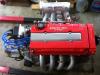
The wear is definitely due to the fuel, wow 3qts is amazing. I'm sure that killed the cyl walls and caused the lack of oiling. However, these teardown pics show another example of why I REALLY dislike ACL bearings.
Honda-Tech Member

Joined: Apr 2003
Posts: 6,919
Likes: 5
From: In the garage
Re: (Jared)
<TABLE WIDTH="90%" CELLSPACING=0 CELLPADDING=0 ALIGN=CENTER><TR><TD>Quote, originally posted by Jared »</TD></TR><TR><TD CLASS="quote">The wear is definitely due to the fuel, wow 3qts is amazing. I'm sure that killed the cyl walls and caused the lack of oiling. However, these teardown pics show another example of why I REALLY dislike ACL bearings.</TD></TR></TABLE>
Everyone is always quick to point the finger in the direction of ACL bearings. Couldn't have had anything to do with washing the oil out with a ton of fuel or anything... Its clearly the fault of the bearings, 100%... right?
Everyone is always quick to point the finger in the direction of ACL bearings. Couldn't have had anything to do with washing the oil out with a ton of fuel or anything... Its clearly the fault of the bearings, 100%... right?
Honda-Tech Member
Joined: May 2001
Posts: 7,190
Likes: 0
From: Tallahassee, FL, US
Re: (Hybrid93Eg)
<TABLE WIDTH="90%" CELLSPACING=0 CELLPADDING=0 ALIGN=CENTER><TR><TD>Quote, originally posted by Hybrid93Eg »</TD></TR><TR><TD CLASS="quote">
Everyone is always quick to point the finger in the direction of ACL bearings. Couldn't have had anything to do with washing the oil out with a ton of fuel or anything... Its clearly the fault of the bearings, 100%... right? </TD></TR></TABLE>
Obviously you didn't read my entire post. I did NOT blame the bearings for this failure. I'm positive that the fuel caused the problem, and actually amazed at how he got 3qts into the oil. The wear is obvioulsy lack of lubrication due to the fuel contaminated oil. My point about the bearings is that this is not the first and won't be the last ACL bearing that I see that looks like that. I've seen engines with perfect oiling and assembly come apart and have the coating coming off the ACL bearing. It's not something I like to see on a tear down, because it means you've gotta pull everything down and find out where that **** went, especiallly if your intent was originally a rering and bearing.
Everyone is always quick to point the finger in the direction of ACL bearings. Couldn't have had anything to do with washing the oil out with a ton of fuel or anything... Its clearly the fault of the bearings, 100%... right? </TD></TR></TABLE>
Obviously you didn't read my entire post. I did NOT blame the bearings for this failure. I'm positive that the fuel caused the problem, and actually amazed at how he got 3qts into the oil. The wear is obvioulsy lack of lubrication due to the fuel contaminated oil. My point about the bearings is that this is not the first and won't be the last ACL bearing that I see that looks like that. I've seen engines with perfect oiling and assembly come apart and have the coating coming off the ACL bearing. It's not something I like to see on a tear down, because it means you've gotta pull everything down and find out where that **** went, especiallly if your intent was originally a rering and bearing.
Honda-Tech Member
Joined: Apr 2003
Posts: 6,919
Likes: 5
From: In the garage
Re: (Jared)
<TABLE WIDTH="90%" CELLSPACING=0 CELLPADDING=0 ALIGN=CENTER><TR><TD>Quote, originally posted by Jared »</TD></TR><TR><TD CLASS="quote">
Obviously you didn't read my entire post. I did NOT blame the bearings for this failure. I'm positive that the fuel caused the problem, and actually amazed at how he got 3qts into the oil. The wear is obvioulsy lack of lubrication due to the fuel contaminated oil. My point about the bearings is that this is not the first and won't be the last ACL bearing that I see that looks like that. I've seen engines with perfect oiling and assembly come apart and have the coating coming off the ACL bearing. It's not something I like to see on a tear down, because it means you've gotta pull everything down and find out where that **** went, especiallly if your intent was originally a rering and bearing. </TD></TR></TABLE>
I've used the ACLS on many engines (6+) that I have built and never had a problem... granted only about 3 of them were torn apart at later times, I have yet to have any issues with these bearings. I hear lots of people complain about them, but have yet to have any personal negative experiences from them to this day.
Obviously you didn't read my entire post. I did NOT blame the bearings for this failure. I'm positive that the fuel caused the problem, and actually amazed at how he got 3qts into the oil. The wear is obvioulsy lack of lubrication due to the fuel contaminated oil. My point about the bearings is that this is not the first and won't be the last ACL bearing that I see that looks like that. I've seen engines with perfect oiling and assembly come apart and have the coating coming off the ACL bearing. It's not something I like to see on a tear down, because it means you've gotta pull everything down and find out where that **** went, especiallly if your intent was originally a rering and bearing. </TD></TR></TABLE>
I've used the ACLS on many engines (6+) that I have built and never had a problem... granted only about 3 of them were torn apart at later times, I have yet to have any issues with these bearings. I hear lots of people complain about them, but have yet to have any personal negative experiences from them to this day.


Honda-Tech Member
Joined: Apr 2002
Posts: 4,834
Likes: 1
From: OH
those look like typical wear of the ACL;s
mines looked like that on 3 mains, and other 2 spun slightly
killed my rod bearing
me no like ACL's
i go with OEM Honda ones
BTW, u seriously got problems if 3 qts of gas got into the oil
u must be dumping streams of gas (not mist) into the cylinders for it to go thru the rings and accumulate into the pan
mines looked like that on 3 mains, and other 2 spun slightly
killed my rod bearing
me no like ACL's
i go with OEM Honda ones
BTW, u seriously got problems if 3 qts of gas got into the oil
u must be dumping streams of gas (not mist) into the cylinders for it to go thru the rings and accumulate into the pan
Thread Starter
Honda-Tech Member
Joined: Jan 2002
Posts: 1,822
Likes: 1
From: Colorado Springs, CO, USA
Since everyone seems to be concerned, I'll explain the problem. I stated that it was due to a long story... well here goes. I had to work, but I needed to get the car detailed before a photoshoot so I had my wife drive it to a sponsor's detail shop and then to get some different stickers cut. Well, she had it in reverse and stalled it. With 1000cc injectors on my AEM 30-1000 box, I think I have a bug with my box... sometimes, if I leave the key in the on position but the car is not running, after a couple minutes of sitting this way, the AEM will hold all of the injectors open.
So, this happened on my wife when she was trying to restart it after stalling it (it was her first time driving a twin-plate to her defense ). She left it in the on position to go get my buddy (who owns the shop that she was still in front of). Well, he comes out and tries to crank it, and it stops cranking.
Once the spark plugs are pulled and the engine is cranked again, fuel shoots up 15+ feet in the air out of the cylinders. Well, probably 2 hours have passed before the fuel was expelled from the cylinders. (The reason it wouldn't crank before the spark plugs were removed were due to all the fuel in the cylinders causing a "hydrolocked" condition: i.e. the starter couldn't compress all the fuel in the cylinders.)
So,when the car gets home, a couple days later I decide to check everything out and find out that the oil was reading 3 quarts high and it smelt like gas :/
So, cliffs, it was due to a problem with my AEM + my wife driving the car without me and not knowing any better. The car has been tuned perfectly, I have been running the same motor high 10's last year and low 10's this year with no problems... I never even took the head off in 2 years. Even after this gas problem I did a compression test and got 174psi in all cylinders (keep in mind I'm 9:1 at 6000 feet elevation). I defeinitely got my money's worth out of this motor, and I still may have gotten a 3rd season out of it if this hadn't happened
So, this happened on my wife when she was trying to restart it after stalling it (it was her first time driving a twin-plate to her defense
). She left it in the on position to go get my buddy (who owns the shop that she was still in front of). Well, he comes out and tries to crank it, and it stops cranking.Once the spark plugs are pulled and the engine is cranked again, fuel shoots up 15+ feet in the air out of the cylinders. Well, probably 2 hours have passed before the fuel was expelled from the cylinders. (The reason it wouldn't crank before the spark plugs were removed were due to all the fuel in the cylinders causing a "hydrolocked" condition: i.e. the starter couldn't compress all the fuel in the cylinders.)
So,when the car gets home, a couple days later I decide to check everything out and find out that the oil was reading 3 quarts high and it smelt like gas :/
So, cliffs, it was due to a problem with my AEM + my wife driving the car without me and not knowing any better. The car has been tuned perfectly, I have been running the same motor high 10's last year and low 10's this year with no problems... I never even took the head off in 2 years. Even after this gas problem I did a compression test and got 174psi in all cylinders (keep in mind I'm 9:1 at 6000 feet elevation). I defeinitely got my money's worth out of this motor, and I still may have gotten a 3rd season out of it if this hadn't happened

Thread
Thread Starter
Forum
Replies
Last Post
