


Resistor on Kill Switch


Thread Starter
Member
Joined: Dec 2001
Posts: 1,541
Likes: 0
From: Edgewater, Maryland, USA
 Resistor on Kill Switch
Alright, I just installed a kill switch on the CRX. It's one of those nifty ones like this:
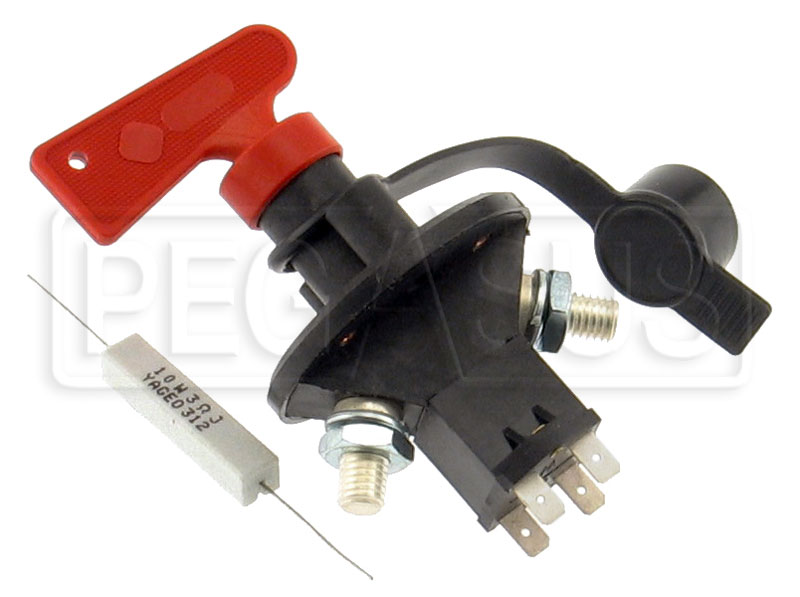
I installed the resistor on the "W" side of the kill switch. It's the one that's normally a closed circuit.
I hooked everything up today and tested it. I noticed that as soon as I kill the power with the switch the resistor gets extremely hot.
Is that normal? What's the dilly?
AJ
I installed the resistor on the "W" side of the kill switch. It's the one that's normally a closed circuit.
I hooked everything up today and tested it. I noticed that as soon as I kill the power with the switch the resistor gets extremely hot.
Is that normal? What's the dilly?
AJ

Senior Member
Joined: Jun 2004
Posts: 10,399
Likes: 3
From: Chicagoland, IL
Re: Resistor on Kill Switch (Aahj)
<TABLE WIDTH="90%" CELLSPACING=0 CELLPADDING=0 ALIGN=CENTER><TR><TD>Quote, originally posted by Aahj »</TD></TR><TR><TD CLASS="quote">Alright, I just installed a kill switch on the CRX. It's one of those nifty ones like this:
I installed the resistor on the "W" side of the kill switch. It's the one that's normally a closed circuit.
I hooked everything up today and tested it. I noticed that as soon as I kill the power with the switch the resistor gets extremely hot.
Is that normal? What's the dilly?
AJ</TD></TR></TABLE>
No! Bad!

Resistor will get smokin' hot if it has 12V.
I hooked mine up without the resistor.
Big switch kills the battery
Small switch kills ignition, so the motor will die even with the alternator spinning. Legal enough, functional.
I installed the resistor on the "W" side of the kill switch. It's the one that's normally a closed circuit.
I hooked everything up today and tested it. I noticed that as soon as I kill the power with the switch the resistor gets extremely hot.
Is that normal? What's the dilly?
AJ</TD></TR></TABLE>
No! Bad!
Resistor will get smokin' hot if it has 12V.
I hooked mine up without the resistor.
Big switch kills the battery
Small switch kills ignition, so the motor will die even with the alternator spinning. Legal enough, functional.


Honda-Tech Member
Joined: Sep 2002
Posts: 2,448
Likes: 0
From: Morgantown, wv, usa
Re: (Rudaluda)
The big terminals (Normally closed) goes between your battery and the main fuse box.
1st little terminals (Normally closed) goes in line with the main ignition wire.
2nd little terminals (Normally open) is an added wire that goes from your alternator output to one side of the switch and the resister to ground on the other side.
when the switch is off: You are cutting the battery to car connection off, cutting the ignition off, and shorting the alternator to ground via the resistor.
To be completely legal you will also have to move the starter wire to go from the main fuse box battery input to starter, rather than from the battery to starter. This is because you should not have 12v anywhere in the car (even the starter), other than at the cut off switch if the switch is off.
1st little terminals (Normally closed) goes in line with the main ignition wire.
2nd little terminals (Normally open) is an added wire that goes from your alternator output to one side of the switch and the resister to ground on the other side.
when the switch is off: You are cutting the battery to car connection off, cutting the ignition off, and shorting the alternator to ground via the resistor.
To be completely legal you will also have to move the starter wire to go from the main fuse box battery input to starter, rather than from the battery to starter. This is because you should not have 12v anywhere in the car (even the starter), other than at the cut off switch if the switch is off.
Senior Member
Joined: Jun 2004
Posts: 10,399
Likes: 3
From: Chicagoland, IL
Re: (577HondaPrelude)
<TABLE WIDTH="90%" CELLSPACING=0 CELLPADDING=0 ALIGN=CENTER><TR><TD>Quote, originally posted by 577HondaPrelude »</TD></TR><TR><TD CLASS="quote">The big terminals (Normally closed) goes between your battery and the main fuse box.
1st little terminals (Normally closed) goes in line with the main ignition wire.
2nd little terminals (Normally open) is an added wire that goes from your alternator output to one side of the switch and the resister to ground on the other side.
when the switch is off: You are cutting the battery to car connection off, cutting the ignition off, and shorting the alternator to ground via the resistor.
To be completely legal you will also have to move the starter wire to go from the main fuse box battery input to starter, rather than from the battery to starter. This is because you should not have 12v anywhere in the car (even the starter), other than at the cut off switch if the switch is off.
</TD></TR></TABLE>
As long as he cuts the battery right at the "+" terminal of the battery, and kills ignition, it'll be legal. I didn't move any wires, just took the Battery + to the kill switch, and back to the original + lead. I tried it without cutting ignition, but that didn't work, the alternator did keep the car alive.
1st little terminals (Normally closed) goes in line with the main ignition wire.
2nd little terminals (Normally open) is an added wire that goes from your alternator output to one side of the switch and the resister to ground on the other side.
when the switch is off: You are cutting the battery to car connection off, cutting the ignition off, and shorting the alternator to ground via the resistor.
To be completely legal you will also have to move the starter wire to go from the main fuse box battery input to starter, rather than from the battery to starter. This is because you should not have 12v anywhere in the car (even the starter), other than at the cut off switch if the switch is off.
</TD></TR></TABLE>
As long as he cuts the battery right at the "+" terminal of the battery, and kills ignition, it'll be legal. I didn't move any wires, just took the Battery + to the kill switch, and back to the original + lead. I tried it without cutting ignition, but that didn't work, the alternator did keep the car alive.
Honda-Tech Member
Joined: Sep 2002
Posts: 2,448
Likes: 0
From: Morgantown, wv, usa
Re: (Chris F)
just as long as battery power goes though the switch before it go to the starter and the main fuse box you are legal. Some people leave the direct connection from the battery to the starter and if you get nit picky that is not legal per the rules because something in the car (the starter) still has electrical power. That's what I was trying to say before.
You don't really need to ground the alternator output via the resistor to cut the car off this is just to ensures you don't have any stray voltage potentials at any point in the car. This way if a tech inspector starts poking around with a volt meter, after cut off, you're 100% safe because every thing has a path to ground (other than the battery its self).
You don't really need to ground the alternator output via the resistor to cut the car off this is just to ensures you don't have any stray voltage potentials at any point in the car. This way if a tech inspector starts poking around with a volt meter, after cut off, you're 100% safe because every thing has a path to ground (other than the battery its self).
Thread Starter
Member
Joined: Dec 2001
Posts: 1,541
Likes: 0
From: Edgewater, Maryland, USA
Re: Resistor on Kill Switch (Aahj)
[Carlos Mancia retard voice]"Dun DaDahh"[/Carlos Mancia retard voice]
Fixed. Thanks for all the help. I'll have to post some pics soon because I think it looks pretty slick where I installed it.
AJ
Fixed. Thanks for all the help. I'll have to post some pics soon because I think it looks pretty slick where I installed it.
AJ
Trending Topics

Honda-Tech Member
Joined: May 2001
Posts: 3,572
Likes: 0
From: Lynchvegas, Va, USA
Re: Resistor on Kill Switch (Aahj)
I'm going through your old post AJ. I just bought a kill switch exactly like yours off of eBay. I installed it this weekend, wiring up just the + battery terminal. Have not tested it yet.
Post some pics!
Post some pics!


Banned
Joined: Sep 2003
Posts: 412
Likes: 0
From: west, mich, usa
read this and use the link to my 86 crx si wiring photos of schematics
http://itforum.improvedtouring...witch
Modified by tom91ita at 4:16 AM 3/28/2007
http://itforum.improvedtouring...witch
Modified by tom91ita at 4:16 AM 3/28/2007

Honda-Tech Member
Joined: Aug 2005
Posts: 880
Likes: 0
Re: (tom91ita)
If my memory serves me right....(watch out...)....One of the main (race) techs at American Honda told me that you only need to interrupt the battery wire.....this proved true, when my battery wire came off, the car abruptly died.....also, if you should accidentally hook up your battery wrong, those fancy ones can fail internally, and end up not working at all, I know this because......oh well, good luck...........
Senior Member
Joined: Jun 2004
Posts: 10,399
Likes: 3
From: Chicagoland, IL
Re: Resistor on Kill Switch (mrlegoman)
<TABLE WIDTH="90%" CELLSPACING=0 CELLPADDING=0 ALIGN=CENTER><TR><TD>Quote, originally posted by mrlegoman »</TD></TR><TR><TD CLASS="quote">I installed it this weekend, wiring up just the + battery terminal. Have not tested it yet.</TD></TR></TABLE>
It won't work!
<TABLE WIDTH="90%" CELLSPACING=0 CELLPADDING=0 ALIGN=CENTER><TR><TD>Quote, originally posted by JOE BD-0 »</TD></TR><TR><TD CLASS="quote">If my memory serves me right....(watch out...)....One of the main (race) techs at American Honda told me that you only need to interrupt the battery wire.....this proved true, when my battery wire came off, the car abruptly died.....also, if you should accidentally hook up your battery wrong, those fancy ones can fail internally, and end up not working at all, I know this because......oh well, good luck...........</TD></TR></TABLE>
I've run my car without battery connected. It didn't flinch, not one bit.
It won't work!
<TABLE WIDTH="90%" CELLSPACING=0 CELLPADDING=0 ALIGN=CENTER><TR><TD>Quote, originally posted by JOE BD-0 »</TD></TR><TR><TD CLASS="quote">If my memory serves me right....(watch out...)....One of the main (race) techs at American Honda told me that you only need to interrupt the battery wire.....this proved true, when my battery wire came off, the car abruptly died.....also, if you should accidentally hook up your battery wrong, those fancy ones can fail internally, and end up not working at all, I know this because......oh well, good luck...........</TD></TR></TABLE>
I've run my car without battery connected. It didn't flinch, not one bit.

Honda-Tech Member
Joined: May 2002
Posts: 13,483
Likes: 0
From: cali
Re: Resistor on Kill Switch (Chris F)
over on nasaforums.com in the HC section there is a really good write on how to do it.
I just had to re-do mine since it wasn't technically legal but would still kill the car when switched off.
I just had to re-do mine since it wasn't technically legal but would still kill the car when switched off.

Thread
Thread Starter
Forum
Replies
Last Post
