


Zero Lag System


Honda-Tech Member
Joined: Mar 2000
Posts: 2,859
Likes: 1
From: Toronto, ON, Canada
 Re: Zero Lag System
Use both... All the Cobb stuff for the Subaru's already have MAF and MAP with very good resolution between the switch over points.
Problem with MAF is that once charged air speed becomes too high (could be from setups like water-to-air with no plumbing or drift setups that rely on very rapid throttle movements), the resolution becomes bogus.
I like MAF for the down low and medium range regions, and MAP on the peak hit of boost or very high RPM and rapid transitions.
Problem with MAF is that once charged air speed becomes too high (could be from setups like water-to-air with no plumbing or drift setups that rely on very rapid throttle movements), the resolution becomes bogus.
I like MAF for the down low and medium range regions, and MAP on the peak hit of boost or very high RPM and rapid transitions.

Who is Mr Robot?
iTrader: (2)
Joined: Jul 2004
Posts: 21,474
Likes: 10
From: ATL - Where the Pimps and Players dwell
Re: Zero Lag System
Unfortunately the ford ecu is maf only... It doesn't blend maf and map like most GM ecus. That is the one thing I like about our ls7 z06. The way gm blends maf and map tables not only makes tuning a breeze but it runs amazingly well under any conditions. Occasionally we will force the ecu to run on just the VE tables (mostly when verifying a tune or trying to tweak the VE tables for some parts change we made) and it blends the two together seamlessly.
I probably could swap my SVT focus over to a late model ecu, since every car from the cobalt to corvette uses the same ecu and software just with individual table changes, but then I'd lose the variable length intake manifold and the intake cam vtc system that uses oil pressure and a 2 wire PWM solenoid to alter intake cam timing by feeding oil pressure into the cam gear. The system is almost identical to the system Toyota uses on the 2zz motors.
Like I said without having a glimpse at the STC software I won't know what the limitations are until I have the software in hand.
As far as HPTuners I'm not sure why they only support the focus from 05 and up. I would assume it has something to do with the ecu and CANbus system since the version up to 2004 was fairly basic and rudimentary in terms of the datastream and what is sent via CAN.
HPTuners support the reading of the focus/ford ecu/pcm all the way back to 2000 so I'm going to call and ask what the deal is about supporting at the very least the 02-04 SVTF ecu. If it's just a matter of not enough reads to compile a PID/table list then I can solve that. Although Ford used roughly 5 different ecu codes for the SVTF.
I would much rather use HPTuners and their VCMsuite since I'm familiar with the software, tuning/datalogging with it, as well as the extra inputs on the interface cable for datalogging things like a wideband, meth injection, nitrous, whatver uses a 0-5v signal. If SCT doesn't support the same additional inputs then it will get super annoying trying to watch and recollect AFR values while tuning. Also since I'll be using meth injection there's no way to implement a failsafe other than having a relay kill the fuel pump or disabling the boost control solenoid.
If they don't allow for inputs like HPTuners does and if I can't convince them to support the 02-04 SVTF then my only option is to go standalone and just swap the stock stuff back for emissions.
Last time I checked a few of the higher power turbo SVTF owners kind of griped about the capabilities of the SCT software and the interface itself. I'd even be content with just screenshots of various key menus and tables just to see the layout and abilities of their software. I always like to browse through tuning software before I consider buying. It's what I've done with aem, megasquirt, haltech, Neptune, enginelab, and so on. Basically an ecu test drive lol.
On an antilag note I managed to locate the supplier of the fresh air/bypass valves and wastegates for WRC. I haven't inquired about price yet but given their purpose, low quantity, high end materials, and epic engineering I imagine they aren't cheap.
I probably could swap my SVT focus over to a late model ecu, since every car from the cobalt to corvette uses the same ecu and software just with individual table changes, but then I'd lose the variable length intake manifold and the intake cam vtc system that uses oil pressure and a 2 wire PWM solenoid to alter intake cam timing by feeding oil pressure into the cam gear. The system is almost identical to the system Toyota uses on the 2zz motors.
Like I said without having a glimpse at the STC software I won't know what the limitations are until I have the software in hand.
As far as HPTuners I'm not sure why they only support the focus from 05 and up. I would assume it has something to do with the ecu and CANbus system since the version up to 2004 was fairly basic and rudimentary in terms of the datastream and what is sent via CAN.
HPTuners support the reading of the focus/ford ecu/pcm all the way back to 2000 so I'm going to call and ask what the deal is about supporting at the very least the 02-04 SVTF ecu. If it's just a matter of not enough reads to compile a PID/table list then I can solve that. Although Ford used roughly 5 different ecu codes for the SVTF.
I would much rather use HPTuners and their VCMsuite since I'm familiar with the software, tuning/datalogging with it, as well as the extra inputs on the interface cable for datalogging things like a wideband, meth injection, nitrous, whatver uses a 0-5v signal. If SCT doesn't support the same additional inputs then it will get super annoying trying to watch and recollect AFR values while tuning. Also since I'll be using meth injection there's no way to implement a failsafe other than having a relay kill the fuel pump or disabling the boost control solenoid.
If they don't allow for inputs like HPTuners does and if I can't convince them to support the 02-04 SVTF then my only option is to go standalone and just swap the stock stuff back for emissions.
Last time I checked a few of the higher power turbo SVTF owners kind of griped about the capabilities of the SCT software and the interface itself. I'd even be content with just screenshots of various key menus and tables just to see the layout and abilities of their software. I always like to browse through tuning software before I consider buying. It's what I've done with aem, megasquirt, haltech, Neptune, enginelab, and so on. Basically an ecu test drive lol.
On an antilag note I managed to locate the supplier of the fresh air/bypass valves and wastegates for WRC. I haven't inquired about price yet but given their purpose, low quantity, high end materials, and epic engineering I imagine they aren't cheap.
Who is Mr Robot?
iTrader: (2)
Joined: Jul 2004
Posts: 21,474
Likes: 10
From: ATL - Where the Pimps and Players dwell
Re: Zero Lag System
Tony, I think your setup works well but also has some limitations and drawbacks I'll get into further down.
Fresh air/egr bypass antilag works on one simple premise: intake system pressure is higher than pre turbine backpressure.
This is why the average WRC/rallycross car runs 30-50psi in addition to the manifold design and turbo sizing keeping pre-turbine backpressure to a minimum. Most street car/grassroots race car can't make the same claim.
This is why most low budget cars that run this style of antilag have a one way check valve to prevent exhaust from being drawn into the intake tract.
Bypass als also uses a throttle kicker or throttle bypass valve so the engine has enough airflow to keep running when the bypass is open. This is also used in conjunction with rotational/roving idle to not only supply raw fuel to the exhaust manifold but to lower the minimum/idle rpm because without it the engine wouldn't idle/coast below about 3000rpm. Also without a kicker/bypass valve the motor couldn't run because the als bypass valve diverts the majority of airflow into the exhaust manifold. Any closing of the throttle would result in the engine shutting off.
It also takes some plumbing wizardry to keep the bypass valve open while positive pressure is being made in the intake manifold. Generally the valve is controlled like a wastegate. There's a pressure port on either side of the diaphragm with both ports being plumbed to the intercooler piping/intake manifold. The top port will have a solenoid inline where when the throttle is closed the ecu opens the solenoid venting the top port to atmosphere. The boost pressure then opens the valve allowing pressurized air to enter the exhaust manifold. Upon throttle tip in the solenoid deactivates closing the valve.
Some systems use a valve with only a bottom port. Spring pressure keeps the valve closed until a solenoid sends pressure to the bottom port.
The one thing I see with your version is the system only supplies air to the exhaust manifold very briefly between shifts. If you were using it as a traditional als system any positive pressure at the intake manifold would result in the valve closing, thus negating the whole purpose. It would require some sort of solenoid/plumbing to allow the valve to stay open.
So I think you're just using the system to keep shaft speed higher between shifts than it would be without the bypass.
I have some diagrams I'll post up when I get home of a typical bypass als system and how it's set up
Fresh air/egr bypass antilag works on one simple premise: intake system pressure is higher than pre turbine backpressure.
This is why the average WRC/rallycross car runs 30-50psi in addition to the manifold design and turbo sizing keeping pre-turbine backpressure to a minimum. Most street car/grassroots race car can't make the same claim.
This is why most low budget cars that run this style of antilag have a one way check valve to prevent exhaust from being drawn into the intake tract.
Bypass als also uses a throttle kicker or throttle bypass valve so the engine has enough airflow to keep running when the bypass is open. This is also used in conjunction with rotational/roving idle to not only supply raw fuel to the exhaust manifold but to lower the minimum/idle rpm because without it the engine wouldn't idle/coast below about 3000rpm. Also without a kicker/bypass valve the motor couldn't run because the als bypass valve diverts the majority of airflow into the exhaust manifold. Any closing of the throttle would result in the engine shutting off.
It also takes some plumbing wizardry to keep the bypass valve open while positive pressure is being made in the intake manifold. Generally the valve is controlled like a wastegate. There's a pressure port on either side of the diaphragm with both ports being plumbed to the intercooler piping/intake manifold. The top port will have a solenoid inline where when the throttle is closed the ecu opens the solenoid venting the top port to atmosphere. The boost pressure then opens the valve allowing pressurized air to enter the exhaust manifold. Upon throttle tip in the solenoid deactivates closing the valve.
Some systems use a valve with only a bottom port. Spring pressure keeps the valve closed until a solenoid sends pressure to the bottom port.
The one thing I see with your version is the system only supplies air to the exhaust manifold very briefly between shifts. If you were using it as a traditional als system any positive pressure at the intake manifold would result in the valve closing, thus negating the whole purpose. It would require some sort of solenoid/plumbing to allow the valve to stay open.
So I think you're just using the system to keep shaft speed higher between shifts than it would be without the bypass.
I have some diagrams I'll post up when I get home of a typical bypass als system and how it's set up

Honda-Tech Member
Joined: Feb 2013
Posts: 2,232
Likes: 4
So tony, your system really is just anti lag that works momentarily from what I understand? Long periods of being off throttle would spool the turbo down, but the turbo will stay spooled momentarily between shifts right?
You posted a pic a few weeks ago that got me thinking. How about using a big Tb linked to the throttle cable (attached to a cam so it opens at a slightly lower rate than the main tb initially, then quickens till it reaches wot) it sgould cause the turbo to enter vacuum and rapidly spool when the throttle is shut, then wgen you get back on the gas there will be zero lag (or minimal) since the turbo never had the chance to slow down.
Its my understanding that they used to do this on old f1 but I dont know how they were opened in conjunction with the main throttle body (if it was a 1:1 opening rate or if it was cammed to open at different rates)
It seems that if the main tb opened slightly faster than the pre turbine tb, the compressor should spool slightly faster because of the vacuum being created by the pre turbine tb (it still would even at a 1:1 rate, but the effect would be greater if the preturbine tb opened slower I would imagine.
I know the high vacuum would cause oil seal issues, but I dont know what types of bearings/seals are and arent effected by high vacuum situations.
Im tempted to toy around with that style of anti lag because of its purely mechanical nature, without needing electronics and bypass valves, etc. Hell, you dont even need a bov at that point.
You posted a pic a few weeks ago that got me thinking. How about using a big Tb linked to the throttle cable (attached to a cam so it opens at a slightly lower rate than the main tb initially, then quickens till it reaches wot) it sgould cause the turbo to enter vacuum and rapidly spool when the throttle is shut, then wgen you get back on the gas there will be zero lag (or minimal) since the turbo never had the chance to slow down.
Its my understanding that they used to do this on old f1 but I dont know how they were opened in conjunction with the main throttle body (if it was a 1:1 opening rate or if it was cammed to open at different rates)
It seems that if the main tb opened slightly faster than the pre turbine tb, the compressor should spool slightly faster because of the vacuum being created by the pre turbine tb (it still would even at a 1:1 rate, but the effect would be greater if the preturbine tb opened slower I would imagine.
I know the high vacuum would cause oil seal issues, but I dont know what types of bearings/seals are and arent effected by high vacuum situations.
Im tempted to toy around with that style of anti lag because of its purely mechanical nature, without needing electronics and bypass valves, etc. Hell, you dont even need a bov at that point.
Honda-Tech Member
Joined: Mar 2000
Posts: 2,859
Likes: 1
From: Toronto, ON, Canada
Re: Zero Lag System
Tony, I think your setup works well but also has some limitations and drawbacks I'll get into further down.
Fresh air/egr bypass antilag works on one simple premise: intake system pressure is higher than pre turbine backpressure.
This is why the average WRC/rallycross car runs 30-50psi in addition to the manifold design and turbo sizing keeping pre-turbine backpressure to a minimum. Most street car/grassroots race car can't make the same claim.
This is why most low budget cars that run this style of antilag have a one way check valve to prevent exhaust from being drawn into the intake tract.
Bypass als also uses a throttle kicker or throttle bypass valve so the engine has enough airflow to keep running when the bypass is open. This is also used in conjunction with rotational/roving idle to not only supply raw fuel to the exhaust manifold but to lower the minimum/idle rpm because without it the engine wouldn't idle/coast below about 3000rpm. Also without a kicker/bypass valve the motor couldn't run because the als bypass valve diverts the majority of airflow into the exhaust manifold. Any closing of the throttle would result in the engine shutting off.
It also takes some plumbing wizardry to keep the bypass valve open while positive pressure is being made in the intake manifold. Generally the valve is controlled like a wastegate. There's a pressure port on either side of the diaphragm with both ports being plumbed to the intercooler piping/intake manifold. The top port will have a solenoid inline where when the throttle is closed the ecu opens the solenoid venting the top port to atmosphere. The boost pressure then opens the valve allowing pressurized air to enter the exhaust manifold. Upon throttle tip in the solenoid deactivates closing the valve.
Some systems use a valve with only a bottom port. Spring pressure keeps the valve closed until a solenoid sends pressure to the bottom port.
The one thing I see with your version is the system only supplies air to the exhaust manifold very briefly between shifts. If you were using it as a traditional als system any positive pressure at the intake manifold would result in the valve closing, thus negating the whole purpose. It would require some sort of solenoid/plumbing to allow the valve to stay open.
So I think you're just using the system to keep shaft speed higher between shifts than it would be without the bypass.
I have some diagrams I'll post up when I get home of a typical bypass als system and how it's set up
Fresh air/egr bypass antilag works on one simple premise: intake system pressure is higher than pre turbine backpressure.
This is why the average WRC/rallycross car runs 30-50psi in addition to the manifold design and turbo sizing keeping pre-turbine backpressure to a minimum. Most street car/grassroots race car can't make the same claim.
This is why most low budget cars that run this style of antilag have a one way check valve to prevent exhaust from being drawn into the intake tract.
Bypass als also uses a throttle kicker or throttle bypass valve so the engine has enough airflow to keep running when the bypass is open. This is also used in conjunction with rotational/roving idle to not only supply raw fuel to the exhaust manifold but to lower the minimum/idle rpm because without it the engine wouldn't idle/coast below about 3000rpm. Also without a kicker/bypass valve the motor couldn't run because the als bypass valve diverts the majority of airflow into the exhaust manifold. Any closing of the throttle would result in the engine shutting off.
It also takes some plumbing wizardry to keep the bypass valve open while positive pressure is being made in the intake manifold. Generally the valve is controlled like a wastegate. There's a pressure port on either side of the diaphragm with both ports being plumbed to the intercooler piping/intake manifold. The top port will have a solenoid inline where when the throttle is closed the ecu opens the solenoid venting the top port to atmosphere. The boost pressure then opens the valve allowing pressurized air to enter the exhaust manifold. Upon throttle tip in the solenoid deactivates closing the valve.
Some systems use a valve with only a bottom port. Spring pressure keeps the valve closed until a solenoid sends pressure to the bottom port.
The one thing I see with your version is the system only supplies air to the exhaust manifold very briefly between shifts. If you were using it as a traditional als system any positive pressure at the intake manifold would result in the valve closing, thus negating the whole purpose. It would require some sort of solenoid/plumbing to allow the valve to stay open.
So I think you're just using the system to keep shaft speed higher between shifts than it would be without the bypass.
I have some diagrams I'll post up when I get home of a typical bypass als system and how it's set up

One of the key points to my builds, is that my intake manifold pressure is always higher than my exhaust pressure. It's the same with all my bigger builds, thus, I end up making a lot of top-end power, and can do so with very low octane requirements. I made a lot of posts about it, regarding choosing compression, cam choices, etc...
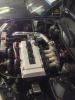
You will notice my wastegate is inverted and plumbed with outlet to the manifold and inlet to the BOV. This gives priority to the pressure coming from the BOV. There is also a VSV that controls the vacuum to the wastegate. My BOV is a Synapse BOV with multiple port configurations. If you check out the different modes and vacuum setup, it can meet all the conditions you are asking for when used in conjunction with a simple VSV (on/off solenoid) and a basic GPO from the EMS.
My car does have a throttle kicker using an OEM Toyota vacuum throttle actuator which is vacuum operated with an adjustable "bladder" when it closes up. It retracts under vacuum and extends at atmoshperic. The actuator was meant to help smoothness and idle dips on an older Toyota, but I just modded it to become a throttle kicker good up to 15-20% throttle. For now, I have the throttle-kicker disabled (it is controlled by a VSV via AEM) just to see how my bypass setup is working so far alone.
The current Bypass setup was to primiarily help me between shifts... During cornering or spirited driving, my current 3.3l engine gives me about 300-400 WHP on tap at about 5000-5500RPM and it's already perfect for the street and some minor track circuit duty. I didn't need any assist when the RPM's are floating, and on a street car, the engine bay temps are a huge concern for longevitiy and daily driving with such aggressive system activated all the time. During a rolling race, I brake-boost anyway, so the setup is simply to help me regain full response between shifts.

Thread
Thread Starter
Forum
Replies
Last Post