


Supercharged type r questions.


Thread Starter
Honda-Tech Member
Joined: Jun 2011
Posts: 46
Likes: 0
 Supercharged type r questions.
So I posted before that I was going to turbo my car but saw a superchaged one and it seems like the way to go. I have a 90 crx si and have been saving for a while to do this build. What I have coming dart b18c 81.5mm bore block, typer head, comp cams stage 2 set, comp cams gears, fluidampr crank pulley, cusco oil catch can, bc dual spings and steel retainers, bc boost friendly valves, aem series 2 ecu, eagle 10.4:1 full rotating assembly,750cc injectors, half core radiator, slim fan, 3" exhaust, traction bars, all hasport mounts and shiftlinkange, walbro 255lph fuel pump, hasport swap axles, act streetlite flywheel, 6puck clutch, test pipe, header, and gsr lsd tranny. My question is what should I do about supercharging it? Should I go jrsc or procharger, what will I be able to boost at and what kind of numbers will I see? And yes its a track car that may accasionally see the street for drive ins with the turbo boys. And where would you go to order your parts? I ordered all of the above from about 5 different sights. And yes numbers aren't everything to me but kickin the turbos doors off is.

Thread Starter
Honda-Tech Member
Joined: Jun 2011
Posts: 46
Likes: 0
 Re: Supercharged type r questions.
Because ive done turbo before and while its great everyone with a honda here has it turboed making 300 to 600whp at the wheels, not only does a 600 hp turbo kill motors but lag sucks, I've spent way to much already too have a mustang kick my *** till 3rd gear that's the reasoning. I know I can make more power with a turbo but that's not **** its all about torque that's what wins races.

 Re: Supercharged type r questions.
You just fell for the old "the bigger the turbo, the better" logic is all. A smaller one would have done much more of what you needed. You don't need 600whp to get a Mustang... But that's besides the point.
As you "looked" at the supercharger, you should have looked at the type of racing you're planning to do. As you already realize, unlike turbochargers, you will be set with the amount of boost used based upon the supercharger size (be it Eaton/Roots ,like a Jackson, or a Centrifugal like a Procharger), the crank pulley, and ow complete the kit is. Getting a used one asks for trouble because a lot of the smaller parts that are essential are not included, or have become lost in the process.
Centrifugals are a bit more top end friendly, while Eaton/Roots are a bit more torque friendly and only stay as stable as the rpms being used. If you were on a circuit, I'd say supercharger is AWESOME to use. For a person worried about Mustangs, you just pulled yourself out of the game due to parasitic loss that occurs even moreso than V8 applications on smaller I4s and boxer engines. (There's a reason why the Cobalt stopped being supercharged from the factory after only 2 year production, then went to turbocharger.
As you "looked" at the supercharger, you should have looked at the type of racing you're planning to do. As you already realize, unlike turbochargers, you will be set with the amount of boost used based upon the supercharger size (be it Eaton/Roots ,like a Jackson, or a Centrifugal like a Procharger), the crank pulley, and ow complete the kit is. Getting a used one asks for trouble because a lot of the smaller parts that are essential are not included, or have become lost in the process.
Centrifugals are a bit more top end friendly, while Eaton/Roots are a bit more torque friendly and only stay as stable as the rpms being used. If you were on a circuit, I'd say supercharger is AWESOME to use. For a person worried about Mustangs, you just pulled yourself out of the game due to parasitic loss that occurs even moreso than V8 applications on smaller I4s and boxer engines. (There's a reason why the Cobalt stopped being supercharged from the factory after only 2 year production, then went to turbocharger.

Honda-Tech Member
Joined: Aug 2001
Posts: 1,842
Likes: 0
From: Fort Worth, TX, USA
Re: Supercharged type r questions.
The centrifugals usually also have the side effect of being easier to intercool because they usually are not directly attached to the intake ports. The downside is that many poeple route them like a turbo so that the compressor is before the throttle body. This requires them to have a blow off valve. Where as with a roots the throttle body usually feeds the supercharger so the throttle body replaces the blow off valve because now the compressor can't pull in air to compress.
Roots downfall is that for ease of install and to keep costs down generally just feed straight into the intake ports which takes away the possiblity of using a intercooler. With a roots the volume of air is not the problem, its the pressure differential that kills you. Intercooling a roots can give excellent results, even if just an inline air to water like the LHT sandwhich or what the Mustang Cobras had, but its harder to do.
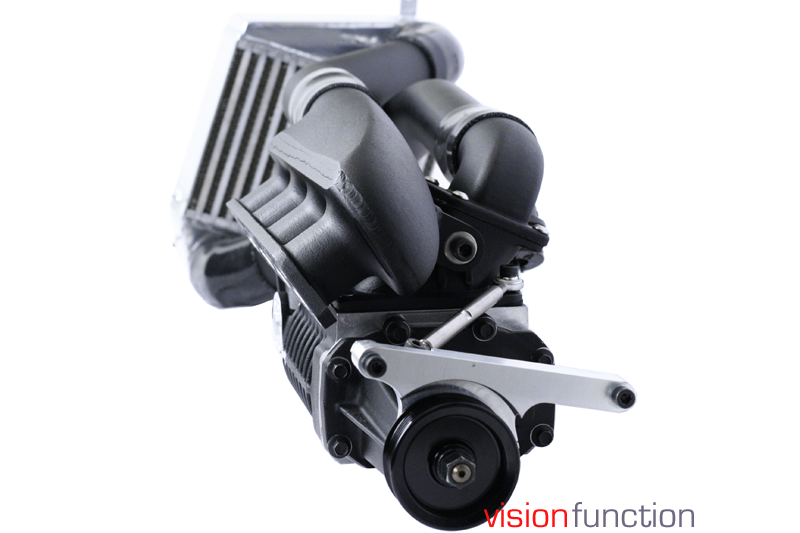
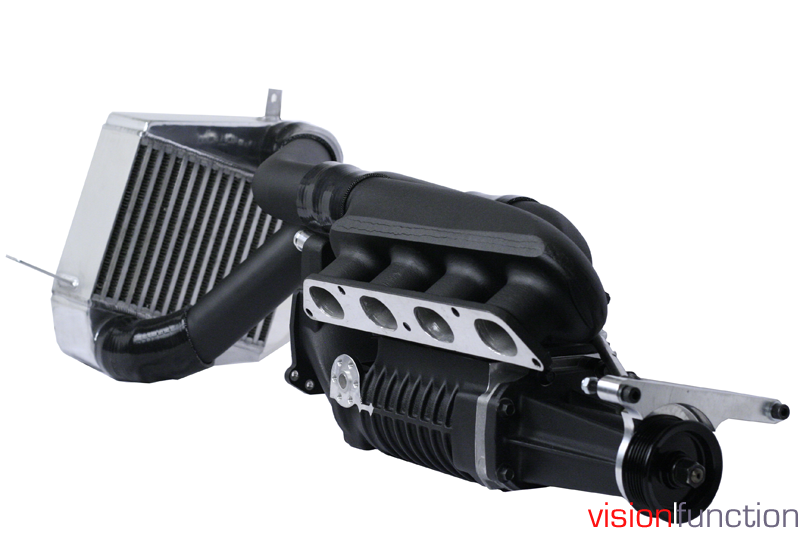
Roots downfall is that for ease of install and to keep costs down generally just feed straight into the intake ports which takes away the possiblity of using a intercooler. With a roots the volume of air is not the problem, its the pressure differential that kills you. Intercooling a roots can give excellent results, even if just an inline air to water like the LHT sandwhich or what the Mustang Cobras had, but its harder to do.
Last edited by Westrock2000; Jun 15, 2011 at 06:18 PM.

Honda-Tech Member
Joined: Jul 2004
Posts: 1,361
Likes: 2
From: Great White North
Re: Supercharged type r questions.
If you want info on a supercharger setup try this thread: https://honda-tech.com/forums/forced-induction-16/%2A%2A%2A-official-jrsc-thread%2A%2A%2A-1214810/
Or take a look at my website; link is in my signature. Supercharger info is under tech - Honda specific
Or take a look at my website; link is in my signature. Supercharger info is under tech - Honda specific
Trending Topics


Thread
Thread Starter
Forum
Replies
Last Post
ALLMTRWHORE
Forced Induction
5
Jun 9, 2003 05:23 AM
