


DP theory


Honda-Tech Member
Joined: Oct 2004
Posts: 1,832
Likes: 0
From: RIP Duke of Turbo, CA
 Re: DP theory (96 GSR-T)
Interesting discussion.
ps - Being an engineer does not automatically equate to an intricate
understanding of fluid dynamics or aerodynamics. "Engineer" is actually a very vague term. Now maybe if you said that you are a EP in fluid dynamics or some specialty field like that, then you might be an
authority on the subject.
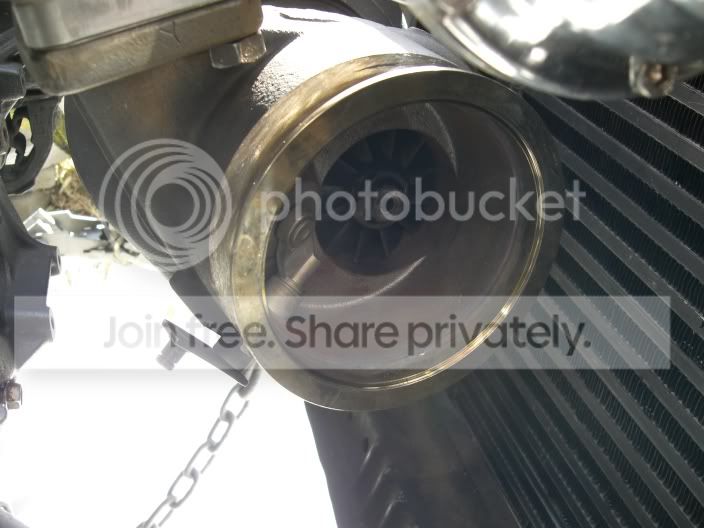
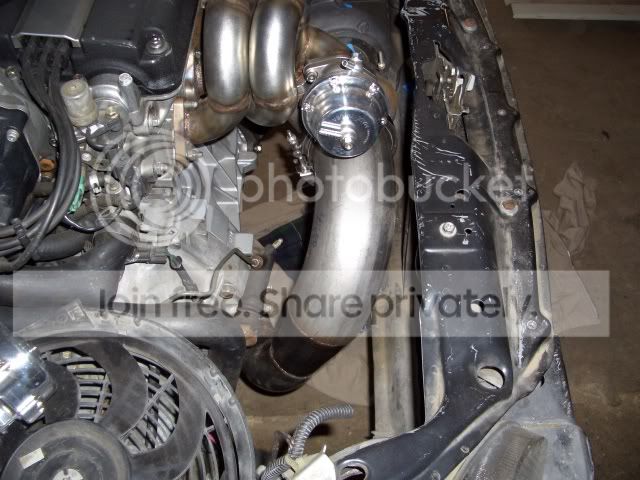
<TABLE WIDTH="90%" CELLSPACING=0 CELLPADDING=0 ALIGN=CENTER><TR><TD>Quote, originally posted by 96 GSR-T »</TD></TR><TR><TD CLASS="quote">Um.... show me a Honda turbo that has a 4" turbine outlet
If there was one I am more than sure the pipe would be a straight 4"
</TD></TR></TABLE>
How 'bout this?...........

ps - Being an engineer does not automatically equate to an intricate
understanding of fluid dynamics or aerodynamics. "Engineer" is actually a very vague term. Now maybe if you said that you are a EP in fluid dynamics or some specialty field like that, then you might be an
authority on the subject.
<TABLE WIDTH="90%" CELLSPACING=0 CELLPADDING=0 ALIGN=CENTER><TR><TD>Quote, originally posted by 96 GSR-T »</TD></TR><TR><TD CLASS="quote">Um.... show me a Honda turbo that has a 4" turbine outlet
If there was one I am more than sure the pipe would be a straight 4"
</TD></TR></TABLE>
How 'bout this?...........

Joined: Nov 2003
Posts: 42
Likes: 0
From: The Blue Planet
Re: DP theory (DaZman69)
I believe that the scientific answer lies in the study of thermodynamics. Specifically, The Ideal Gas Law and the related laws concerning gas behavior. Put on your science cap kids! We're going on a field trip! Beware, not for the faint of heart! http://scienceworld.wolfram.co....html If any Phd's could explain these principles, as they relate to this example, please feel free.

Honda-Tech Member

Joined: Sep 2003
Posts: 5,072
Likes: 2
From: Raleigh, NC
Re: DP theory (hopware)
its all about pressure drop across the turbine wheel, the lower the pressure on the exit side of the turbine the faster and quicker the turbine wheel will spin. if you put the same ammount of gasses in a 2 inch pipe, vs a 4 inch pipe the 4 inch pipe will have a lower pressure, generally it will lower th pressure in the whole system (including the intake manifold) which will allow everything to work better.

Member
Joined: Jan 2003
Posts: 2,933
Likes: 1
From: northern, ma, US
Re: DP theory (JDogg)
<TABLE WIDTH="90%" CELLSPACING=0 CELLPADDING=0 ALIGN=CENTER><TR><TD>Quote, originally posted by JDogg »</TD></TR><TR><TD CLASS="quote">its all about pressure drop across the turbine wheel, the lower the pressure on the exit side of the turbine the faster and quicker the turbine wheel will spin. if you put the same ammount of gasses in a 2 inch pipe, vs a 4 inch pipe the 4 inch pipe will have a lower pressure, generally it will lower th pressure in the whole system (including the intake manifold) which will allow everything to work better.</TD></TR></TABLE>
couldnt have said it better myself...
pv=nRT
couldnt have said it better myself...
pv=nRT
Honda-Tech Member
Joined: Oct 2004
Posts: 1,832
Likes: 0
From: RIP Duke of Turbo, CA
Re: DP theory (drumking15)
<TABLE WIDTH="90%" CELLSPACING=0 CELLPADDING=0 ALIGN=CENTER><TR><TD>Quote, originally posted by drumking15 »</TD></TR><TR><TD CLASS="quote">couldnt have said it better myself...
pv=nRT</TD></TR></TABLE>
Anyone remember what the value of R is again?? Lol, I can never remember that one.
JDogg is absolutely correct. Flow does not exist unto itself, it is merely a result of a differential pressure.
no dp = no flow
pv=nRT</TD></TR></TABLE>
Anyone remember what the value of R is again?? Lol, I can never remember that one.
JDogg is absolutely correct. Flow does not exist unto itself, it is merely a result of a differential pressure.
no dp = no flow

Honda-Tech Member
Joined: Oct 2003
Posts: 6,281
Likes: 0
From: Catching Rivers on Fire TWICE
Re: DP theory (KeyserSoze)

Honda-Tech Member
Joined: Jun 2001
Posts: 590
Likes: 0
From: Tampa, FL, USA
Re: (drumking15)
Think of it like you are adding up back pressure as you go along the length of the DP or even the whole exhaust. There is a certain amount of backpressure developed per foot of pipe at a given flow rate. The larger the pipe diameter the less backpressure is developed per length of pipe. Bends, especially really tight radius bends add backpressure also along with transitions and mis-aligned tubes. So even though you may come out of the turbo at 3", if you have a nice transition to four and carry it out the rest of the way you will accumulate less back pressure than a full 3" would.

Honda-Tech Member
Joined: Jan 2003
Posts: 455
Likes: 0
From: Tamworth, England, England
Re: DP theory (turbotommy)
Wall effects of a longer pipe will slow the gas down and in trun effects the reynolds number and hence turbulence, the gas exiting the turbo is very tubulent. Really all that matter is that the CFM and CSA of the pipe mean the velocity is a sensible level to create a scavenging effect that draws exhaust gas from the turbine on the next stroke.
With the turbine wheel operating on a pressure ratio to provide shaft torque to the compressor then it means the lower the pressure after the turbine then the lower the exhaust manifold pressure. This allows the engine to evacuate more residuals and reduces the bad effect of cam overlap. Driving Volumetric effieciency up for more frsh charge will only ever help your power output.
Also with regard to gas cooling throughout the system this also means the velocity slows, so in an ideal world the full system would gradually taper down (although probably by a small amount) to account for the increasing gas density.
Column inertia is the key to exhausts, keeping the gas fast enough to create a suction effect behind each pressure wave but without going to large that the frictional wall losses serve to also stall the gas speed and creat backpressure.
With the turbine wheel operating on a pressure ratio to provide shaft torque to the compressor then it means the lower the pressure after the turbine then the lower the exhaust manifold pressure. This allows the engine to evacuate more residuals and reduces the bad effect of cam overlap. Driving Volumetric effieciency up for more frsh charge will only ever help your power output.
Also with regard to gas cooling throughout the system this also means the velocity slows, so in an ideal world the full system would gradually taper down (although probably by a small amount) to account for the increasing gas density.
Column inertia is the key to exhausts, keeping the gas fast enough to create a suction effect behind each pressure wave but without going to large that the frictional wall losses serve to also stall the gas speed and creat backpressure.
Honda-Tech Member
Joined: Jan 2003
Posts: 455
Likes: 0
From: Tamworth, England, England
Re: DP theory (KeyserSoze)
<TABLE WIDTH="90%" CELLSPACING=0 CELLPADDING=0 ALIGN=CENTER><TR><TD>Quote, originally posted by KeyserSoze »</TD></TR><TR><TD CLASS="quote">
Anyone remember what the value of R is again?? Lol, I can never remember that one.
</TD></TR></TABLE>
Its 287 here in metric world
<TABLE WIDTH="90%" CELLSPACING=0 CELLPADDING=0 ALIGN=CENTER><TR><TD>Quote »</TD></TR><TR><TD CLASS="quote"> no dp = no flow</TD></TR></TABLE>
are you saying theres no pressure differential between a turbine wheel stage fed by a rather large air pump (IC engine) and the atmosphere?
no DP just means you have no hope in hell of making the post turbine pressure significantly less than atmospheric. Certainly doesn't mean no flow
Anyone remember what the value of R is again?? Lol, I can never remember that one.
</TD></TR></TABLE>
Its 287 here in metric world
<TABLE WIDTH="90%" CELLSPACING=0 CELLPADDING=0 ALIGN=CENTER><TR><TD>Quote »</TD></TR><TR><TD CLASS="quote"> no dp = no flow</TD></TR></TABLE>
are you saying theres no pressure differential between a turbine wheel stage fed by a rather large air pump (IC engine) and the atmosphere?
no DP just means you have no hope in hell of making the post turbine pressure significantly less than atmospheric. Certainly doesn't mean no flow

Honda-Tech Member
Joined: Sep 2003
Posts: 5,072
Likes: 2
From: Raleigh, NC
Re: DP theory (BoostedCivicSedan)
its a turbo, all the pressure/velocity stuff you keep talking about has to happen before the turbo... after the turb you just want the gasses away from the turbo as freely as possible.
Honda-Tech Member
Joined: Jan 2003
Posts: 455
Likes: 0
From: Tamworth, England, England
Re: DP theory (JDogg)
Just to develop my opinion futher; before the turbo is more about pressure. Hence EL tend to have a later boost threshold partly due the larger volume, however at higher rpm the wider runners and fast speed help clear the chambers of exhaust residuals, the EXACT same thing happens to the turbo with regard to scavenging although i guess the pulse nature of each wave is less prominant with the baffling effect of the turbine wheel, so downpipe sizing isnt quite as easy to get the pressure significantly below atmos.
The way the gas escape from the turbo makes a huge difference. Surely we have anedotal evidence in the form of dyno graphs when people jump from 2.5" to 3" systems/downpipes.
The exhaust system is a significant length on pretty much all cars, you cant just ignore it and pull the 'big is better' line. Although yes of course you want it going away from the turbo as easily as possible, the ease of this is not too small to restrict the gases, or too large to stall them. Velocity talk is a kinda moot point with the IC engine anyway, the operating range is far to wide to tune anything specifically, the engine speed and load and hence CFM change a huge amount very frequently so your only every in a compromise situation and have to consider the application of the car.
Get a decent CVT system then you can start to get really **** over stuff like this
The way the gas escape from the turbo makes a huge difference. Surely we have anedotal evidence in the form of dyno graphs when people jump from 2.5" to 3" systems/downpipes.
The exhaust system is a significant length on pretty much all cars, you cant just ignore it and pull the 'big is better' line. Although yes of course you want it going away from the turbo as easily as possible, the ease of this is not too small to restrict the gases, or too large to stall them. Velocity talk is a kinda moot point with the IC engine anyway, the operating range is far to wide to tune anything specifically, the engine speed and load and hence CFM change a huge amount very frequently so your only every in a compromise situation and have to consider the application of the car.
Get a decent CVT system then you can start to get really **** over stuff like this
Honda-Tech Member
Joined: Oct 2004
Posts: 1,832
Likes: 0
From: RIP Duke of Turbo, CA
Re: DP theory (JonnyCoupe)
<TABLE WIDTH="90%" CELLSPACING=0 CELLPADDING=0 ALIGN=CENTER><TR><TD>Quote, originally posted by JonnyCoupe »</TD></TR><TR><TD CLASS="quote">Its 287 here in metric world
are you saying theres no pressure differential between a turbine wheel stage fed by a rather large air pump (IC engine) and the atmosphere?
no DP just means you have no hope in hell of making the post turbine pressure significantly less than atmospheric. Certainly doesn't mean no flow </TD></TR></TABLE>
What I'm saying is this....flow in and of itself does not really exist. It is a product of a differential pressure. No dp (as in differential pressure, not down pipe), no flow. It's a physical fact. I wasn't referring to not having a down pipe, which would in many cases be the most advantageous to the majority of turbo setups it would seem. As long as there are no surfaces in close proximity of the turbine outlet on which the air could reverberrate or slow down to create backpressue.
SAT time:
Pressure is to flow as
A) voltage is to current.
B) gravity is to weight.
C) Keyra Augustina is to me pitchin a tent in my pants.
D) All of the above.
The correct answer is D. Damn the **** in my head is random!
are you saying theres no pressure differential between a turbine wheel stage fed by a rather large air pump (IC engine) and the atmosphere?
no DP just means you have no hope in hell of making the post turbine pressure significantly less than atmospheric. Certainly doesn't mean no flow
</TD></TR></TABLE>What I'm saying is this....flow in and of itself does not really exist. It is a product of a differential pressure. No dp (as in differential pressure, not down pipe
), no flow. It's a physical fact. I wasn't referring to not having a down pipe, which would in many cases be the most advantageous to the majority of turbo setups it would seem. As long as there are no surfaces in close proximity of the turbine outlet on which the air could reverberrate or slow down to create backpressue. SAT time:
Pressure is to flow as
A) voltage is to current.
B) gravity is to weight.
C) Keyra Augustina is to me pitchin a tent in my pants.
D) All of the above.
The correct answer is D. Damn the **** in my head is random!
Honda-Tech Member
Joined: Oct 2004
Posts: 1,832
Likes: 0
From: RIP Duke of Turbo, CA
Re: (drumking15)
<TABLE WIDTH="90%" CELLSPACING=0 CELLPADDING=0 ALIGN=CENTER><TR><TD>Quote, originally posted by drumking15 »</TD></TR><TR><TD CLASS="quote">8.31 for short work
and technically speaking keyzer...your outlet is still a lil less than 3"....yet the mating housing is 4"....only cause its an internal gate</TD></TR></TABLE>
Hey man all I know is it takes a 4" dp.
ps. New picts in the holset thread, can't let Phreak show me up!!!!
and technically speaking keyzer...your outlet is still a lil less than 3"....yet the mating housing is 4"....only cause its an internal gate
</TD></TR></TABLE>Hey man all I know is it takes a 4" dp.
ps. New picts in the holset thread, can't let Phreak show me up!!!!

Honda-Tech Member
Joined: Sep 2003
Posts: 3,166
Likes: 0
From: Boost is good
Re: DP theory (BoostedCivicSedan)
<TABLE WIDTH="90%" CELLSPACING=0 CELLPADDING=0 ALIGN=CENTER><TR><TD>Quote, originally posted by BoostedCivicSedan »</TD></TR><TR><TD CLASS="quote">All Im saying is STOP COMPARING COMPRESSED AIR TO HOT EXHAUST GASSES.
Thank you </TD></TR></TABLE>
No kidding! Hahaa. All this time, this is what my mind was asking me.
By no doubt, thermal dynamics is way far different. Apples and Orange here.
Bad idea to start with.
Thank you
</TD></TR></TABLE>No kidding! Hahaa. All this time, this is what my mind was asking me.
By no doubt, thermal dynamics is way far different. Apples and Orange here.
Bad idea to start with.

Honda-Tech Member
Joined: Dec 2004
Posts: 2,776
Likes: 0
From: Halifax, NS Canada
i always wondered this also.... my turbo was always .5 of an inch smaller then my DP and exhaust...
im lookin now at puttin a 4 inch DP on a new GT35R... but i think that has a 3 inch comin off the turbo
im lookin now at puttin a 4 inch DP on a new GT35R... but i think that has a 3 inch comin off the turbo

Honda-Tech Member
Joined: Sep 2005
Posts: 324
Likes: 0
From: long isle
Re: DP theory (adictionbass)
<TABLE WIDTH="90%" CELLSPACING=0 CELLPADDING=0 ALIGN=CENTER><TR><TD>Quote, originally posted by adictionbass »</TD></TR><TR><TD CLASS="quote">forget the rest of the pipe sections. Picture ur container filled with gas contained in the central cylinder of your picture there. Now put the 2" outlet with a 2" pipe that is say 1' in length. Now put another 2" outlet (as u have pictured) without any piping on it.
Your arguement is that with a 2" outlet, no matter if there is a pipe on it or not, will flow the same volume. That is a true statement.
Now take into account that you are dealing with hot compressed air in pulses. On the 2" outlet with the 1' pipe, the hot compressed air will stay hot and compressed, with the pipe providing resistance (backpressure) on the compressed air tank.
Now look at the 2" opening with no piping on it. The hot compress air makes its way out the 2" opening then is completly free from drag and allowed to expand pretty much unlimitedly. No drag, no back pressure. More power.
That was my stab at it...</TD></TR></TABLE>
i believe this man was right when he stated the HOT COMPRESSED AIR factor. and thats pretty much it
Your arguement is that with a 2" outlet, no matter if there is a pipe on it or not, will flow the same volume. That is a true statement.
Now take into account that you are dealing with hot compressed air in pulses. On the 2" outlet with the 1' pipe, the hot compressed air will stay hot and compressed, with the pipe providing resistance (backpressure) on the compressed air tank.
Now look at the 2" opening with no piping on it. The hot compress air makes its way out the 2" opening then is completly free from drag and allowed to expand pretty much unlimitedly. No drag, no back pressure. More power.
That was my stab at it...</TD></TR></TABLE>
i believe this man was right when he stated the HOT COMPRESSED AIR factor. and thats pretty much it

Honda-Tech Member
Joined: May 2002
Posts: 518
Likes: 0
From: Deutschland, Germany
Re: DP theory (drumking15)
<TABLE WIDTH="90%" CELLSPACING=0 CELLPADDING=0 ALIGN=CENTER><TR><TD>Quote, originally posted by drumking15 »</TD></TR><TR><TD CLASS="quote">
couldnt have said it better myself...
pv=nRT</TD></TR></TABLE> PERV=ERT
couldnt have said it better myself...
pv=nRT</TD></TR></TABLE> PERV=ERT

Honda-Tech Member
Joined: Apr 2005
Posts: 1,828
Likes: 0
From: NZ
Re: DP theory (crucian)
Ok Im no expert in this field but I will try my best to apply what I learnt at school from fluid mechanics.
So far you have been correct about what you have said in regards to pressure drop/loss in speed.
As the air is exhausted out of the turbo, if it was a constant 3" pipe the pressure (depening on the amount of boost you are running) will cause very high pressure in the downpipe, which we will call "x" pressure. At the same time we will call the speed of the air to be "y" speed.
Now (just speaking not real) if we increased the diameter by twice the size we have twice the "area". This will of course slow the speed down and at the same time lower the pressure. Pressure = "x/2" and speed "y/2". However if you think about it we now have more volumetric flow.
Now to answer your question, the reason why I believe it is making more power is because once you have stepped up in size you have theoretically reduced the pressure that is hitting back at the turbo. What this should mean is that now there is less resistance on the turbo blades and it allows it to spin more freely/faster and creates more boost and thus hence why people say that they get a raise in boost when they install a bigger downpipe/go open downpipe/install an e-cut out.
Now this does not go on to say that the biggest downpipe will give you the biggest gains. The reason for this is because like mentioned above with high pressure comes high speed. If right at the engine (lets say right at the manifold flange) it was low pressure then there will be no suction "force" to pull out the exhausts air from the engine.
This is the case with the downpipe since the exhausted air is gonna go down it and out of the exhaust pipe so we dont need it anymore. However with the intercooler we still need the exhaust gas so hence the reversal. If we had really large pipes in an intercooler set up there will be low pressure, low speed, high volumetric flow but this is what cause the "lag" we are use to with turbo set ups.
Again with a small pipe for the intercooler setup you will reduce the turbo lag but with the less volumetric flow you will be losing power because not as much exhaust gas is being "forced-fed" into your engine.
It is quite hard to determine the right size for your intercooler setup, its either you want big power or less turbo lag. It is also an emperical (derived through experience) type of formula.
Hope this help to lighten up your question, BTW all of this is based on bernoulli's equation, do a hit up on google if you're interested to find out more. I am no expert in this field and just trying to explain through first principles that I learnt, feel free to correct something if I have said it wrong.
So far you have been correct about what you have said in regards to pressure drop/loss in speed.
As the air is exhausted out of the turbo, if it was a constant 3" pipe the pressure (depening on the amount of boost you are running) will cause very high pressure in the downpipe, which we will call "x" pressure. At the same time we will call the speed of the air to be "y" speed.
Now (just speaking not real) if we increased the diameter by twice the size we have twice the "area". This will of course slow the speed down and at the same time lower the pressure. Pressure = "x/2" and speed "y/2". However if you think about it we now have more volumetric flow.
Now to answer your question, the reason why I believe it is making more power is because once you have stepped up in size you have theoretically reduced the pressure that is hitting back at the turbo. What this should mean is that now there is less resistance on the turbo blades and it allows it to spin more freely/faster and creates more boost and thus hence why people say that they get a raise in boost when they install a bigger downpipe/go open downpipe/install an e-cut out.
Now this does not go on to say that the biggest downpipe will give you the biggest gains. The reason for this is because like mentioned above with high pressure comes high speed. If right at the engine (lets say right at the manifold flange) it was low pressure then there will be no suction "force" to pull out the exhausts air from the engine.
This is the case with the downpipe since the exhausted air is gonna go down it and out of the exhaust pipe so we dont need it anymore. However with the intercooler we still need the exhaust gas so hence the reversal. If we had really large pipes in an intercooler set up there will be low pressure, low speed, high volumetric flow but this is what cause the "lag" we are use to with turbo set ups.
Again with a small pipe for the intercooler setup you will reduce the turbo lag but with the less volumetric flow you will be losing power because not as much exhaust gas is being "forced-fed" into your engine.
It is quite hard to determine the right size for your intercooler setup, its either you want big power or less turbo lag. It is also an emperical (derived through experience) type of formula.
Hope this help to lighten up your question, BTW all of this is based on bernoulli's equation, do a hit up on google if you're interested to find out more. I am no expert in this field and just trying to explain through first principles that I learnt, feel free to correct something if I have said it wrong.

Honda-Tech Member
Joined: Jul 2005
Posts: 1,734
Likes: 2
From: Canada
everyone says that when the gas enters the larger diameter DP it slows down...but its not going to slow down instantly. the gas is going to have less pressure when it enters the larger section and this will allow it to start cooling a little bit faster. since it is moving at the same speed as in the 3 inch section (breifly) it will create a very small vacuum that will keep exaust gasses flowing smoothly along. heres the part im vague at, since the gasses will be under less pressure in the 4 inch section, this will cause a slight raise in CFM, or no? because i thought the same amount of air but at less pressure must mean an increase in volume since pressure and volume are proportional to eachother.
edit: my theory anyways, im only a kid.
edit: my theory anyways, im only a kid.

Honda-Tech Member
Joined: Aug 2004
Posts: 2,411
Likes: 0
From: nowere, usa
Re: DP theory (Turbo-charged)
<TABLE WIDTH="90%" CELLSPACING=0 CELLPADDING=0 ALIGN=CENTER><TR><TD>Quote, originally posted by Turbo-charged »</TD></TR><TR><TD CLASS="quote">gt42r has 4 inch outlet</TD></TR></TABLE>
the GT142.2 niner has a 12" outlet

the GT142.2 niner has a 12" outlet

Member
Joined: Apr 2003
Posts: 2,150
Likes: 0
From: CT
Re: (unusual71)
I think the simplest way to explain it is to imagine that the 3" end of the downpipe is part of the turbo itself - it's just elongating the outlet. So if that part is the same as the outlet, then in essence you have a complete 4" downpipe. My $.02

Honda-Tech Member
Joined: Feb 2003
Posts: 7,355
Likes: 0
From: Margaritaville
Re: DP theory (hks85)
<TABLE WIDTH="90%" CELLSPACING=0 CELLPADDING=0 ALIGN=CENTER><TR><TD>Quote, originally posted by hks85 »</TD></TR><TR><TD CLASS="quote">
the GT142.2 niner has a 12" outlet
</TD></TR></TABLE>
I've got one of those on my D16 now.
the GT142.2 niner has a 12" outlet
</TD></TR></TABLE>I've got one of those on my D16 now.
Honda-Tech Member
Joined: Apr 2005
Posts: 1,828
Likes: 0
From: NZ
Re: (unusual71)
<TABLE WIDTH="90%" CELLSPACING=0 CELLPADDING=0 ALIGN=CENTER><TR><TD>Quote, originally posted by unusual71 »</TD></TR><TR><TD CLASS="quote">everyone says that when the gas enters the larger diameter DP it slows down...but its not going to slow down instantly. the gas is going to have less pressure when it enters the larger section and this will allow it to start cooling a little bit faster. since it is moving at the same speed as in the 3 inch section (breifly) it will create a very small vacuum that will keep exaust gasses flowing smoothly along. heres the part im vague at, since the gasses will be under less pressure in the 4 inch section, this will cause a slight raise in CFM, or no? because i thought the same amount of air but at less pressure must mean an increase in volume since pressure and volume are proportional to eachother.
edit: my theory anyways, im only a kid.</TD></TR></TABLE>
Dude, have you seen a venturi tube measuring tube before? Differential pressures are measured at the opening of the pipe an at the throat and there is an immediate change in pressure so I dont know why there wouldnt be a change in speed right away.
Even if we put it your way, if you're saying its moving so fast that there isnt time for it to lose pressure right away then what makes you think it will lose heat right away then? We all know when gas expands it loses heat so how in your situation do you think it loses heat without losing pressure? Hell the air rushing in your engine bay cant cool it that fast.
p1v1/t1 = p2v2/t2 Pressure1 X Volumn1 / Temperature1 = Pressure2 X Volumn2 / Temperature2
edit: my theory anyways, im only a kid.</TD></TR></TABLE>
Dude, have you seen a venturi tube measuring tube before? Differential pressures are measured at the opening of the pipe an at the throat and there is an immediate change in pressure so I dont know why there wouldnt be a change in speed right away.
Even if we put it your way, if you're saying its moving so fast that there isnt time for it to lose pressure right away then what makes you think it will lose heat right away then? We all know when gas expands it loses heat so how in your situation do you think it loses heat without losing pressure? Hell the air rushing in your engine bay cant cool it that fast.
p1v1/t1 = p2v2/t2 Pressure1 X Volumn1 / Temperature1 = Pressure2 X Volumn2 / Temperature2