


BOV before IC?


Thread Starter
Honda-Tech Member
Joined: Mar 2002
Posts: 2,178
Likes: 1
From: Portland, OR
 BOV before IC?
My manager at work brought this up...why wouldn't you put your BOV BEFORE your intercooler (ie. between the compressor and the IC) instead of inbetween the IC and throttlebody? The intercooler is a slight flow restriction, so wouldn't you keep the turbo spooled up ever-so-slightly more with the BOV in this alternate position?
I believe this is the set-up he has on his turbo car...but, I'll ask tomorrow...
I don't think this would have any downfall, except placement issues...anyone?
I believe this is the set-up he has on his turbo car...but, I'll ask tomorrow...
I don't think this would have any downfall, except placement issues...anyone?

Member
Joined: Jun 2002
Posts: 1,314
Likes: 0
From: NE Of Metro Area, MN, US
Re: BOV before IC? (ion_four)
daym, that is an interesting thought. maybe it has something to do with the heat of the charged air before the IC tho? i dunno.. i am curious as to the answer to this one too

Honda-Tech Member
Joined: Sep 2001
Posts: 1,851
Likes: 0
From: Twin Cities
Re: BOV before IC? (ion_four)
The BOV is there to vent "air" that bounces off your throttle-plate so it doesn't hit the compressor. You wouldn't want to make that "air" go back through your I/C first before venting it...
 makes sense, dont know why i didnt even comprehend that at first

New User
Joined: Aug 2001
Posts: 1,074
Likes: 0
From: Sacramento, CA, U.S.A.
Re: BOV before IC? (TheShocker)
The BOV is there to vent "air" that bounces off your throttle-plate so it doesn't hit the compressor. You wouldn't want to make that "air" go back through your I/C first before venting it...


Trending Topics

Better than steak

Joined: Jan 2000
Posts: 16,859
Likes: 0
Re: BOV before IC? (inspyral)
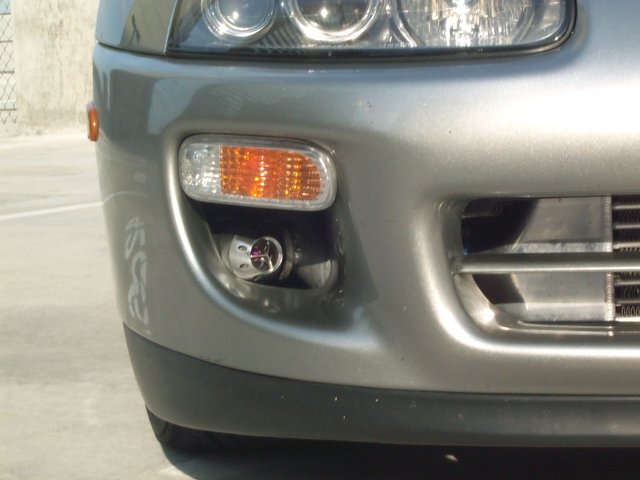
Some of the Supra guys put their BOV's on their i/c piping...
Thread Starter
Honda-Tech Member
Joined: Mar 2002
Posts: 2,178
Likes: 1
From: Portland, OR
Re: BOV before IC? (TheShocker)
The BOV is there to vent "air" that bounces off your throttle-plate so it doesn't hit the compressor. You wouldn't want to make that "air" go back through your I/C first before venting it...

Will you make something up for me please?

Joined: Sep 2001
Posts: 6,392
Likes: 0
From: SoCal
Re: BOV before IC? (TheShocker)
You wouldn't want to make that "air" go back through your I/C first before venting it...
Honda-Tech Member
Joined: Sep 2001
Posts: 1,851
Likes: 0
From: Twin Cities
Re: BOV before IC? (shamoo)
I don't think it would nessecarily be harmful, but what's the point of putting it before the I/C anyway? Seems to me the shorter the path that "air" has to travel before being vented the safer...why wait 'til the last minute to vent it. Then again, maybe it doesn't matter, after all it is pressure...

Joined: Mar 2002
Posts: 2,018
Likes: 0
From: lafayette, la, usa
Re: BOV before IC? (TheShocker)
they guy is right! the air would first be travling to the TB and as you shift and the TB closes. now where is it going to go. now it hits the TB hard then has to travel back to the bov. by the time that happens you are finished shifting and the new compressed air hits the air comming to the BOV. It makes more sence to put it near the TB. it is a lot less distance to travel.

Honda-Tech Member
Joined: Oct 2000
Posts: 6,236
Likes: 0
From: Texasss
Re: BOV before IC? (CovertFI)
Hate to break it to you guys but the air does not travel back... its not a train. When you close the tb, the pressure builds up through the entire system. The BOV senses the higher pressure and blows off the excess. Does not matter where it is in the system, the pressure through out will be the same, that is what causes it to blow off...
Honda-Tech Member
Joined: Sep 2001
Posts: 1,851
Likes: 0
From: Twin Cities
Re: BOV before IC? (AssPenny)
x
That's what I started to think...
Hate to break it to you guys but the air does not travel back... its not a train. When you close the tb, the pressure builds up through the entire system. The BOV senses the higher pressure and blows off the excess. Does not matter where it is in the system, the pressure through out will be the same, that is what causes it to blow off...

Joined: May 2002
Posts: 583
Likes: 0
From: POWERLINE, norcal, usa
Re: BOV before IC? (TheShocker)
yes the turbine is still spinnig when the butterfly closses adn creates pressure in the charge pipe and thats what makes the blow off!! but if bov is messed up or you dont have one the air can go back to the turbo and f#ck it up!

Member
Joined: Oct 2001
Posts: 1,599
Likes: 0
From: Santa Barbara, California, usa
Re: BOV before IC? (boostinb18)
yes i agree with boostinb18, the fact that its pressurized makes no difference its the fact of a pressure wave, surgin from the TB back to the turbo which shocks the turbo, basically think of you drivein your car at 65 in fifth gear and the putting it in reverse, thats what happens when the pressure wave hits the turbo it trys to stop it from spining, very bad for the turbo.
and if im correct what the blowoff valves does it equalizes the pressure in the charge pipe when not boosting.
we had an eclipse here that have a broken blowoff vavle flange, and it was not blowing off at all, but the weird thing was it would sound like it was blowing off, but it would flutter, and the car felt reallly fast,
so we tested a theory, reved it and put our hand in front of the blowoff, no air was coming out when the throttle plate closed, we listened really carefully it was actully going back into the intake piping, you could hear it from the intake filter, and fluttering back and for against the turbo....
the reason it was fast was because it was keeping all the charge air, but it was beating the turbo up
[Modified by pornstarSR, 11:47 PM 6/13/2002]
and if im correct what the blowoff valves does it equalizes the pressure in the charge pipe when not boosting.
we had an eclipse here that have a broken blowoff vavle flange, and it was not blowing off at all, but the weird thing was it would sound like it was blowing off, but it would flutter, and the car felt reallly fast,
so we tested a theory, reved it and put our hand in front of the blowoff, no air was coming out when the throttle plate closed, we listened really carefully it was actully going back into the intake piping, you could hear it from the intake filter, and fluttering back and for against the turbo....
the reason it was fast was because it was keeping all the charge air, but it was beating the turbo up
[Modified by pornstarSR, 11:47 PM 6/13/2002]

Junior Member
Joined: Dec 2001
Posts: 983
Likes: 0
From: NJ
Re: BOV before IC? (pornstarSR)
IC to TB and IC to turbo correct? So what would happen if I take out the IC to TB and just put an intake on there (and plug the hole on the IC). This would eliminate the blow off valve. What would be the consequences? Reason for this hypothetical question is me trying to find a way around my turbo issue right now.
Is there a way of running turbo without a blow off valve?
Is there a way of running turbo without a blow off valve?


Honda-Tech Member
Joined: Mar 2001
Posts: 4,408
Likes: 4
From: Somewhere in California
Re: BOV before IC? (TheShocker)
....You wouldn't want to make that "air" go back through your I/C first before venting it...
Honda-Tech Member
Joined: Mar 2001
Posts: 4,408
Likes: 4
From: Somewhere in California
Re: BOV before IC? (b18tdelsol)
btw, how bad is compressor surge? i think i have it.

Honda-Tech Member
Joined: Nov 2000
Posts: 11,967
Likes: 0
From: Charlotte
Re: BOV before IC? (AssPenny)
Hate to break it to you guys but the air does not travel back... its not a train. When you close the tb, the pressure builds up through the entire system. The BOV senses the higher pressure and blows off the excess. Does not matter where it is in the system, the pressure through out will be the same, that is what causes it to blow off...

having the BOV near the TB allows the air flow to maintain the max. speed all the way thru the IC and IC piping.
The BOV is connected to the motor side of the TB and once that area is in vaccum (off gas) the BOV opens to allow the pressure to 'blow off'

Junior Member
Joined: Mar 2002
Posts: 480
Likes: 0
From: Toronto, ON, Canada
Re: BOV before IC? (AssPenny)
Hate to break it to you guys but the air does not travel back... its not a train. When you close the tb, the pressure builds up through the entire system. The BOV senses the higher pressure and blows off the excess. Does not matter where it is in the system, the pressure through out will be the same, that is what causes it to blow off...
Chris Rado has his before the intercooler also

Honda-Tech Member

Joined: Jan 2001
Posts: 4,749
Likes: 26
From: Portland, OR
Re: BOV before IC? (kidkutz)
Its hard to put a BOV before the intercooler on a honda...as the piping from the turbo to the intercooler is pretty short...low to the ground...and would be hard to find a good place to mount it [the bov].
liam
liam
Member
Joined: Oct 2001
Posts: 1,599
Likes: 0
From: Santa Barbara, California, usa
Re: BOV before IC? (kidkutz)
but you have to remember that chris rado is also running some crazy fuel and a race car, so he can pay for new turbos and what not....
but depending on application,different parts are needed, if you all read sport compact car magazine you will remember a hyundia tiburon Twin motor both turbo charged running something like 20lbs on each, no intercooler, he was running methanol, so each aplication has different setups, weither or not you put the blowoff before or after the intercooler, havinga blowoff is better than not in my opinion
but depending on application,different parts are needed, if you all read sport compact car magazine you will remember a hyundia tiburon Twin motor both turbo charged running something like 20lbs on each, no intercooler, he was running methanol, so each aplication has different setups, weither or not you put the blowoff before or after the intercooler, havinga blowoff is better than not in my opinion

New User
Joined: Feb 2001
Posts: 548
Likes: 0
From: SLC, Ut
Re: BOV before IC? (AssPenny)
This is a great discussion about a good question. But, many of you are fogetting the basic physics involved. before I proceed, I need to prepare:
[hip waders]
It is VERY important to understand that there is a major difference between "BlowOff Valves" and "Compressor Bypass Valves". This discussion is relavent to BOV applications. More specifically, this discussion is related to the use of a BOV positioned before the throttle plate. (It is common practice in many racing venues to implement a BOV after the throttle plate to prevent overboosting. These are commonly refered to pressure relief valves.)
Think for a moment what a blowoff valve (very rare on production vehicles) is designed to do... It prevents compressor surge and maintains turbine shaft speed during [lifted throttle] shifts, reducing transient spool time and potential damage to the turbocharger. This is accomplished by venting excessive airflow when the engine demand is lower than the compressor supply volume (closed TB).
Now, if the BOV is capable of doing its job (preventing compressor surge and mantaining shaft speed) before the intercooler, it would make sense to place it there. Why? Because the air temperature before the intercooler can exceed 300 degrees F, and all of this heat is removed from the intake charge air by the intercooler. If we choose to vent the excessive airflow BEFORE the intercooler, it is simply hot air released to the atmosphere. If we choose to vent the excessive airflow AFTER the intercooler, we have effectively heatsoaked our intercooler and wasted xx% of cooling efficiency for no good reason at all. That's not a good practice in racing...
[/hip waders]
[Modified by B20C5 Turbo, 12:58 AM 6/14/2002]
[hip waders]
It is VERY important to understand that there is a major difference between "BlowOff Valves" and "Compressor Bypass Valves". This discussion is relavent to BOV applications. More specifically, this discussion is related to the use of a BOV positioned before the throttle plate. (It is common practice in many racing venues to implement a BOV after the throttle plate to prevent overboosting. These are commonly refered to pressure relief valves.)
Think for a moment what a blowoff valve (very rare on production vehicles) is designed to do... It prevents compressor surge and maintains turbine shaft speed during [lifted throttle] shifts, reducing transient spool time and potential damage to the turbocharger. This is accomplished by venting excessive airflow when the engine demand is lower than the compressor supply volume (closed TB).
Now, if the BOV is capable of doing its job (preventing compressor surge and mantaining shaft speed) before the intercooler, it would make sense to place it there. Why? Because the air temperature before the intercooler can exceed 300 degrees F, and all of this heat is removed from the intake charge air by the intercooler. If we choose to vent the excessive airflow BEFORE the intercooler, it is simply hot air released to the atmosphere. If we choose to vent the excessive airflow AFTER the intercooler, we have effectively heatsoaked our intercooler and wasted xx% of cooling efficiency for no good reason at all. That's not a good practice in racing...
[/hip waders]
[Modified by B20C5 Turbo, 12:58 AM 6/14/2002]