


Prothane rear trailing arm bushing: legal STS


Thread Starter
Member
Joined: Apr 2002
Posts: 2,905
Likes: 0
From: Superior, CO
 Re: Prothane rear trailing arm bushing: legal STS (RAB)
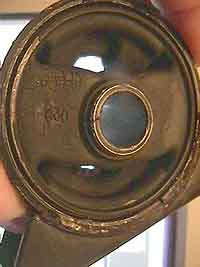
This being a Mugen bushing or Honda bushing.

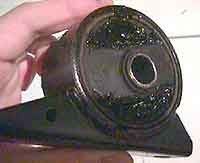
and this being a Prothane bushing.

I remember the bushing rule states something about you can't increase the amount of metal relative to bushing material or vice versa or I need a rule book in front of me!
and this being a Prothane bushing.
I remember the bushing rule states something about you can't increase the amount of metal relative to bushing material or vice versa or I need a rule book in front of me!

Member
Joined: Aug 2001
Posts: 1,605
Likes: 0
Re: Prothane rear trailing arm bushing: legal STS (RAB)
yes they are legal. You are not increasing the ammount of metal. They both have the outer metal ring and the metal rod that goes thru the middle. The only difference is one is surrounded by rubber and the other poly.

Honda-Tech Member
Joined: Apr 2003
Posts: 160
Likes: 0
Re: Prothane rear trailing arm bushing: legal STS (ryan12321)
I remember people having trouble with this or the es bushing insert not allowing the trailing arm to move on all its axis and causing binding of some kind

Honda-Tech Member
Joined: May 2000
Posts: 2,861
Likes: 0
From: Atlanta, GA, USA
Re: Prothane rear trailing arm bushing: legal STS (SOL1D)
<TABLE WIDTH="90%" CELLSPACING=0 CELLPADDING=0 ALIGN=CENTER><TR><TD>Quote, originally posted by SOL1D »</TD></TR><TR><TD CLASS="quote">I remember people having trouble with this or the es bushing insert not allowing the trailing arm to move on all its axis and causing binding of some kind</TD></TR></TABLE>
I was one of those people. Running Mugen now.
I was one of those people. Running Mugen now.
Member
Joined: Aug 2001
Posts: 1,605
Likes: 0
Re: Prothane rear trailing arm bushing: legal STS (SPiFF)
<TABLE WIDTH="90%" CELLSPACING=0 CELLPADDING=0 ALIGN=CENTER><TR><TD>Quote, originally posted by SPiFF »</TD></TR><TR><TD CLASS="quote">I was one of those people. Running Mugen now.</TD></TR></TABLE>
what exactly did it do and how could you tell?
I've got a set of ES and I'm still considering if I want to put them in.
what exactly did it do and how could you tell?
I've got a set of ES and I'm still considering if I want to put them in.
Honda-Tech Member
Joined: May 2000
Posts: 2,861
Likes: 0
From: Atlanta, GA, USA
Re: Prothane rear trailing arm bushing: legal STS (ryan12321)
I didn't like the fact that the "pin" was not attached to the bushing. There was a lot of "walk" in the TA. So much so, the TA would hit the frame under high load. This was on the H3 car, so I am not sure if that applies to street or AutoX.
I have read some threads where people didn't like them because they don't offer the range of movement the OE/Mugen does. You can do a search and find some good info.
EDIT: https://honda-tech.com/zerothread?id=902142
Modified by SPiFF at 3:47 PM 11/23/2004
I have read some threads where people didn't like them because they don't offer the range of movement the OE/Mugen does. You can do a search and find some good info.
EDIT: https://honda-tech.com/zerothread?id=902142
Modified by SPiFF at 3:47 PM 11/23/2004
Trending Topics

Honda-Tech Member
Joined: Nov 2000
Posts: 5,135
Likes: 0
From: Fredericksburg, VA, USA
Re: Prothane rear trailing arm bushing: legal STS (SPiFF)
<TABLE WIDTH="90%" CELLSPACING=0 CELLPADDING=0 ALIGN=CENTER><TR><TD>Quote, originally posted by SPiFF »</TD></TR><TR><TD CLASS="quote">I didn't like the fact that the "pin" was not attached to the bushing. There was a lot of "walk" in the TA. So much so, the TA would hit the frame under high load. This was on the H3 car, so I am not sure if that applies to street or AutoX.
I have read some threads where people didn't like them because they don't offer the range of movement the OE/Mugen does. You can do a search and find some good info.
EDIT: https://honda-tech.com/zerothread?id=902142
Modified by SPiFF at 3:47 PM 11/23/2004</TD></TR></TABLE>
The old prothane versions had a clip on the pin which prevented movement. THis set up allows for movement where the stock bushing twists. I have a set in my H1 car but it hasn't been on the track yet. If the trailing arm was hitting your frame I would think you may have had a problem with your end links or your LCA bushings.
Modified by SMSP at 8:42 PM 11/23/2004
I have read some threads where people didn't like them because they don't offer the range of movement the OE/Mugen does. You can do a search and find some good info.
EDIT: https://honda-tech.com/zerothread?id=902142
Modified by SPiFF at 3:47 PM 11/23/2004</TD></TR></TABLE>
The old prothane versions had a clip on the pin which prevented movement. THis set up allows for movement where the stock bushing twists. I have a set in my H1 car but it hasn't been on the track yet. If the trailing arm was hitting your frame I would think you may have had a problem with your end links or your LCA bushings.
Modified by SMSP at 8:42 PM 11/23/2004
Thread Starter
Member
Joined: Apr 2002
Posts: 2,905
Likes: 0
From: Superior, CO
Re: Prothane rear trailing arm bushing: legal STS (RAB)
What I got out of that thread.
<TABLE WIDTH="90%" CELLSPACING=0 CELLPADDING=0 ALIGN=CENTER><TR><TD>Quote »</TD></TR><TR><TD CLASS="quote">Having just installed the Mugen rear trailing arm bushings, I can offer you some comments, part of which have already been given by RR98ITR. When I ordered the Orijin front spherical bushings for the LCA front bushing (I use the Mugen front LCA rear bushing) and the plastic UCA bushings, Jean-Francois from Orijin suggested that windshield urethane could be used to fill each side of the stock rear trailing arm bushing, for a fraction of the cost and hassle of the Mugen replacement. I chose to get the Mugen bushings, with the option of filling those at a later date. The whole issue about this bushing is that the trailing arm moves around quite a lot when you move the wheel up and down, and it moves differently when you brake, or brake and turn. This is why this bushing is so much more complex than a simple sleeve mounted in rubber like the rest of the suspension bushings. It has different stiffness for different types of motion, such as radial, axial or twisting. The Mugen one obviously uses the original molds from Honda and they substitute some slightly stiffer rubber. They are not that much stiffer, maybe 30% or so I think. I compared both the stock ITR and Mugen ones when they were off the car, and was surprised at the similarity in stiffness of both bushings. If you have the car on jack stands and the damper out, you can see how the bushing moves by jacking the suspension up and down. It is a rather complex motion. If this bushing is replaced by a spherical bushing, things will be different. </TD></TR></TABLE>
<TABLE WIDTH="90%" CELLSPACING=0 CELLPADDING=0 ALIGN=CENTER><TR><TD>Quote »</TD></TR><TR><TD CLASS="quote">Having just installed the Mugen rear trailing arm bushings, I can offer you some comments, part of which have already been given by RR98ITR. When I ordered the Orijin front spherical bushings for the LCA front bushing (I use the Mugen front LCA rear bushing) and the plastic UCA bushings, Jean-Francois from Orijin suggested that windshield urethane could be used to fill each side of the stock rear trailing arm bushing, for a fraction of the cost and hassle of the Mugen replacement. I chose to get the Mugen bushings, with the option of filling those at a later date. The whole issue about this bushing is that the trailing arm moves around quite a lot when you move the wheel up and down, and it moves differently when you brake, or brake and turn. This is why this bushing is so much more complex than a simple sleeve mounted in rubber like the rest of the suspension bushings. It has different stiffness for different types of motion, such as radial, axial or twisting. The Mugen one obviously uses the original molds from Honda and they substitute some slightly stiffer rubber. They are not that much stiffer, maybe 30% or so I think. I compared both the stock ITR and Mugen ones when they were off the car, and was surprised at the similarity in stiffness of both bushings. If you have the car on jack stands and the damper out, you can see how the bushing moves by jacking the suspension up and down. It is a rather complex motion. If this bushing is replaced by a spherical bushing, things will be different. </TD></TR></TABLE>

Honda-Tech Member
Joined: Apr 2000
Posts: 3,846
Likes: 1
From: I started it
Re: Prothane rear trailing arm bushing: legal STS (SOL1D)
I still have the poly piece in my car and have been meaning to replace it with OE for months now. The car's had a weird, unpredictable snap oversteer problem for years now...and it started doing it right around the time I put the poly stuff on the car.
Where are folks finding this windshield Urethane stuff? I've looked for it at the garden variety parts houses (AutoZone and similar) and I've never spotted it. I need it to reattach some trim pieces to the CRX.
Where are folks finding this windshield Urethane stuff? I've looked for it at the garden variety parts houses (AutoZone and similar) and I've never spotted it. I need it to reattach some trim pieces to the CRX.

Honda-Tech Member
Joined: Nov 2000
Posts: 11,967
Likes: 0
From: Charlotte


Member
Joined: Apr 2003
Posts: 1,139
Likes: 0
From: Johntown, NY, USA
Re: Prothane rear trailing arm bushing: legal STS (SMSP)
Urethane needs humidity and warmth to cure properly. The closer to freezing and the lower the humidity the slower it will cure. Summer day on the Florida coast= fast cure. Northeast in the fall (or winter or spring or much of last summer)= slow cure. Clean the parts with soap and water first then a final wipe with alcohol will give the best chance for adhesion. Some urethanes have primers available too, but the newer types don't need it for most applications.
To find urethane locally, find your nearest windshield shop. They'll probably want something in the $10-14 range for a 10 1/2 oz tube. Make sure you have a decent caulk gun, urethane is thick stuff. If the tube is 80-90 degrees the urethane will flow more easily than if it's colder.
To find urethane locally, find your nearest windshield shop. They'll probably want something in the $10-14 range for a 10 1/2 oz tube. Make sure you have a decent caulk gun, urethane is thick stuff. If the tube is 80-90 degrees the urethane will flow more easily than if it's colder.
Honda-Tech Member
Joined: Nov 2000
Posts: 5,135
Likes: 0
From: Fredericksburg, VA, USA
Re: Prothane rear trailing arm bushing: legal STS (Mohudsolo)
<TABLE WIDTH="90%" CELLSPACING=0 CELLPADDING=0 ALIGN=CENTER><TR><TD>Quote, originally posted by Mohudsolo »</TD></TR><TR><TD CLASS="quote">Urethane needs humidity and warmth to cure properly. The closer to freezing and the lower the humidity the slower it will cure. Summer day on the Florida coast= fast cure. Northeast in the fall (or winter or spring or much of last summer)= slow cure. Clean the parts with soap and water first then a final wipe with alcohol will give the best chance for adhesion. Some urethanes have primers available too, but the newer types don't need it for most applications.
To find urethane locally, find your nearest windshield shop. They'll probably want something in the $10-14 range for a 10 1/2 oz tube. Make sure you have a decent caulk gun, urethane is thick stuff. If the tube is 80-90 degrees the urethane will flow more easily than if it's colder.</TD></TR></TABLE>
Well I did some engine mounts with the stuff. First time I filled them up. Wait for a few days and still could tell the stuff wasn't hard. I even put the mounts in the oven at the lowest temp I could do, still they didn't dry solid. I had to cut them open and pull out the wet stuff. Let it dry, then layer fill them. Just my $.02
To find urethane locally, find your nearest windshield shop. They'll probably want something in the $10-14 range for a 10 1/2 oz tube. Make sure you have a decent caulk gun, urethane is thick stuff. If the tube is 80-90 degrees the urethane will flow more easily than if it's colder.</TD></TR></TABLE>
Well I did some engine mounts with the stuff. First time I filled them up. Wait for a few days and still could tell the stuff wasn't hard. I even put the mounts in the oven at the lowest temp I could do, still they didn't dry solid. I had to cut them open and pull out the wet stuff. Let it dry, then layer fill them. Just my $.02

Junior Member
Joined: Aug 2004
Posts: 143
Likes: 0
From: Orange County, CA
Re: Prothane rear trailing arm bushing: legal STS (RAB)
just checked the trailing arm bushing on my 96 hatch and yup it's dead. I was going to replace it with the ES bushing but after reading this thread I have 2nd thoughts. I remember someone saying that Honda will not sell just the bushing by itself they only sell the complete trailing arm? is this true?
We been using the windo-weld trick for awhile at the shop I work at and yes it work great.
Here is a link of someone doing it, it's on a motor mount but you get the idea.
http://www.raktron.com/misc/mt.htm
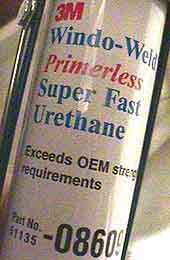
We been using the windo-weld trick for awhile at the shop I work at and yes it work great.
Here is a link of someone doing it, it's on a motor mount but you get the idea.
http://www.raktron.com/misc/mt.htm


Joined: Oct 2002
Posts: 689
Likes: 0
From: Indianapolis, IN, USA
Re: Prothane rear trailing arm bushing: legal STS (volkdlr)
How I do it is cut up pieces of polyurethane cutting board and shove them in to fill the big gaps and then fill the rest with the Windo-weld. Prevents the problem with it not curing and seems to be a little stiffer.

be professional
Joined: Oct 2002
Posts: 14,842
Likes: 13
From: Pittsburgh, PA
Re: Prothane rear trailing arm bushing: legal STS (volkdlr)
<TABLE WIDTH="90%" CELLSPACING=0 CELLPADDING=0 ALIGN=CENTER><TR><TD>Quote, originally posted by volkdlr »</TD></TR><TR><TD CLASS="quote">I remember someone saying that Honda will not sell just the bushing by itself they only sell the complete trailing arm? is this true?</TD></TR></TABLE>
You used to have to buy the entire trailing arm, but you can indeed buy the bushings separately nowadays.
The part numbers for the OEM Honda bushings can be found here, courtesy of H-T member Wes V. This information can also be found in Honda TSB #00-006, dated Dec. 11, 2001.
And of course the Mugen bushings can be found at King Motorsports.
Modified by Targa250R at 2:06 PM 12/6/2004
You used to have to buy the entire trailing arm, but you can indeed buy the bushings separately nowadays.
The part numbers for the OEM Honda bushings can be found here, courtesy of H-T member Wes V. This information can also be found in Honda TSB #00-006, dated Dec. 11, 2001.
And of course the Mugen bushings can be found at King Motorsports.
Modified by Targa250R at 2:06 PM 12/6/2004
Junior Member
Joined: Aug 2004
Posts: 143
Likes: 0
From: Orange County, CA
Re: Prothane rear trailing arm bushing: legal STS (turbohappy)

Honda-Tech Member
Joined: Nov 2000
Posts: 5,135
Likes: 0
From: Fredericksburg, VA, USA
Re: Prothane rear trailing arm bushing: legal STS (volkdlr)
<TABLE WIDTH="90%" CELLSPACING=0 CELLPADDING=0 ALIGN=CENTER><TR><TD>Quote, originally posted by volkdlr »</TD></TR><TR><TD CLASS="quote">anyone seen these?

I wondering if they work well.
http://www.jhpusa.com/catalog/...d=893 </TD></TR></TABLE>
Slot the holes, C clip the bearings and remove the adjustable end links
I wondering if they work well.
http://www.jhpusa.com/catalog/...d=893 </TD></TR></TABLE>
Slot the holes, C clip the bearings and remove the adjustable end links

Honda-Tech Member
Joined: Sep 2004
Posts: 1,390
Likes: 1
From: downshifting into 5th,, nyc, usa
Re: Prothane rear trailing arm bushing: legal STS (SMSP)
<TABLE WIDTH="90%" CELLSPACING=0 CELLPADDING=0 ALIGN=CENTER><TR><TD>Quote, originally posted by SMSP »</TD></TR><TR><TD CLASS="quote">
Slot the holes, C clip the bearings and remove the adjustable end links </TD></TR></TABLE>
i was planning to install these this week... can you elaborate a bit?
Slot the holes, C clip the bearings and remove the adjustable end links
</TD></TR></TABLE> i was planning to install these this week... can you elaborate a bit?