


Pulse Tig Welding


Thread Starter
Honda-Tech Member
Joined: Jan 2011
Posts: 31
Likes: 1
From: Barbados
 Pulse Tig Welding
Is it necessary to have a Tig welder with the pulse feature??
or can u really live without it using proper techniques??
im speaking to the turbo manifold, exhaust, IC pipe fab guys.
or can u really live without it using proper techniques??
im speaking to the turbo manifold, exhaust, IC pipe fab guys.

Honda-Tech Member
Joined: Jun 2009
Posts: 206
Likes: 0
 Re: Pulse Tig Welding
I don't use it but who knows, maybe one day it'll serve a real purpose so ill stay open minded. It just bugs me when guys don't weld good due to lack of experience, push that pulse button to go over their weld to make it look good.

OG Fabricator
Joined: Dec 2006
Posts: 1,342
Likes: 0
From: Calgary, Alberta, Canada
Re: Pulse Tig Welding
I'd like to see a very accomplished set of skills with constant feed and dip feed before pulse is explored or used. I don't feel I'm good enough yet to use it a bunch, I want to master the manual side first. I've used it maybe 3 or 4 times in the last several years. It has it's place, and I believe it is superior on thin material where heat treatments (6061-t651) or colour are paramount, and I too remain open to new ideas and applications.

OG Fabricator
Joined: Dec 2008
Posts: 1,073
Likes: 0
From: texas
Re: Pulse Tig Welding
You don't need a welder with pulse. I can say early on in welding I used it a lot, all it did was lead me down a road that in the long run did not help. Stick with constant heat and nice dipping rhythms. But, there is a time and place to use it. Welding really thin materials where warping is a issue, a high pps can have an advantage.
Thread Starter
Honda-Tech Member
Joined: Jan 2011
Posts: 31
Likes: 1
From: Barbados
Re: Pulse Tig Welding
Cool.
im not trying to short cut the welding but learn proper techniques.
i have a thermal arc 95S tig, but not having a foot pedal is a pain.
ur either too cold or too hot etc etc. im about to buy a another Tig hence the question.
i wouldnt get into the brands im looking at cause thats whole different road i dont want
to got down lol. As im not in the US the economics of buying particular brands doesnt
make it worth it when u factor in shipping.
Do u guys pulse with the foot pedal?
im not trying to short cut the welding but learn proper techniques.
i have a thermal arc 95S tig, but not having a foot pedal is a pain.
ur either too cold or too hot etc etc. im about to buy a another Tig hence the question.
i wouldnt get into the brands im looking at cause thats whole different road i dont want
to got down lol. As im not in the US the economics of buying particular brands doesnt
make it worth it when u factor in shipping.
Do u guys pulse with the foot pedal?

Honda-Tech Member
Joined: May 2008
Posts: 2,312
Likes: 1
From: RCautoworks, Bridgeview, Illinois
Re: Pulse Tig Welding
I've been welding for years now and producing products, I never use it. The only time I mess with it, is if I'm bored and just wanna mess with something different.

Honda-Tech Member
Joined: Feb 2011
Posts: 315
Likes: 0
Re: Pulse Tig Welding
When I was looking to buy my Welder I had the same questions as you and I asked one of my instructors weather or not to get it and he told me not to bother. He has a Dynasty 350 and never uses it and he's def. the best Tig welder i've seen in person so I took his advice. I ended up buying a Dynasty 200SD and saved the $200, I'm very happy with it.
Trending Topics
Honda-Tech Member
Joined: Jun 2009
Posts: 206
Likes: 0
Re: Pulse Tig Welding
I'll be honest, I use the foot pedal to pulse in certain cases where the material is thin or gaps occur where you need to pulse and weld backwards. I think learning to pulse is a great tool. Just another thing to teach your body some rhythm. The more you know about welding and know well, the better off you'll be. Just don't over do it with the pulse. Please.

Honda-Tech Member
Joined: Apr 2009
Posts: 71
Likes: 0
From: Tempe, AZ
Re: Pulse Tig Welding
I have messed around with pulsed TIG a little, using the pedal and then with machine settings on stainless tubing. From what I remember, I saw a smaller HAZ and faster travel speed. IMO it's a feature worth having....then again, I haven't picked up a torch in ~4 months lol

Honda-Tech Member
Joined: Jun 2004
Posts: 426
Likes: 0
From: Kent, WA, USA
Re: Pulse Tig Welding
The pulse feature is great. I don't understand why people think it's "cheating" when you can control the heat input more effectively. Setting up peak amps, background and PPS helps with distortion on thin sheet metal and controls the affected HAZ. I've always used the pulse setting when I do titanium fillet welds and no I just don't just pulse and do an autogenous weld but I do add my filler by pulsing my wire in. Let me say this one more time... It's not cheating if you know how to use it correctly.
OG Fabricator
Joined: Dec 2008
Posts: 1,073
Likes: 0
From: texas
Re: Pulse Tig Welding
I've seen a local shop making horrible root passes, then pulsing over them to make them look nice. Fixed a few.
I do use pulse on head flanges, and turbo flanges. I've had nothing but great results with it, keeping much needed heat outa them. Not sure peoples take on this, but from what I've seen full-race also does this. Seems to work well for people.
AFI, pulsing head flanges? It really seems less heat going into them helps? As far as welding the runners i use a constant hear around 70-80 amps.
I do use pulse on head flanges, and turbo flanges. I've had nothing but great results with it, keeping much needed heat outa them. Not sure peoples take on this, but from what I've seen full-race also does this. Seems to work well for people.
AFI, pulsing head flanges? It really seems less heat going into them helps? As far as welding the runners i use a constant hear around 70-80 amps.
OG Fabricator
Joined: Dec 2008
Posts: 1,073
Likes: 0
From: texas
Thread Starter
Honda-Tech Member
Joined: Jan 2011
Posts: 31
Likes: 1
From: Barbados
Re: Pulse Tig Welding
I'll be honest, I use the foot pedal to pulse in certain cases where the material is thin or gaps occur where you need to pulse and weld backwards. I think learning to pulse is a great tool. Just another thing to teach your body some rhythm. The more you know about welding and know well, the better off you'll be. Just don't over do it with the pulse. Please.
was just making sure it a feature i can live without as the tig im looking
at has no pulse feature.

Honda-Tech Member
Joined: Jun 2009
Posts: 206
Likes: 0
Re: Pulse Tig Welding
I pulled out a manifold from the archive. This is an example of someone who didn't know what they were doing.
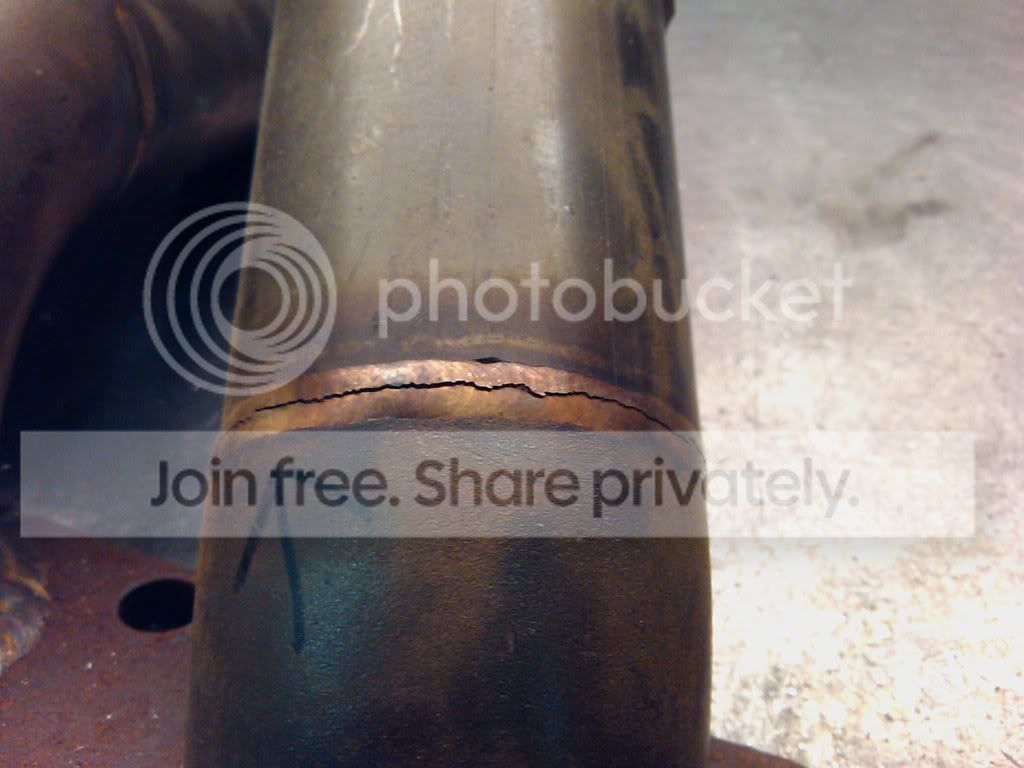
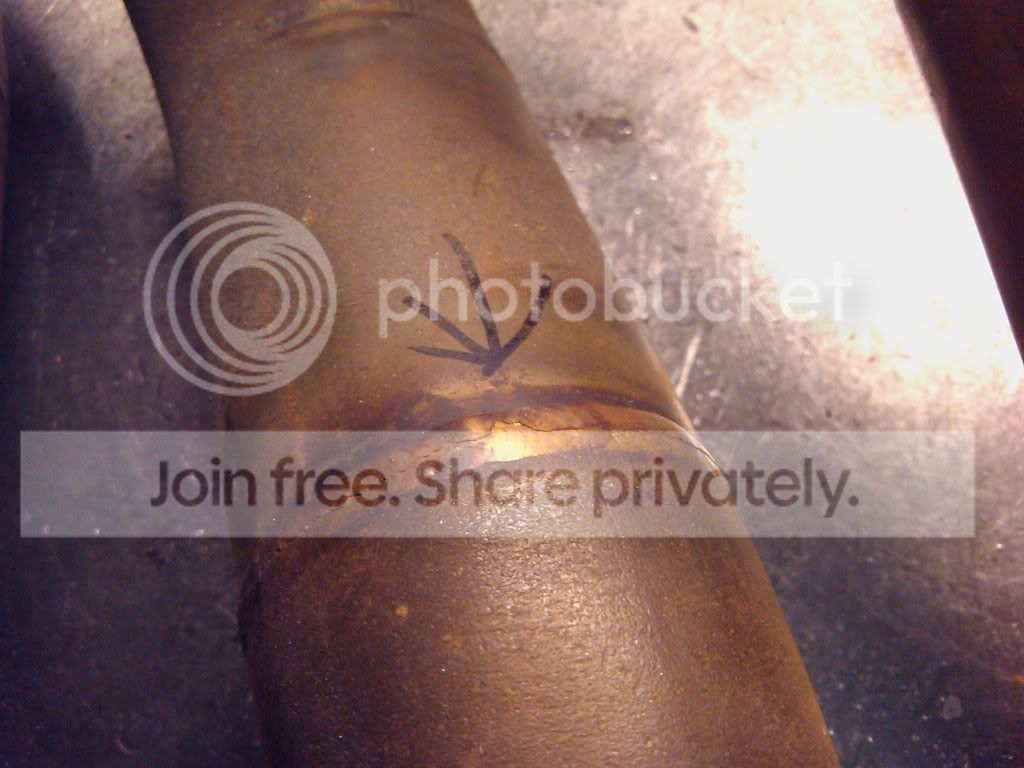
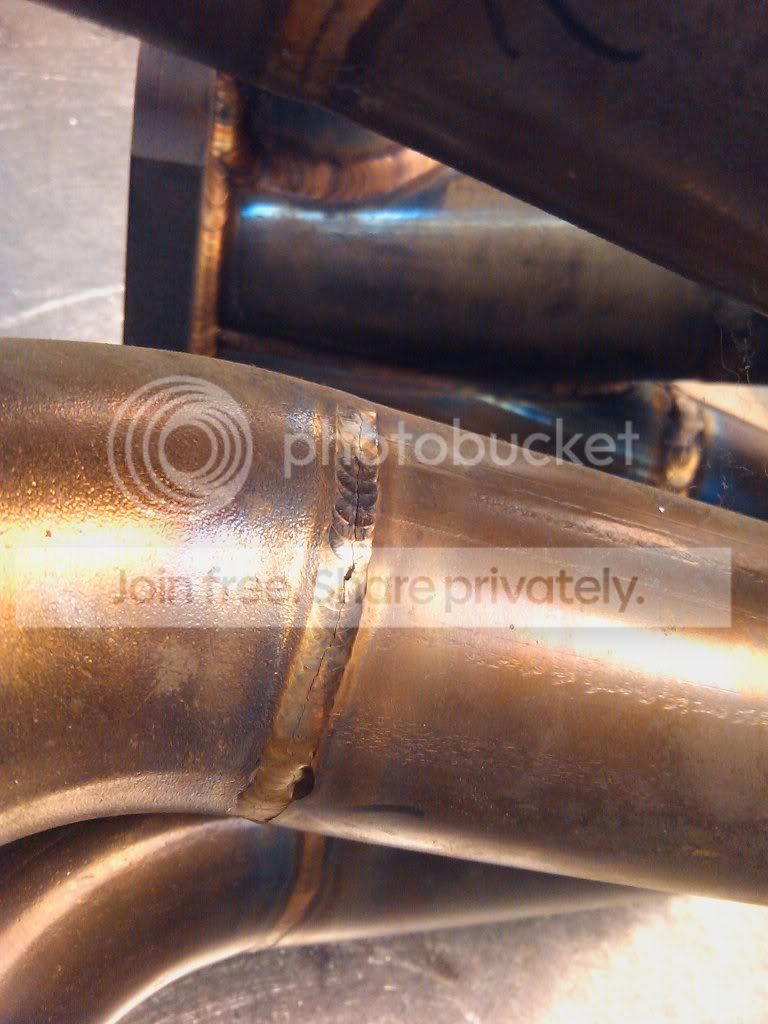
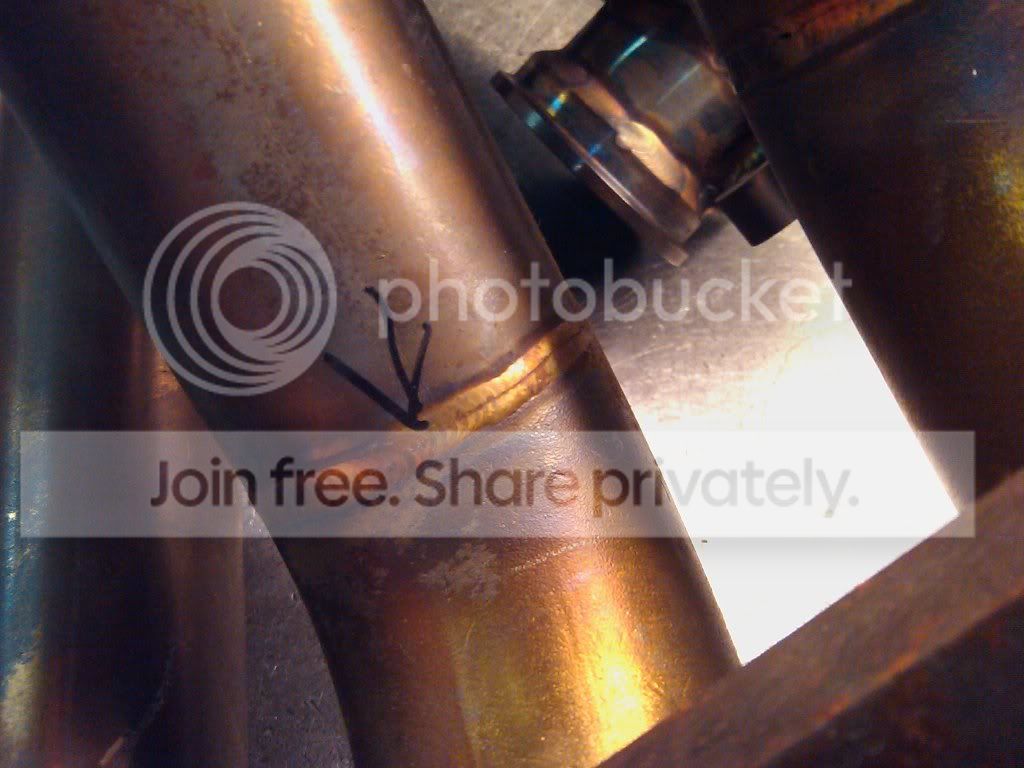
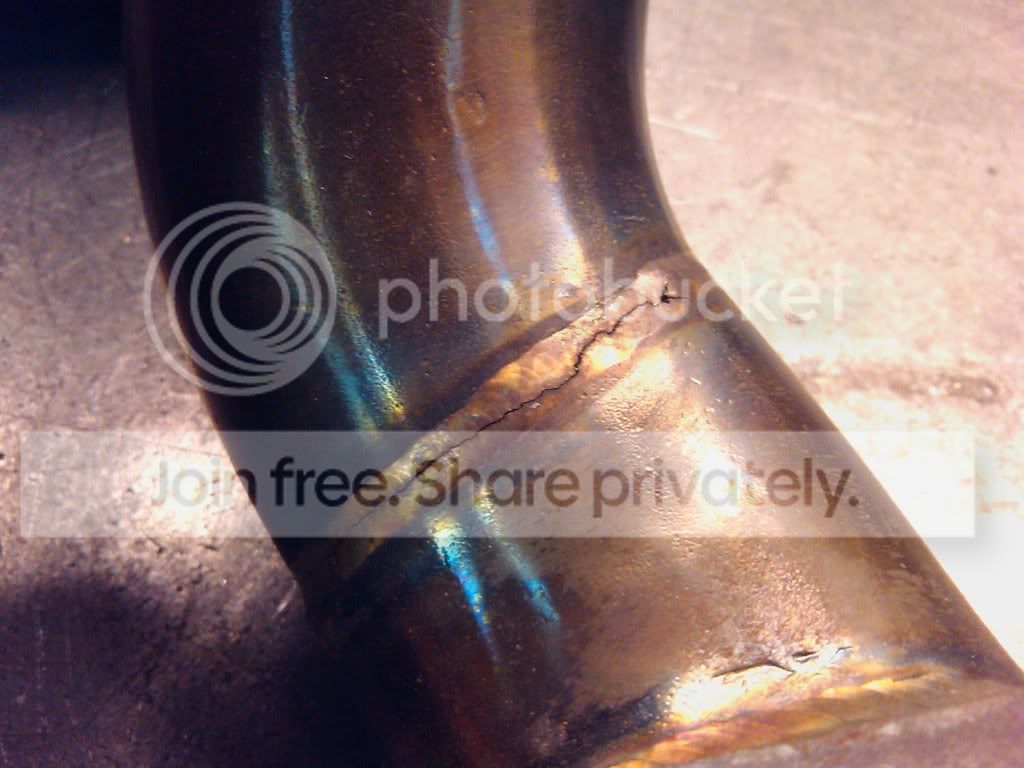
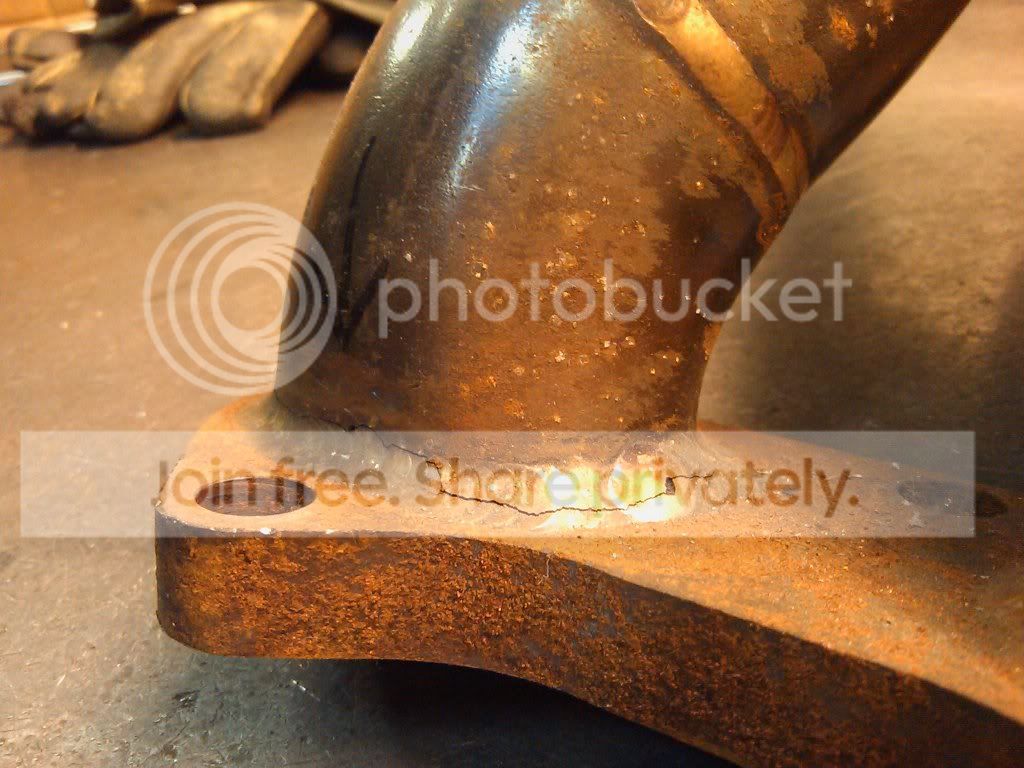
All this was done on one individual manifold that was sold to a customer. It had 5 cracks down the center of the weld and was COMPLETELY UNACCEPTABLE.
These runners were welded with 2 passes. First pass was with filler and the second was with the pulse setting on the machine to clean up the look of the hand weld.
All this was done on one individual manifold that was sold to a customer. It had 5 cracks down the center of the weld and was COMPLETELY UNACCEPTABLE.
These runners were welded with 2 passes. First pass was with filler and the second was with the pulse setting on the machine to clean up the look of the hand weld.

Honda-Tech Member
Joined: Oct 2003
Posts: 252
Likes: 0
From: Lake Ariel, PA, USA
Re: Pulse Tig Welding
The head flange weld cracked in a pretty interesting place. It doesn't seem to be the thinnest part of the joint. Looks like the pipe joints didn't see enough heat--but its hard to tell from the weld on the flange.
Should the pulse time been reduced or the pulse amps increased?
I'm still playing around with the HS pulsur function on my welder and it's interesting to say the least.
Should the pulse time been reduced or the pulse amps increased?
I'm still playing around with the HS pulsur function on my welder and it's interesting to say the least.

Honda-Tech Member
Joined: Jun 2004
Posts: 426
Likes: 0
From: Kent, WA, USA
Re: Pulse Tig Welding
When I have a chance I will show you guys a picture of how I run the pulse setting when dealing with thin material. I don't use the pulse setting to melt the existing weld for aesthetic purposes but for a whole different reason. I think you guys are getting at this wrong... I'll post information of what schedule I run also...

Honda-Tech Member
Joined: Jan 2008
Posts: 79
Likes: 0
From: Austin, Tx, USA
Re: Pulse Tig Welding
Did they just not bevel and back purge that manifold?
the kid must have been stoked to get that manifold since it looks pretty good, then psyche its actually a piece of **** hahaha.
the kid must have been stoked to get that manifold since it looks pretty good, then psyche its actually a piece of **** hahaha.
Thread Starter
Honda-Tech Member
Joined: Jan 2011
Posts: 31
Likes: 1
From: Barbados
Re: Pulse Tig Welding
Just an small update...
I ended up ditching the 'cheap' welder and got a HTP Invertig 201. Its
ability to run off a 30A circuit was the main selling point for me given
i cant add/change the circuits where i am an i have a 30A feed ready.
I ended up ditching the 'cheap' welder and got a HTP Invertig 201. Its
ability to run off a 30A circuit was the main selling point for me given
i cant add/change the circuits where i am an i have a 30A feed ready.
OG Fabricator
Joined: Dec 2006
Posts: 1,342
Likes: 0
From: Calgary, Alberta, Canada
Re: Pulse Tig Welding
When I have a chance I will show you guys a picture of how I run the pulse setting when dealing with thin material. I don't use the pulse setting to melt the existing weld for aesthetic purposes but for a whole different reason. I think you guys are getting at this wrong... I'll post information of what schedule I run also...
Funny thing is, I recently fixed a FR manifold, and there was no penetration on any of the butt joints on the runners. I was surprised. They must have some data telling them this works long-term. I have a hard time believing it's the best way to do it though. Faster and more profitable, absolutely. It's a stress riser, how does it not adversely shorten the life of the product? Their warranty and reputation suggest it works fine.
The welds are pulsed, and spectacular of course.
The real benefits of pulse are to maximize penetration while minimizing heat input.
Running a much higher peak amperage, with a very low background current achieves this well. I save a ton of gas too.