


How important is it to level an engine off when retrofitting it ?


Thread Starter
Honda-Tech Member
Joined: Aug 2004
Posts: 4,638
Likes: 0
From: Altamonte Springs/Orlando, Florida, USA
 How important is it to level an engine off when retrofitting it ?
How important is it to level off a chassis North-South / East-West when mounting it
into a chassis it doesn't bolt into?
Should I even consider this in relation to how an engine picks up oil for its galleys, and how well it will pick up oil from it's pan whether dry or wet sump oil system.
into a chassis it doesn't bolt into?
Should I even consider this in relation to how an engine picks up oil for its galleys, and how well it will pick up oil from it's pan whether dry or wet sump oil system.

Honda-Tech Member
Joined: Apr 2001
Posts: 16,905
Likes: 3
From: Lansdale, PA
Re: How important is it to level an engine off when retrofitting it ? (MidShipCivic)
in my opinion the engine should be "square" in the car. i wouldnt want my engine facing left or right or up or down. who knows what may happen if and when the car makes big power ?
also, try to get the oil pickup close to level, if its not by the time you have the engine "squared up" in there.
also, try to get the oil pickup close to level, if its not by the time you have the engine "squared up" in there.

Honda-Tech Member
Joined: Jun 2004
Posts: 2,852
Likes: 0
From: Dont Steal My Car, Ct, USA
Re: How important is it to level an engine off when retrofitting it ? (DaveF)
i think the most important thing is to make sure the car is true, and once u verify that it is, then squaring the enigne to certian points like the strut mounts or the firewall would be more important than having it truely straight.
Make it straight to the car, and focus less on making it truely "straight"
Make it straight to the car, and focus less on making it truely "straight"


Honda-Tech Member
Joined: Dec 2003
Posts: 920
Likes: 0
From: bumfuck egypt, SD, US
Re: How important is it to level an engine off when retrofitting it ? (MidShipCivic)
Well, the way I've done it in my own car and helped a few friends do it was first, get the axle lengths equal, and as straight as possible, if you can, (there's your N/S/E/W), then copy the original mounting angle of the motor. For instance, with these honda motors, the bottom of the oil pan will be parallel with the ground when the motor is angled properly..
But I suspect you already know everything I just wrote..
As far as a v8 or something rwd without a transversely mounted motor, the motor in my completely stock chevy truck sits slightly off to the pass side to clear the steering shaft, and I suspect that's common in a lot of vehicles. I thought that was retarded when I first noticed it, but whatever. So I guess it's not all that important, if there is a slight offset in weight at all, it's probably is more than compensated by me sitting in the driver's seat. Or by having a full tank of gas. I'd still center it if I could though. When I turn into a baller and can afford to put the 4.2L inline 6 in my truck, it'll be centered..
But I suspect you already know everything I just wrote..
As far as a v8 or something rwd without a transversely mounted motor, the motor in my completely stock chevy truck sits slightly off to the pass side to clear the steering shaft, and I suspect that's common in a lot of vehicles. I thought that was retarded when I first noticed it, but whatever. So I guess it's not all that important, if there is a slight offset in weight at all, it's probably is more than compensated by me sitting in the driver's seat. Or by having a full tank of gas. I'd still center it if I could though. When I turn into a baller and can afford to put the 4.2L inline 6 in my truck, it'll be centered..

Honda-Tech Member
Joined: Oct 2000
Posts: 4,534
Likes: 0
From: Zoo York
Re: How important is it to level an engine off when retrofitting it ? (rorik)
Many v8's are offset a lil bit. Somre more than others. Just like the yoke of the rear isnt centered in many car either. Squaring the motor is pretty important, dont want the motor pointing anywhere but straight. Keep in mind also for a street car you generally do not want a straight driveshaft when positioning the motor and rear.
Trending Topics

Honda-Tech Member
Joined: Sep 2002
Posts: 5,517
Likes: 1
From: ME
Re: How important is it to level an engine off when retrofitting it ? (bigTom)
Yup, you want the crank either inline or square to the car (transverse or longitudinal) but other than that it depends on how it was originally mounted. I'm doing a 6.1 Hemi into a '49 Plymouth right now and it's interesting to see how it was all orientated from the factory. it's about 1 3/16" offset to the passenger side and so is the rear end.
Thread Starter
Honda-Tech Member
Joined: Aug 2004
Posts: 4,638
Likes: 0
From: Altamonte Springs/Orlando, Florida, USA
Re: How important is it to level an engine off when retrofitting it ? (DaveF)
<TABLE WIDTH="90%" CELLSPACING=0 CELLPADDING=0 ALIGN=CENTER><TR><TD>Quote, originally posted by DaveF »</TD></TR><TR><TD CLASS="quote">in my opinion the engine should be "square" in the car. i wouldnt want my engine facing left or right or up or down. who knows what may happen if and when the car makes big power ?
also, try to get the oil pickup close to level, if its not by the time you have the engine "squared up" in there. </TD></TR></TABLE>
Oil pick up close to level as in positioning it with no pan, and using a leveler?
<TABLE WIDTH="90%" CELLSPACING=0 CELLPADDING=0 ALIGN=CENTER><TR><TD>Quote, originally posted by 93supercoupe »</TD></TR><TR><TD CLASS="quote">
Make it straight to the car, and focus less on making it truely "straight"</TD></TR></TABLE>
Of course.
<TABLE WIDTH="90%" CELLSPACING=0 CELLPADDING=0 ALIGN=CENTER><TR><TD>Quote, originally posted by Mike@TCI »</TD></TR><TR><TD CLASS="quote">Depends on the vehicle and engine, where as sometimes an offset to the pass side is necessary, in order to clear the steering shaft.</TD></TR></TABLE>
89 Nissan 240sx.
Nissan VH45DE V8


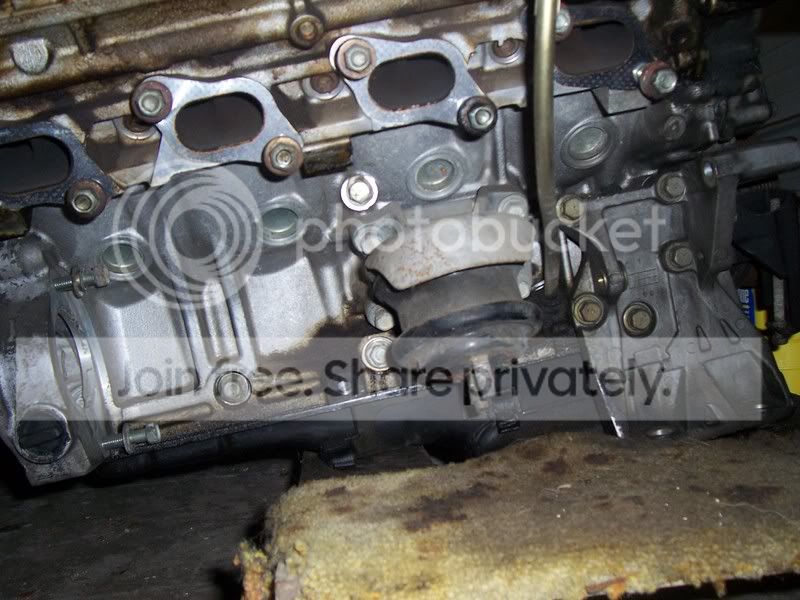
I'm not sure if I'll use the stock mounts is it best that I should keep their mounting geometry?
<TABLE WIDTH="90%" CELLSPACING=0 CELLPADDING=0 ALIGN=CENTER><TR><TD>Quote, originally posted by rorik »</TD></TR><TR><TD CLASS="quote">
As far as a v8 or something rwd without a transversely mounted motor, the motor in my completely stock chevy truck sits slightly off to the pass side to clear the steering shaft, and I suspect that's common in a lot of vehicles. I thought that was retarded when I first noticed it, but whatever. So I guess it's not all that important, if there is a slight offset in weight at all, it's probably is more than compensated by me sitting in the driver's seat. Or by having a full tank of gas. I'd still center it if I could though. When I turn into a baller and can afford to put the 4.2L inline 6 in my truck, it'll be centered..</TD></TR></TABLE>
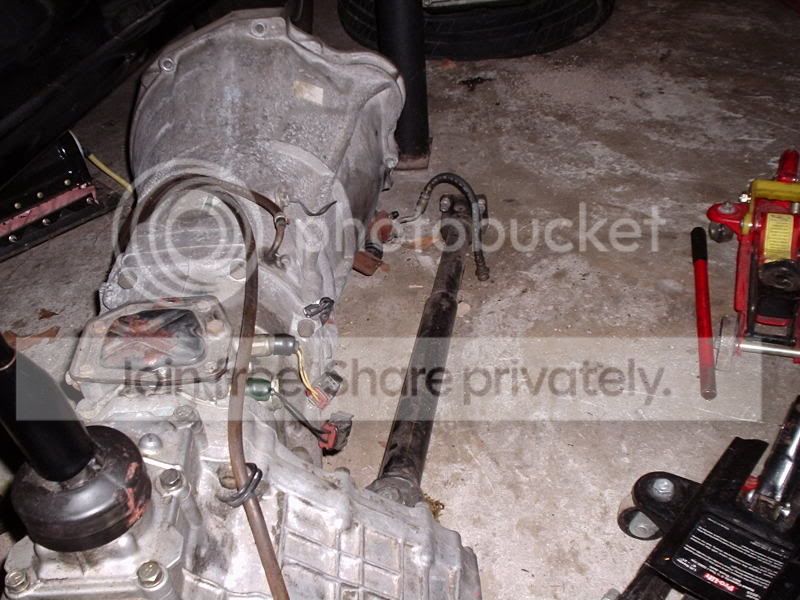
Well in my case. I have a Skyline GTR front driveshaft running to the front of the car. I'm not sure if the driveshaft will intersect the OEM mount bracket. I hope it doesn't , because it will tolerate very little angle and it is very close to stationary parts.
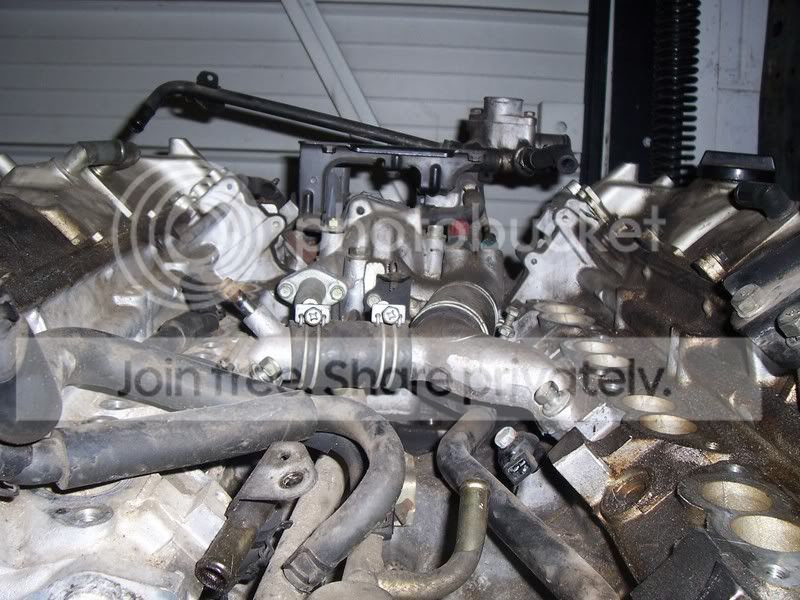
In the valley there is this X between it I figure I can lay a leveler on it and that should suffice I have a lot of other objects to think about as well I'll bring them up
when I can summarize it.


<TABLE WIDTH="90%" CELLSPACING=0 CELLPADDING=0 ALIGN=CENTER><TR><TD>Quote, originally posted by BailHatch »</TD></TR><TR><TD CLASS="quote"> Yup, you want the crank either inline or square to the car </TD></TR></TABLE>
So reference position to in between frame rail to crank center line ? I know it may not be perfect due to something maybe turbo manifold or drive shafts.
also, try to get the oil pickup close to level, if its not by the time you have the engine "squared up" in there. </TD></TR></TABLE>
Oil pick up close to level as in positioning it with no pan, and using a leveler?
<TABLE WIDTH="90%" CELLSPACING=0 CELLPADDING=0 ALIGN=CENTER><TR><TD>Quote, originally posted by 93supercoupe »</TD></TR><TR><TD CLASS="quote">
Make it straight to the car, and focus less on making it truely "straight"</TD></TR></TABLE>
Of course.
<TABLE WIDTH="90%" CELLSPACING=0 CELLPADDING=0 ALIGN=CENTER><TR><TD>Quote, originally posted by Mike@TCI »</TD></TR><TR><TD CLASS="quote">Depends on the vehicle and engine, where as sometimes an offset to the pass side is necessary, in order to clear the steering shaft.</TD></TR></TABLE>
89 Nissan 240sx.
Nissan VH45DE V8
I'm not sure if I'll use the stock mounts is it best that I should keep their mounting geometry?
<TABLE WIDTH="90%" CELLSPACING=0 CELLPADDING=0 ALIGN=CENTER><TR><TD>Quote, originally posted by rorik »</TD></TR><TR><TD CLASS="quote">
As far as a v8 or something rwd without a transversely mounted motor, the motor in my completely stock chevy truck sits slightly off to the pass side to clear the steering shaft, and I suspect that's common in a lot of vehicles. I thought that was retarded when I first noticed it, but whatever. So I guess it's not all that important, if there is a slight offset in weight at all, it's probably is more than compensated by me sitting in the driver's seat. Or by having a full tank of gas. I'd still center it if I could though. When I turn into a baller and can afford to put the 4.2L inline 6 in my truck, it'll be centered..</TD></TR></TABLE>
Well in my case. I have a Skyline GTR front driveshaft running to the front of the car. I'm not sure if the driveshaft will intersect the OEM mount bracket. I hope it doesn't , because it will tolerate very little angle and it is very close to stationary parts.
In the valley there is this X between it I figure I can lay a leveler on it and that should suffice I have a lot of other objects to think about as well I'll bring them up
when I can summarize it.
<TABLE WIDTH="90%" CELLSPACING=0 CELLPADDING=0 ALIGN=CENTER><TR><TD>Quote, originally posted by BailHatch »</TD></TR><TR><TD CLASS="quote"> Yup, you want the crank either inline or square to the car </TD></TR></TABLE>
So reference position to in between frame rail to crank center line ? I know it may not be perfect due to something maybe turbo manifold or drive shafts.

Honda-Tech Member
Joined: Apr 2005
Posts: 1,895
Likes: 0
From: Lincoln, Ne, USA
Re: How important is it to level an engine off when retrofitting it ? (MidShipCivic)
I'd try to get the engine as close to how it was mounted originally as possible. Sometimes the engines are mounted at a slight angle...ie front higher than the rear.
Honda-Tech Member
Joined: Dec 2003
Posts: 920
Likes: 0
From: bumfuck egypt, SD, US
It sounds like quite a project you have there..
I'm not really familiar with nissans, but as far as using stock mounts/stock mount locations on a motor, and altering only the chassis, that's how I would do it. The factory puts the main mounts on the motor/powertrain in the location that transmits the least amount of vibration into the chassis. On a honda, that's why the tranny side mount and the driver's side mount are located not on a flat centerline. They're located close to the driveline's axis of torsional vibration, which is not perpendicular to the chassis/parallel with the ground.. So despite the non factory intended joining of the v8 and skyline tranny/transfer case (right?) I'm guessing the oem mounting points on the motor/tranny would still be close to ideal.
Good luck with your project, definitely sounds like it's going to be pretty cool.
I'm not really familiar with nissans, but as far as using stock mounts/stock mount locations on a motor, and altering only the chassis, that's how I would do it. The factory puts the main mounts on the motor/powertrain in the location that transmits the least amount of vibration into the chassis. On a honda, that's why the tranny side mount and the driver's side mount are located not on a flat centerline. They're located close to the driveline's axis of torsional vibration, which is not perpendicular to the chassis/parallel with the ground.. So despite the non factory intended joining of the v8 and skyline tranny/transfer case (right?) I'm guessing the oem mounting points on the motor/tranny would still be close to ideal.
Good luck with your project, definitely sounds like it's going to be pretty cool.
Thread Starter
Honda-Tech Member
Joined: Aug 2004
Posts: 4,638
Likes: 0
From: Altamonte Springs/Orlando, Florida, USA
Re: How important is it to level an engine off when retrofitting it ? (bigTom)
<TABLE WIDTH="90%" CELLSPACING=0 CELLPADDING=0 ALIGN=CENTER><TR><TD>Quote, originally posted by bigTom »</TD></TR><TR><TD CLASS="quote"> Keep in mind also for a street car you generally do not want a straight driveshaft when positioning the motor and rear.
</TD></TR></TABLE>
Could you be more elaborate?
<TABLE WIDTH="90%" CELLSPACING=0 CELLPADDING=0 ALIGN=CENTER><TR><TD>Quote, originally posted by rorik »</TD></TR><TR><TD CLASS="quote">It sounds like quite a project you have there..
I'm not really familiar with nissans, but as far as using stock mounts/stock mount locations on a motor, and altering only the chassis, that's how I would do it.
</TD></TR></TABLE>
Well I DO want to use polyurethane mounts so I'm probably going to be changing these.
<TABLE WIDTH="90%" CELLSPACING=0 CELLPADDING=0 ALIGN=CENTER><TR><TD>Quote »</TD></TR><TR><TD CLASS="quote">So despite the non factory intended joining of the v8 and skyline tranny/transfer case (right?) I'm guessing the oem mounting points on the motor/tranny would still be close to ideal.
Good luck with your project, definitely sounds like it's going to be pretty cool.</TD></TR></TABLE>
Well I already can't use the stock passenger side mount because the driveshaft pretty much intersects that space.
</TD></TR></TABLE>
Could you be more elaborate?
<TABLE WIDTH="90%" CELLSPACING=0 CELLPADDING=0 ALIGN=CENTER><TR><TD>Quote, originally posted by rorik »</TD></TR><TR><TD CLASS="quote">It sounds like quite a project you have there..
I'm not really familiar with nissans, but as far as using stock mounts/stock mount locations on a motor, and altering only the chassis, that's how I would do it.
</TD></TR></TABLE>
Well I DO want to use polyurethane mounts so I'm probably going to be changing these.
<TABLE WIDTH="90%" CELLSPACING=0 CELLPADDING=0 ALIGN=CENTER><TR><TD>Quote »</TD></TR><TR><TD CLASS="quote">So despite the non factory intended joining of the v8 and skyline tranny/transfer case (right?) I'm guessing the oem mounting points on the motor/tranny would still be close to ideal.
Good luck with your project, definitely sounds like it's going to be pretty cool.</TD></TR></TABLE>
Well I already can't use the stock passenger side mount because the driveshaft pretty much intersects that space.

Junior Member
Joined: Oct 2005
Posts: 419
Likes: 0
From: Cleveland, OH, USA
Re: How important is it to level an engine off when retrofitting it ? (MidShipCivic)
Looking at the car from the top, you want the crank centerline in line with the centerline of your rear end. It can be offset a little, but try not to angle it. keep in mind the angle of the driveshaft joints. Looking from the side, it can be angled (many production longitudinal engines are) based on the angles of the driveline joints (keeping them to a minimum to avoid the non-linearity of power transfer through U-joints, and the associated power loss and vibration issues). Looking from the front, you can rotate the engine about the crank as needed for clearance.
The caveat is that your engine oil system should be able to get oil at all times. The 'level the oil pickup' argument doesn't hold much water when the car is accelerating, braking, or turning hard, because the oil will move around in the pan. As far as what to do to make sure your engine gets oil, there's no one answer other than dry sump, lots of cars oil starve and blow motors. Just be careful.
Also, those laser levels arent very accurate past a coulpe feet. Read the tolerances if you don't believe me. As a contractor I have seen some that are off by 1/4" at 15' that's not so good. I like using a long piece of 1x2 and a nice camber/caster gague level where I can. But I'm **** like that.
The caveat is that your engine oil system should be able to get oil at all times. The 'level the oil pickup' argument doesn't hold much water when the car is accelerating, braking, or turning hard, because the oil will move around in the pan. As far as what to do to make sure your engine gets oil, there's no one answer other than dry sump, lots of cars oil starve and blow motors. Just be careful.
Also, those laser levels arent very accurate past a coulpe feet. Read the tolerances if you don't believe me. As a contractor I have seen some that are off by 1/4" at 15' that's not so good.
I like using a long piece of 1x2 and a nice camber/caster gague level where I can. But I'm **** like that.
Honda-Tech Member
Joined: Apr 2005
Posts: 1,895
Likes: 0
From: Lincoln, Ne, USA
Re: How important is it to level an engine off when retrofitting it ? (Niles)
FWIW you want to angle the u joints ever so slightly to keep the bearings moving, as opposed to having the driveshaft dead center with the output of the trans and the input of the rear diff.
Thread Starter
Honda-Tech Member
Joined: Aug 2004
Posts: 4,638
Likes: 0
From: Altamonte Springs/Orlando, Florida, USA
Re: How important is it to level an engine off when retrofitting it ? (Niles)
<TABLE WIDTH="90%" CELLSPACING=0 CELLPADDING=0 ALIGN=CENTER><TR><TD>Quote, originally posted by Niles »</TD></TR><TR><TD CLASS="quote">
Also, those laser levels arent very accurate past a coulpe feet. Read the tolerances if you don't believe me. As a contractor I have seen some that are off by 1/4" at 15' that's not so good. I like using a long piece of 1x2 and a nice camber/caster gague level where I can. But I'm **** like that.</TD></TR></TABLE>
Couple of feet is 15' ? For example I'm moving the engine back and making sure it's square with the rear differential centerline that shouldn't exceed 15' or come close ... Or am I missing something here ?
<TABLE WIDTH="90%" CELLSPACING=0 CELLPADDING=0 ALIGN=CENTER><TR><TD>Quote, originally posted by k24em2 »</TD></TR><TR><TD CLASS="quote">FWIW you want to angle the u joints ever so slightly to keep the bearings moving, as opposed to having the driveshaft dead center with the output of the trans and the input of the rear diff.</TD></TR></TABLE>
In what way? Tilting the east-west axis or Tilting the North-South axis and how much angle am I looking for ?
Modified by MidShipCivic at 10:30 PM 2/4/2008
Also, those laser levels arent very accurate past a coulpe feet. Read the tolerances if you don't believe me. As a contractor I have seen some that are off by 1/4" at 15' that's not so good.
I like using a long piece of 1x2 and a nice camber/caster gague level where I can. But I'm **** like that.</TD></TR></TABLE>Couple of feet is 15' ? For example I'm moving the engine back and making sure it's square with the rear differential centerline that shouldn't exceed 15' or come close ... Or am I missing something here ?
<TABLE WIDTH="90%" CELLSPACING=0 CELLPADDING=0 ALIGN=CENTER><TR><TD>Quote, originally posted by k24em2 »</TD></TR><TR><TD CLASS="quote">FWIW you want to angle the u joints ever so slightly to keep the bearings moving, as opposed to having the driveshaft dead center with the output of the trans and the input of the rear diff.</TD></TR></TABLE>
In what way? Tilting the east-west axis or Tilting the North-South axis and how much angle am I looking for ?
Modified by MidShipCivic at 10:30 PM 2/4/2008
Honda-Tech Member
Joined: Apr 2005
Posts: 1,895
Likes: 0
From: Lincoln, Ne, USA
Re: How important is it to level an engine off when retrofitting it ? (MidShipCivic)
Doesn't matter the direction, and a few degrees is all thats necessary. Check with whoever makes your driveshaft...most of them will spec it for you if you ask.
Thread Starter
Honda-Tech Member
Joined: Aug 2004
Posts: 4,638
Likes: 0
From: Altamonte Springs/Orlando, Florida, USA
Re: How important is it to level an engine off when retrofitting it ? (k24em2)
<TABLE WIDTH="90%" CELLSPACING=0 CELLPADDING=0 ALIGN=CENTER><TR><TD>Quote, originally posted by k24em2 »</TD></TR><TR><TD CLASS="quote">Doesn't matter the direction, and a few degrees is all thats necessary. Check with whoever makes your driveshaft...most of them will spec it for you if you ask.</TD></TR></TABLE>
<TABLE WIDTH="90%" CELLSPACING=0 CELLPADDING=0 ALIGN=CENTER><TR><TD>Quote »</TD></TR><TR><TD CLASS="quote">Operating angles in a driveshaft are the angles between the pinion, driveshaft and transmission centerlines. The optimal angle for any driveshaft to run at is 0 degrees, where many vibrational and frictional problems are non-existent. In order to minimize power loss and vibration in an offset configuration, the pinion centerline and the transmission centerline need to be parallel. In general, the largest angle for racing applications should be 2 degrees and the centerlines should be parallel within 1/2 degree. If the centerlines are off too far, the u-joints travel at different speeds causing vibration (this is the same problem induced by poorly phased end yokes). This vibration is hard to distinguish from an unbalanced driveshaft.

- Mark Williams
</TD></TR></TABLE>
What's your comments on that ?
<TABLE WIDTH="90%" CELLSPACING=0 CELLPADDING=0 ALIGN=CENTER><TR><TD>Quote »</TD></TR><TR><TD CLASS="quote">Operating angles in a driveshaft are the angles between the pinion, driveshaft and transmission centerlines. The optimal angle for any driveshaft to run at is 0 degrees, where many vibrational and frictional problems are non-existent. In order to minimize power loss and vibration in an offset configuration, the pinion centerline and the transmission centerline need to be parallel. In general, the largest angle for racing applications should be 2 degrees and the centerlines should be parallel within 1/2 degree. If the centerlines are off too far, the u-joints travel at different speeds causing vibration (this is the same problem induced by poorly phased end yokes). This vibration is hard to distinguish from an unbalanced driveshaft.
- Mark Williams
</TD></TR></TABLE>
What's your comments on that ?
Honda-Tech Member
Joined: Apr 2005
Posts: 1,895
Likes: 0
From: Lincoln, Ne, USA
Re: How important is it to level an engine off when retrofitting it ? (MidShipCivic)
Check with who makes your driveshaft...I've had some made and have been told to angle it very slightly.
Honda-Tech Member
Joined: Dec 2003
Posts: 920
Likes: 0
From: bumfuck egypt, SD, US
Re: How important is it to level an engine off when retrofitting it ? (k24em2)
<TABLE WIDTH="90%" CELLSPACING=0 CELLPADDING=0 ALIGN=CENTER><TR><TD>Quote, originally posted by k24em2 »</TD></TR><TR><TD CLASS="quote">FWIW you want to angle the u joints ever so slightly to keep the bearings moving, as opposed to having the driveshaft dead center with the output of the trans and the input of the rear diff.</TD></TR></TABLE>
Why? if the bearings aren't moving, I see that as advantageous to friction reduction, etc.
I suspect most driveshaft angles are solely the result of packaging concerns. (keeping the tranny up and out of the way)
Why? if the bearings aren't moving, I see that as advantageous to friction reduction, etc.
I suspect most driveshaft angles are solely the result of packaging concerns. (keeping the tranny up and out of the way)
Honda-Tech Member
Joined: Dec 2003
Posts: 920
Likes: 0
From: bumfuck egypt, SD, US
Re: How important is it to level an engine off when retrofitting it ? (MidShipCivic)
<TABLE WIDTH="90%" CELLSPACING=0 CELLPADDING=0 ALIGN=CENTER><TR><TD>Quote, originally posted by MidShipCivic »</TD></TR><TR><TD CLASS="quote">
Well I DO want to use polyurethane mounts so I'm probably going to be changing these. </TD></TR></TABLE>
I just mean the location of the mounts on the motor/powertrain, not the material. I'd always adapt the chassis to fit the stock mount locations on the powertrain if possible, that's all I was saying.
Well I DO want to use polyurethane mounts so I'm probably going to be changing these. </TD></TR></TABLE>
I just mean the location of the mounts on the motor/powertrain, not the material. I'd always adapt the chassis to fit the stock mount locations on the powertrain if possible, that's all I was saying.
Honda-Tech Member
Joined: Apr 2005
Posts: 1,895
Likes: 0
From: Lincoln, Ne, USA
Re: How important is it to level an engine off when retrofitting it ? (rorik)
<TABLE WIDTH="90%" CELLSPACING=0 CELLPADDING=0 ALIGN=CENTER><TR><TD>Quote, originally posted by rorik »</TD></TR><TR><TD CLASS="quote">
Why? if the bearings aren't moving, I see that as advantageous to friction reduction, etc.
I suspect most driveshaft angles are solely the result of packaging concerns. (keeping the tranny up and out of the way)</TD></TR></TABLE>
I think it depends more on how the bearings are lubed...It needs to keep the grease moving...same thing with CV joints, but to a greater extent
Why? if the bearings aren't moving, I see that as advantageous to friction reduction, etc.
I suspect most driveshaft angles are solely the result of packaging concerns. (keeping the tranny up and out of the way)</TD></TR></TABLE>
I think it depends more on how the bearings are lubed...It needs to keep the grease moving...same thing with CV joints, but to a greater extent

Honda-Tech Member
Joined: May 2002
Posts: 3,599
Likes: 0
From: BeLlInGhAm, Wa
Re: How important is it to level an engine off when retrofitting it ? (k24em2)
you want to offset your cardin joints so they dont bind. you weld them 180 degrees out from each other on the driveshaft.
I wouldn't worry about trying to get misalignment in the driveshaft as it will be hard not to have it unless you spend tons of time getting it perfectly straight only to set the car on its wheels and realiz its constantly changing and it doesnt really matter !
as far as the engine etc. ... you know what right is...just do it. (maybe ask for more money too!)
I wouldn't worry about trying to get misalignment in the driveshaft as it will be hard not to have it unless you spend tons of time getting it perfectly straight only to set the car on its wheels and realiz its constantly changing and it doesnt really matter !
as far as the engine etc. ... you know what right is...just do it.
(maybe ask for more money too!)
Thread Starter
Honda-Tech Member
Joined: Aug 2004
Posts: 4,638
Likes: 0
From: Altamonte Springs/Orlando, Florida, USA
Re: How important is it to level an engine off when retrofitting it ? (.RTErnie)
<TABLE WIDTH="90%" CELLSPACING=0 CELLPADDING=0 ALIGN=CENTER><TR><TD>Quote, originally posted by .RTErnie »</TD></TR><TR><TD CLASS="quote">you want to offset your cardin joints so they dont bind. you weld them 180 degrees out from each other on the driveshaft. </TD></TR></TABLE>
You mean cardan joints? I couldn't find a ''cardin''.
<TABLE WIDTH="90%" CELLSPACING=0 CELLPADDING=0 ALIGN=CENTER><TR><TD>Quote »</TD></TR><TR><TD CLASS="quote">
I wouldn't worry about trying to get misalignment in the driveshaft as it will be hard not to have it unless you spend tons of time getting it perfectly straight only to set the car on its wheels and realiz its constantly changing and it doesnt really matter ! </TD></TR></TABLE>
I figured that today as the suspension goes about movement and the body flexes the angle of the shaft will change, so I will still set it on the centerlines.
<TABLE WIDTH="90%" CELLSPACING=0 CELLPADDING=0 ALIGN=CENTER><TR><TD>Quote »</TD></TR><TR><TD CLASS="quote">
as far as the engine etc. ... you know what right is...just do it. (maybe ask for more money too!)</TD></TR></TABLE>
Yeah my money .
.
You mean cardan joints? I couldn't find a ''cardin''.
<TABLE WIDTH="90%" CELLSPACING=0 CELLPADDING=0 ALIGN=CENTER><TR><TD>Quote »</TD></TR><TR><TD CLASS="quote">
I wouldn't worry about trying to get misalignment in the driveshaft as it will be hard not to have it unless you spend tons of time getting it perfectly straight only to set the car on its wheels and realiz its constantly changing and it doesnt really matter !
</TD></TR></TABLE>I figured that today as the suspension goes about movement and the body flexes the angle of the shaft will change, so I will still set it on the centerlines.
<TABLE WIDTH="90%" CELLSPACING=0 CELLPADDING=0 ALIGN=CENTER><TR><TD>Quote »</TD></TR><TR><TD CLASS="quote">
as far as the engine etc. ... you know what right is...just do it.
(maybe ask for more money too!)</TD></TR></TABLE>Yeah my money
.

Thread
Thread Starter
Forum
Replies
Last Post
devin0606
All Motor / Naturally Aspirated
3
Mar 21, 2017 12:45 PM
streetracerof06
Honda Civic / Del Sol (1992 - 2000)
3
May 8, 2006 06:09 AM