


cage tips? gussets & boxed joints?


Thread Starter
Honda-Tech Member
Joined: Apr 2002
Posts: 2,126
Likes: 0
 cage tips? gussets & boxed joints?
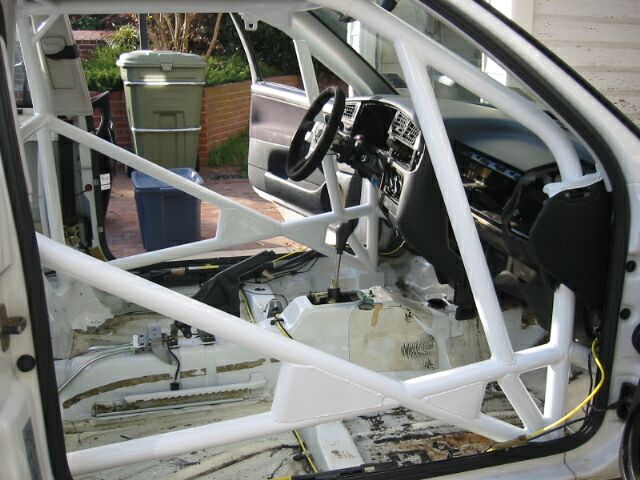
Ok please no "read the rule book comments" , just want to hear design ideas/how to build suggestions.
Box mounting points?
How would you go about building a boxed pick up point for a cage tube? Do the tubes go strraight through the box to the floor or do the actually mount to the box?
What thickness material is best to use for building boxes...1/4? Also I undestand that boxed joints make for flatter pick up points but what makes them stronger, as in what stops the box from just collapsing?


Gussets
Most gusset pics I've seen don't look like just flat stock welded inbettwen the tubing , they look like sections of retangular tube cut out to fit is that right?

Box mounting points?
How would you go about building a boxed pick up point for a cage tube? Do the tubes go strraight through the box to the floor or do the actually mount to the box?
What thickness material is best to use for building boxes...1/4? Also I undestand that boxed joints make for flatter pick up points but what makes them stronger, as in what stops the box from just collapsing?
Gussets
Most gusset pics I've seen don't look like just flat stock welded inbettwen the tubing , they look like sections of retangular tube cut out to fit is that right?


Honda-Tech Member
Joined: Nov 2001
Posts: 6,400
Likes: 0
From: ...
Re: cage tips? gussets & boxed joints? (essex)
boxes are terrible , too much deflection.
what eludes most people is that properly designed plates tie the car together as well as attaching the cage to the car better than any box ever could , the reason most people make the boxes is that is a really big shortcut in getting the cage in and out of the car and allows for dropping the cage down to weld around halo and such , then lift it back up and slide the boxes in to put it in its place.
- rant -
oh , and those Miata gussets were made from plate steel , not square tubing.
the curves on that section were too elaborate to cut out of square stock.
...that cage that you posted in the DC2 is wrong on so many levels , BTW.
what eludes most people is that properly designed plates tie the car together as well as attaching the cage to the car better than any box ever could , the reason most people make the boxes is that is a really big shortcut in getting the cage in and out of the car and allows for dropping the cage down to weld around halo and such , then lift it back up and slide the boxes in to put it in its place.
- rant -
oh , and those Miata gussets were made from plate steel , not square tubing.
the curves on that section were too elaborate to cut out of square stock.
...that cage that you posted in the DC2 is wrong on so many levels , BTW.
Thread Starter
Honda-Tech Member
Joined: Apr 2002
Posts: 2,126
Likes: 0
Re: cage tips? gussets & boxed joints? (Doctor CorteZ)
<TABLE WIDTH="90%" CELLSPACING=0 CELLPADDING=0 ALIGN=CENTER><TR><TD>Quote, originally posted by Doctor CorteZ »</TD></TR><TR><TD CLASS="quote">boxes are terrible , too much deflection.
what eludes most people is that properly designed plates tie the car together as well as attaching the cage to the car better than any box ever could , the reason most people make the boxes is that is a really big shortcut in getting the cage in and out of the car and allows for dropping the cage down to weld around halo and such , then lift it back up and slide the boxes in to put it in its place.
- rant -
oh , and those Miata gussets were made from plate steel , not square tubing.
the curves on that section were too elaborate to cut out of square stock.
...that cage that you posted in the DC2 is wrong on so many levels , BTW.</TD></TR></TABLE>
Ahhh ok thanks for the explain
It looked like a more complicated way and I never thought of it as a short cut.
This DC2 is Warrens can you please dissect what is the wrong way of doing it.
http://www.wangspeed.com/ITR/cage/
Also since boxing the corners is not the right way to stiifen things up can someone post a non painted pic of a plated mounting point(maybe main hoop point) and how to mount to rear shock tower properly.
what eludes most people is that properly designed plates tie the car together as well as attaching the cage to the car better than any box ever could , the reason most people make the boxes is that is a really big shortcut in getting the cage in and out of the car and allows for dropping the cage down to weld around halo and such , then lift it back up and slide the boxes in to put it in its place.
- rant -
oh , and those Miata gussets were made from plate steel , not square tubing.
the curves on that section were too elaborate to cut out of square stock.
...that cage that you posted in the DC2 is wrong on so many levels , BTW.</TD></TR></TABLE>
Ahhh ok thanks for the explain
It looked like a more complicated way and I never thought of it as a short cut.
This DC2 is Warrens can you please dissect what is the wrong way of doing it.
http://www.wangspeed.com/ITR/cage/
Also since boxing the corners is not the right way to stiifen things up can someone post a non painted pic of a plated mounting point(maybe main hoop point) and how to mount to rear shock tower properly.
Honda-Tech Member
Joined: Nov 2001
Posts: 6,400
Likes: 0
From: ...
Re: cage tips? gussets & boxed joints? (essex)
I know whos cage it is , it has Mitch Piper all over it.
I dont like the boxesbut I've already spoke my peace on that , my main problem with it is the rear downtube design , nothing is triangulated at all and the attachment points are focusing on the struts not the suspension mounting points , IE : rear UCA pick up points.
think of putting two triangles point to point , and then think of how much flex could happen under even small loads.
...
I dont like the boxesbut I've already spoke my peace on that , my main problem with it is the rear downtube design , nothing is triangulated at all and the attachment points are focusing on the struts not the suspension mounting points , IE : rear UCA pick up points.
think of putting two triangles point to point , and then think of how much flex could happen under even small loads.
...

Honda-Tech Member
Joined: Aug 2003
Posts: 1,014
Likes: 0
From: 8 blocks from George Bush, DC
Re: cage tips? gussets & boxed joints? (Doctor CorteZ)
<TABLE WIDTH="90%" CELLSPACING=0 CELLPADDING=0 ALIGN=CENTER><TR><TD>Quote, originally posted by Doctor CorteZ »</TD></TR><TR><TD CLASS="quote">I know whos cage it is , it has Mitch Piper all over it.
my main problem with it is the rear downtube design , nothing is triangulated at all ..
</TD></TR></TABLE>
I thought the same with warren's not having the your typical rear braces.
Would you mind critiquing my rollbar from what you can see in these pics? PM me if you like. Thanks!


my main problem with it is the rear downtube design , nothing is triangulated at all ..
</TD></TR></TABLE>
I thought the same with warren's not having the your typical rear braces.
Would you mind critiquing my rollbar from what you can see in these pics? PM me if you like. Thanks!

Honda-Tech Member
Joined: Dec 2001
Posts: 3,643
Likes: 1
From: assville, MI, USA
Re: cage tips? gussets & boxed joints? (Another Drew)
I am curious about the design of the gussets.
What gage metal sheet does one tend to use? I have seen people mention the use of sheet-metal for them, which doesn't seem like it would be very rigid?
Is it only metal at the joints? Or do most cage builders run another tube to triangulate underneath the sheets?
Thanks in advance.
What gage metal sheet does one tend to use? I have seen people mention the use of sheet-metal for them, which doesn't seem like it would be very rigid?
Is it only metal at the joints? Or do most cage builders run another tube to triangulate underneath the sheets?
Thanks in advance.
Trending Topics

Honda-Tech Member
Joined: Aug 2003
Posts: 1,014
Likes: 0
From: 8 blocks from George Bush, DC
Re: cage tips? gussets & boxed joints? (fab1)
<TABLE WIDTH="90%" CELLSPACING=0 CELLPADDING=0 ALIGN=CENTER><TR><TD>Quote, originally posted by Doctor CorteZ »</TD></TR><TR><TD CLASS="quote">
think of putting two triangles point to point , and then think of how much flex could happen under even small loads.
</TD></TR></TABLE>
I would disagree with you that it's not triangulated. It's not "two triangles point to point".
Rather, it's two larger triangles overlapped. The overlapped bars (your "point to point") functions to brace the legs so that one triangle supports the leg of the other triangle.
The only problem I don't like is that the overlapping triangle are large compared to if he ran braces down straight to the shock mounts. Large triangles formed from the same material is not going to be as strong.
The legs that make up the 1st triangle:
*The car's frame from the driver's head to the driver side shock mount
*Driver's side shock mount to the passenger side shock mount
*passenger side shock mount to the driver's head.
The legs that make up the 2nd triangle:
* Passenger's head to passenger side shock mount
*passenger side shock mount to driver side shock mount
*driver side shock mount to passenger head
think of putting two triangles point to point , and then think of how much flex could happen under even small loads.
</TD></TR></TABLE>
I would disagree with you that it's not triangulated. It's not "two triangles point to point".
Rather, it's two larger triangles overlapped. The overlapped bars (your "point to point") functions to brace the legs so that one triangle supports the leg of the other triangle.
The only problem I don't like is that the overlapping triangle are large compared to if he ran braces down straight to the shock mounts. Large triangles formed from the same material is not going to be as strong.
The legs that make up the 1st triangle:
*The car's frame from the driver's head to the driver side shock mount
*Driver's side shock mount to the passenger side shock mount
*passenger side shock mount to the driver's head.
The legs that make up the 2nd triangle:
* Passenger's head to passenger side shock mount
*passenger side shock mount to driver side shock mount
*driver side shock mount to passenger head

Honda-Tech Member
Joined: May 2002
Posts: 13,483
Likes: 0
From: cali
Re: cage tips? gussets & boxed joints? (essex)
i like this thread. Here is another question maybe jamie or some one else can answer.
is it better to "stich" weld plate to the car or just weld all around them. (excuse me if my terms aren't right)
Remember what i can from the NASA rule book everything must have a full 360 degree weld, now i know they aren't the end all saviours to cage design and installation, but its who im going to be racing with.
is it better to "stich" weld plate to the car or just weld all around them. (excuse me if my terms aren't right)
Remember what i can from the NASA rule book everything must have a full 360 degree weld, now i know they aren't the end all saviours to cage design and installation, but its who im going to be racing with.

Junior Member
Joined: Jun 2004
Posts: 46
Likes: 0
From: Berkley, MI, USA
Re: cage tips? gussets & boxed joints? (essex)
Where should you put gussets?? at every cornor or what?? also you guys might know, is there an easy/good way to paint a cage inside the car???
Honda-Tech Member
Joined: May 2002
Posts: 13,483
Likes: 0
From: cali
Re: cage tips? gussets & boxed joints? (CrazycakesEM2)
<TABLE WIDTH="90%" CELLSPACING=0 CELLPADDING=0 ALIGN=CENTER><TR><TD>Quote, originally posted by CrazycakesEM2 »</TD></TR><TR><TD CLASS="quote">is there an easy/good way to paint a cage inside the car???</TD></TR></TABLE>
i painted my roll bar with a brush, fairly easy stillsome places are hard to reach
i painted my roll bar with a brush, fairly easy stillsome places are hard to reach


Joined: Aug 2002
Posts: 1,220
Likes: 0
From: Marietta, Georgia, USA
Re: cage tips? gussets & boxed joints? (essex)
<TABLE WIDTH="90%" CELLSPACING=0 CELLPADDING=0 ALIGN=CENTER><TR><TD>Quote, originally posted by essex »</TD></TR><TR><TD CLASS="quote">How does one go about making the holes taperd like this? Is there a tool for this?
 </TD></TR></TABLE>
Its actually a press die that you get that cuts those wholes out.
</TD></TR></TABLE>Its actually a press die that you get that cuts those wholes out.

Banned
Joined: Mar 2002
Posts: 2,784
Likes: 0
From: CA, USA
Re: cage tips? gussets & boxed joints? (Another Drew)
Regarding the red "cage" what's the purpose of half a roll cage? I didn't even know you could get them that way; it gives away a lot of structural and torsional strength. Yeah it's a good anchor for belts and provides basic roll-over protection but not much more since it doesn't extend forward of the door openings. All the extra tubes back there just prevent the floor behind the seats from twisting relative to the rear struts. Is it only half built?

Honda-Tech Member
Joined: Oct 2000
Posts: 4,534
Likes: 0
From: Zoo York
Re: cage tips? gussets & boxed joints? (kb58)
<TABLE WIDTH="90%" CELLSPACING=0 CELLPADDING=0 ALIGN=CENTER><TR><TD>Quote, originally posted by kb58 »</TD></TR><TR><TD CLASS="quote">Regarding the red "cage" what's the purpose of half a roll cage? I didn't even know you could get them that way; it gives away a lot of structural and torsional strength. Yeah it's a good anchor for belts and provides basic roll-over protection but not much more since it doesn't extend forward of the door openings. All the extra tubes back there just prevent the floor behind the seats from twisting relative to the rear struts. Is it only half built?</TD></TR></TABLE>
i was wondering the same thing
i was wondering the same thing
Honda-Tech Member
Joined: May 2002
Posts: 13,483
Likes: 0
From: cali
Re: cage tips? gussets & boxed joints? (kb58)
<TABLE WIDTH="90%" CELLSPACING=0 CELLPADDING=0 ALIGN=CENTER><TR><TD>Quote, originally posted by kb58 »</TD></TR><TR><TD CLASS="quote">Regarding the red "cage" what's the purpose of half a roll cage? I didn't even know you could get them that way; it gives away a lot of structural and torsional strength. Yeah it's a good anchor for belts and provides basic roll-over protection but not much more since it doesn't extend forward of the door openings. All the extra tubes back there just prevent the floor behind the seats from twisting relative to the rear struts. Is it only half built?</TD></TR></TABLE>
Roll bars, are great for street cars.
the guy with the red cage does lots of track days/DE and haveing a roll bar is defently a good thing. and IIRC that car IS going to be a race car with a full cage.
Full cages in a street driven car are more dangerous then they are good.
Roll bars, are great for street cars.
the guy with the red cage does lots of track days/DE and haveing a roll bar is defently a good thing. and IIRC that car IS going to be a race car with a full cage.
Full cages in a street driven car are more dangerous then they are good.
Honda-Tech Member
Joined: Nov 2001
Posts: 6,400
Likes: 0
From: ...
Re: cage tips? gussets & boxed joints? (slammed_93_hatch)
<TABLE WIDTH="90%" CELLSPACING=0 CELLPADDING=0 ALIGN=CENTER><TR><TD>Quote, originally posted by slammed_93_hatch »</TD></TR><TR><TD CLASS="quote">
is it better to "stich" weld plate to the car or just weld all around them. (excuse me if my terms aren't right)
</TD></TR></TABLE>
your term is correct.
I assume , which I dont do often , that you're talking about the anchor plates ?
in which case , we rosset and stitch weld them , its a little advantage over seem welding if a small part of the weld tears it isnt attached to the rest like in a seem weld....if that makes any sense....
is it better to "stich" weld plate to the car or just weld all around them. (excuse me if my terms aren't right)
</TD></TR></TABLE>
your term is correct.
I assume , which I dont do often , that you're talking about the anchor plates ?
in which case , we rosset and stitch weld them , its a little advantage over seem welding if a small part of the weld tears it isnt attached to the rest like in a seem weld....if that makes any sense....
Honda-Tech Member
Joined: May 2002
Posts: 13,483
Likes: 0
From: cali
Re: cage tips? gussets & boxed joints? (Doctor CorteZ)
<TABLE WIDTH="90%" CELLSPACING=0 CELLPADDING=0 ALIGN=CENTER><TR><TD>Quote, originally posted by Doctor CorteZ »</TD></TR><TR><TD CLASS="quote">
your term is correct.
I assume , which I dont do often , that you're talking about the anchor plates ?
in which case , we rosset and stitch weld them , its a little advantage over seem welding if a small part of the weld tears it isnt attached to the rest like in a seem weld....if that makes any sense....</TD></TR></TABLE>
intresting, do you have any pictures of this?
OO and your assumtion was correct, i forgot ot put anchor points
your term is correct.
I assume , which I dont do often , that you're talking about the anchor plates ?
in which case , we rosset and stitch weld them , its a little advantage over seem welding if a small part of the weld tears it isnt attached to the rest like in a seem weld....if that makes any sense....</TD></TR></TABLE>
intresting, do you have any pictures of this?
OO and your assumtion was correct, i forgot ot put anchor points

Honda-Tech Member
Joined: Jun 2000
Posts: 2,748
Likes: 0
From: Concord, CA, USA
Re: (95db8GSR)
<TABLE WIDTH="90%" CELLSPACING=0 CELLPADDING=0 ALIGN=CENTER><TR><TD>Quote, originally posted by 95db8GSR »</TD></TR><TR><TD CLASS="quote">those are serious!! i luv how the one car is totally track prepped, but still has the power mirrors and controller, haha.</TD></TR></TABLE>
why is that funny? We are living in modern lifetime, not 20 or 30 years ago. the next time you go to ALMS or World Challenge race, check out their cars up close. Almost everyone run power mirror!
why is that funny? We are living in modern lifetime, not 20 or 30 years ago. the next time you go to ALMS or World Challenge race, check out their cars up close. Almost everyone run power mirror!
Honda-Tech Member
Joined: Nov 2001
Posts: 6,400
Likes: 0
From: ...
Re: cage tips? gussets & boxed joints? (slammed_93_hatch)
<TABLE WIDTH="90%" CELLSPACING=0 CELLPADDING=0 ALIGN=CENTER><TR><TD>Quote, originally posted by slammed_93_hatch »</TD></TR><TR><TD CLASS="quote">
intresting, do you have any pictures of this?
</TD></TR></TABLE>
you can see the rosset holes that have been welded , we actually seem welded this plate as there was an abundance of spot welds to prevent the possibility of tearout.
mind you , all these holes are in between OEM spot welds and have been countersunk down thru 2 layers so we can grab the bottom layer of metal(3rd)


intresting, do you have any pictures of this?
</TD></TR></TABLE>
you can see the rosset holes that have been welded , we actually seem welded this plate as there was an abundance of spot welds to prevent the possibility of tearout.
mind you , all these holes are in between OEM spot welds and have been countersunk down thru 2 layers so we can grab the bottom layer of metal(3rd)

Joined: Jun 2003
Posts: 675
Likes: 0
From: plattsurgh, ny, usa
Re: cage tips? gussets & boxed joints? (slammed_93_hatch)
<TABLE WIDTH="90%" CELLSPACING=0 CELLPADDING=0 ALIGN=CENTER><TR><TD>Quote, originally posted by slammed_93_hatch »</TD></TR><TR><TD CLASS="quote">.Roll bars, are great for street cars.
the guy with the red cage does lots of track days/DE and haveing a roll bar is defently a good thing. and IIRC that car IS going to be a race car with a full cage.
Full cages in a street driven car are more dangerous then they are good.
</TD></TR></TABLE>
Why is it that a full cage on the street is more dangerous i agree that it would suck steping over a bar every day getting into your car. the reason i am asking is that i am trying to design a role bar/cage in my del sol and cant decide on bars across the door.
the guy with the red cage does lots of track days/DE and haveing a roll bar is defently a good thing. and IIRC that car IS going to be a race car with a full cage.
Full cages in a street driven car are more dangerous then they are good.
</TD></TR></TABLE>
Why is it that a full cage on the street is more dangerous i agree that it would suck steping over a bar every day getting into your car. the reason i am asking is that i am trying to design a role bar/cage in my del sol and cant decide on bars across the door.

Member
Joined: Oct 2004
Posts: 2,111
Likes: 0
From: west hills, ca, united states
Re: cage tips? gussets & boxed joints? (cstay)
Since your not wearing safety equipment such as a helmet or 5 pt harness, if the car should roll or you get hit on the side very hard you can possibly hit the bars with your head. Other than that having a cage is relatively safe in a street car.