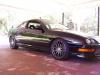
check out my itr rims these are OEM


Thread Starter
Honda-Tech Member
Joined: Feb 2002
Posts: 2,914
Likes: 0
 Re: check out my itr rims these are OEM (Toda Built)
I wasn't trying to argue you could be right but thanks for the compliment. I got them from auto adventure and thats what they said they were. But if they were NSX wheels that would be cool too. Is there any visible marks I could check for maybe


Honda-Tech Member
Joined: Jan 2003
Posts: 1,661
Likes: 0
From: Lost in, NC, United States
Re: check out my itr rims these are OEM (The Raven)
<TABLE WIDTH="90%" CELLSPACING=0 CELLPADDING=0 ALIGN=CENTER><TR><TD>Quote, originally posted by The Raven »</TD></TR><TR><TD CLASS="quote">looks like someone polished the front of their itr wheels. i dont like it very much</TD></TR></TABLE>
I think your right. (it doesnt look that bad to me) I guess I would have to see them on a car to get the full effect
I think your right. (it doesnt look that bad to me) I guess I would have to see them on a car to get the full effect
Trending Topics


Honda-Tech Member
Joined: May 2000
Posts: 3,073
Likes: 0
From: EXIT Real World
Re: (UltimX)
<TABLE WIDTH="90%" CELLSPACING=0 CELLPADDING=0 ALIGN=CENTER><TR><TD>Quote, originally posted by UltimX »</TD></TR><TR><TD CLASS="quote">16's all the way around for the nsx... i have a book on cars and thats what they said.</TD></TR></TABLE>
Get a refund on that book.
Get a refund on that book.


Honda-Tech Member
Joined: Oct 2000
Posts: 7,810
Likes: 0
From: Yokohama, Japan, Japan
Re: (UltimX)
<TABLE WIDTH="90%" CELLSPACING=0 CELLPADDING=0 ALIGN=CENTER><TR><TD>Quote, originally posted by UltimX »</TD></TR><TR><TD CLASS="quote">16's all the way around for the nsx... i have a book on cars and thats what they said.</TD></TR></TABLE>
NSX's come in 15's, 16's, and 17's
NSX's come in 15's, 16's, and 17's

Honda-Tech Member
Joined: Jun 2002
Posts: 9,925
Likes: 0
From: Milwaukee, WI, USA
Re: (Mario)
<TABLE WIDTH="90%" CELLSPACING=0 CELLPADDING=0 ALIGN=CENTER><TR><TD>Quote, originally posted by Mario »</TD></TR><TR><TD CLASS="quote">
Get a refund on that book.</TD></TR></TABLE>
LMAO
Get a refund on that book.</TD></TR></TABLE>
LMAO

Honda-Tech Member
Joined: Sep 2002
Posts: 3,229
Likes: 0
Re: (r573)
<TABLE WIDTH="90%" CELLSPACING=0 CELLPADDING=0 ALIGN=CENTER><TR><TD>Quote, originally posted by r573 »</TD></TR><TR><TD CLASS="quote">nsx rims thay only come 16inch and the back is 17inch i think i no thay didint come 15inch.must b R rims</TD></TR></TABLE>
weren't the fronts on early NSX's 15?.. I could be wrong
weren't the fronts on early NSX's 15?.. I could be wrong

Honda-Tech Member
Joined: Nov 2003
Posts: 1,012
Likes: 0
From: South Shore, united states
Re: (MiraiZ)
<TABLE WIDTH="90%" CELLSPACING=0 CELLPADDING=0 ALIGN=CENTER><TR><TD>Quote, originally posted by MiraiZ »</TD></TR><TR><TD CLASS="quote">
NSX's come in 15's, 16's, and 17's </TD></TR></TABLE> what is it 15s front 17s back think about that i no thay have 17s on the back.
NSX's come in 15's, 16's, and 17's
</TD></TR></TABLE> what is it 15s front 17s back think about that i no thay have 17s on the back.

 Re: (EMI)
From Consumer Guide:
What some observers considered to be Acura's "Ferrari-fighter" went on sale in summer 1990, accompanied by considerable fanfare. Part of that fanfare had to do with price, because this new entrant from Honda's luxury division was the most expensive Japanese-brand car on the U.S. market. Because of its instant popularity,too, dealers began to sell them for more than sticker price.
An all-out midengine sports car, the new NSX 2-passenger coupe had a body and suspension made of aluminum. Transversely mounted in the middle, between the seats and ahead of the rear axle, was an aluminum 3.0-liter V6 engine, with dual overhead cams and variable valve timing.
All of the initial NSX coupes had 5-speed manual transmissions, and the V6 produced 270 horsepower. When a 4-speed automatic transmission arrived a few months later, the engine in that model dipped to 252 horsepower. An NSX could accelerate to 60 mph in a swift 5.6 seconds, according to its maker, and run a quarter-mile in 13.9 seconds. Acura intended to offer no more than 3000 cars per year in the U.S. market.
Chassis features included a fully independent suspension, antilock all-disc brakes, traction control, Yokohama A-022 tires (205/50ZR15 in front and 225/50ZR16 out back) on forged aluminum wheels. Acura claimed to be the first manufacturer to offer electrically driven power steering, but it was available only on models with the automatic transmission. Standard equipment included a driver's airbag, leather upholstery, air conditioning, 4 speaker Acura/Bose stereo system power windows, power locks, a tilt steering wheel, and automatic climate control.
Year-to-Year Changes
1992 Acura NSX: Little was new for Acura's sports car in its second season.
1993 Acura NSX: Except for a new passenger-side airbag and seatbelt pretensioners, not much change was evident for 1993. The center console was redesigned, with an integral cupholder.
1994 Acura NSX: Few changes occurred this season, other than tires that grew in size. Up front were 215/45ZR15 tires on new 7-inch forged alloy wheels. At the rear, 8.5 inch wheels held 245/40ZR17 rubber. Power steering remained unavailable with manual shift. Standard leather upholstery now was available in tan color, as well as black or white.
1995 Acura NSX: The '95 models went on sale late in the season, and only in NSX-T form. That meant a removable roof panel, which could be stored in a compartment behind the seats without cutting into cargo volume. Acura also turned to structural reinforcement, upgrading to meet the 1997 Federal side-impact standards. A new "drive-by-wire" throttle system was installed. Electrical power steering, previously available only with an automatic transmission, could now be installed with manual shift as well. The automatic transmission gained a SportShift feature, controlled by flipping a lever on the steering column.
1996 Acura NSX: Both regular and Targa-roofed (NSX-T) coupes went on sale in 1996, without significant change.
1997 Acura NSX: A bigger engine went into the 1997 NSX, and a new 6-speed manual transmission edged aside the 5-speed unit. The new 3.2-liter all-aluminum V6 produced 290 horsepower. Brakes were enlarged, and the NSX again came in regular coupe or targa-roofed (NSX-T) form.
1998 Acura NSX: Following adoption of a larger engine and 6-speed in 1997, little change was evident for '98.
1999 Acura NSX: Alterations to Acura's sports car were minimal for 1999. Both the fixed-roof coupe and the NSX-T, with removable center roof panel, remained available. Model choices include the base coupe, T (Targa) coupe, and special Alex Zanardi Edition.
2000 Acura NSX: For its 10th year on the market, the 2-seater got revised upholstery. Leather trim on seats, door panels, steering wheel, and hand-brake handle now was perforated. Acura also claimed improved manual-shift action.
2001 Acura NSX: For 2001, an emergency opener was added inside the trunk which is behind the engine. No-cost carpeted floormats were the only other change for this model year.
2002 Acura NSX: NSX got its first noticeable appearance changes. The previous fixed-roof model was gone, leaving only the NSX-T with lift-off roof panel. New were Xenon headlamps, larger exhaust ports, wider rear tires, and revised suspension. A 4-speed automatic transmission with manual-shift feature became available.
What some observers considered to be Acura's "Ferrari-fighter" went on sale in summer 1990, accompanied by considerable fanfare. Part of that fanfare had to do with price, because this new entrant from Honda's luxury division was the most expensive Japanese-brand car on the U.S. market. Because of its instant popularity,too, dealers began to sell them for more than sticker price.
An all-out midengine sports car, the new NSX 2-passenger coupe had a body and suspension made of aluminum. Transversely mounted in the middle, between the seats and ahead of the rear axle, was an aluminum 3.0-liter V6 engine, with dual overhead cams and variable valve timing.
All of the initial NSX coupes had 5-speed manual transmissions, and the V6 produced 270 horsepower. When a 4-speed automatic transmission arrived a few months later, the engine in that model dipped to 252 horsepower. An NSX could accelerate to 60 mph in a swift 5.6 seconds, according to its maker, and run a quarter-mile in 13.9 seconds. Acura intended to offer no more than 3000 cars per year in the U.S. market.
Chassis features included a fully independent suspension, antilock all-disc brakes, traction control, Yokohama A-022 tires (205/50ZR15 in front and 225/50ZR16 out back) on forged aluminum wheels. Acura claimed to be the first manufacturer to offer electrically driven power steering, but it was available only on models with the automatic transmission. Standard equipment included a driver's airbag, leather upholstery, air conditioning, 4 speaker Acura/Bose stereo system power windows, power locks, a tilt steering wheel, and automatic climate control.
Year-to-Year Changes
1992 Acura NSX: Little was new for Acura's sports car in its second season.
1993 Acura NSX: Except for a new passenger-side airbag and seatbelt pretensioners, not much change was evident for 1993. The center console was redesigned, with an integral cupholder.
1994 Acura NSX: Few changes occurred this season, other than tires that grew in size. Up front were 215/45ZR15 tires on new 7-inch forged alloy wheels. At the rear, 8.5 inch wheels held 245/40ZR17 rubber. Power steering remained unavailable with manual shift. Standard leather upholstery now was available in tan color, as well as black or white.
1995 Acura NSX: The '95 models went on sale late in the season, and only in NSX-T form. That meant a removable roof panel, which could be stored in a compartment behind the seats without cutting into cargo volume. Acura also turned to structural reinforcement, upgrading to meet the 1997 Federal side-impact standards. A new "drive-by-wire" throttle system was installed. Electrical power steering, previously available only with an automatic transmission, could now be installed with manual shift as well. The automatic transmission gained a SportShift feature, controlled by flipping a lever on the steering column.
1996 Acura NSX: Both regular and Targa-roofed (NSX-T) coupes went on sale in 1996, without significant change.
1997 Acura NSX: A bigger engine went into the 1997 NSX, and a new 6-speed manual transmission edged aside the 5-speed unit. The new 3.2-liter all-aluminum V6 produced 290 horsepower. Brakes were enlarged, and the NSX again came in regular coupe or targa-roofed (NSX-T) form.
1998 Acura NSX: Following adoption of a larger engine and 6-speed in 1997, little change was evident for '98.
1999 Acura NSX: Alterations to Acura's sports car were minimal for 1999. Both the fixed-roof coupe and the NSX-T, with removable center roof panel, remained available. Model choices include the base coupe, T (Targa) coupe, and special Alex Zanardi Edition.
2000 Acura NSX: For its 10th year on the market, the 2-seater got revised upholstery. Leather trim on seats, door panels, steering wheel, and hand-brake handle now was perforated. Acura also claimed improved manual-shift action.
2001 Acura NSX: For 2001, an emergency opener was added inside the trunk which is behind the engine. No-cost carpeted floormats were the only other change for this model year.
2002 Acura NSX: NSX got its first noticeable appearance changes. The previous fixed-roof model was gone, leaving only the NSX-T with lift-off roof panel. New were Xenon headlamps, larger exhaust ports, wider rear tires, and revised suspension. A 4-speed automatic transmission with manual-shift feature became available.
Honda-Tech Member
Joined: Nov 2003
Posts: 1,012
Likes: 0
From: South Shore, united states
Re: (DsR)
<TABLE WIDTH="90%" CELLSPACING=0 CELLPADDING=0 ALIGN=CENTER><TR><TD>Quote, originally posted by DsR »</TD></TR><TR><TD CLASS="quote">
weren't the fronts on early NSX's 15?.. I could be wrong</TD></TR></TABLE> what was the first year they made the nsx 91-92
weren't the fronts on early NSX's 15?.. I could be wrong</TD></TR></TABLE> what was the first year they made the nsx 91-92
Honda-Tech Member
Joined: Nov 2003
Posts: 1,012
Likes: 0
From: South Shore, united states
Re: (markpaco)
Originally Posted by markpaco
From Consumer Guide:
What some observers considered to be Acura's "Ferrari-fighter" went on sale in summer 1990, accompanied by considerable fanfare. Part of that fanfare had to do with price, because this new entrant from Honda's luxury division was the most expensive Japanese-brand car on the U.S. market. Because of its instant popularity,too, dealers began to sell them for more than sticker price.
An all-out midengine sports car, the new NSX 2-passenger coupe had a body and suspension made of aluminum. Transversely mounted in the middle, between the seats and ahead of the rear axle, was an aluminum 3.0-liter V6 engine, with dual overhead cams and variable valve timing.
All of the initial NSX coupes had 5-speed manual transmissions, and the V6 produced 270 horsepower. When a 4-speed automatic transmission arrived a few months later, the engine in that model dipped to 252 horsepower. An NSX could accelerate to 60 mph in a swift 5.6 seconds, according to its maker, and run a quarter-mile in 13.9 seconds. Acura intended to offer no more than 3000 cars per year in the U.S. market.
Chassis features included a fully independent suspension, antilock all-disc brakes, traction control, Yokohama A-022 tires (205/50ZR15 in front and 225/50ZR16 out back) on forged aluminum wheels. Acura claimed to be the first manufacturer to offer electrically driven power steering, but it was available only on models with the automatic transmission. Standard equipment included a driver's airbag, leather upholstery, air conditioning, 4 speaker Acura/Bose stereo system power windows, power locks, a tilt steering wheel, and automatic climate control.
Year-to-Year Changes
1992 Acura NSX: Little was new for Acura's sports car in its second season.
1993 Acura NSX: Except for a new passenger-side airbag and seatbelt pretensioners, not much change was evident for 1993. The center console was redesigned, with an integral cupholder.
1994 Acura NSX: Few changes occurred this season, other than tires that grew in size. Up front were 215/45ZR15 tires on new 7-inch forged alloy wheels. At the rear, 8.5 inch wheels held 245/40ZR17 rubber. Power steering remained unavailable with manual shift. Standard leather upholstery now was available in tan color, as well as black or white.
1995 Acura NSX: The '95 models went on sale late in the season, and only in NSX-T form. That meant a removable roof panel, which could be stored in a compartment behind the seats without cutting into cargo volume. Acura also turned to structural reinforcement, upgrading to meet the 1997 Federal side-impact standards. A new "drive-by-wire" throttle system was installed. Electrical power steering, previously available only with an automatic transmission, could now be installed with manual shift as well. The automatic transmission gained a SportShift feature, controlled by flipping a lever on the steering column.
1996 Acura NSX: Both regular and Targa-roofed (NSX-T) coupes went on sale in 1996, without significant change.
1997 Acura NSX: A bigger engine went into the 1997 NSX, and a new 6-speed manual transmission edged aside the 5-speed unit. The new 3.2-liter all-aluminum V6 produced 290 horsepower. Brakes were enlarged, and the NSX again came in regular coupe or targa-roofed (NSX-T) form.
1998 Acura NSX: Following adoption of a larger engine and 6-speed in 1997, little change was evident for '98.
1999 Acura NSX: Alterations to Acura's sports car were minimal for 1999. Both the fixed-roof coupe and the NSX-T, with removable center roof panel, remained available. Model choices include the base coupe, T (Targa) coupe, and special Alex Zanardi Edition.
2000 Acura NSX: For its 10th year on the market, the 2-seater got revised upholstery. Leather trim on seats, door panels, steering wheel, and hand-brake handle now was perforated. Acura also claimed improved manual-shift action.
2001 Acura NSX: For 2001, an emergency opener was added inside the trunk which is behind the engine. No-cost carpeted floormats were the only other change for this model year.
2002 Acura NSX: NSX got its first noticeable appearance changes. The previous fixed-roof model was gone, leaving only the NSX-T with lift-off roof panel. New were Xenon headlamps, larger exhaust ports, wider rear tires, and revised suspension. A 4-speed automatic transmission with manual-shift feature became available.
What some observers considered to be Acura's "Ferrari-fighter" went on sale in summer 1990, accompanied by considerable fanfare. Part of that fanfare had to do with price, because this new entrant from Honda's luxury division was the most expensive Japanese-brand car on the U.S. market. Because of its instant popularity,too, dealers began to sell them for more than sticker price.
An all-out midengine sports car, the new NSX 2-passenger coupe had a body and suspension made of aluminum. Transversely mounted in the middle, between the seats and ahead of the rear axle, was an aluminum 3.0-liter V6 engine, with dual overhead cams and variable valve timing.
All of the initial NSX coupes had 5-speed manual transmissions, and the V6 produced 270 horsepower. When a 4-speed automatic transmission arrived a few months later, the engine in that model dipped to 252 horsepower. An NSX could accelerate to 60 mph in a swift 5.6 seconds, according to its maker, and run a quarter-mile in 13.9 seconds. Acura intended to offer no more than 3000 cars per year in the U.S. market.
Chassis features included a fully independent suspension, antilock all-disc brakes, traction control, Yokohama A-022 tires (205/50ZR15 in front and 225/50ZR16 out back) on forged aluminum wheels. Acura claimed to be the first manufacturer to offer electrically driven power steering, but it was available only on models with the automatic transmission. Standard equipment included a driver's airbag, leather upholstery, air conditioning, 4 speaker Acura/Bose stereo system power windows, power locks, a tilt steering wheel, and automatic climate control.
Year-to-Year Changes
1992 Acura NSX: Little was new for Acura's sports car in its second season.
1993 Acura NSX: Except for a new passenger-side airbag and seatbelt pretensioners, not much change was evident for 1993. The center console was redesigned, with an integral cupholder.
1994 Acura NSX: Few changes occurred this season, other than tires that grew in size. Up front were 215/45ZR15 tires on new 7-inch forged alloy wheels. At the rear, 8.5 inch wheels held 245/40ZR17 rubber. Power steering remained unavailable with manual shift. Standard leather upholstery now was available in tan color, as well as black or white.
1995 Acura NSX: The '95 models went on sale late in the season, and only in NSX-T form. That meant a removable roof panel, which could be stored in a compartment behind the seats without cutting into cargo volume. Acura also turned to structural reinforcement, upgrading to meet the 1997 Federal side-impact standards. A new "drive-by-wire" throttle system was installed. Electrical power steering, previously available only with an automatic transmission, could now be installed with manual shift as well. The automatic transmission gained a SportShift feature, controlled by flipping a lever on the steering column.
1996 Acura NSX: Both regular and Targa-roofed (NSX-T) coupes went on sale in 1996, without significant change.
1997 Acura NSX: A bigger engine went into the 1997 NSX, and a new 6-speed manual transmission edged aside the 5-speed unit. The new 3.2-liter all-aluminum V6 produced 290 horsepower. Brakes were enlarged, and the NSX again came in regular coupe or targa-roofed (NSX-T) form.
1998 Acura NSX: Following adoption of a larger engine and 6-speed in 1997, little change was evident for '98.
1999 Acura NSX: Alterations to Acura's sports car were minimal for 1999. Both the fixed-roof coupe and the NSX-T, with removable center roof panel, remained available. Model choices include the base coupe, T (Targa) coupe, and special Alex Zanardi Edition.
2000 Acura NSX: For its 10th year on the market, the 2-seater got revised upholstery. Leather trim on seats, door panels, steering wheel, and hand-brake handle now was perforated. Acura also claimed improved manual-shift action.
2001 Acura NSX: For 2001, an emergency opener was added inside the trunk which is behind the engine. No-cost carpeted floormats were the only other change for this model year.
2002 Acura NSX: NSX got its first noticeable appearance changes. The previous fixed-roof model was gone, leaving only the NSX-T with lift-off roof panel. New were Xenon headlamps, larger exhaust ports, wider rear tires, and revised suspension. A 4-speed automatic transmission with manual-shift feature became available.