


Foam or K&N style cotton air filte?


Thread Starter
Junior Member
Joined: Jul 2002
Posts: 594
Likes: 0
From: Portland, ORYGUN
 Foam or K&N style cotton air filte?
Title should read *filter*
Overall, which (round, tapered) one would you reccommend? Which one is better for air flow? Which filters particles better? Thanks
Modified by T_Rex at 11:55 AM 5/9/2003
Overall, which (round, tapered) one would you reccommend? Which one is better for air flow? Which filters particles better? Thanks
Modified by T_Rex at 11:55 AM 5/9/2003

Honda-Tech Member
Joined: Jan 2003
Posts: 1,074
Likes: 0
From: Brampton, ON, CA
Re: Foam or K&N style cotton air filte? (T_Rex)
Comptech foam filters filter less, but flow better.
K&N/AEM/INJEN all are cotton guaze. They filter better than the comptech, but flow less.
K&N/AEM/INJEN all are cotton guaze. They filter better than the comptech, but flow less.
Thread Starter
Junior Member
Joined: Jul 2002
Posts: 594
Likes: 0
From: Portland, ORYGUN
Re: Foam or K&N style cotton air filte? (joe_bocc)
The one I have right now is a Weapon R...that's why I'm wondering. This is from their site:
Here's what it says on their site:
Pleated Gauze or Fabric Filtration
This is another screen type that is only 1mm thick. If the dirt is not stopped on the surface, it is not stopped at all. These filters are sold on the pretense that they maintain an oil curtain
for the air to pass through, thereby catching all dirt particles. It is impossible to maintain an
oil curtain. The oil soaks the threads of the gauze or cloth, but does not span the openings;
otherwise, the air could not get through. The dirt particles that do hit the threads have a good
chance of being caught; the others simply go through. The reason the filter does not look dirty
on the inside is because the dirt went into the engine. You can easily demonstrate this fact
yourself by coating the inside of your housing or carb throat with a thin layer of grease to
trap some of the dirt not caught by the filter or you can place a foam filter inside the gauze
element to prove the same thing. The one advantage that this type of element has over paper is greatly reduced airflow restriction; however, poor filtration efficiency is the price you pay. When dirt builds up, filtering action improves, but now the airflow is poor like paper elements.
Open Cell Filter Foam
The development of this special foam represented a major advancement in air filtration technology. Foam air filters now combine great airflow capability, huge dust holding capacity, and very high filtration efficiency for extremely small particles.
Fully reticulated (open pore) foam is a honeycomb of tiny, interlocking cells of uniform size, which create an impossible journey for dirt particles since there are no straight-through passageways. Each passageway (16 to 25mm long) is like hundreds of very small centrifugal/oil bath filters connected one to another. In this way, foam traps and holds the particles throughout the entire volume of foam. This is why they are referred to as "full depth" filters in contrast to the paper or gauze elements, which are screens, or "surface type" filters. The cell strands stop the dirt, while the oil film holds the dirt like fly paper until removed for cleaning.
WHY IS FOAM BETTER?
The principle of how foam air filters work is simple: "Open Cell" Polyurethane Foam is wetted with
specially developed filter oil. The "sticky" filter oil is suspended in the path of the dirty air
on the strands of the web-like cell structure of the foam. This makes it impossible for dirt to
pass through the depth of the filter without sticking to the strands. As the outer strands become
loaded with dirt particles, the wetted strands down stream start trapping dirt, allowing the entire
thickness to be utilized. This prevents surface loading or air restriction for 80% of the service life
of the air filter element. When the filter is sufficiently dirty, it can be easily washed, re-oiled,
and re-used.
Modified by T_Rex at 9:42 PM 5/8/2003
Here's what it says on their site:
Pleated Gauze or Fabric Filtration
This is another screen type that is only 1mm thick. If the dirt is not stopped on the surface, it is not stopped at all. These filters are sold on the pretense that they maintain an oil curtain
for the air to pass through, thereby catching all dirt particles. It is impossible to maintain an
oil curtain. The oil soaks the threads of the gauze or cloth, but does not span the openings;
otherwise, the air could not get through. The dirt particles that do hit the threads have a good
chance of being caught; the others simply go through. The reason the filter does not look dirty
on the inside is because the dirt went into the engine. You can easily demonstrate this fact
yourself by coating the inside of your housing or carb throat with a thin layer of grease to
trap some of the dirt not caught by the filter or you can place a foam filter inside the gauze
element to prove the same thing. The one advantage that this type of element has over paper is greatly reduced airflow restriction; however, poor filtration efficiency is the price you pay. When dirt builds up, filtering action improves, but now the airflow is poor like paper elements.
Open Cell Filter Foam
The development of this special foam represented a major advancement in air filtration technology. Foam air filters now combine great airflow capability, huge dust holding capacity, and very high filtration efficiency for extremely small particles.
Fully reticulated (open pore) foam is a honeycomb of tiny, interlocking cells of uniform size, which create an impossible journey for dirt particles since there are no straight-through passageways. Each passageway (16 to 25mm long) is like hundreds of very small centrifugal/oil bath filters connected one to another. In this way, foam traps and holds the particles throughout the entire volume of foam. This is why they are referred to as "full depth" filters in contrast to the paper or gauze elements, which are screens, or "surface type" filters. The cell strands stop the dirt, while the oil film holds the dirt like fly paper until removed for cleaning.
WHY IS FOAM BETTER?
The principle of how foam air filters work is simple: "Open Cell" Polyurethane Foam is wetted with
specially developed filter oil. The "sticky" filter oil is suspended in the path of the dirty air
on the strands of the web-like cell structure of the foam. This makes it impossible for dirt to
pass through the depth of the filter without sticking to the strands. As the outer strands become
loaded with dirt particles, the wetted strands down stream start trapping dirt, allowing the entire
thickness to be utilized. This prevents surface loading or air restriction for 80% of the service life
of the air filter element. When the filter is sufficiently dirty, it can be easily washed, re-oiled,
and re-used.
Modified by T_Rex at 9:42 PM 5/8/2003

Joined: Feb 2002
Posts: 563
Likes: 0
From: Beaverton, OR, US
Re: Foam or K&N style cotton air filte? (10K2HVN)
For a second opinion check here
http://www.mkiv.com/techarticles/filters_test/2/
Also Apexi does not require any oiling or additional maintenance
http://www.mkiv.com/techarticles/filters_test/2/
Also Apexi does not require any oiling or additional maintenance

Joined: Sep 2002
Posts: 1,769
Likes: 0
From: Orange County, CALIFORNIACATIONATED, USA
Re: Foam or K&N style cotton air filte? (mey_xanng)
thanks for the link  ..but i think Apexi paid them off! i mean, LOOK AT THIS!!!
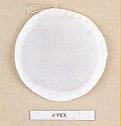
THERES NO DIRT AT ALL!!! Sounds fishy, thats all...but id probably get one anyways...
..but i think Apexi paid them off! i mean, LOOK AT THIS!!! THERES NO DIRT AT ALL!!! Sounds fishy, thats all...but id probably get one anyways...

Trending Topics
Thread Starter
Junior Member
Joined: Jul 2002
Posts: 594
Likes: 0
From: Portland, ORYGUN
Re: Foam or K&N style cotton air filte? (GZERO)
<TABLE WIDTH="90%" CELLSPACING=0 CELLPADDING=0 ALIGN=CENTER><TR><TD>Quote, originally posted by GZERO »</TD></TR><TR><TD CLASS="quote">where is the cheapest place to get the apexi filter? and how much would it be?</TD></TR></TABLE>
I'd like to know this also. I read something about an Apexi garage sale, but I think that was only available to people in SoCal.
I'd like to know this also. I read something about an Apexi garage sale, but I think that was only available to people in SoCal.
Guest
Posts: n/a
Re: Foam or K&N style cotton air filte? (10K2HVN)
<TABLE WIDTH="90%" CELLSPACING=0 CELLPADDING=0 ALIGN=CENTER><TR><TD>Quote, originally posted by 10K2HVN »</TD></TR><TR><TD CLASS="quote">thanks for the link ..but i think Apexi paid them off! i mean, LOOK AT THIS!!!
THERES NO DIRT AT ALL!!! Sounds fishy, thats all...but id probably get one anyways... </TD></TR></TABLE>
wouldnt u think that since the filter has no dirt on it, the filter really isnt doing it's job.
..but i think Apexi paid them off! i mean, LOOK AT THIS!!! THERES NO DIRT AT ALL!!! Sounds fishy, thats all...but id probably get one anyways...
</TD></TR></TABLE>wouldnt u think that since the filter has no dirt on it, the filter really isnt doing it's job.
Joined: Feb 2002
Posts: 563
Likes: 0
From: Beaverton, OR, US
Re: Foam or K&N style cotton air filte? (ophdeheezy)
<TABLE WIDTH="90%" CELLSPACING=0 CELLPADDING=0 ALIGN=CENTER><TR><TD>Quote, originally posted by ophdeheezy »</TD></TR><TR><TD CLASS="quote">
wouldnt u think that since the filter has no dirt on it, the filter really isnt doing it's job.</TD></TR></TABLE>
that's not the filter itself but a second paper filter downstream of it
wouldnt u think that since the filter has no dirt on it, the filter really isnt doing it's job.</TD></TR></TABLE>
that's not the filter itself but a second paper filter downstream of it
Thread Starter
Junior Member
Joined: Jul 2002
Posts: 594
Likes: 0
From: Portland, ORYGUN
Re: Foam or K&N style cotton air filte? (mey_xanng)
Most of the votes so far have been for K&N <u>style</u>. Are you guys referring to the ones that come with the AEM, Injen or other intake?
Modified by T_Rex at 12:04 AM 5/10/2003
Modified by T_Rex at 12:04 AM 5/10/2003


 Re: Foam or K&N style cotton air filte? (bOOsTiNSoHcVtEc)
well i would personally never run a foam base filter! My vote is for Apexi or a regular K&N filter. About 6 months ago there was a GB here on honda-tech for $65 shipped! I wish i got one back then. KN works very well as you can see.

Thread Starter
Junior Member
Joined: Jul 2002
Posts: 594
Likes: 0
From: Portland, ORYGUN
Re: Foam or K&N style cotton air filte? (TurboSedan)
I've never really known...what is the harm to the engine if it sucks in too much dirt...especially if you change the oil often?

Honda-Tech Member
Joined: Oct 2002
Posts: 744
Likes: 0
From: Fairfax, VA, United States
Re: Foam or K&N style cotton air filte? (TurboSedan)
the blitz filters out but not as well cause its gettin more air which means more power especially if you put it on a cold air...jus gotta watch out fer da puddles. The little tiny dirt particles that get through is not enuff to hurt your motor...wen your engine fires it will jus burn them. But its up to you...power or protection...the other filters werk fine but i jus like the blitz especially on a turbo car

Thread
Thread Starter
Forum
Replies
Last Post
morepoop4u
Southern California (Sales)
0
Apr 28, 2016 07:00 PM
