When you click on links to various merchants on this site and make a purchase, this can result in this site earning a commission. Affiliate programs and affiliations include, but are not limited to, the eBay Partner Network.
I’m stumped. After overheating and a head replacement, project Civic won’t start. No spark. ICM testing per manual says it’s good and coil test says it’s good (ohms testing claimed to be unreliable but readings fall solidly within specs). But, nothing mentions input to ICM as part of the test. Why is that? It’s pin 20 on connector A. Manual says it should read battery voltage with ignition on and drop somewhat when running depending on RPM. This implies that pin 20 supplies voltage, not ground, to the ICM even though the ICM supplies ground to the coil on it’s output. What’s so complicated about that? If you turn the key on, you should have battery voltage on the input to the ICM but that is not mentioned anywhere in the manual or in searches.
But, I don’t have battery voltage on pin 20, I have 6.4 volts. Worse, if I disconnect the ICM connector to the coil I don’t have any voltage. So, I got another ECU but get the same results. So, without an internal schematic of the ECU I can’t troubleshoot any farther. If someone can produce a schematic of a 37820-P2E-A71 then I can continue. Barring that, I have a question: Has anyone measured the voltage of Connector A pin 20 with ignition on and, if so, what is it? I have checked voltage and grounds on all power and ground pins on connector A and they are good.
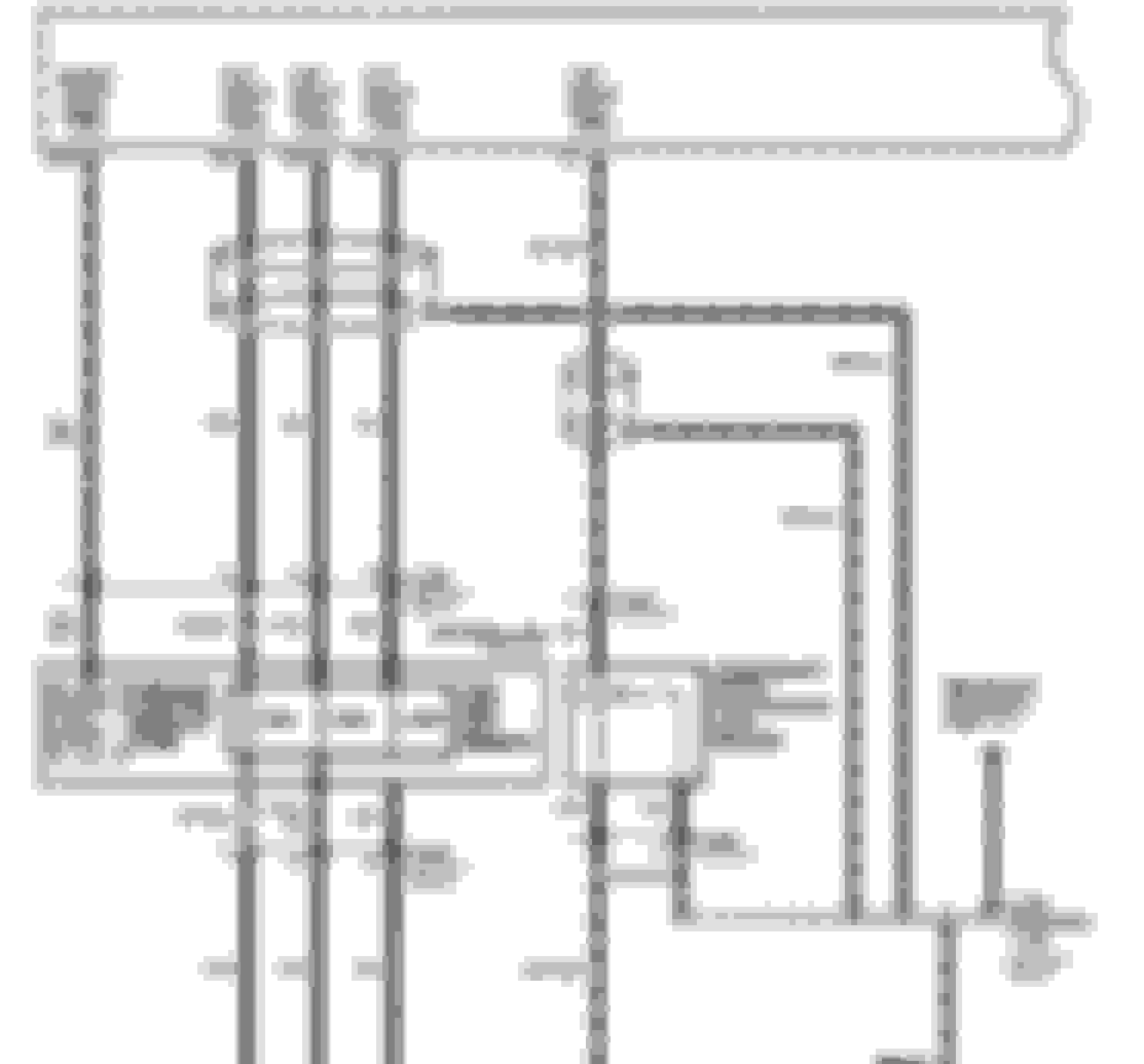
Thanks for responding. Except for the A20 input, your diagram doesn’t show the remaining four connections to the ICM. Under dash fuse nine supplies battery voltage to the ICM via a BLK/YLW wire. I had no voltage here at first and discovered that this fuse had blown. I’m always suspicious as to why a fuse may have blown. At any rate, I replaced the fuse and now have power on the BLK/YLW (which also splices over to the coil). The WHT/BLU from ICM to the coil is where the ICM supplies ground to the coil upon receiving inputs on your aforementioned YEL/GRN wire coming from A20. There is a BLU wire going from the ICM over to the test tachometer connector. The ICM appears to be grounded through its case because there are five connections shown but only four terminals exiting the ICM.
So, we have
1) BLK/YLW -power to the ICM and coil from fuse nine
2) WHT/BLU (TEC distributor) ICM coil control
3) BLU-tach connection
4) YEL/GRN-ICM input from A20
It’s very frustrating not to have an ECU output connector list showing which pins supply ground (like the ICM does) and which pins supply voltage (either battery or Vref). But, From the description of A20 in the manual, it’s strongly implied that the ECU supplies battery voltage to the ICM and, of course when pulsing, the voltage will go down somewhat depending on RPM as described.
Therefore, with the key on (position II) I think that you should have 12v on YEL/GRN even if you unplugged the distributor connector. But, when I unplug my connector, even my paltry 6.4 volts disappears.
We have also done the test suggested by several you tube videos where we put the test light to 12v and held the probe on the disconnected ICM output which results in a pulsing test light when cranking. We thought we had some weak pulsing at first but subsequent testing with this method never showed any activity. Thinking that the overheating might have damaged the ICM causing the blown fuse we replaced the ICM before I got curious about the possible lack of ICM input. If the ICM had fried, it would also be logical to assume that it might have spiked the ECU and blown pin 20. But, none of this appears to be true. The new ICM acts like the old one and, as I’ve discovered, we had no voltage on pin 20 (even 6.4v) with the old ECU because we had the distributor connector unplugged.
I’m going to measure for any current flow on the A20 input to see if there is excessive resistance to ground that might be pulling the voltage down. But, this again assumes that pin 20 outputs voltage so I’m asking again for any documentation that can clear up the issue of whether pin 20 outputs voltage or supplies ground.
But, From the description of A20 in the manual, it’s strongly implied that the ECU supplies battery voltage to the ICM and, of course when pulsing, the voltage will go down somewhat depending on RPM as described.
ECU pin A20 inputs ground to voltage supplied from the ICM on YEL/Grn wire. The ground signal received by the ICM signals it to tell the coil to release its high voltage that generates spark at the plug. That's how the circuit works. You can accept this fact or abandon it. It's your choice.
Therefore, with the key on (position II) I think that you should have 12v on YEL/GRN even if you unplugged the distributor connector.
The voltage at the ICM Yel/Grn wire pin varies from 12V to 5V, but 10V is most common.
But, when I unplug my connector, even my paltry 6.4 volts disappears.
Which connector are you referring to?
We have also done the test suggested by several you tube videos where we put the test light to 12v and held the probe on the disconnected ICM output which results in a pulsing test light when cranking. We thought we had some weak pulsing at first but subsequent testing with this method never showed any activity. Thinking that the overheating might have damaged the ICM causing the blown fuse we replaced the ICM before I got curious about the possible lack of ICM input. If the ICM had fried, it would also be logical to assume that it might have spiked the ECU and blown pin 20. But, none of this appears to be true. The new ICM acts like the old one and, as I’ve discovered, we had no voltage on pin 20 (even 6.4v) with the old ECU because we had the distributor connector unplugged.
Unplug the Yel/Grn wire from the ICM. What voltage do you read at the ICM pin. If you measure 6.5V there but none at ECU pin A20, then the Yel/Grn wire is broken somewhere between the ICM and ECU.
Thanks for helping me to work through this. The connector I’m referring to is the one near the distributor but I don’t recall its number at the moment. After getting 12v to the ICM and still getting no spark, I performed the Ignition Control Module Input test per section 23-109 in our manual and it tested good so we did the coil test and, resistance wise at least, it tested good also. But, as stated, we didn’t see test light activity on the ICM coil control terminal when cranking so how could the ICM be good? Also, to restate, I was curious that 23-109 did not mention checking the A20 YLW/GRN connector for voltage (or ground for that matter) and thought that to be a serious oversight contributing to the confusion of whether pin 20 supplied ground or voltage. 23-109 specifies a continuity test between the distributor and the ECU for the pin 20 wire which it passed. It also wanted a check between ground and the A20 wire which also passed (no continuity).
During all of this I have not measured any voltage at the ICM YLW/GRN terminal which would of course be required if pin 20 was switching ground. I’m developing a head cold and am quite fuzzy now but I need to redo these voltage tests ASAP hoping that I have missed something simple. I will then post my results. To proceed I will accept your assertion that pin 20 switches ground but, as a Mueller fan, you should appreciate my skepticism of this assertion without providing any documentation.
Thanks for helping me to work through this. The connector I’m referring to is the one near the distributor but I don’t recall its number at the moment.
Probably the distributor connector itself.
After getting 12v to the ICM and still getting no spark, I performed the Ignition Control Module Input test per section 23-109 in our manual and it tested good so we did the coil test and, resistance wise at least, it tested good also. But, as stated, we didn’t see test light activity on the ICM coil control terminal when cranking so how could the ICM be good?
Because you did not perform all required tests on the YEL/Grn wire. You need to test not only for continuity but also for a short to ground. Doing the two voltage drop tests I mentioned earlier are also likely to be informative.
as a Mueller fan, you should appreciate my skepticism of this assertion without providing any documentation.
Yes, that's the connector. Actually, in the the Honda manual, 23-109 item 6 specifies a test of the YEL/GRN to body ground and this I have done (no continuity). Thanks to the information you have provided me I have a good understanding of voltage and current flow of this circuit and how it operates. Several test procedures come to mind. For instance, as a static test, if power and ground are supplied to the ICM we should see a healthy voltage on the ICM's A20 terminal and this could even be done with the ICM out of the vehicle. I also like the test lamp idea of checking for activity on the ICM output when cranking by hooking the test lamp to battery voltage and touching the disconnected ICM output with the probe end. But, since the ECU also pulses a ground connection, it would seem that A20 could also be checked for output in the same manner by probing the A20 wire connector. If we get no light activity we would then check the crank and cam position sensors.
Until my bro-in-law turned this thing into a Stanley Steamer it was running fine so you can imagine our disappointment after replacing the head and turning the key only to have it lay there like a dead fish. I'm still under the weather so it'll take a day or two so sort this out. Hopefully, I'll conclude with a final note of successful startup. If not, I'll provide as much data as possible so someone can check my work.
Since the Crankshaft speed fluctuation sensor had to be moved and re-installed it has been a slight cause of concern that I might have messed it up but I've read the codes after the failed startups and there are none which should indicate that everything is OK with this and the other sensors.
Despite our best efforts we have failed to achieve startup to date. I remain stymied by lack of detailed information on ECM requirements to pulse the ICM and, it appears, the fuel injectors. So, for now, I cannot troubleshoot any further without some guidance. As things seem to get more complicated I still can’t help feeling I’m overlooking something simple.
After reviewing the ignition circuit, I retested all wiring for continuity and shorts to ground but found no fault in the wiring. Earlier testing must have been erroneous due to inexperience because, depending on installed ICM module, I had 6.4 volts or 11.9 volts on A20. But, A20 would still not pulse ground. So, I inspected all the rotational sensors. I don’t think the Crankshaft fluctuation sensor is evaluated on startup but I included it anyway. All sensors had ohms reading within specs so I got out my USB scope and, after some study on what they should look like, observed the waveforms of the Crankshaft, CKP/TDC/CYP sensors. Everything looked good but the CYP sensor trace was very fat, like someone had gone over it with the wide part of a magic marker. This indicated noise which is not a good thing. A search of noisy CYP output brought up another world of Honda owner angst with tales of code 9, failed distributors and other woes.
About this time, I reviewed a video of ScannerDanner testing no start conditions on an old Civic trying to use only a test light. Before looking at the distributor he unplugged an injection connector to look for pulsing on the injector explaining that the ECM used the same sensor information to pulse the injectors as well as the ICM module. Since the injector ground wire tickled the test light he knew he had input to the distributor and proceeded from there.
Similar to accepting muellerfan’s knowledge of A20 pulsing ground, I also accepted ScannerDanner’s contention of the ECM’s use of distributor signals and decided to test for injector pulsing. I had none (but did have proper voltage on the other wire) and so had to consider that, although I didn’t know how much aberration a CYP trace could have, I did have a sorry looking trace and possibly the distributor was failing. So, without a detailed description of the ECM startup process what else to do but replace the distributor which we did. The CYP output is now very clean (as are the others-tested ‘em all) but we still have no pulsing on A20 or any injector. I have rechecked all ground and power inputs to the ECM and all are good. When the key is turned on, the fuel pump runs for a couple of seconds, etc, so all seems well with the main relay.
Living on an island is paradise until you have to pay for shipping if the item won’t fit into a USPS flat rate box. So, since the $50 Chinese knockoffs (if this thing ever runs again, it’ll prob. be a 5000 miles/yr beater so who cares?) would cost $150 to ship, we paid $200 to get a NAPA rebuild locally. This has really hurt the pocket book and is starting to make me look (deservedly) foolish.
Where is a detailed description of the startup process and a fault tree? Is it in a hidden Honda dealer only tech manual? How did muellerfan know that A20 pulsed ground? How did ScannerDanner know the ECM used the same information for spark and injector pulsing? Generally that should be true but different systems could consider other things as well so how did he know it would match exactly? I have built many machines using computer control for product manufacturing, testing, and the actual retail product itself and had to write enough of a manual so someone could fix it later. Where is the real Honda ECM manual? This is a 20yr old four banger. How hard can it be to fix these things? Hard enough, I guess. I’m getting nowhere.
We have continuity to ground on A9,A22,A10,A23. I also checked resistance and it was around .3 ohms for all. Not a bad reading for sticking and poking. We have battery voltage on A11 and A24 (13.71 volts with batt just taken off the charger).
This exercise recalls the first time I brought this car back from the dead. I arrived on the scene to find wires and components disconnected and strewn all over the interior with several items, including fuel pump, replaced. They were blowing fuse 44 (I think) every time they tried to start the car. There were blown fuses strewn about like popcorn. Having failed, all their buddies would mutter “it’s the brain” as they left. I disconnected connector A and fuses stopped blowing. I tested every pin for shorts, sensor integrity, etc. and all seemed fine. So, I grabbed the brain and checked continuity between the ground and power pins-boom! A direct short. So, it WAS the brain this time. But why? Quizzing the nephew elicited the story of driving home and smelling the battery burning before everything went dead. Must be a failed regular, I thought. So, with a new ECM, I had him start it while I held my multimeter across the battery. Sure enough, 12-14-16-18 STOP! I yelled. We replaced the alternator (not easy) and it ran fine until this adventure-which in this case-doesn’t seem to be the brain.
I do have a question about connector A. Everyone cautions that Vref must be OK or things can go south. Connector A shows 5v Vref on pin 25 but we don’t have a wire connected to pin 25. Any ideas?
Wonky voltage and ground problems can certainly throw a monkey wrench into straightforward troubleshooting but, copied below, is information similar to what I’ve been looking for. Unfortunately, it’s from a Toyota publication “Engine Controls #2-ECU process and Output functions”. But, it’s a straightforward documentation of what is required so one could at least check the items first without wondering what needs to be tested. Where’s the Honda book?
Input Signals Required to Pulse Injectors
There are three signals which are necessary to operate the fuel injectors. These are the Ne, G, and IGf signals. Inside the ECU, the Ne Signal is used to produce an injection chive signal. The G signal is used to determine the timing of the injection signals. The IGf signal is monitored for fuel deliveryfail-safe. (With Conventional EFI, the IG signal is used to produce the injection drive signal.)
The ECU cannot pulse the injector without an Ne signal and will not start or run if this signal is not present. If the G signal is not present while cranking the engine, the ECUwill not be able to identify when to produce the injection signal. The result will be the same, no injection pulse. If the IGf signal is not present, the ECU will go into fuel fail-safe by stopping injection pulses.
If, however, the ECU loses the G signal with the engine running, the engine will continue to run because the timing of injection signals is locked in once the engine starts.
I'm now leaning toward a bad ECU. Do you have a friend who has a 96-98 Civic?
You had to disconnect many sensor connectors to remove the head. A common cause of a blown Civic ECU is swapped sensor connectors. Carefully check whether you accidentally swapped any connectors.
Vref is only used by the Civic HX with an automatic CVT transmission.
I’m going to recheck the O2 sensors, water temp sensors, etc. When I was underneath, I swear I saw a huge connector going to nowhere that I never touched. But, if we have a bad brain, we have two of ‘em. We will ask around again for another brain from our Honda friends. Reason we bought one was as of a few weeks ago no one had any.
I tried to get a test distributor also but failed so we bought one. However, today is a new day.
All connectors look to be correctly reinstalled. Except for the O2 sensors, the rest were unique. I looked for and found the large, unconnected connector (really hard to reach, of course). I thought it was an orphan but its mate is right next to it. One side is blue, the other gray and has lots of pins. It might be C114/C115. It’s low and in the middle behind the engine under water hoses and such. This connector has probably been unplugged since they bought the vehicle so (famous last words) it can’t possibly have anything to do with startup. I’m almost afraid to plug it together. It’s listed as a junction but, so far, I can’t find much of anything that it might connect together. Because, I must say once again that it’s impossible to use this 2000 page copied PDF in an orderly fashion. I can’t reliably search so must scroll through trying to remember where things are while extracting pages of interest here and there. For instance, I found C114 on a page but if I search for C114 nothing comes up. Similar trying to get back to pages. I can get to 11-87 but not 11-88 so must try and jot down the PDF page number for reference.
However, looking for C114, I came across a wiring diagram in System Description-Electrical Connections. It shows A20 being tied to the collector of an NPN transistor where the emitter is grounded-thus proving that A20 supplies ground when turned on so congrats to you for getting to that page way before me. As my contractor friend and I say, "we might be slow-but we're expensive". Too bad it doesn’t say what to do if A20 is not being turned on. If I come across the injector outputs, I’d expect to see the same thing.
I’m tempted to put the spark plugs back in and just try to start the thing. But, the small portion of my brain that is logical says don’t bother-wait till you get the ICM to pulse.
Junction connectors have a cap. They don't connect to another connector. It's a way to distribute a single power and ground source to multiple electrical components.
Use connector wire colors to ensure that they are plugged into the correct sensor. See 96-00 Electrical Troubleshooting manual, pages 23 to 23-14.
We’re good on the sensor wiring. Later, I’m going to put a wire tracer on the mystery connector and see if it lands on one of the ECM connectors. All I can say is this car has been running with a sh*tload of wires disconnected! Makes you wonder if they were necessary.
I went to the Honda service desk (I’m desperate). They suggested a simple test which I had neglected (don’t use my scanner much). They said to see if it read RPM when cranking-which it did. I get about 200 RPM. It had a FI pulse duration box maxing out at 20ms range. It went red showing 22 so I think that means nothing because 22ms would surely tickle the test light. There was a timing in deg box of which min was -5 and scanner read -10 also in red text. OBDII mode showed #1 cylinder timing at 5 deg.
I am pleased to announce that I have successfully started my nephew’s 1998 civic DX hatchback project car after having no spark or injector pulses for several weeks. Short story is it MAY have been a distributor connector issue. Or, it could have been Divine Intervention. It seems there are many threads on many forums out there (I’ve joined three) with people having this issue. Most of them die out without resolution leaving one to wonder what eventually happened. So, I will share my story in the hopes that it might help someone someday. I will go through the complete sequence to show how troubleshooting was done (not entirely correctly either so everyone can have a good laugh). Not entirely correctly is due to several things. Foremost is a lack of knowledge on how the systems work for a particular automobile. It took me quite a while scrolling through the 2,000 page PDF (which couldn’t be accurately searched) to piece enough information together.
But first, allow me to offer apologies to my Mormon friends, my Muslim friends, my Baptist friends and others who might abstain from alcohol as I enjoy a margarita while writing this post. And this is after my grateful brother-in-law pulled me a nice Stella draught! Oh Yeah-before you start, make sure your distributor is actually spinning. I was a passenger in a helper’s CRV one day as it flamed out and we came to a halt. I pulled the cap and had him crank it to find the dizzy wasn’t turning. Whoops!!!
To review, we had to R&R the head because of a blown head gasket. This took a while and the car wouldn’t start when we were done. This time lapse is important to remember. Others have reported the same issue after the car has been sitting for some time and inexplicably won’t start up later having no spark and/or injector pulses. BTW-we had no DTC codes anywhere along the line during this whole ordeal. However, somewhere along the line while we waited for the head, a strong wind blew their basketball hoop over and it crashed into the back of the civic taking out the rear window. I mean, you can’t make this s**t up. Over my objections to wait until we got it running (just in case it never did) , bro-in-law bought a new rear window so now he’s spent over $1000 on this ratty beater and I’m feeling the pressure to get it running. My wife put it best- “Wow! The rear window looks great!” which it did, indeed.
But, it was a comedy even getting to the point where we realized we had no spark. When the key was first turned we had nothing but a slight clicking noise. Are we drawing too much current because of a failed starter motor? I did the quick “check the headlights” test. I turned on the headlights and had my nephew watch as I attempted to crank the engine. Nothing happened but the headlights didn’t dim either indicating that not much current was being drawn from the battery. I confirmed this with a DC ammeter. My battery tester said to replace the battery because cranking capacity was at 50% but we had good voltage so I deemed the battery to be OK for now. We removed the starter to more easily get at the terminals and, with a set of jumper cables, energized the starter motor directly. It spun to life and seemed OK. Next, I jumpered the solenoid and it sprung to life extending the Bendix gear and rotating the motor. Good. After a bath of WD40 back it went and cranking commenced. But, no start.
So, I pulled a plug and tested for spark-none. Consulting the hard to read copy of a copy 2,000 page manual, I came across the ignition input module test in Section 23. We had no voltage on the blk/ylw wire. Looking at the schematic I saw that fuse 9 supplied the voltage. Sure enough, it was blown so we replaced it. We’re gonna start now-NOT! Still no spark because the ICM wasn’t grounding the coil. We finished the rest of the test which is really just a wiring check and manual said if wires checked good replace the ICM which we did. No spark.
I was wondering why the instructions made no mention of testing the input to the ICM. We all know garbage in-garbage out, right? Not knowing what to expect, I had probed it with my bro-in-law’s test light from both plus and minus battery terminals but didn’t get anything. Digging further into the impossible to search through manual, I found the connections to the ECM “A” connector which showed pin 20 being the output to the ICM and described it as having battery voltage. I disconnected the distributor to avoid any interference and had no voltage on pin 20. Viola! We have a bad ECM module. The ICM must have gotten too hot, failed, blown the fuse and fried the brain in the process. One eBay brain later we hooked everything up and….NO START.
Back to the manual. With some study and help from another member of a forum I began to understand how the brain (ECM) outputted signals to the ignition (and injectors). First off is the fact that the manual is poorly written in regards to the pin 20 description. True, we should see battery voltage but it’s because the ICM has battery voltage and is presenting it, through an internal circuit, to the ECM and WAITING FOR GROUND--- NOT 12 VOLTS TO THE ICM FROM THE BRAIN. I didn’t see any voltage because I had disconnected the distributor from the brain to make my test. Jeez! But, my bad as I studied further and found the schematic that shows pin A20 and the injector pins A1-4 connected to NPN transistors such that when the ECM turns on the transistor whatever is attached to the pin will be grounded. So, to review, the ECM pulses ground to the ignition module and injectors and the ignition module, in turn, grounds the coil so we get a high voltage spark.
Somewhere along this process, I came across a video of someone testing the injector output first before he checked the distributor ignition circuit on a civic like ours. He explained that the ECM used the same signals to fire the injectors and the ignition. If the injector signal was there he felt confident of checking the ignition system (of course he didn’t explain what he would do if the injectors had no pulse-thanks). This scenario makes perfect sense as the two are inexorably related. It’s likely that no matter what car you are working on, this relationship holds. So I checked the ECM outputs to the injector connectors and, not surprisingly, we didn’t have ground pulses there either
So, what signals does the ECM want to see before it tries to start the engine by supplying grounds to the ICM and injectors? We need to know this so we can check them. This is where the manual again fails miserably. Nowhere to be found is a description of the start up sequence. Unlike a Toyota treatise I found which stated “to fire the injectors three things are needed..” so you could go check these. Even the hapless Honda dealer tech dept. didn’t answer the question nor did anyone on any of the forums. All we can deduce from the manual and other literature is, that for this era civic at least, the distributor contains the sensors that monitor engine RPM, top dead center and cylinder position (#1 cyl). These are the Crankshaft Position/Top Dead Center/Cylinder Position (CKP/TDC/CYP) sensors and the ECM uses their signals for startup (and running). Is anything else monitored for startup? Who knows? There is a crankshaft FLUCTUATION sensor under the timing belt cover directly monitoring the crankshaft -not to be confused with the CYP sensor. It’s a fair bet that the TDC and CYP sensors are the ones of interest here unless there is a threshold RPM that must be reached. As for the Fluctuation sensor, I believe it’s out of the picture for startup. It watches for RPM fluctuations which would indicate a misfire and has no idea where the crank is at any given point. One tip the Honda dealer suggested was to see if RPMs could be read with a scanner (or if you had a tach installed). This would verify that at least the CKP sensor was being read (it was according to my scanner).
Once grasped, this setup seems so bizarre. The distributor really has no idea where the crankshaft is. The sensors, all contained in the distributor, give their outputs based on predetermined positions around the distributor shaft when assembled at the factory. The relationship between crank and cam only holds true if the timing belt has been installed correctly with cam and crank in the correct positions. I maintain that if you pulled the distributor out, reconnected it, turned it at cranking speed with a drill (200 RPM for us) and turned on the key to crank the engine, the car would start. If you have spark and fuel and no start THEN start looking at the timing belt. Therefore, if you have no spark and/or no injection pulses on one of these civics and someone starts telling you to check #1 cyl and the timing belt, etc. (and many did to me), politely thank them and move on.
So, I started looking at the individual traces with a single channel USB scope I use for other electrical and electronic testing (those four channel scopes are starting to look good to me). The CYP trace looked funny so I thought-there’s the problem! So, we installed a NAPA rebuild and still NO START. Crap. In fact, its CYP trace looked worse in some respects. It had several voltage spikes in between the CYP sensor signature. Forum gossip maintains that rebuilt distributors from the era are very unreliable and it’s best to try and get a used one from the junkyard. So, we returned it and I went back to the original ECM, ICM and distributor to get back to square one.
I was concentrating on the distributor because I had checked and rechecked all ECM power and ground connections (including the infamous G101 at the thermostat connection) and everything was fine. But, I was tiring of making these measurements at the ECM because my back was starting to hurt and it was hard to see the laptop screen in the sunlight (had a daylight screen laptop some time ago but the display hinge broke-bummer). So, I moved to the engine compartment to probe at the distributor connector and set everything on a piece of plywood under the hood. I’d have the distributor connector plugged in and sometimes I wouldn’t. It seemed that when it was plugged in and connected to the brain (ECM), the traces didn’t look so good. So, I commenced to plug and unplug the distributor connector several times looking for wire colors, isolating the distributor then hooking everything up again, etc. After several back and forth readings, suddenly the traces started to look good whether looking at the distributor itself or looking at it hooked up to the brain. Distorted waveforms, fat waveforms and other trash started to disappear. OMG, this thing’s ready to start I thought. During this process I had also ordered an LED test light. My bro-in-law’s was an incandescent and, even though videos showed it blinking when connected to injector ground, I was suspicious of response time. Some say to observe injector pulses you must use a noid light which is just a fancy LED light. Not for this car at least. But, an LED test light is essentially a noid light and it was advertised as “computer safe” (because of the LED’s low current draw) so I got one. Since an LED is a diode, there are two lights in the handle, red and green so you can read when connected to either side of the battery.
I don’t have a remote starter switch so had to wait for someone to arrive home. First to show up was my wife who agreed to be the starter. I attached my LED test light to #1 injector and hollered “crank it”. We had pulses! Gingerly, I went to the ICM input and tried again. It pulsed as well. Yay! But, night was falling and I had to put the plugs in, get the distributor rotor screwed in (who ever thought that design was a good idea?) etc. so tomorrow was another day. Next morning, the volunteer was bro-in-law. We tried to start the car before I went to work. No Start. OUCH! So, I pulled the distributor cap and checked ICM output. We still had pulses (whew!) which indicated that the coil was bad. I also checked it with his old timer incandescent light and, later, my scope because I was gun-shy about buying parts by now. Got a nice ACCEL coil (only coil left on the shelf) and put it in with bro-in-law at the ready. This time I checked every path. First (and I don’t know if this is really a good idea), I checked spark from the coil by copying what I’d seen on some videos where the guy connects his test light to ground and puts the tip near the coil to see if a spark will jump to the tip. I wasn’t about to do this with my new LED test light so I used bro-in-law’s “analog” light. Hey! We had some spark. So, I buttoned up the cap and proceeded to the plug wire test. #1 plug wire is just long enough to reach battery negative. So, I plugged it onto my spark tester and clipped it to the negative terminal. We cranked it and, finally, had spark. I can’t tell you how many times, we were at this juncture in the past several weeks with no spark. I put the plug wire back, snapped the injector connectors on and issued the most famous words in racing “drivers-start your engines”. She started right up and purred like a kitten. I couldn’t believe it. I figured we had no compression left after scraping the piston walls trying to start time and time again (I did get a tube and squirt WD40 in the holes every so often).
So, what does all this mean? I’ve had enough experience with electrical and electronics to know that low voltage circuits require exceptionally clean and tight connectors to work. Cranking voltage of these sensors is less than 2 volts. So, a clean well functioning connector is critical. If a car sits for any amount of time connector surfaces can start to oxidize. What do all these forums say? Check your connections over and over again. Our ECM and distributor connections looked fine to the naked eye. But, were they? Is it a coincidence that the traces finally started to look good after unplugging and plugging in the distributor connector so many times? Or, was it the fact that unplugging and plugging in the ECM connectors finally cleaned those? One might make the case that if I had just squirted contact cleaner on all of the connectors and plugged/ unplugged them in a couple of dozen times I might have avoided all the histrionics and high tech scope trace nonsense. So, was this a rookie mistake on my part? Hopefully, the answer is yes and if you clean everything you might avoid weeks of tail chasing like I did. But, I learned to use my scope better, learned more about how this car works, etc. so all was not lost.
Or, was there crud in the distributor because of overheating and interfering with the sensors that finally cleaned itself out after enough rotations?
I just can’t say. But…if it walks like a duck, looks like a duck and talks like a duck….then it’s a duck. As soon as the signals looked good-she started up. Good luck to you-and don’t give up.
i checked obd2a 1st wire YEL/GRN voltage 0V and icm BLU wire 0V showing...
i checked 1st pin obd2a YEL/GRN wire to ECU A20 pin continuity..there is continuity good
and i checked All wiring shortage is clear..
kindly Help.....
Thanks
any one know this fault? how i can resolve this fault? all distributor wiring ok BLK/YEL wire 12V ok
tachometer pulse not showing BLU wire in distributor...
YEL/GRN wire card not showing pulse in distributor...
injector pulse ok..
please help anyone guide me...
Thanks
If the ICM receives battery voltage on the Blk/Yel wire, then replace the ICM.
Last edited by muellersfan; Dec 11, 2020 at 05:21 AM.



 1998 civic no spark-pin 20 problem?