When you click on links to various merchants on this site and make a purchase, this can result in this site earning a commission. Affiliate programs and affiliations include, but are not limited to, the eBay Partner Network.
I bought a 1997 Civic HX earlier this year, with the intention of using it as a commuter on my new 80 mi round-trip commute. I've fallen in love with the car and I've done some cool mods that I though you all may appreciate. I currently get about 39-40 mpg going average of 75 mph, and I can get mid 40's if I hypermile it, going 60-65. I just installed the federal ECU this weekend so I'll see if I get better after I go through the first tank of gas this week. I'm hoping to get another 2-3 mpg.
Heres a list of things i've done to the car:
Fixes/Repairs:
Input shaft bearing
axles and seals
pads/rotors
bitch pin
exedy clutch & flywheel
new window motors and linkages
new driver window seals
new headlights
new ac compressor & dryer
new oil pan
wiper switch
vtec & valve cover gasket
rebuilt seals in distributor
cap & rotor
all fluids
bosch platinum spark plugs
Mods:
Poly shift bushings
Ebay short shifter
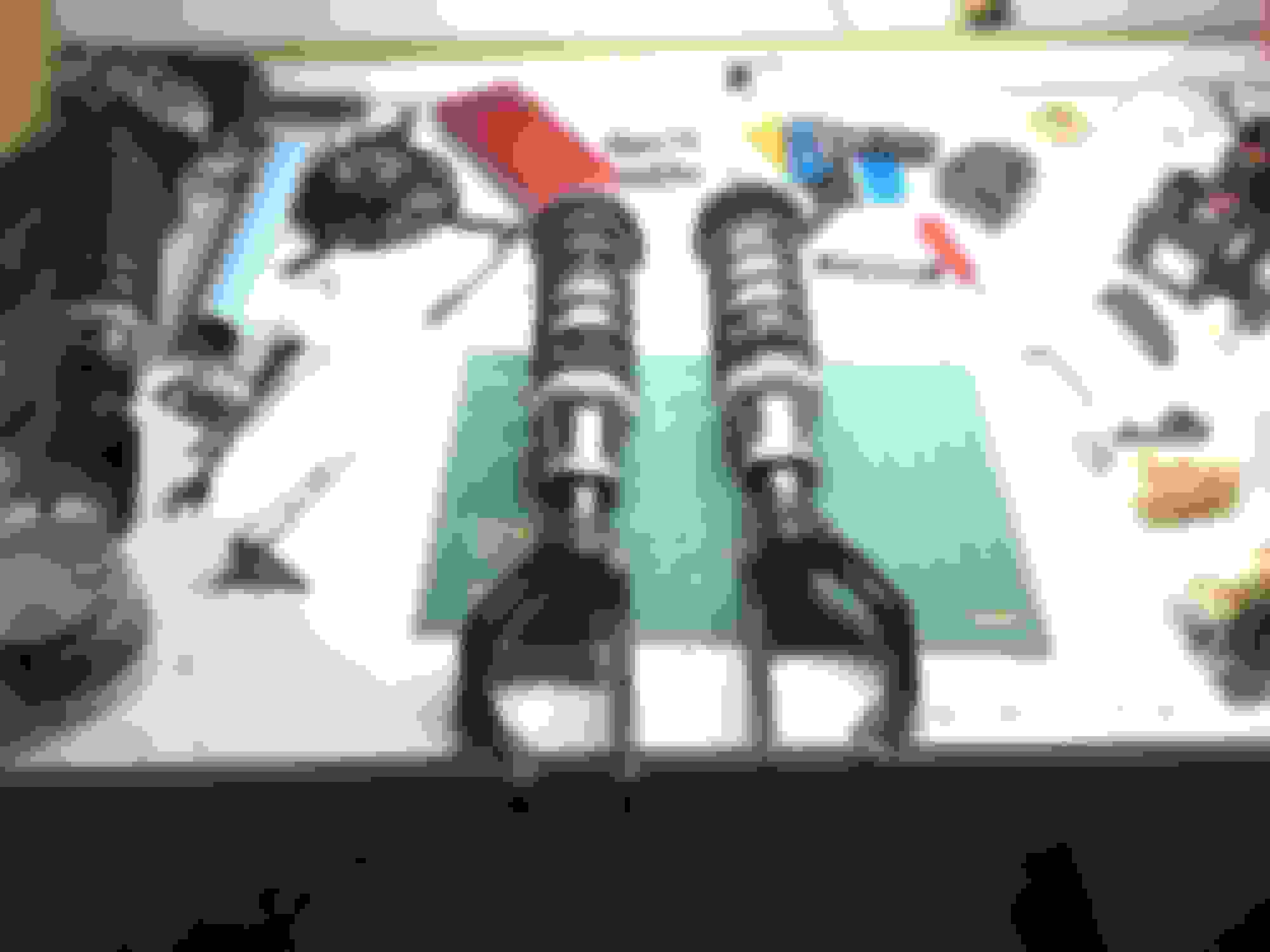
Progress CSII lowering coils and springs (450/350)
Why did you switch the ecu? What is different about it?
The california ECU is tuned differently because CARB didnt approve the higher NOx emissions of the federal ECU. So, honda had to make a special one for CA.
It's rumored to not have as aggressive of a lean burn. The fed ecu will actually burn leaner, and easier to go in/out of lean burn. I was able to go into lean burn in 3rd gear yesterday which has never happened before.
Originally Posted by Caoboy
i believe cruising at 62-63 mph initiates lean burn mode which is where you want to keep the engine operating for maximum fuel efficiency.
Yes and no. Lean burn kicks in based on engine load, throttle percent and RPM. I can keep it in lean burn up to about 80 mph.
I was keeping it to 60-65 mph for the first 3 months of this commute, but now I tend to go 70-75 and I get more time to spend with the fam.
Nah lean burn is only triggered in overdrive at speeds over 51mph and below 81mph....
Overdrive refers to the gearing of the transmission, I'm basically saying 5th gear.
You can monitor lean burn by viewing the secondary oxygen sensor voltage using an obd2 reader, or you can tap the secondary 02 wire with a small $3 volt meter you can run on your dash. I made alot of threads on ecomodder about it.
Alright, well just to clear it up for everyone, the HX can lean burn in 3rd 4th or 5th gear, so what you said earlier about the car having to be in 'overdrive' or 5th gear is false. I just don't want to spread misinformation in this thread.
Originally Posted by chrysler kid
The california ecu is only capable of lean burn for a few seconds and it kicks back into regular 12 valve non lean burn.
Another false statement. I've been running the CA ecu for about 20,000 miles, while consistently monitoring lean burn with an ultragauge. I can get the car to stay in lean burn for most of my 40 mile commute. Also, the CA ecu will go into lean burn in 4th gear. honestly I haven't noticed much of a difference in the fed ecu as far as how easy it is to engage lean burn, but I suspect the afr's are slightly leaner. It went into lean burn in 3rd gear but thats about all I've noticed for difference.
No your ultra gauge is not calibrated correctly to monitor lean burn.
I dont want you to spread false information so I just want to correct you and inform you that you need to read your owners manual. The afr readings are not the only calibration that determines lean burn, it is also highly determined by tps readings with afr. The car always runs lean, the fact you think your California civic could lean burn just shows you do not know how to actually lean burn or drive your car yet. I dont want you to assume anything since youre getting worse than EPA mileage but youre doing it wrong
The link you sent confirms what I said earlier about using the ultragauge to monitor lean burn. Ive been monitoring it using the bank 2 O2 sensor. In fact, one of your quotes from that link also confirms my method:
” had a small volt meter hooked to the secondary oxygen sensor power wire to the ecu to monitor lean burn. Secondary voltage would read .00 in lean burn. “
So again, you posted a link that confirms I have been monitoring lean burn correctly using the ultra-gauge, yet you want to tell me im doing it wrong. Are there other ways to monitor it like vacuum gauge? Yes. But what I was tryin to communicate was that the california cars will not only stay in lean burn for a couple seconds like you said earlier. In fact, they will stay in lean burn much longer. I’ve also gotten the car into lean burn in gears other than 5th, and many isers on ecomodder have also confirmed this. Think about it: why would a car company put in a feature for traveling efficiently at long distances if it only works for a couple seconds at a time? Doesnt really make sense.
And where in the owners manual does it say how to properly monitor lean burn mode? I dont have the original owners manual so maybe you could show everyone? I’d be interested to see.
I appreciate you enthusiasm for HXs dude, and I think youre a super talented tinkerer and builder. Just trying to post a fun build thread about my HX. Your contribution to my build thread has been mostly “look at all my cars and builds” and “youre doing it wrong”.
I had one of these back in grad school (~'14) and it was a tank. Original clutch and just oil changes got it up to 300K miles and was still going strong. I miss this car the most if anything, it taught me a bunch. 40-45mpg was also really nice on the wallet back then lol
I had one of these back in grad school (~'14) and it was a tank. Original clutch and just oil changes got it up to 300K miles and was still going strong. I miss this car the most if anything, it taught me a bunch. 40-45mpg was also really nice on the wallet back then lol
300k on original clutch?? The reliability of these cars is amazing. Its been fun keep the stock engine and just tweak the car to make it even better. Its actually a pretty fun car to drive, considering it can get such great gas mileage.
I bought an hx and I wasn't aware that they could do as well in fuel economy as you guys are getting. Mine isn't going to be an economy car though.
I honestly wonder when people throw out numbers over 50 mpg. A common mod for these is to use vx wheels which are 13” rather than 14”, and would show artificially high mileage. Same with going with smaller tires than stock. Hypermiling is also a driving style, where some people will drive dangerously slow on the highways. When I am hypermiling I try to keep it to 60 at a minimum if there are other cars on the road. If I drive the car without trying to hypermile it will get high 30’s for mpg. Im hypermiling my current tank and Im expecting to get around 45 mpg.
I honestly wonder when people throw out numbers over 50 mpg. A common mod for these is to use vx wheels which are 13” rather than 14”, and would show artificially high mileage. Same with going with smaller tires than stock. Hypermiling is also a driving style, where some people will drive dangerously slow on the highways. When I am hypermiling I try to keep it to 60 at a minimum if there are other cars on the road. If I drive the car without trying to hypermile it will get high 30’s for mpg. Im hypermiling my current tank and Im expecting to get around 45 mpg.
High 30's is pretty good to me. Mine is on its way to a b series swap, so I'll never see that in mine.
I honestly wonder when people throw out numbers over 50 mpg. A common mod for these is to use vx wheels which are 13” rather than 14”, and would show artificially high mileage. Same with going with smaller tires than stock. Hypermiling is also a driving style, where some people will drive dangerously slow on the highways. When I am hypermiling I try to keep it to 60 at a minimum if there are other cars on the road. If I drive the car without trying to hypermile it will get high 30’s for mpg. Im hypermiling my current tank and Im expecting to get around 45 mpg.
As long as the tires are the correct size, I don't see how the 13" wheels would show a false improvement... if anything I would venture a guess that they might hurt a little bit since there is more tire and tires are heavier than aluminum. I think 45mpg should be very doable with the stock setup, if everything is in tip-top condition. Are all the splash shields and fender liners intact on the car? Are all of the snap clips in place along the bottom of the rear bumper cover?
As long as the tires are the correct size, I don't see how the 13" wheels would show a false improvement... if anything I would venture a guess that they might hurt a little bit since there is more tire and tires are heavier than aluminum. I think 45mpg should be very doable with the stock setup, if everything is in tip-top condition. Are all the splash shields and fender liners intact on the car? Are all of the snap clips in place along the bottom of the rear bumper cover?
The typical tire sizes for a 13" wheel would result in a smaller circumference for the wheel. What I meant is that the odometer will read that you have gone more miles for a given revolution of the tire. So if people are doing math based on odometer reading they are probably reporting more miles than they have actually gone.
As for the fender liners- the driver side is damaged and there is no bottom liner on the front of the car. I need to fix that. I didn't know there was one on the rear.
As for the turbo I haven't found any examples of cars that use turbos for fuel efficiency, and I've done some research. The thing with turbos is you may get a slight boost in fuel efficiency when you're traveling at constant speed on the highway, but the losses from spooling up the impeller Durning city driving will cause you to lose more efficiency than it's worth. You're compressing air which means you needore fuel to balance out your higher intake flow rates. If you can find an example of a hypermiler that added a turbo (ie not stock setup) send it my way I'd love to see it!
There is an argument to be made in regards to spool-up. But in the steady state there is an argument for “boosting” to zero pressure I.e., running near or at atmospheric pressure all the time. The idea is that the engine should run at best VE and also best BSFC at that manifold pressure and ultimately would make steady state torque at much lower throttle angles. I know I’ve seen at least one build that exploited that theory fairly successfully. The downside would be that, unless you are willing to spend big $$ on proper engine management (beyond a system that adapts an old obd1 ecu), you are going to lose that nice factory lean burn strategy. I’ll look around and see if I can find one of those builds.
There is an argument to be made in regards to spool-up. But in the steady state there is an argument for “boosting” to zero pressure I.e., running near or at atmospheric pressure all the time. The idea is that the engine should run at best VE and also best BSFC at that manifold pressure and ultimately would make steady state torque at much lower throttle angles. I know I’ve seen at least one build that exploited that theory fairly successfully. The downside would be that, unless you are willing to spend big $$ on proper engine management (beyond a system that adapts an old obd1 ecu), you are going to lose that nice factory lean burn strategy. I’ll look around and see if I can find one of those builds.
Super interesting build, and I enjoyed the article about the D15B. Its an interesting concept to try and keep the manifold vacuum/ boost to 0 psi to avoid losses from the piston pulling vacuum. Overall 54 mpg is pretty good, but I've also heard that 1.5l engine can get up there without the turbo. I wonder what pulling a vacuum does to an engine's efficiency, vs having to push the impeller on the exhaust side. maybe someone has quantified this?
Edit: I remember reading that turbocharging for fuel economy is a viable option if you're adding boost, and going down in displacement, i.e. make a 3.0L car into a 2.0L car with a turbo. Maybe its possible to cut fuel to one of the cylinders at highway speeds, and the boost could make up for the power.
If you were truly hypermiling then yes you can achieve those 50mpg, I pulled off a crazy 45mpg with ethanol free gas, 39psi tires and no road raging by not getting in the passing lane. Only problem was when I started to hit all the inclines/declines of Texas was when I started to struggle keeping that 45mpg.
If you were truly hypermiling then yes you can achieve those 50mpg, I pulled off a crazy 45mpg with ethanol free gas, 39psi tires and no road raging by not getting in the passing lane. Only problem was when I started to hit all the inclines/declines of Texas was when I started to struggle keeping that 45mpg.
yeah i would kill for a 2005 hx with a swapped vx tranny with that little bit higher last gear gear. or even just a unmolested hx 04-05 manual. ya could get 50+ easy
yeah i would kill for a 2005 hx with a swapped vx tranny with that little bit higher last gear gear. or even just a unmolested hx 04-05 manual. ya could get 50+ easy
I don't know much about the later generation HX, but I remember the EPA fuel economy is less than the 6th gen. Are they supposed to get better mileage than 6th gen?
Cleaned out the egr passages underneath the plate on top of the intake. Haven't really noticed a difference. Some of the passages had quite a bit of buildup but the holes going down into the intake didn't seem to be completely clogged. Seems to be consistent with the mileage.



 1997 Civic HX respectable Hypermiler