


Drag Alighnment Questions *HELP*


Thread Starter
Honda-Tech Member
Joined: Mar 2011
Posts: 137
Likes: 0
From: Washington
 Drag Alighnment Questions *HELP*
i have drag racing for a couple years now but getting more serious into it this year since i did a build with more power.
in the past ive never had an issue but it seems with the more power the car isnt stable like it use to be. Granted im going speeds i never use to go so im not sure if this is normal.
Car is being used for ROLL/DRAG racing it does reach speeds of 160+ roll racing.
Currently the car makes 600whp its a h2b turbo setup in a Eg civic hatchback.
when under power for example brake boosting in 3rd let of the brake and take off the car wants to jump 3 lanes of traffic and i cant controll the car...
Suspension Mods/Tires/Current alighnment info below:
Tires: Front M&H 245/55/15s 26" tall
Front
Progress technology suspension ( drag spring rate ) 550 rear 450 front
aftermarket front lower controll arms ( poly bushings )
New Tie rods
just ordered Hard race compliance bushings and trailing arm bushings ( hoping it might help)
Rear
Function7 LCA ( Poly bushing )
Current Alighnment specs
Front
Left Right
.05 Camber .05 camber
-.015 Toe -.015 Toe
Rear
0 Camber 0 Camber
+.0625 toe +.0625 toe
A buddy of mine thinks the postive toe in the rear is the issue but i surfed alot of drag alighment threads on here that say positive toe in the rear makes the car stable at high speeds
any help/advice is greatly apreciated.
in the past ive never had an issue but it seems with the more power the car isnt stable like it use to be. Granted im going speeds i never use to go so im not sure if this is normal.
Car is being used for ROLL/DRAG racing it does reach speeds of 160+ roll racing.
Currently the car makes 600whp its a h2b turbo setup in a Eg civic hatchback.
when under power for example brake boosting in 3rd let of the brake and take off the car wants to jump 3 lanes of traffic and i cant controll the car...
Suspension Mods/Tires/Current alighnment info below:
Tires: Front M&H 245/55/15s 26" tall
Front
Progress technology suspension ( drag spring rate ) 550 rear 450 front
aftermarket front lower controll arms ( poly bushings )
New Tie rods
just ordered Hard race compliance bushings and trailing arm bushings ( hoping it might help)
Rear
Function7 LCA ( Poly bushing )
Current Alighnment specs
Front
Left Right
.05 Camber .05 camber
-.015 Toe -.015 Toe
Rear
0 Camber 0 Camber
+.0625 toe +.0625 toe
A buddy of mine thinks the postive toe in the rear is the issue but i surfed alot of drag alighment threads on here that say positive toe in the rear makes the car stable at high speeds
any help/advice is greatly apreciated.

Thread Starter
Honda-Tech Member
Joined: Mar 2011
Posts: 137
Likes: 0
From: Washington
Re: Drag Alighnment Questions *HELP*
how much would you say i should toe out the front? some say 1/8" so say 1/16"
the more reading i do it seems like i should be toeing the rear in for high speed stability not toeing out.
does that seem right?


Honda-Tech Member


Joined: May 2006
Posts: 444
Likes: 1
From: Daphne, AL
Re: Drag Alighnment Questions *HELP*
Corner balancing has always been very helpful for me initially, then setting the alignment. Now my opinion and experience is completely related to FWD nitrous cars, and they hit the tire a lot harder, but ive always set cars as if they were making a pass, we have floor mounted anchor rings in the floor at the shop to strap the rear down with a tension gauge, then slightly bump the front trac bar with a screw jack, I look for - .5 to 0 worth of camber and -.06 to .00 toe as set when simulated then unload the cars suspension, do a rolling compensation again as well as your caster sweep, find a happy medium of loaded and unloaded, typically specs are so very close no further adjustments are needed.
Thread Starter
Honda-Tech Member
Joined: Mar 2011
Posts: 137
Likes: 0
From: Washington
Re: Drag Alighnment Questions *HELP*
Trending Topics
Honda-Tech Member
Joined: May 2006
Posts: 444
Likes: 1
From: Daphne, AL
Re: Drag Alighnment Questions *HELP*
i will explain the best i can why its better to toe in on straight line/drag applications, pertaining to FWD cars specifically. The rack being mounted behind SAI or spindle center, as the vehicle launches, the front end pulls up on the front suspension, the tie rods will want to pull the rear of the spindle/wheel in, basically creating a toe out action upon launch, which is why ive always run negative/toe in on fwd cars. And like ive stated, this is just what has worked for me, the fastest ive ever been is 10.90s on a nitrous b series car, and you could one finger drive the car down the track, which makes for way more consistency and less miss shifts due to fighting the car. Hope this helps, and im sure others will have different opinions, but this has worked for me for 10 years or more.
Thread Starter
Honda-Tech Member
Joined: Mar 2011
Posts: 137
Likes: 0
From: Washington
Re: Drag Alighnment Questions *HELP*
i will explain the best i can why its better to toe in on straight line/drag applications, pertaining to FWD cars specifically. The rack being mounted behind SAI or spindle center, as the vehicle launches, the front end pulls up on the front suspension, the tie rods will want to pull the rear of the spindle/wheel in, basically creating a toe out action upon launch, which is why ive always run negative/toe in on fwd cars. And like ive stated, this is just what has worked for me, the fastest ive ever been is 10.90s on a nitrous b series car, and you could one finger drive the car down the track, which makes for way more consistency and less miss shifts due to fighting the car. Hope this helps, and im sure others will have different opinions, but this has worked for me for 10 years or more.
taking it strait to the highway i noticed the car was 100% better and went strait under power in 3rd where it used to just rip me left real hard. but i still noticed it to be unstable when i hit 4th but i could of been fighting grooves....
im going to the track tomorrow to do some testing wish me luck. i may try the toe in thing on the front again just obviously not as much toe in as i had lol
thanks for the respones




 Re: Drag Alighnment Questions *HELP*
Lol. When I lower cars all of them toe out. Would the opposite not be true if the front lifts when launching? What else is happening that would cause them to toe out? I would imagine bushing flex, if there were any, would toe in also.

Honda-Tech Member
Joined: Mar 2005
Posts: 2,428
Likes: 11
From: CT, US
Re: Drag Alighnment Questions *HELP*
you want zero camber and zero toe front and rear while under actual race conditions for the car to be fastest. a hint of toe-in at the rear will help stabilize it at speed. a hint of camber front and rear will also help stabilize it at speed.
the 3 main things that affect toe geometry under actual race conditions are:
-flex
-front lift and rear squat
-tire centerline vs steering axis wheel width/offset/diameter drastically affect this)
some cars will toe out when the front lifts, some will toe in when the front lifts. you need to do some actual testing on an alignment rack to determine what your car does, and how much.
flex is nearly impossible to measure, which is why everyone simply gets the stiffest stuff possible to keep flex to a bare minimum.
if the tire surface centerline is further out than the steering axis, the wheel will pull toe in under load, and toe out under decel. and vice versa. ideally you want the tire surface centerline to be perfectly inline with the steering axis, which causes no effects on toe at all, but that can be impossible sometimes due to varying fitment issues of certain wheel and tire sizes.
also keep safety in mind. like rear toe while braking. my car toes out a little at the rear while braking, so I can not run zero toe at rest or while squatted, I need to run about 3/32" toe-in at the rear, which causes near zero (stil toe-in though) toe while braking, but even more toe-in while squatted under load which slows me down a bit. I'd rather live and be a hair slower though, than be the fastest and risk not living to see the race pics/vids.
I have a specific method for setting my car, but every car is different, and trial and error and lots of measurements messing around on the alignment rack are key.
**also to note, at speeds of 160+ you really want to get a drag wing**
the 3 main things that affect toe geometry under actual race conditions are:
-flex
-front lift and rear squat
-tire centerline vs steering axis wheel width/offset/diameter drastically affect this)
some cars will toe out when the front lifts, some will toe in when the front lifts. you need to do some actual testing on an alignment rack to determine what your car does, and how much.
flex is nearly impossible to measure, which is why everyone simply gets the stiffest stuff possible to keep flex to a bare minimum.
if the tire surface centerline is further out than the steering axis, the wheel will pull toe in under load, and toe out under decel. and vice versa. ideally you want the tire surface centerline to be perfectly inline with the steering axis, which causes no effects on toe at all, but that can be impossible sometimes due to varying fitment issues of certain wheel and tire sizes.
also keep safety in mind. like rear toe while braking. my car toes out a little at the rear while braking, so I can not run zero toe at rest or while squatted, I need to run about 3/32" toe-in at the rear, which causes near zero (stil toe-in though) toe while braking, but even more toe-in while squatted under load which slows me down a bit. I'd rather live and be a hair slower though, than be the fastest and risk not living to see the race pics/vids.
I have a specific method for setting my car, but every car is different, and trial and error and lots of measurements messing around on the alignment rack are key.
**also to note, at speeds of 160+ you really want to get a drag wing**
Thread Starter
Honda-Tech Member
Joined: Mar 2011
Posts: 137
Likes: 0
From: Washington
Re: Drag Alighnment Questions *HELP*
you want zero camber and zero toe front and rear while under actual race conditions for the car to be fastest. a hint of toe-in at the rear will help stabilize it at speed. a hint of camber front and rear will also help stabilize it at speed.
the 3 main things that affect toe geometry under actual race conditions are:
-flex
-front lift and rear squat
-tire centerline vs steering axis wheel width/offset/diameter drastically affect this)
some cars will toe out when the front lifts, some will toe in when the front lifts. you need to do some actual testing on an alignment rack to determine what your car does, and how much.
flex is nearly impossible to measure, which is why everyone simply gets the stiffest stuff possible to keep flex to a bare minimum.
if the tire surface centerline is further out than the steering axis, the wheel will pull toe in under load, and toe out under decel. and vice versa. ideally you want the tire surface centerline to be perfectly inline with the steering axis, which causes no effects on toe at all, but that can be impossible sometimes due to varying fitment issues of certain wheel and tire sizes.
also keep safety in mind. like rear toe while braking. my car toes out a little at the rear while braking, so I can not run zero toe at rest or while squatted, I need to run about 3/32" toe-in at the rear, which causes near zero (stil toe-in though) toe while braking, but even more toe-in while squatted under load which slows me down a bit. I'd rather live and be a hair slower though, than be the fastest and risk not living to see the race pics/vids.
I have a specific method for setting my car, but every car is different, and trial and error and lots of measurements messing around on the alignment rack are key.
**also to note, at speeds of 160+ you really want to get a drag wing**
the 3 main things that affect toe geometry under actual race conditions are:
-flex
-front lift and rear squat
-tire centerline vs steering axis wheel width/offset/diameter drastically affect this)
some cars will toe out when the front lifts, some will toe in when the front lifts. you need to do some actual testing on an alignment rack to determine what your car does, and how much.
flex is nearly impossible to measure, which is why everyone simply gets the stiffest stuff possible to keep flex to a bare minimum.
if the tire surface centerline is further out than the steering axis, the wheel will pull toe in under load, and toe out under decel. and vice versa. ideally you want the tire surface centerline to be perfectly inline with the steering axis, which causes no effects on toe at all, but that can be impossible sometimes due to varying fitment issues of certain wheel and tire sizes.
also keep safety in mind. like rear toe while braking. my car toes out a little at the rear while braking, so I can not run zero toe at rest or while squatted, I need to run about 3/32" toe-in at the rear, which causes near zero (stil toe-in though) toe while braking, but even more toe-in while squatted under load which slows me down a bit. I'd rather live and be a hair slower though, than be the fastest and risk not living to see the race pics/vids.
I have a specific method for setting my car, but every car is different, and trial and error and lots of measurements messing around on the alignment rack are key.
**also to note, at speeds of 160+ you really want to get a drag wing**
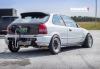
when i launched the car i felt like something was wrong it went strait for the wall and i was literally turning the wheel a half turn to the right to go strait?
is this common? as i got faster the wheel straitened out..
here is a video.
60 ft - 1.657
330 - 4.622
1/8 - 6.991
MPH - 103.85
1000 - 9.003
ET - 10.655@137.46
Honda-Tech Member
Joined: Mar 2005
Posts: 2,428
Likes: 11
From: CT, US
Re: Drag Alighnment Questions *HELP*
thanks for all the info... with my last specs i felt comfortable enough to take it down the track.
when i launched the car i felt like something was wrong it went strait for the wall and i was literally turning the wheel a half turn to the right to go strait?
is this common? as i got faster the wheel straitened out..
when i launched the car i felt like something was wrong it went strait for the wall and i was literally turning the wheel a half turn to the right to go strait?
is this common? as i got faster the wheel straitened out..
I've actually been in the process of this with my car for the last month or so, so far having replaced the rack with one I rebuilt, front inner and outer tie rods, all front uca and lca bushings, and one front upper balljoint. just did a fresh alignment 2 days ago, but I'm still getting some inconsistent pulling at higher speeds and on uneven road surfaces. as of tonight, I've determined the front radius arm bushings are too soft, and driver rear uca bushings are breaking down and shifting a bit more than intended, causing that wheel to toe all over the place. I'll be ordering aftermarket replacements soon, and replacing both rear upper balljoints as preventative maintenance while I'm in there.

Honda-Tech Member
Joined: Sep 2015
Posts: 429
Likes: 0
Re: Drag Alighnment Questions *HELP*
mite be something as simple as spinning the left tire and not the right. i set my car up to pull a little to the right on slow speed / daily driving and when wot it straight as a arrow
Thread Starter
Honda-Tech Member
Joined: Mar 2011
Posts: 137
Likes: 0
From: Washington
Re: Drag Alighnment Questions *HELP*
ya im going to to my bushings, the car is getting a 10 point as well now since we got kicked from the track. Then im going to play with tire pressures as well next time we go maybe do 1 lb less in the right side of the car see if it helps with the pull.
trial and error i suppose
trial and error i suppose
Honda-Tech Member
Joined: Mar 2005
Posts: 2,428
Likes: 11
From: CT, US
Re: Drag Alighnment Questions *HELP*
ya im going to to my bushings, the car is getting a 10 point as well now since we got kicked from the track. Then im going to play with tire pressures as well next time we go maybe do 1 lb less in the right side of the car see if it helps with the pull.
trial and error i suppose
trial and error i suppose
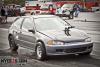
and for adjusting front wheel weight balance, ideally you'd want to do it via the coilovers, but it can also be done via adjustable swaybar links. I have adjustable links on the rear bar in my car. I race autocross (best with corner balance) and drag race (best with FL/FR balance), so I disconnect my swaybars and corner balance the car, then install the bar links again in a neutral position to maintain the same balance. the car is now set up for autocross. then when I hit the strip, I just crank the snot out of the rear bar links, adjusting the left rear up and the right rear down, which causes the front wheels to be balanced, but the rear wheels to be quite a bit off which doesnt matter for drag.

Honda-Tech Member
Joined: Feb 2014
Posts: 415
Likes: 0
From: Atlanta, GA
Re: Drag Alighnment Questions *HELP*
Maybe it's just the QC . . . either way the idea that corner balancing means you won't have to run different pressures is false. Corner balancing is going to help reduce the amount of what is essentially torque steer (more weight on a side to help it have more traction than the other side) but it's not going to change rollout.