When you click on links to various merchants on this site and make a purchase, this can result in this site earning a commission. Affiliate programs and affiliations include, but are not limited to, the eBay Partner Network.
I'm a little concerned that the way bigger I.D. of the line (compared to the tubing usually used) will make it read as if it had lower oil pressure but I don't think i'll know until I try. I was hoping someone has tried and can tell me if they had a problem or if it worked without issues.
Had a buddy who did something similar in setup with the same I.D. hose. It read 2-3 psi lower at the sending unit than at the block. If I remember correctly, he had roughly 8" of hose between the T-fitting and the sending unit. I will suggest that you use better hose clamps tho, simple vibration over time will cause those clamps to degrade/shred your hose and will lead to leaks/unusable sections of hose. Try something like
instead. They will work great with either barbed or single raised lip fittings, and the housings will not tend to spread apart over time (a bit pricey yes, but better $24 than a new engine).
They're single raised fittings, i'm not too worried about the clamps but I am going to look further into that since i've had a few problems with autocrap (advance auto parts) clamps already, mostly breaking before they're even tight.
I was planning on either fastening the sending unit to the firewall (commonly recommended) or the intake manifold or maybe block. Since I mentioned it, does anyone have recommendations for securing that silly bell?
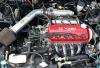
Well, for my own setup I fabbed a U-bracket out of stainless sheet. one end has two holes that line up with two firewall studs and the other end is curved to sit snugly against the sender, and i have the sender held to the bracket with a solid band hose clamp and some silicone 1/16" thick strips. It's not real easy to see the construction in this pic, but the general idea can be garnered.



 Will my oil pressure gauge work?