When you click on links to various merchants on this site and make a purchase, this can result in this site earning a commission. Affiliate programs and affiliations include, but are not limited to, the eBay Partner Network.
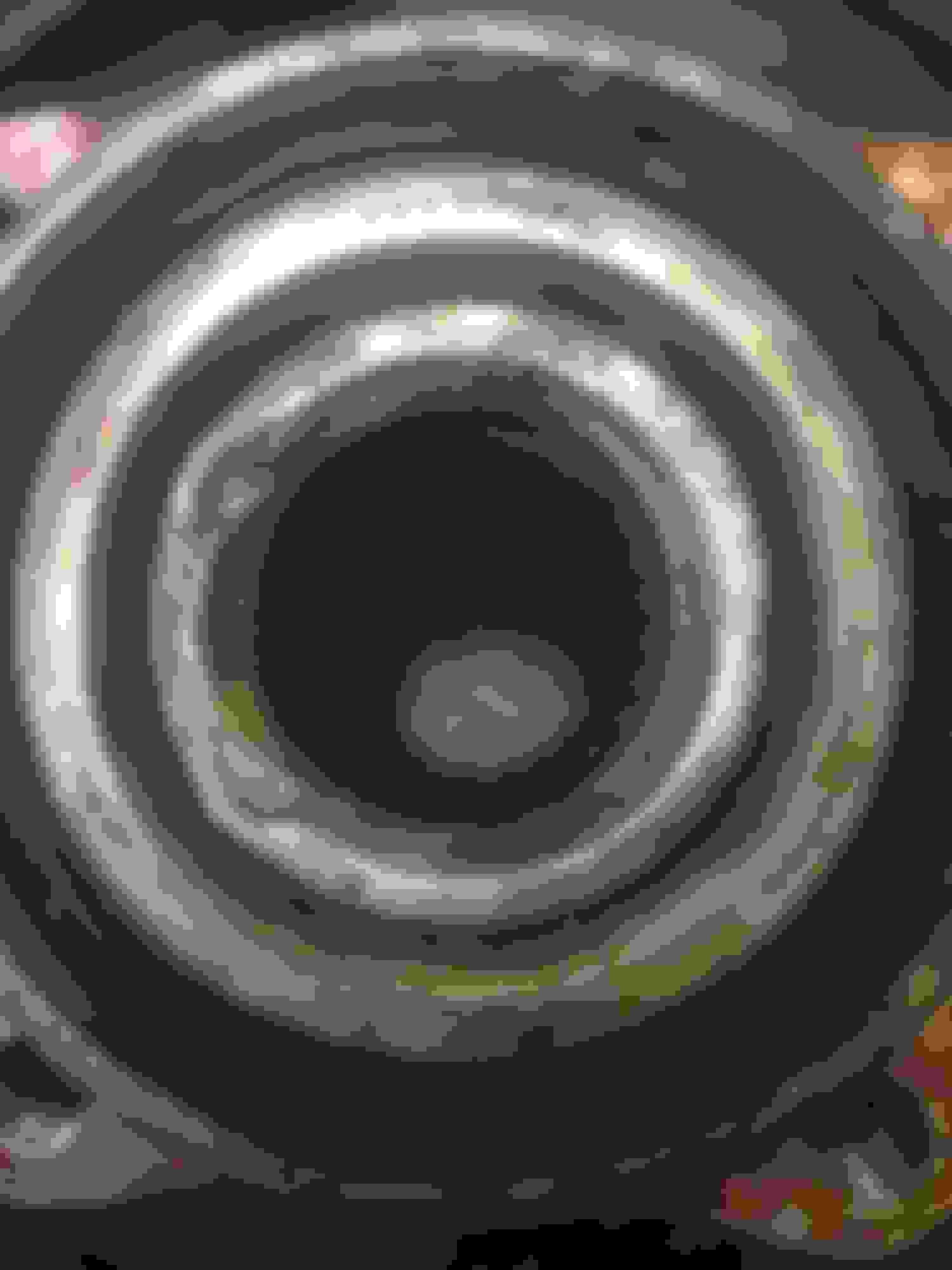
My 1996 Honda Accord recently started making a concerning repetitive popping noise in reverse and during turns. I replaced the CV axles, the sway bar links, and the upper control arms on both sides, but it still made the noise. So I figured, why not replace the lower ball joints and outer tie rod ends (the boots were slightly ripped for both). However, when I got the steering knuckle out to replace the ball joints, I found this:
The wheel hub is dented on the inner rim (on the driver and passenger side), and I can't figure out why. I don't really want to order new parts and put it all back together if it's just gonna happen again, so does anyone have any clue as to how this might have happened? And could this be the cause of my noise?
Also, is it possible to get the inner race of the wheel bearing off of the hub without damaging it or do I need to get a whole new hub and bearing assembly?
Thanks in advance to all who respond, I would really appreciate some help with this.
<p>Was your axle nut on TIGHT?</p><p> </p><p>Once you figure out the cause you can just purchase a wheel bearing, press (read as HAMMER) the old one out and press it in or have someone press it in. Should be cheaper than a new hub/bearing assembly.</p>
I don't know why a hub would ever be in contact with the BJ. The two would never meet.
Cobr547 that damage is most likely from someone, in the past, beating on the hub to remove it from the bearing assembly. Ericthecarguy(youtube) shows a 'method' to removing hubs from bearings on Hondas without a press. At best it is savage method, it is just uncouth. Beating the hub out of the bearing would cause such damage. I do not believe it to be the cause of your sound. However, if the new wheel bearings where beat on in a similar fashion they may not be in the best of shape. Noise they make when failing is usually whining, growling(sounds like driving on an unpaved road), or howling.
Chamfer of the hub is to clear the bullnose corner of the stub axle, as long as the splines are undamaged and the back of the hub is flat(file down any raised areas from the beating) allowing the stub axle to fully seat into the hub there should be no issues. The bearing should rotate smoothly, any grinding or rough spots would indicate a failing race surface.
Not to quibble, but I'm pretty sure this model is like the 1991 with the hub-over-rotor design; in that the hub assembly bolts up into the knuckle, adjacent to the balljoint as in the drawing below. And when you try to remove the balljoint, it hits the lip of the hub assembly (as shown in your first picture).
As for getting by without a press, it's possible Advance Auto or Autozone loan out a press kit for balljoints that you can borrow for free as one of their free loaner kits that might could work.
If something was used between the hub and hammer to prevent damage that would work. Such as an impact socket. The outer race usually sticks to the hub, if no press is available you will need to cut it off to remove.



 Wheel hub dented, can't figure out why