When you click on links to various merchants on this site and make a purchase, this can result in this site earning a commission. Affiliate programs and affiliations include, but are not limited to, the eBay Partner Network.
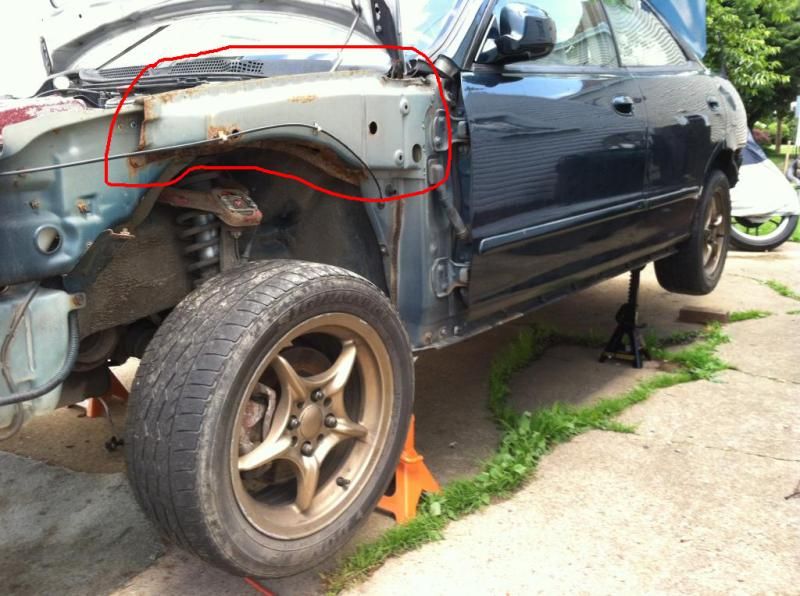
i'm no stranger when it comes to body work and painting, but i have never attempted a repair like this one before. luckily i never had to until now. i have a nasty rust hole that has expanded pretty large in the front wheelhouse. here is a pic:
the hole is in the piece i have circled in red, i seen that honda still sells this piece new. how much of a PITA is it to take this off the car and either fix it off the car or replace it with a new one? my previous body works was really limited to just the outside panels, i've never messed with something like this before.
the hole is huge now, probably not able to be repaired. at least not easily with this piece on the car. the hole is the entire width of that piece and probably 6 inches long. its from when i had the car slammed several years back and drving on our awesome PA road salt covered roads in the winter
Basically get a good spotweld bit, drill out all the spot welds and then separate the piece (an air chisel works best but a cold chisel and a hammer will work) Then clean everything up really well with a flap disc or fiber wheel. Weld the new piece in, grind your welds down, prime with epoxy primer, seal the seams with seam sealer, done.
1. I want to save money and take them off myself (spot weld cutter, chisel, grinder, etc.). Can I drive without them on the car to get to an auto body shop and have new ones welded on or will any bump make something bend or crack?
2. Do you know of a online shop where I could get a good deal on these?
Part numbers are : 60614S01A00ZZ and 60714S01A00ZZ
i've always ordered my parts from acuraoemparts.com. i still havent fixed this yet. i may just try to make repairs with what i have and weld in new metal once i cut all the rusted stuff out.
Auto Body Shop uses advanced technology to reveal the shadows of the dent, which guides the technician’s tool placement and allows them to restore the damaged area to its original position.



 Body Repair-Drivers front wheelhouse