


Compression vs. VE


Thread Starter
Honda-Tech Member

Joined: Nov 2004
Posts: 1,117
Likes: 0
From: NY
 Compression vs. VE
do we buy pistons and ASSUME the compression thats listed in the catalog? unfortunately, MOST do and SOME DONT.
-how does compression and VE relate to each other?
-how does a camshaft play a role in this?
-even after we take all the proper measurements to calculate the compression we have, is this the end of it all?
-how can we make an ICE more efficient?
hopefully i opened pandora's box. its just a start
-how does compression and VE relate to each other?
-how does a camshaft play a role in this?
-even after we take all the proper measurements to calculate the compression we have, is this the end of it all?
-how can we make an ICE more efficient?
hopefully i opened pandora's box. its just a start

Honda-Tech Member
Joined: Oct 2005
Posts: 756
Likes: 0
From: Boston, Ma, USA
Re: Compression vs. VE
You can't assume the compression ratio based on the catalog because you need other information to determine your actual compression ratio. Things that can change the CR are Piston Dome/Dish, HG thickness, CC work, Valves ( Flat or Dished) and ect.
VE is a measure of how efficient your engine can fill its cylinders. So with increased compression your VE increases. Please correct me if I am wrong.
Camshaft play a roll because they control your valve timing. Increased or Decreased intake valve duration will raise or lower the engines VE.
Measuring is not the end of be all because there are different types of compression. Static compression ratio and dynamic compression ratio
When I figure out what the ICE acronym is I'll make an attempt at answer that question.
Right or wrong I hope this sparks some good debate!
VE is a measure of how efficient your engine can fill its cylinders. So with increased compression your VE increases. Please correct me if I am wrong.
Camshaft play a roll because they control your valve timing. Increased or Decreased intake valve duration will raise or lower the engines VE.
Measuring is not the end of be all because there are different types of compression. Static compression ratio and dynamic compression ratio
When I figure out what the ICE acronym is I'll make an attempt at answer that question.
Right or wrong I hope this sparks some good debate!
Last edited by Fink29; Apr 4, 2013 at 08:44 PM. Reason: correction

B*a*n*n*e*d
Joined: Dec 2001
Posts: 8,185
Likes: 3
Re: Compression vs. VE
Thank you Fink29. I love your signature, I actually spoke on the phone for a couple of hours last night with Rocket (thanks to Omniman for introducing me) and Brad RLZ is the another great pioneer that early on took the time to teach me a few things.
There are different kinds of compression. What everyone knows about compression is pretty much wrong and is basically oversimplified.
Static compression ratio = (Chamber Volume+ Swept Volume) / Chamber Volume
Effective Compression ratio =Cylinder Volume when the intake valve closes vs Volume at TDC
This is the compression ratio calculated from the static compression and other engine parameters, determined mainly by cam selection . This is the ratio you build an engine around whether you know it or not.
Dynamic Compression Ratio = Effective Compression ratio x Volumetric Efficiency (VE)
This is the actual compression ratio that the engine is running on. It changes with conditions, by RPMs and so does VE. It cannot really be predicted or measured unless you have a very advanced dynocell with high accuracy.
From the available BTUs you can balance the static vs Dynamic compression ratio to maximize power.
Generally speaking, as compression ratio is increased, cam duration and valve timing can also increase with gains in power and tq.
In order to understand what this all means, you need to consider that VE is the ratio between the amount of air that is consumed by an engine while it is running divided by the amount that would fill its displacement completely to atmospheric pressure at that RPM. It is therefore directly related to the engine's ability to breath, especially by the intake valve opening timing, the rate of lift of the intake valve and the efficiency of the entire intake system. Usually around peak Torque, you will get peak VE but in a high HP engine, it often means that peak VE comes later at higher RPM because tuning for that condition usually makes more power vs a street engine. In a race engine, around 85% VE is where max tq happens.
The key to all this is BMEP, brake mean effective pressure. It measures the work done in a single cylinder so its directly related to VE. It's usefull when comparing engines based on the same design, like bseries vs bseries, or kseries vs kseries etc. All this would not be possible without fuel , so Brake Specific Fuel Consumption is also directly related to VE because the lower the BSFC, the more efficient the combustion is so more power is made from fuel.
Looking at the bigger picture what does this all mean? Well, the engine is a system and that is why you sometimes here people talking about building the whole package. There are no changes you can do in a engine that will not affect something else on the engine. These principles are well known to a few, while most misunderstand them and grossly distorted by online forums, website and popular magazines. Once you gain a solid understanding of the fundamental principles , you have a better chance in changing it effectively. Nobody gets it right the first time, don't be afraid to chart your own road.
Now, if you want to know the relationship between compression, VE and cam specs/design, I could sum it up as the following.
You have an engine that you have flowed
Tested Pressure Drop (in H2O)= 28
RPM = 8700
Flow data for intake and exhaust is the following
Intake
Lift Flow
0.05 43.4
0.1 95
0.15 135
0.2 173.6
0.25 202.9
0.3 225.3
0.35 241
0.4 251.4
0.45 259.6
0.5 265
0.55 267.9
Exhaust
Lift Flow
0.05 31.2
0.1 78.4
0.15 115
0.2 142.8
0.25 170.4
0.3 182.4
0.35 190.2
0.4 194.8
0.45 197.7
0.5 199.7
0.55 200
By graphic this data, you can come up with an equation to match the flow curve.
intake y = 19400x6 - 46097x5 + 43611x4 - 19465x3 + 2845x2 + 796.55x
exhaust y = 45663x6 - 102005x5 + 89754x4 - 37428x3 + 6086.2x2 + 441.44x
these are basically the port coeficients that let you see how the head flows.
Then you need to see what are the specs of the engine..
Num Cyl= 4
Bore = 3.386
Stroke = 3.386
Rd Len = 5.473
CR = 11
JournalD.= 2.0275
Peak HP= 277
RPM = 8700
these will yield around
CID = 122.0 1998.5 cc
BMEP= 206.8 psi 14.25566692 bar
FMEP= 33.6
IMEP= 240.4
K = 0.68
Voll Eff.= 99.5
mps 4909.7 ft/min 24.9 m/sec
Knowing this info is a good start but what about the geometry of the piston rod and bearing going up and down. Remember, we only really care about a single cylinder at this point so we have to look at the behavior of the piston rod system
for the data above,
Crank Piston Delta T
Angle Position Sec/deg
0 0 0.0000192 0.00 0
1 0.000337609 0.0000192 2.94 0
2 0.001350268 0.0000192 5.87 0
3 0.00303747 0.0000192 8.80 0
4 0.005398373 0.0000192 11.73 0
5 0.008431795 0.0000192 14.65 0
6 0.012136223 0.0000192 17.57 0
7 0.016509805 0.0000192 20.48 0
8 0.021550357 0.0000192 23.37 0
9 0.027255362 0.0000192 26.26 0
10 0.033621972 0.0000192 29.13 0
11 0.040647011 0.0000192 31.98 0
12 0.048326975 0.0000192 34.82 0
13 0.056658034 0.0000192 37.65 0
14 0.065636037 0.0000192 40.45 0
15 0.075256512 0.0000192 43.24 0
16 0.08551467 0.0000192 46.00 0
17 0.096405407 0.0000192 48.74 0
18 0.10792331 0.0000192 51.45 0
19 0.120062656 0.0000192 54.14 0
20 0.13281742 0.0000192 56.81 0
21 0.146181274 0.0000192 59.44 0
22 0.160147597 0.0000192 62.05 0
23 0.174709473 0.0000192 64.62 0
24 0.189859702 0.0000192 67.17 0
25 0.205590798 0.0000192 69.68 0
26 0.221895 0.0000192 72.15 0
27 0.238764271 0.0000192 74.59 0
28 0.256190309 0.0000192 77.00 0
29 0.274164548 0.0000192 79.36 0
30 0.292678167 0.0000192 81.69 0
31 0.311722094 0.0000192 83.97 0
32 0.331287013 0.0000192 86.22 0
33 0.351363369 0.0000192 88.42 0
34 0.371941376 0.0000192 90.58 0
35 0.393011023 0.0000192 92.70 0
36 0.41456208 0.0000192 94.77 0
37 0.436584108 0.0000192 96.80 0
38 0.459066462 0.0000192 98.78 0
39 0.481998301 0.0000192 100.71 0
40 0.505368597 0.0000192 102.59 0
41 0.52916614 0.0000192 104.42 0
42 0.553379545 0.0000192 106.21 0
43 0.577997265 0.0000192 107.94 0
44 0.603007595 0.0000192 109.62 0
45 0.628398682 0.0000192 111.25 0
46 0.654158532 0.0000192 112.83 0
47 0.680275022 0.0000192 114.36 0
48 0.706735905 0.0000192 115.83 0
49 0.733528823 0.0000192 117.24 0
50 0.760641311 0.0000192 118.61 0
51 0.78806081 0.0000192 119.92 0
52 0.815774677 0.0000192 121.17 0
53 0.84377019 0.0000192 122.37 0
54 0.872034562 0.0000192 123.51 0
55 0.900554946 0.0000192 124.59 0
56 0.92931845 0.0000192 125.62 0
57 0.958312141 0.0000192 126.60 0
58 0.98752306 0.0000192 127.51 0
59 1.016938226 0.0000192 128.37 0
60 1.04654465 0.0000192 129.18 0
61 1.076329343 0.0000192 129.92 0
62 1.106279326 0.0000192 130.61 0
63 1.136381639 0.0000192 131.25 0
64 1.16662335 0.0000192 131.83 0
65 1.196991567 0.0000192 132.35 0
66 1.227473444 0.0000192 132.82 0
67 1.258056194 0.0000192 133.23 0
68 1.288727095 0.0000192 133.58 0
69 1.3194735 0.0000192 133.88 0
70 1.350282846 0.0000192 134.13 0
71 1.381142666 0.0000192 134.32 0
72 1.41204059 0.0000192 134.46 0
73 1.442964361 0.0000192 134.55 0
74 1.473901841 0.0000192 134.58 74
75 1.504841016 0.0000192 134.56 0
76 1.535770008 0.0000192 134.49 0
77 1.56667708 0.0000192 134.37 0
78 1.597550645 0.0000192 134.20 0
79 1.628379272 0.0000192 133.98 0
80 1.659151692 0.0000192 133.71 0
81 1.689856807 0.0000192 133.40 0
82 1.720483695 0.0000192 133.03 0
83 1.751021615 0.0000192 132.62 0
84 1.781460013 0.0000192 132.17 0
85 1.811788529 0.0000192 131.67 0
86 1.841997002 0.0000192 131.12 0
87 1.87207547 0.0000192 130.54 0
88 1.90201418 0.0000192 129.91 0
89 1.93180359 0.0000192 129.24 0
90 1.961434371 0.0000192 128.53 0
91 1.990897414 0.0000192 127.78 0
92 2.020183827 0.0000192 126.99 0
93 2.049284944 0.0000192 126.17 0
94 2.078192324 0.0000192 125.31 0
95 2.106897753 0.0000192 124.41 0
96 2.135393243 0.0000192 123.48 0
97 2.163671041 0.0000192 122.52 0
98 2.191723621 0.0000192 121.52 0
99 2.219543688 0.0000192 120.50 0
100 2.247124179 0.0000192 119.44 0
101 2.274458264 0.0000192 118.35 0
102 2.301539341 0.0000192 117.24 0
103 2.328361037 0.0000192 116.10 0
104 2.35491721 0.0000192 114.93 0
105 2.381201943 0.0000192 113.74 0
106 2.407209546 0.0000192 112.52 0
107 2.432934549 0.0000192 111.28 0
108 2.458371705 0.0000192 110.01 0
109 2.483515987 0.0000192 108.73 0
110 2.50836258 0.0000192 107.43 0
111 2.532906884 0.0000192 106.10 0
112 2.557144506 0.0000192 104.76 0
113 2.58107126 0.0000192 103.40 0
114 2.604683161 0.0000192 102.02 0
115 2.627976424 0.0000192 100.62 0
116 2.650947456 0.0000192 99.22 0
117 2.673592855 0.0000192 97.79 0
118 2.695909402 0.0000192 96.36 0
119 2.717894063 0.0000192 94.91 0
120 2.739543978 0.0000192 93.44 0
121 2.760856457 0.0000192 91.97 0
122 2.781828981 0.0000192 90.49 0
123 2.80245919 0.0000192 88.99 0
124 2.822744881 0.0000192 87.49 0
125 2.842684003 0.0000192 85.98 0
126 2.862274655 0.0000192 84.46 0
127 2.881515073 0.0000192 82.93 0
128 2.900403633 0.0000192 81.40 0
129 2.918938842 0.0000192 79.86 0
130 2.937119332 0.0000192 78.31 0
131 2.954943858 0.0000192 76.76 0
132 2.972411291 0.0000192 75.20 0
133 2.989520611 0.0000192 73.64 0
134 3.006270907 0.0000192 72.08 0
135 3.022661367 0.0000192 70.51 0
136 3.038691275 0.0000192 68.94 0
137 3.054360008 0.0000192 67.37 0
138 3.069667027 0.0000192 65.80 0
139 3.084611876 0.0000192 64.22 0
140 3.099194176 0.0000192 62.64 0
141 3.113413617 0.0000192 61.06 0
142 3.127269962 0.0000192 59.48 0
143 3.140763032 0.0000192 57.90 0
144 3.153892711 0.0000192 56.32 0
145 3.166658934 0.0000192 54.74 0
146 3.179061688 0.0000192 53.16 0
147 3.191101006 0.0000192 51.58 0
148 3.202776965 0.0000192 50.00 0
149 3.214089679 0.0000192 48.42 0
150 3.225039296 0.0000192 46.84 0
151 3.235625996 0.0000192 45.26 0
152 3.245849987 0.0000192 43.69 0
153 3.255711502 0.0000192 42.11 0
154 3.265210793 0.0000192 40.53 0
155 3.274348131 0.0000192 38.96 0
156 3.283123802 0.0000192 37.39 0
157 3.291538104 0.0000192 35.82 0
158 3.299591343 0.0000192 34.25 0
159 3.307283832 0.0000192 32.68 0
160 3.314615888 0.0000192 31.11 0
161 3.32158783 0.0000192 29.55 0
162 3.328199974 0.0000192 27.98 0
163 3.334452636 0.0000192 26.42 0
164 3.340346124 0.0000192 24.86 0
165 3.345880739 0.0000192 23.30 0
166 3.351056775 0.0000192 21.74 0
167 3.355874514 0.0000192 20.18 0
168 3.360334225 0.0000192 18.62 0
169 3.364436163 0.0000192 17.07 0
170 3.368180568 0.0000192 15.51 0
171 3.371567666 0.0000192 13.96 0
172 3.37459766 0.0000192 12.40 0
173 3.377270738 0.0000192 10.85 0
174 3.379587067 0.0000192 9.30 0
175 3.381546794 0.0000192 7.75 0
176 3.383150044 0.0000192 6.20 0
177 3.38439692 0.0000192 4.65 0
178 3.385287503 0.0000192 3.10 0
179 3.385821852 0.0000192 1.55 0
180 3.386 -0.0034483 0.00 0
Looking at the max values of the results, it is found that
MaxPS MaxPS MaxPS MaxPS
Ft/s Angle Angle Angle
134.58 74 434 286
With this information we can now move on the cam specs. Its a game between flow and cam lift and crank angle and finding balance to satisfy the BMEP needs for the engine while keeping in mind compression etc etc
Following analysis is based on the time area method that is pretty good at predicting specs as a first educated guess
CAM 1
Average Flow= 114.4 CFM Full Cam Range 1 Time area starting Crankangle = 135
Fim(e)= Average Area= 0.783 Sq inches Full Cam Cam 1 Time area finishing Crankangle = 180
Full Cam Range 2 Time area starting Crankangle = 180
Average Flow= 35.1 CFM Range 1 Cam 1 Time area finishing Crankangle = 360
Fim(e)= Average Area= 0.240 Sq inches Range 1
Range 1
Average Flow= 146.0 CFM Range 2
Fim(e)= Average Area= 1.000 Sq inches Range 2
Range 2
exh o'lap Average Flow= 68.1 CFM adjust cell d16
Fim(e)= Average Area= 0.467 Sq inches
What we are doing here is at first assuming the cam is a square with max lift through out duration, (impossible) and then trying to fit that area to satisfy the flow coming in under the boundary conditions of geometry, compression etc etc
After countless calculations, we arrive at a good starting point to try our first design
Int. Major Intensity = 32
Int. Minor Intensity = 20
Exh.Major Intensity = 32
Exh.Minor Intensity = 24
Ratio of BDC exhaust to intake = 40.0%
Ratio of int pseudo vel. to exh = 76.2%
Ratio of exh Fit(e) to Int Fit(e) = 73.8%
Ratio on Int.to Exh.Mach Mach = 87.7%
Intake stroke Fit(e) / Ram Fit(e) = 13.32 7.5 %
Exhaust stroke Fit(e) / Blow Fit(e)= 16.12 6.2 %
Exhaust overlap Fit(e) / to Int Fit(e)= 8.2 %
ec 21
io 25
overlap 46
So off we go and try a set of cams based on these designs, assuming we have an idea what lift and duration will satisfy the given valve motion.
This is a sample of what a good commercial cam design program does because in reality, its a combination of a dozen or so programs that control the behavior of the head, the block, the cams, the springs etc etc Most people do not understand that cams without springs cannot really do much so none of that stuff even matters if you have the wrong springs that will not match your cams.
Overall, my attempt to show you part of the process to design a custom high performance engine is to really explain that it is not possible to oversimplify honda all motor engine building by expecting someone to tell you something straight forward like.. run these stage 3s with that mani and that head and you good to go. Very rarely it works like this.
Good luck developing the right senses in order to feed an open mind.
There are different kinds of compression. What everyone knows about compression is pretty much wrong and is basically oversimplified.
Static compression ratio = (Chamber Volume+ Swept Volume) / Chamber Volume
Effective Compression ratio =Cylinder Volume when the intake valve closes vs Volume at TDC
This is the compression ratio calculated from the static compression and other engine parameters, determined mainly by cam selection . This is the ratio you build an engine around whether you know it or not.
Dynamic Compression Ratio = Effective Compression ratio x Volumetric Efficiency (VE)
This is the actual compression ratio that the engine is running on. It changes with conditions, by RPMs and so does VE. It cannot really be predicted or measured unless you have a very advanced dynocell with high accuracy.
From the available BTUs you can balance the static vs Dynamic compression ratio to maximize power.
Generally speaking, as compression ratio is increased, cam duration and valve timing can also increase with gains in power and tq.
In order to understand what this all means, you need to consider that VE is the ratio between the amount of air that is consumed by an engine while it is running divided by the amount that would fill its displacement completely to atmospheric pressure at that RPM. It is therefore directly related to the engine's ability to breath, especially by the intake valve opening timing, the rate of lift of the intake valve and the efficiency of the entire intake system. Usually around peak Torque, you will get peak VE but in a high HP engine, it often means that peak VE comes later at higher RPM because tuning for that condition usually makes more power vs a street engine. In a race engine, around 85% VE is where max tq happens.
The key to all this is BMEP, brake mean effective pressure. It measures the work done in a single cylinder so its directly related to VE. It's usefull when comparing engines based on the same design, like bseries vs bseries, or kseries vs kseries etc. All this would not be possible without fuel , so Brake Specific Fuel Consumption is also directly related to VE because the lower the BSFC, the more efficient the combustion is so more power is made from fuel.
Looking at the bigger picture what does this all mean? Well, the engine is a system and that is why you sometimes here people talking about building the whole package. There are no changes you can do in a engine that will not affect something else on the engine. These principles are well known to a few, while most misunderstand them and grossly distorted by online forums, website and popular magazines. Once you gain a solid understanding of the fundamental principles , you have a better chance in changing it effectively. Nobody gets it right the first time, don't be afraid to chart your own road.
Now, if you want to know the relationship between compression, VE and cam specs/design, I could sum it up as the following.
You have an engine that you have flowed
Tested Pressure Drop (in H2O)= 28
RPM = 8700
Flow data for intake and exhaust is the following
Intake
Lift Flow
0.05 43.4
0.1 95
0.15 135
0.2 173.6
0.25 202.9
0.3 225.3
0.35 241
0.4 251.4
0.45 259.6
0.5 265
0.55 267.9
Exhaust
Lift Flow
0.05 31.2
0.1 78.4
0.15 115
0.2 142.8
0.25 170.4
0.3 182.4
0.35 190.2
0.4 194.8
0.45 197.7
0.5 199.7
0.55 200
By graphic this data, you can come up with an equation to match the flow curve.
intake y = 19400x6 - 46097x5 + 43611x4 - 19465x3 + 2845x2 + 796.55x
exhaust y = 45663x6 - 102005x5 + 89754x4 - 37428x3 + 6086.2x2 + 441.44x
these are basically the port coeficients that let you see how the head flows.
Then you need to see what are the specs of the engine..
Num Cyl= 4
Bore = 3.386
Stroke = 3.386
Rd Len = 5.473
CR = 11
JournalD.= 2.0275
Peak HP= 277
RPM = 8700
these will yield around
CID = 122.0 1998.5 cc
BMEP= 206.8 psi 14.25566692 bar
FMEP= 33.6
IMEP= 240.4
K = 0.68
Voll Eff.= 99.5
mps 4909.7 ft/min 24.9 m/sec
Knowing this info is a good start but what about the geometry of the piston rod and bearing going up and down. Remember, we only really care about a single cylinder at this point so we have to look at the behavior of the piston rod system
for the data above,
Crank Piston Delta T
Angle Position Sec/deg
0 0 0.0000192 0.00 0
1 0.000337609 0.0000192 2.94 0
2 0.001350268 0.0000192 5.87 0
3 0.00303747 0.0000192 8.80 0
4 0.005398373 0.0000192 11.73 0
5 0.008431795 0.0000192 14.65 0
6 0.012136223 0.0000192 17.57 0
7 0.016509805 0.0000192 20.48 0
8 0.021550357 0.0000192 23.37 0
9 0.027255362 0.0000192 26.26 0
10 0.033621972 0.0000192 29.13 0
11 0.040647011 0.0000192 31.98 0
12 0.048326975 0.0000192 34.82 0
13 0.056658034 0.0000192 37.65 0
14 0.065636037 0.0000192 40.45 0
15 0.075256512 0.0000192 43.24 0
16 0.08551467 0.0000192 46.00 0
17 0.096405407 0.0000192 48.74 0
18 0.10792331 0.0000192 51.45 0
19 0.120062656 0.0000192 54.14 0
20 0.13281742 0.0000192 56.81 0
21 0.146181274 0.0000192 59.44 0
22 0.160147597 0.0000192 62.05 0
23 0.174709473 0.0000192 64.62 0
24 0.189859702 0.0000192 67.17 0
25 0.205590798 0.0000192 69.68 0
26 0.221895 0.0000192 72.15 0
27 0.238764271 0.0000192 74.59 0
28 0.256190309 0.0000192 77.00 0
29 0.274164548 0.0000192 79.36 0
30 0.292678167 0.0000192 81.69 0
31 0.311722094 0.0000192 83.97 0
32 0.331287013 0.0000192 86.22 0
33 0.351363369 0.0000192 88.42 0
34 0.371941376 0.0000192 90.58 0
35 0.393011023 0.0000192 92.70 0
36 0.41456208 0.0000192 94.77 0
37 0.436584108 0.0000192 96.80 0
38 0.459066462 0.0000192 98.78 0
39 0.481998301 0.0000192 100.71 0
40 0.505368597 0.0000192 102.59 0
41 0.52916614 0.0000192 104.42 0
42 0.553379545 0.0000192 106.21 0
43 0.577997265 0.0000192 107.94 0
44 0.603007595 0.0000192 109.62 0
45 0.628398682 0.0000192 111.25 0
46 0.654158532 0.0000192 112.83 0
47 0.680275022 0.0000192 114.36 0
48 0.706735905 0.0000192 115.83 0
49 0.733528823 0.0000192 117.24 0
50 0.760641311 0.0000192 118.61 0
51 0.78806081 0.0000192 119.92 0
52 0.815774677 0.0000192 121.17 0
53 0.84377019 0.0000192 122.37 0
54 0.872034562 0.0000192 123.51 0
55 0.900554946 0.0000192 124.59 0
56 0.92931845 0.0000192 125.62 0
57 0.958312141 0.0000192 126.60 0
58 0.98752306 0.0000192 127.51 0
59 1.016938226 0.0000192 128.37 0
60 1.04654465 0.0000192 129.18 0
61 1.076329343 0.0000192 129.92 0
62 1.106279326 0.0000192 130.61 0
63 1.136381639 0.0000192 131.25 0
64 1.16662335 0.0000192 131.83 0
65 1.196991567 0.0000192 132.35 0
66 1.227473444 0.0000192 132.82 0
67 1.258056194 0.0000192 133.23 0
68 1.288727095 0.0000192 133.58 0
69 1.3194735 0.0000192 133.88 0
70 1.350282846 0.0000192 134.13 0
71 1.381142666 0.0000192 134.32 0
72 1.41204059 0.0000192 134.46 0
73 1.442964361 0.0000192 134.55 0
74 1.473901841 0.0000192 134.58 74
75 1.504841016 0.0000192 134.56 0
76 1.535770008 0.0000192 134.49 0
77 1.56667708 0.0000192 134.37 0
78 1.597550645 0.0000192 134.20 0
79 1.628379272 0.0000192 133.98 0
80 1.659151692 0.0000192 133.71 0
81 1.689856807 0.0000192 133.40 0
82 1.720483695 0.0000192 133.03 0
83 1.751021615 0.0000192 132.62 0
84 1.781460013 0.0000192 132.17 0
85 1.811788529 0.0000192 131.67 0
86 1.841997002 0.0000192 131.12 0
87 1.87207547 0.0000192 130.54 0
88 1.90201418 0.0000192 129.91 0
89 1.93180359 0.0000192 129.24 0
90 1.961434371 0.0000192 128.53 0
91 1.990897414 0.0000192 127.78 0
92 2.020183827 0.0000192 126.99 0
93 2.049284944 0.0000192 126.17 0
94 2.078192324 0.0000192 125.31 0
95 2.106897753 0.0000192 124.41 0
96 2.135393243 0.0000192 123.48 0
97 2.163671041 0.0000192 122.52 0
98 2.191723621 0.0000192 121.52 0
99 2.219543688 0.0000192 120.50 0
100 2.247124179 0.0000192 119.44 0
101 2.274458264 0.0000192 118.35 0
102 2.301539341 0.0000192 117.24 0
103 2.328361037 0.0000192 116.10 0
104 2.35491721 0.0000192 114.93 0
105 2.381201943 0.0000192 113.74 0
106 2.407209546 0.0000192 112.52 0
107 2.432934549 0.0000192 111.28 0
108 2.458371705 0.0000192 110.01 0
109 2.483515987 0.0000192 108.73 0
110 2.50836258 0.0000192 107.43 0
111 2.532906884 0.0000192 106.10 0
112 2.557144506 0.0000192 104.76 0
113 2.58107126 0.0000192 103.40 0
114 2.604683161 0.0000192 102.02 0
115 2.627976424 0.0000192 100.62 0
116 2.650947456 0.0000192 99.22 0
117 2.673592855 0.0000192 97.79 0
118 2.695909402 0.0000192 96.36 0
119 2.717894063 0.0000192 94.91 0
120 2.739543978 0.0000192 93.44 0
121 2.760856457 0.0000192 91.97 0
122 2.781828981 0.0000192 90.49 0
123 2.80245919 0.0000192 88.99 0
124 2.822744881 0.0000192 87.49 0
125 2.842684003 0.0000192 85.98 0
126 2.862274655 0.0000192 84.46 0
127 2.881515073 0.0000192 82.93 0
128 2.900403633 0.0000192 81.40 0
129 2.918938842 0.0000192 79.86 0
130 2.937119332 0.0000192 78.31 0
131 2.954943858 0.0000192 76.76 0
132 2.972411291 0.0000192 75.20 0
133 2.989520611 0.0000192 73.64 0
134 3.006270907 0.0000192 72.08 0
135 3.022661367 0.0000192 70.51 0
136 3.038691275 0.0000192 68.94 0
137 3.054360008 0.0000192 67.37 0
138 3.069667027 0.0000192 65.80 0
139 3.084611876 0.0000192 64.22 0
140 3.099194176 0.0000192 62.64 0
141 3.113413617 0.0000192 61.06 0
142 3.127269962 0.0000192 59.48 0
143 3.140763032 0.0000192 57.90 0
144 3.153892711 0.0000192 56.32 0
145 3.166658934 0.0000192 54.74 0
146 3.179061688 0.0000192 53.16 0
147 3.191101006 0.0000192 51.58 0
148 3.202776965 0.0000192 50.00 0
149 3.214089679 0.0000192 48.42 0
150 3.225039296 0.0000192 46.84 0
151 3.235625996 0.0000192 45.26 0
152 3.245849987 0.0000192 43.69 0
153 3.255711502 0.0000192 42.11 0
154 3.265210793 0.0000192 40.53 0
155 3.274348131 0.0000192 38.96 0
156 3.283123802 0.0000192 37.39 0
157 3.291538104 0.0000192 35.82 0
158 3.299591343 0.0000192 34.25 0
159 3.307283832 0.0000192 32.68 0
160 3.314615888 0.0000192 31.11 0
161 3.32158783 0.0000192 29.55 0
162 3.328199974 0.0000192 27.98 0
163 3.334452636 0.0000192 26.42 0
164 3.340346124 0.0000192 24.86 0
165 3.345880739 0.0000192 23.30 0
166 3.351056775 0.0000192 21.74 0
167 3.355874514 0.0000192 20.18 0
168 3.360334225 0.0000192 18.62 0
169 3.364436163 0.0000192 17.07 0
170 3.368180568 0.0000192 15.51 0
171 3.371567666 0.0000192 13.96 0
172 3.37459766 0.0000192 12.40 0
173 3.377270738 0.0000192 10.85 0
174 3.379587067 0.0000192 9.30 0
175 3.381546794 0.0000192 7.75 0
176 3.383150044 0.0000192 6.20 0
177 3.38439692 0.0000192 4.65 0
178 3.385287503 0.0000192 3.10 0
179 3.385821852 0.0000192 1.55 0
180 3.386 -0.0034483 0.00 0
Looking at the max values of the results, it is found that
MaxPS MaxPS MaxPS MaxPS
Ft/s Angle Angle Angle
134.58 74 434 286
With this information we can now move on the cam specs. Its a game between flow and cam lift and crank angle and finding balance to satisfy the BMEP needs for the engine while keeping in mind compression etc etc
Following analysis is based on the time area method that is pretty good at predicting specs as a first educated guess
CAM 1
Average Flow= 114.4 CFM Full Cam Range 1 Time area starting Crankangle = 135
Fim(e)= Average Area= 0.783 Sq inches Full Cam Cam 1 Time area finishing Crankangle = 180
Full Cam Range 2 Time area starting Crankangle = 180
Average Flow= 35.1 CFM Range 1 Cam 1 Time area finishing Crankangle = 360
Fim(e)= Average Area= 0.240 Sq inches Range 1
Range 1
Average Flow= 146.0 CFM Range 2
Fim(e)= Average Area= 1.000 Sq inches Range 2
Range 2
exh o'lap Average Flow= 68.1 CFM adjust cell d16
Fim(e)= Average Area= 0.467 Sq inches
What we are doing here is at first assuming the cam is a square with max lift through out duration, (impossible) and then trying to fit that area to satisfy the flow coming in under the boundary conditions of geometry, compression etc etc
After countless calculations, we arrive at a good starting point to try our first design
Int. Major Intensity = 32
Int. Minor Intensity = 20
Exh.Major Intensity = 32
Exh.Minor Intensity = 24
Ratio of BDC exhaust to intake = 40.0%
Ratio of int pseudo vel. to exh = 76.2%
Ratio of exh Fit(e) to Int Fit(e) = 73.8%
Ratio on Int.to Exh.Mach Mach = 87.7%
Intake stroke Fit(e) / Ram Fit(e) = 13.32 7.5 %
Exhaust stroke Fit(e) / Blow Fit(e)= 16.12 6.2 %
Exhaust overlap Fit(e) / to Int Fit(e)= 8.2 %
ec 21
io 25
overlap 46
So off we go and try a set of cams based on these designs, assuming we have an idea what lift and duration will satisfy the given valve motion.
This is a sample of what a good commercial cam design program does because in reality, its a combination of a dozen or so programs that control the behavior of the head, the block, the cams, the springs etc etc Most people do not understand that cams without springs cannot really do much so none of that stuff even matters if you have the wrong springs that will not match your cams.
Overall, my attempt to show you part of the process to design a custom high performance engine is to really explain that it is not possible to oversimplify honda all motor engine building by expecting someone to tell you something straight forward like.. run these stage 3s with that mani and that head and you good to go. Very rarely it works like this.
Good luck developing the right senses in order to feed an open mind.


B*a*n*n*e*d
Joined: Dec 2001
Posts: 8,185
Likes: 3
Re: Compression vs. VE
I guess it basically means that the engine does not really care what compression and VE really is, and that cams are not really designed based on compression.
The engine is an air pump with a intake/exhaust appetite, fed by the head. Compression is a dynamic variable parameter that changes based on the cams, VE and other characterstics.
The above is a modified example of the time area method that you can read more about on the 1979 book by Professor Blair. Design and Simulation of Four Stroke Engine.
When you read online, these cams need more compression, that is pretty much wrong.
When you read online, these cams need race fuel, that is pretty much wrong.
When you read online, high compression does not work with pump gas, that is pretty much wrong.
To summarize, block needs to stay together, head needs to flow well and cams are the brains of the engine along with the springs because they control the opening and closing of valves which make ... compression.
The engine is an air pump with a intake/exhaust appetite, fed by the head. Compression is a dynamic variable parameter that changes based on the cams, VE and other characterstics.
The above is a modified example of the time area method that you can read more about on the 1979 book by Professor Blair. Design and Simulation of Four Stroke Engine.
![Design and Simulation of Four Stroke Engines [R-186]: Gordon P. Blair: 9780768004403: Amazon.com: Books](https://honda-tech.com/forums/images/misc/amazon_icon.gif)
When you read online, these cams need more compression, that is pretty much wrong.
When you read online, these cams need race fuel, that is pretty much wrong.
When you read online, high compression does not work with pump gas, that is pretty much wrong.
To summarize, block needs to stay together, head needs to flow well and cams are the brains of the engine along with the springs because they control the opening and closing of valves which make ... compression.

a.k.a. Komodo
Joined: Jun 2009
Posts: 847
Likes: 2
From: England
Re: Compression vs. VE
There are different kinds of compression. What everyone knows about compression is pretty much wrong and is basically oversimplified
There are different kinds of compression. What everyone knows about compression is pretty much wrong and is basically oversimplified.
Static compression ratio = (Chamber Volume+ Swept Volume) / Chamber Volume
Effective Compression ratio =Cylinder Volume when the intake valve closes vs Volume at TDC
This is the compression ratio calculated from the static compression and other engine parameters, determined mainly by cam selection . This is the ratio you build an engine around whether you know it or not.
Dynamic Compression Ratio = Effective Compression ratio x Volumetric Efficiency (VE)
This is the actual compression ratio that the engine is running on. It changes with conditions, by RPMs and so does VE. It cannot really be predicted or measured unless you have a very advanced dynocell with high accuracy.
There are different kinds of compression. What everyone knows about compression is pretty much wrong and is basically oversimplified.
Static compression ratio = (Chamber Volume+ Swept Volume) / Chamber Volume
Effective Compression ratio =Cylinder Volume when the intake valve closes vs Volume at TDC
This is the compression ratio calculated from the static compression and other engine parameters, determined mainly by cam selection . This is the ratio you build an engine around whether you know it or not.
Dynamic Compression Ratio = Effective Compression ratio x Volumetric Efficiency (VE)
This is the actual compression ratio that the engine is running on. It changes with conditions, by RPMs and so does VE. It cannot really be predicted or measured unless you have a very advanced dynocell with high accuracy.
Otherwise, great post!

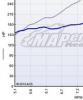
I'm working on implementing everything you mentioned in my spreadsheet. I've got the port flow co-efficients nailed same as you mention, and modelled a parabolic lift curve to plot it against. Then for a given RPM input I can get the valve open time per cycle and use the flow co.efficient and lift curve to estimate the amount of air flow, and match that against the cylinder capacity. Unfortunately it throws silly results under peak torque, but seems to tell me 100% VE is achieved at around peak torque for most stock configurations. The VE then drops as RPM increases, and suggests that peak power will be around 90% VE.
Aiming to incorporate this onto the engine thermo model at some point. That one does a 720˜ cycle modelling cylinder pressures, temperatures and instantaneous torque in 1° increments. At present though, that's only got VE as a single input. I want to tie the two models together at some point...
Last edited by Kozy.; Apr 5, 2013 at 05:28 AM.
Trending Topics
a.k.a. Komodo
Joined: Jun 2009
Posts: 847
Likes: 2
From: England
Re: Compression vs. VE
I guess the same principals can be applied to the induction stroke though. A larger expansion ratio would generate a larger vacuum, earlier in the stroke to generate a high port velocity.
Predominantly though, it's affecting VE though extracting more work from the combustion process.
Internal Combustion Engine.
a.k.a. Komodo
Joined: Jun 2009
Posts: 847
Likes: 2
From: England
Re: Compression vs. VE
At the moment, VE is just an input to restrict how much air/fuel is in the cylinder, otherwise it assumes 100% VE. What the VE parameter actually does is alter the intake pressure, so at 50% the MAP is 50kPa, the cylinder only gets 1/2 filled etc.
I'd like to mate the other one with the headflow and cam specs to it, so instead of inputting VE = 85%, I can use the flow coefficient, cam specs and RPM to achieve the same end.
I'll get round to it eventually. Might be too inaccurate to be any use though.
I'd like to mate the other one with the headflow and cam specs to it, so instead of inputting VE = 85%, I can use the flow coefficient, cam specs and RPM to achieve the same end.
I'll get round to it eventually. Might be too inaccurate to be any use though.
B*a*n*n*e*d
Joined: Dec 2001
Posts: 8,185
Likes: 3
Re: Compression vs. VE
At the moment, VE is just an input to restrict how much air/fuel is in the cylinder, otherwise it assumes 100% VE. What the VE parameter actually does is alter the intake pressure, so at 50% the MAP is 50kPa, the cylinder only gets 1/2 filled etc.
I'd like to mate the other one with the headflow and cam specs to it, so instead of inputting VE = 85%, I can use the flow coefficient, cam specs and RPM to achieve the same end.
I'll get round to it eventually. Might be too inaccurate to be any use though.
I'd like to mate the other one with the headflow and cam specs to it, so instead of inputting VE = 85%, I can use the flow coefficient, cam specs and RPM to achieve the same end.
I'll get round to it eventually. Might be too inaccurate to be any use though.
Yes, no matter how expensive or complicated a software package is or spreadsheet, it can be in the ballpark but only real life testing can prove or disprove these short of things.
I don't know how it is in the UK, but before 2000 in the USA, there was a large number of engineers employed by the american racing industry, nascar etc These people were very smart and great and their jobs using state of the art equipment to back up their theories and software simulations.
As the racing market started to shrink, most of them were forced to retire honorably or were pretty much laid off. All this training and knowledge is hard to put to work without multi million dollar facilities, so software was the only way out until they raised enough money to get another dyno cell, sprintron etc etc
The other paradox is that even if you had the time , knowledge and will to make such an awesome model that takes into account everything and spits out good numbers, only 30-50 people on the planet would be interested in buying it.. if you are lucky enough of course to actually produce that short of software that can be applied to any type of engine.
So keeping this information to yourself is probably a better idea because over the years and since the days of Ed Winfield, the pioneer in american hot rodding and father of cam design and manufacturing, one thing stands out.
Most knowledgeable people are independent and do not like to act like the marketing B.S. type artists that usually take credit for others work. They are never part of the CROWD. They are innovators and lead the way for others to follow. All these racing associations, media etc They keep inducting people that SOLD things to the industry and the ones that advertised in the propaganda mags because that is what is going to pay the bills.
Hopefully you understand that even if you were driven and knowledgeable enough to connect all the dots, you should probably not tell anyone about it and find a way to position yourself in the market in order to benefit yourself, your family and in great respect your customers that will have no idea how much work and blood and sweat, your products whatever these maybe really contain. I would not waste my time trying to reinvent the wheel on most of these matters. As far back as 1950s, these matters were laid out pretty straight forward and have never really changed.
Barkin P, in 1953, SAE Transactions 31.. Calculation of high speed valve motion with flexible overhead linkage.. Bakonyi S.M. 1968 Advantages of overhead camshafts SAE Paper 680028 , Turkish MC 1953 Relationshionship of valve spring design to valve gear dynamics and hydraulic lifter SAE Volume 61 to name a few , there are a lot.
For your project, I would suggest Seidlitz S 1989, SAE Paper 890620 He proposed at the time a 21 degree of freedom model where the spring alone was divided into 9 masses .
With computers today, we can have unlimited capability in nailing it down but in order to be confident in your results from a program you need to have a broad understanding of very advanced concepts.
Even though Professor's Blair 4sthead cam design package is around 15k from what I have been told, I do not use it or own the program, the amount of work to do something like this can consume an entire career so I would advise you to look into that as well if you really want some decent. It's ok for what most people need but if you are going to be competitive and try to be ahead of the curve, no software package will ever help enough since everyone is using similar software. I still have a desire to help people like you but, just like you are doing, you have to ask the right questions and timing needs to be right because I can only reply after late at night most of the time and timing has to be right for me to read what you are asking since the only reason why I was here last night was to read up on Joe Mccarthy's thread on the kseries forum here and this Compression and VE caught my attention. Many times, I type a reply and after spending 30 minutes on it, I delete it without posting because I am very critical of what I write and do not want to be taken out of context.
Honda-Tech Member
Joined: Oct 2005
Posts: 756
Likes: 0
From: Boston, Ma, USA
Re: Compression vs. VE
Thanks. For the first time in nearly 3 years I was eager to check Honda-Tech. I also have the pleasure of chit chatting with Rocket every few months or so. Rocket and Brad (mostly Rocket) help steer me in the right direction when I was planning my engine build.
Honda-Tech Member
Joined: Oct 2005
Posts: 756
Likes: 0
From: Boston, Ma, USA
Re: Compression vs. VE
Thank you for the correction sir!
a.k.a. Komodo
Joined: Jun 2009
Posts: 847
Likes: 2
From: England
Re: Compression vs. VE
I'm not trying to re-invent the wheel with what I am doing and I doubt I'll ever be earning a living from it. I just like to learn and modelling the maths is the only way I can do that since I don't have money to just go building engines to see what happens, like people in the US seem to have the luxury of doing. (Remember that our gas prices here are $8/gal so we can't afford anything once the bills are paid, that's why everyone is running around in 1 litre turbos. I wouldn't be doing this stuff if I could afford to build cars and go racing.)
I can't see me ever getting it to the point of modelling valve train harmonics though. For one thing it'd be so specific it would be no use to anyone. For another, I'd hope by that point I'd be well past the obstacles such as marriage, raising kids and paying off a $300k mortgage on a 3 bed semi that my disposable income would be such that I can actually afford to be tinkering away in the garage, instead of sitting at a desk.
Cheers for the recommendations on papers though, I'll save those, just incase I ever do get to that point...
I can't see me ever getting it to the point of modelling valve train harmonics though. For one thing it'd be so specific it would be no use to anyone. For another, I'd hope by that point I'd be well past the obstacles such as marriage, raising kids and paying off a $300k mortgage on a 3 bed semi that my disposable income would be such that I can actually afford to be tinkering away in the garage, instead of sitting at a desk.
Cheers for the recommendations on papers though, I'll save those, just incase I ever do get to that point...
B*a*n*n*e*d
Joined: Dec 2001
Posts: 8,185
Likes: 3
Re: Compression vs. VE
I took the time to look at your stuff briefly, holy crap, you are very talented. Valve train harmonics are cake to calculate if you can get the right data for the spring you are trying to test and have someone like me steer you in the right direction.
To convert cam profile from the time domain to the frequency domain for harmonic analysis, the camshaft lift data must be known for each degree or rotation. Then you convert the degrees into a time, in seconds which depends on the engine speed and rpm. the time in seconds for the cam to rotate one degree is determined by the following forumula
time (sec) = 1 cam degree x (1 cam revolution/360 cam degress) x (crank rev/min)^-1 x 1 crank rev/2 cam revs x 60 sec/min
Once the cam lift data is known at specific points in time, it can be expressed as teh sum of a constant plus a series of terms of sine and cosine factors.Since the cam lift motion repeats periodically, steady state vibration is assumed. The digital fourier transform was defined by Inman in 1994 book , engineering vibration.
xk= x tk = a0/2+ SIGMA ai cos 2 mpitk/T + bi sing (2mpitk/T_ etc
where the digital specral coefficients are
a0= 2/n sigma xk
ai- 2/n sigma xk cost (2pik/N)
the coefficients of the cosine and sine terms can be added vectorally at each frequency to determine the magniturde at that frequency
By looking at the frequency spectrum , we can determine where spring surge will occur.
On the papers above, Turkish in 1953 wrote
Harmonic number i=valve spring natural frequency /camshaft rpm
where camshaft rpm = 1/2 crankshaft rpm
so if a valve spring has a natural frequency of lets say 27000 cycles per minute and the engine is operating at 6000 rpm (crank rpm) then if you graph it out, you should be in the 9th harmonic. As the engine speed increases, the harmonic number decreases and the rate of driving the valve spring approaches its natural frequency.
If you want to look at something most people have not considered, I would look into the acceleration frequency spectrum. By doing so, you might be able to reach a conclusion that stiff valvetrain with a higher natural frequency has more problems controlling spring surgee than does a soft valvetrain etc.
If I were you , I would keep trying to make my software better because I think you are on the right track. I have 3 kids as well and no day job so my situation is quite different because I do not have the option or anything to catch me if i fall so to speak , so for me its death or freedom, nothing in between.. have to swim or I am dead
To convert cam profile from the time domain to the frequency domain for harmonic analysis, the camshaft lift data must be known for each degree or rotation. Then you convert the degrees into a time, in seconds which depends on the engine speed and rpm. the time in seconds for the cam to rotate one degree is determined by the following forumula
time (sec) = 1 cam degree x (1 cam revolution/360 cam degress) x (crank rev/min)^-1 x 1 crank rev/2 cam revs x 60 sec/min
Once the cam lift data is known at specific points in time, it can be expressed as teh sum of a constant plus a series of terms of sine and cosine factors.Since the cam lift motion repeats periodically, steady state vibration is assumed. The digital fourier transform was defined by Inman in 1994 book , engineering vibration.
xk= x tk = a0/2+ SIGMA ai cos 2 mpitk/T + bi sing (2mpitk/T_ etc
where the digital specral coefficients are
a0= 2/n sigma xk
ai- 2/n sigma xk cost (2pik/N)
the coefficients of the cosine and sine terms can be added vectorally at each frequency to determine the magniturde at that frequency
By looking at the frequency spectrum , we can determine where spring surge will occur.
On the papers above, Turkish in 1953 wrote
Harmonic number i=valve spring natural frequency /camshaft rpm
where camshaft rpm = 1/2 crankshaft rpm
so if a valve spring has a natural frequency of lets say 27000 cycles per minute and the engine is operating at 6000 rpm (crank rpm) then if you graph it out, you should be in the 9th harmonic. As the engine speed increases, the harmonic number decreases and the rate of driving the valve spring approaches its natural frequency.
If you want to look at something most people have not considered, I would look into the acceleration frequency spectrum. By doing so, you might be able to reach a conclusion that stiff valvetrain with a higher natural frequency has more problems controlling spring surgee than does a soft valvetrain etc.
If I were you , I would keep trying to make my software better because I think you are on the right track. I have 3 kids as well and no day job so my situation is quite different because I do not have the option or anything to catch me if i fall so to speak , so for me its death or freedom, nothing in between.. have to swim or I am dead

moderator emeritus
Joined: Oct 2002
Posts: 16,357
Likes: 6
From: Cantonment, FL
Re: Compression vs. VE
I found that CCing the chambers was incredibly important as well as measuring the actual depth of the "quench" pads. After measuring the race head, I found a window of .010" between the chambers. All from the original casting (uncut). thats almost a half point in compression addition or loss between the min and max depth cylinder!
Since getting the head opened up to stuff more piston in there, we cut the depths a tad deeper so they are all the same.
With that being said, not all cylinders are created equal when it comes to efficiency unless made that way.
also, other factors such as rod stretch can change the dynamic compression ratio. Rosko and I have been working on getting a custom piston designed and 4piston had told him that the AL rod will stretch .03" at 9000rpm! Taking that into effect, your 14:1 engine will be creating over 15:1 compression at 9000 and if you did not factor that extra clearance into your blueprint your going to get a serial number stamped into the chamber.
Kozy,
I read a paper a long time ago that Professor Blair wrote on valvetrain harmonics and it was completely over my head. I think with the things I have learned now I will read it again and see if I can understand more of the concepts he outlined.
Since getting the head opened up to stuff more piston in there, we cut the depths a tad deeper so they are all the same.
With that being said, not all cylinders are created equal when it comes to efficiency unless made that way.
also, other factors such as rod stretch can change the dynamic compression ratio. Rosko and I have been working on getting a custom piston designed and 4piston had told him that the AL rod will stretch .03" at 9000rpm! Taking that into effect, your 14:1 engine will be creating over 15:1 compression at 9000 and if you did not factor that extra clearance into your blueprint your going to get a serial number stamped into the chamber.
Kozy,
I read a paper a long time ago that Professor Blair wrote on valvetrain harmonics and it was completely over my head. I think with the things I have learned now I will read it again and see if I can understand more of the concepts he outlined.

a.k.a. Komodo
Joined: Jun 2009
Posts: 847
Likes: 2
From: England
Re: Compression vs. VE
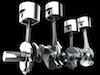
So far, the best I've managed is to determine the maximum negative acceleration of the valve as the rocker rolls over the nose of the lobe. I've been using this as another limiting factor in looking at different engine configurations, though obviously it completely overlooks the spring effects at the start and end of the valve event.
I wrote this bit when I was looking at camshaft options for the H22A7 motor in my Accord. I wanted something with much better performance below VTEC, but that would be a drop in option. I noted the max acceleration at the redline with the VTEC profile. Then done the same with the secondary lobe at 5700rpm. Then increased the lift while maintaining the duration to the point that the acceleration matched the VTEC lobe at redline.
Found that even with the pri/sec lobes increased to the VTEC profiles 12.2mm lift, the max acceleration was still less than the maximum in VTEC. Obviously this is making the massive assumption that both lift curves are true parabolic curves, which they won't be.
Never really took it any further, but I assume there are other factors at play to prevent you using identical lifts on both profiles...
Honda-Tech Member
Joined: Oct 2007
Posts: 1,745
Likes: 2
From: Oregon City, OR, USA
Re: Compression vs. VE
If you want some software to play around with, I would suggest taking a look at Performance Trends; they have several different software packages priced very reasonably. I've only played with the basic Engine Analyzer from them, but they do have software that will simulate valve train movement and dynamics for I think $500US or less.
B*a*n*n*e*d
Joined: Dec 2001
Posts: 8,185
Likes: 3
Re: Compression vs. VE
A cam just gives a command for lift and duration with every angle of rotation and presses on the valve to make it move as the spring is responsible for keeping it all together and bringing the valve back after it opens and closes.
What I am trying to say here is that as RPM goes up, the spring has to process this information faster and faster for the valve not to float or the spring to bounce.
So the regular answer to a question like this is go with the springs that the cam mfg is recommending but as you probably have seen many honda ethusiasts run springs from one brand and cams from another because they are both stage 2 or stage 3 etc etc
Springs have different specs depending on the cam that you are going to use. Free Length,
Wire Diameter,Inside Diameter,Total Coils,Mid Point Height,Mid Point Force,Coil Bind Height,Coil Bind Force,Installed Height,Installed Force,Spring Weight are important spec when trying to decide which spring to use for a certain cam profile or application.
Once the cam MFG designs a new profile, they should be able to performs a harmonic analysis of the cam profile to tell when the cam profile will cause spring surge.They should predict the rpms the springs will surge at and the valves will float. They should also be able to determine the spring's installed height so you can go to the maximum rpm that you want .Predicting if excessive cam/lifter wear will occur from excessive spring forces by calculating the Hertz contact stress at the cam/lifter/roller interface is also important..Wire stresses, rates, natural frequencies, and harmonic numbers will be able to give them a complete picture about how their cams will behave on their engine.
So the answer to your question is not an easy one. Everyone can have their own brand of cams selling something with some springs that are supposed to work because someone said so, but it is going to depend on the manufacturer and designer of the cams, originally.
As long as RPM are low, it does not matter as much but the minute you get into honda high rpm, it does not take a lot of imagination to realize that the faster the springs go up and down due to RPM, the harder it is going to be to have stability. When this short of stability is lost, no more power is going to be made and the dyno curve goes down or flat.
Its because the cam is still rotating but its too fast for the spring that at this point is just doing its own thing.
The short answer to all this is, your your better judgement to match the springs with the cams you will run by taking the word of the cam brand you are going to use. If their word is not enough because they appear to be a bunch of hacks, start asking harder questions they cannot answer because they are just trying to make $50 a set of cams that come in a box.
That is why RLZ is still in business and will be in business for a long time because most cam brands have no idea what they really need for springs, they just are able to source some cam, someone is making somewhere.
If I had to use a real world example, its almost like buying a gun without bullets. Sure you can ask around and see what bullets will fit in the gun, but the real science behind what spec bullets this gun is supposed to be able to shoot should come from the gun maker.
That is one of the reasons why no company that I know of, is able to guarantee cams or springs. Too many things can go wrong if you are just piecing stuff together mostly based on price and what people on the internet say.
So since all this is still hard to achieve, try to avoid mass produced overseas springs that are made in bulk and are no close to their actual specs governed mainly by their price.
moderator emeritus
Joined: Oct 2002
Posts: 16,357
Likes: 6
From: Cantonment, FL
Re: Compression vs. VE
Nikos,
I stayed with your original post somewhat ok but I have a question on how you determined the port coefficients equation?
Also, I was hoping you could further explain the Crank/Piston position data you posted?
I stayed with your original post somewhat ok but I have a question on how you determined the port coefficients equation?
Also, I was hoping you could further explain the Crank/Piston position data you posted?

Honda-Tech Member
Joined: Aug 2012
Posts: 196
Likes: 9
From: Philadelphia
Re: Compression vs. VE
I hate trying to type calculations on forums so Ill try to describe it in words.
First you need to define your crank throw and rod length. CT and RL.
You set your crank centerline as your origin. So it has the cartesian coordinates of (0,0).
Theta is your crank angle in radians.
Beta is the angle between the centerline of the piston and the rod. Its calculated as such:
beta=arcsin((CT/RL)*sin(theta))
You then define your rod small end position in the same way as the origin:
(0, CT*cos(theta)+RL*cos(beta)).
Here Im saying that the second term is the position in the y direction. X remains zero because the piston doesnt move side to side. (or it shouldnt haha).
So since you have calculated the beta, theta and you know you lengths you can plug all of that into the y portion of the last equations and that will give you your position. I actually kind of did that *** backwards from how the equations are derived but thats how my program is written.
Velocity and acceleration are found by taking the first and second derivative of the last y equation respectively.
Hopefully that helped a little. Im not the best at explaining stuff.
B*a*n*n*e*d
Joined: Dec 2001
Posts: 8,185
Likes: 3
Re: Compression vs. VE
It's easy to find the equation, if you are using excel, its a trendline equation option.
Looks like this in excel

About the crank / piston position, its really up to the size of the stroke, the length of the rod and the RPM you want to rev the engine to.
This can give us an idea about your max piston speed in ft/sec , max angle and pretty much how the system behaves for the 180 degrees of the crank movement.
So the equation for the piston position is:
=((rod length+stroke/2)^2)^0.5-((rod length^2-(stroke/2*SIN(crank degrees/180*3.14159))^2)^0.5)-stroke/2*COS(crank degrees/180*3.14159)
I just googled and found this link, so he is pretty much doing what I am doing , but I have not checked his numbers. http://ftlracing.com/rsratio.htm
thank you
Nikos