


Is this Blow off valve junk? anyone try it?


Thread Starter
Honda-Tech Member
Joined: Feb 2003
Posts: 245
Likes: 0
From: columbus, ohio, us
 Is this Blow off valve junk? anyone try it?
Its a generic one from Ebay but I don't know who makes it or anyone who has tried it. If it's cheap enough I was going to try it, what do you guys think?
http://www.ebay.com/itm/170905695250...witem=&vxp=mtr
Thanks
http://www.ebay.com/itm/170905695250...witem=&vxp=mtr
Thanks



Who is Mr Robot?
iTrader: (2)
Joined: Jul 2004
Posts: 21,474
Likes: 10
From: ATL - Where the Pimps and Players dwell
Re: Is this Blow off valve junk? anyone try it?
its a fake... turbosmart products have the logo on top. this does not.
the clamp is a dead give away too...
its ****, i wouldn't touch it
the clamp is a dead give away too...
its ****, i wouldn't touch it

Honda-Tech Member
Joined: Apr 2007
Posts: 179
Likes: 0
From: Windsor, Ontario, Canada

Honda-Tech Member

Joined: Jan 2012
Posts: 642
Likes: 0
Re: Is this Blow off valve junk? anyone try it?
Actually MANY rally cars have and do surge constantly. The blow off valve recirculates to the exhaust manifold which is useful for keeping the BOV spinning (and thus producing positive pressure).
Trending Topics
Who is Mr Robot?
iTrader: (2)
Joined: Jul 2004
Posts: 21,474
Likes: 10
From: ATL - Where the Pimps and Players dwell
Re: Is this Blow off valve junk? anyone try it?
all these cars you mention also had throttle bodies before the turbo... so it they wouldn't be required in the first place
Thread Starter
Honda-Tech Member
Joined: Feb 2003
Posts: 245
Likes: 0
From: columbus, ohio, us
Re: Is this Blow off valve junk? anyone try it?
Thats great and all but has anyone used these or known anyone who has? I mean is it going to work for 6 months, a year, 2 years, not at all? Because a Turbosmart one is going to run me 200-300 bucks
 Re: Is this Blow off valve junk? anyone try it?
Bid. Win the auction. Then come back and tell us after 6 months, a year, two years.
If it's off brand like that then there's no real way to tell if anyone has used it before or not. IT"S NOT BRANDED!!! It could have been made in any one of 2 dozen sweatshops in China/Taiwan. All anyone will be able to tell you is that they ran one that LOOKED like that one.
If it's off brand like that then there's no real way to tell if anyone has used it before or not. IT"S NOT BRANDED!!! It could have been made in any one of 2 dozen sweatshops in China/Taiwan. All anyone will be able to tell you is that they ran one that LOOKED like that one.

Honda-Tech Member
Joined: Feb 2005
Posts: 1,190
Likes: 2
From: Idaho Falls, Idaho
Re: Is this Blow off valve junk? anyone try it?
Turbo era F1 cars, IMSA GTP cars, turbo LeMans cars, some of the Porsche GT cars, and champ cars don't use blow off valves.
Actually MANY rally cars have and do surge constantly. The blow off valve recirculates to the exhaust manifold which is useful for keeping the BOV spinning (and thus producing positive pressure).
Actually MANY rally cars have and do surge constantly. The blow off valve recirculates to the exhaust manifold which is useful for keeping the BOV spinning (and thus producing positive pressure).
It was/is called anti-lag, With a BOV anti-lag would not work at all. Throttle body pre turbo? Not that I am aware of, Restrictor plate yes. This is in no way recommended on any street car or race car with out a pretty big budget as the old school rally way was known to eat turbo's as often as a rally stage.
Carry on.....
Who is Mr Robot?
iTrader: (2)
Joined: Jul 2004
Posts: 21,474
Likes: 10
From: ATL - Where the Pimps and Players dwell
Re: Is this Blow off valve junk? anyone try it?
go look at the 80s imsa, cart, can-am and infy, f1 cars.
all had throttle bodies pre-turbo
ask me how i know? mom and dad used to work at road atlanta, I grew up around this stuff.
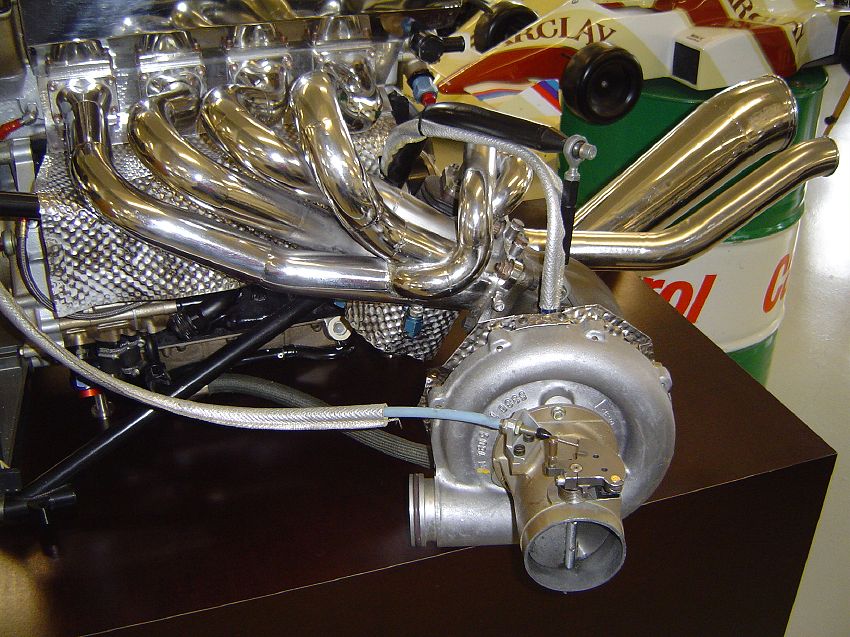
bmw's f1 motor
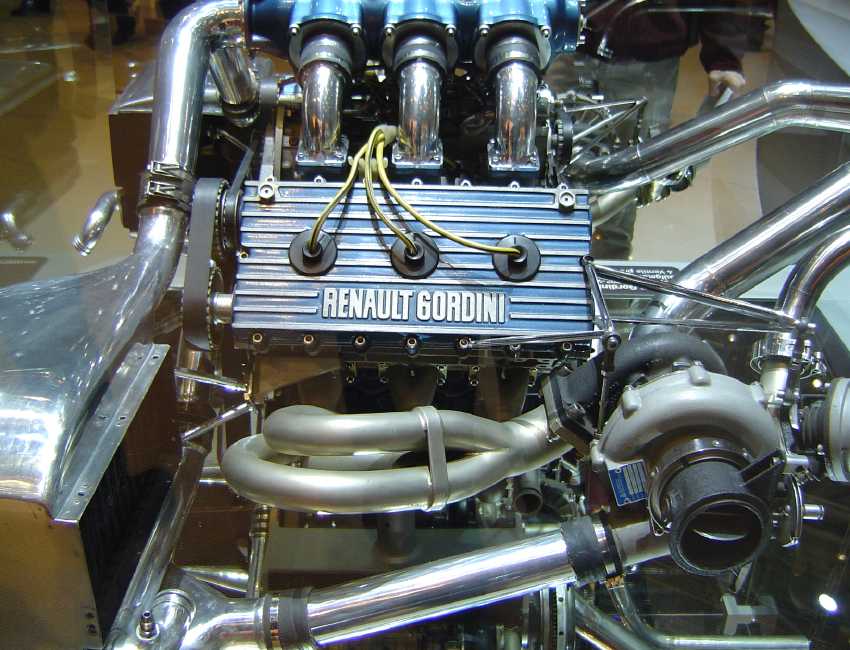
Renault
all had throttle bodies pre-turbo
ask me how i know? mom and dad used to work at road atlanta, I grew up around this stuff.
bmw's f1 motor
Renault
Who is Mr Robot?
iTrader: (2)
Joined: Jul 2004
Posts: 21,474
Likes: 10
From: ATL - Where the Pimps and Players dwell
Re: Is this Blow off valve junk? anyone try it?
Umm no... Way off tron.
It was/is called anti-lag, With a BOV anti-lag would not work at all. Throttle body pre turbo? Not that I am aware of, Restrictor plate yes. This is in no way recommended on any street car or race car with out a pretty big budget as the old school rally way was known to eat turbo's as often as a rally stage.
Carry on.....
It was/is called anti-lag, With a BOV anti-lag would not work at all. Throttle body pre turbo? Not that I am aware of, Restrictor plate yes. This is in no way recommended on any street car or race car with out a pretty big budget as the old school rally way was known to eat turbo's as often as a rally stage.
Carry on.....
Honda-Tech Member
Joined: Feb 2005
Posts: 1,190
Likes: 2
From: Idaho Falls, Idaho
Re: Is this Blow off valve junk? anyone try it?
Im sorry you lumped rally and f1/cart into one lump some, and so did I. I shouldnt of as I dont know to much about the f1/cart stuff. Pretty cool pics. Blow offs on anti-lag??? please do tell me how that works...
Who is Mr Robot?
iTrader: (2)
Joined: Jul 2004
Posts: 21,474
Likes: 10
From: ATL - Where the Pimps and Players dwell
Re: Is this Blow off valve junk? anyone try it?
i know sti guys that run them without fail.
anti lag has 2 kinds, drag and rally... drag works while stationary and only while stationary so thats moot.
rally style that works between shifts, blow off valves work just fine, since the intake manifold is pressurized as well as the charge piping they remain closed... you get some flutter on tip in since the pressure levels fluctuate between piping and intake manifold, and when you let off, it vents excess pressure for a split second until the anti lag activates.
anti lag has 2 kinds, drag and rally... drag works while stationary and only while stationary so thats moot.
rally style that works between shifts, blow off valves work just fine, since the intake manifold is pressurized as well as the charge piping they remain closed... you get some flutter on tip in since the pressure levels fluctuate between piping and intake manifold, and when you let off, it vents excess pressure for a split second until the anti lag activates.
Honda-Tech Member
Joined: Feb 2005
Posts: 1,190
Likes: 2
From: Idaho Falls, Idaho
Re: Is this Blow off valve junk? anyone try it?
His build thread is on nasioc, His is kinda anti lag as you can see when he turns it on it doesn't build positive psi. If the bov opens when anti lag is on then there is no sense of anti lag as it dumps all the pressure out of the pipes. I did quite a bit of rally anti lag research as there are some big gains to be had on the RR track but the way I would set it up would be old school rally ways and like said that pukes turbos pretty quick lol. The f1 setups are crazy and didn't know much about it as they a bit ahead of my fwd RR car haha. thanks for the pics those are freakin awesome. Have any more?
Uhh hmm back on topic...
Uhh hmm back on topic...
Who is Mr Robot?
iTrader: (2)
Joined: Jul 2004
Posts: 21,474
Likes: 10
From: ATL - Where the Pimps and Players dwell
Re: Is this Blow off valve junk? anyone try it?
anti lag does not build positive pressure at idle... only on throttle or between shifts.
he has rally style anti lag using solenoids to bypass air into the intake manifold, just like most rally teams use... he maintains positive pressure in between shifts, which is the sole purpose of rally style anti lag
what are you talking about?
he has rally style anti lag using solenoids to bypass air into the intake manifold, just like most rally teams use... he maintains positive pressure in between shifts, which is the sole purpose of rally style anti lag
what are you talking about?

Honda-Tech Member

Joined: Nov 2007
Posts: 2,695
Likes: 1
From: detroit, mi, usa
Re: Is this Blow off valve junk? anyone try it?
dont get it. get a namebrand. even if it doesn't break it probably doesn't perform well or leaks. last thing you want is a bov that leaks lol.
Honda-Tech Member
Joined: Feb 2005
Posts: 1,190
Likes: 2
From: Idaho Falls, Idaho
Re: Is this Blow off valve junk? anyone try it?
I dont have all my saved info and sites on this computer but here is one that is ok.
How the turbo Anti-Lag System works from this site http://www.rallycars.com/Cars/bangbang.html
Bang-bang (also known as ALS which stands for Anti-Lag System) is an engine management technique that allows to minimize the turbo lag time.
As you might be aware of, turbochargers display what is known as lag time which is the time needed for the turbine to reach its full throttle from an intermediate rotational speed state. The duration of a turbocharger's lag depends on many factors among which its inertia, airflow efficiency, back pressure, etc. The problem is partly dealt with by fitting a turbo dump valve, which acts each time the driver lifts his foot from the throttle. The dump valve will evacuate the pressurized air coming out of the turbocharger while the inlet manifold is closed thus allowing the turbine not to stall and avoiding possible damage to its bearings. In race cars it is very common to fit oversized turbochargers in order to be able to produce enough boost pressure and assure a sufficient engine output. Big turbochargers display significant amounts of lag due to their increased rotational inertia. In such cases the dump valve is insufficient to allow the turbocharger not to loose too much speed when the driver lifts off. Additionally rally cars hold a turbo restrictor, which is regulated by the FIA. One of the restrictor' effects is to increase lag time. This is why in racing cars, and more specifically in rally cars, where torque and engine availability are critical factors, most applications use anti-lag systems.
During lag time the engine is much less responsive and its output well below nominal. To counter the effect of the turbocharger's lag time drivers used to anticipate the engine's reactions by accelerating well before they would have done in a non-turbo car. Others have used a technique, introduced by the German driver Walter Röhrl, known as "left foot braking" where the driver uses his left foot to brake the car while his right foot accelerates to keep the turbocharger in optimal load. Left foot braking is very hard on the brakes which are put into extreme stress but is very efficient in keeping the turbo spinning.
ALS was a simple idea but one that was relatively difficult to implement. Only when electronic engine management systems were advanced enough to allow taking into consideration many more parameters than in the past it became possible to use them efficiently in handling ALS. To the best of my knowledge Toyota Team Europe were the first to use it in racing (Toyota's implementation is known as Toyota Combustion Control System while Mitsubishi call the system Post Combustion Control System).
How ALS works
When the driver lifts his foot from the gas pedal the ignition timing is altered with sometimes 40° or more of delay (retard) and the intake air and fuel supply mixture is made richer. The inlet butterfly is kept slightly open or an air injector is used to maintain air supply to the engine. This results in air/fuel mixture that keeps getting in the combustion chambers when the driver no longer accelerates. The ignition being delayed, the air/fuel mixture reaches the exhaust tubes mostly unburned. When the spark plug fires, the exhaust valve is starting to open due to the ignition delay mentioned above. Additionally, the exhaust temperature being extremely high, the unburned fuel explodes at the contact of the exhaust tubes. Luckily the turbo sits right there and the explosion keeps it turning (otherwise it would slow down since its intake, the exhaust gases, is cut-off). The effect is vastly lower response times with some downsides:
A quick rise of the turbocharger's temperature (which jumps from ~800°C to the 1100°C+ region) whenever the system is activated
A huge stress on the exhaust manifold and pipes (mounted on a street car a bang-bang system would destroy the exhaust system within 50-100 km)
The turbo produces significant boost even at engine idle speeds
The explosions which occur in the exhaust tubes generate important flames which can, sometimes, be seen at the end of the exhaust tube
Reduced engine brake
The ALS effect is mostly dependent on the air allowed into the engine, the more air supplied the more the ALS effect will be noticeable. Consequently ALS systems can be more or less aggressive. A mild ALS will maintain a 0 to 0.3 bar pressure in the inlet manifold when activated whereas, when inactive, the pressure in the inlet manifold with the throttle closed would be in the region of -1 bar (absolute vacuum). Racing ALS versions can maintain a pressure of up to 1.5 bar in the inlet manifold with the throttle closed.
While the systems mounted in Toyota and Mitsubishi racing cars are relatively smooth and noiseless those fitted in Ford and Subaru cars are much more noisy and aggressive.
The bang-bang system owns its name to the loud explosion noises one hears whenever the driver lifts off. Most racing implementations have user selectable anti-lag settings depending on the terrain, usually three settings can be selected by the driver going from mild to very aggressive.
Note that some regional or national European events prohibit the use of ALS systems while more and more WRC events regulate the noise levels allowed by competition cars effectively disabling ALS.
Starting in 2002 new anti-lag techniques, such as Exhaust Gas Recirculation (EGR), are slowly overtaking the method described above as they are kinder on the engine's mechanical parts.
How the turbo Anti-Lag System works from this site http://www.rallycars.com/Cars/bangbang.html
Bang-bang (also known as ALS which stands for Anti-Lag System) is an engine management technique that allows to minimize the turbo lag time.
As you might be aware of, turbochargers display what is known as lag time which is the time needed for the turbine to reach its full throttle from an intermediate rotational speed state. The duration of a turbocharger's lag depends on many factors among which its inertia, airflow efficiency, back pressure, etc. The problem is partly dealt with by fitting a turbo dump valve, which acts each time the driver lifts his foot from the throttle. The dump valve will evacuate the pressurized air coming out of the turbocharger while the inlet manifold is closed thus allowing the turbine not to stall and avoiding possible damage to its bearings. In race cars it is very common to fit oversized turbochargers in order to be able to produce enough boost pressure and assure a sufficient engine output. Big turbochargers display significant amounts of lag due to their increased rotational inertia. In such cases the dump valve is insufficient to allow the turbocharger not to loose too much speed when the driver lifts off. Additionally rally cars hold a turbo restrictor, which is regulated by the FIA. One of the restrictor' effects is to increase lag time. This is why in racing cars, and more specifically in rally cars, where torque and engine availability are critical factors, most applications use anti-lag systems.
During lag time the engine is much less responsive and its output well below nominal. To counter the effect of the turbocharger's lag time drivers used to anticipate the engine's reactions by accelerating well before they would have done in a non-turbo car. Others have used a technique, introduced by the German driver Walter Röhrl, known as "left foot braking" where the driver uses his left foot to brake the car while his right foot accelerates to keep the turbocharger in optimal load. Left foot braking is very hard on the brakes which are put into extreme stress but is very efficient in keeping the turbo spinning.
ALS was a simple idea but one that was relatively difficult to implement. Only when electronic engine management systems were advanced enough to allow taking into consideration many more parameters than in the past it became possible to use them efficiently in handling ALS. To the best of my knowledge Toyota Team Europe were the first to use it in racing (Toyota's implementation is known as Toyota Combustion Control System while Mitsubishi call the system Post Combustion Control System).
How ALS works
When the driver lifts his foot from the gas pedal the ignition timing is altered with sometimes 40° or more of delay (retard) and the intake air and fuel supply mixture is made richer. The inlet butterfly is kept slightly open or an air injector is used to maintain air supply to the engine. This results in air/fuel mixture that keeps getting in the combustion chambers when the driver no longer accelerates. The ignition being delayed, the air/fuel mixture reaches the exhaust tubes mostly unburned. When the spark plug fires, the exhaust valve is starting to open due to the ignition delay mentioned above. Additionally, the exhaust temperature being extremely high, the unburned fuel explodes at the contact of the exhaust tubes. Luckily the turbo sits right there and the explosion keeps it turning (otherwise it would slow down since its intake, the exhaust gases, is cut-off). The effect is vastly lower response times with some downsides:
A quick rise of the turbocharger's temperature (which jumps from ~800°C to the 1100°C+ region) whenever the system is activated
A huge stress on the exhaust manifold and pipes (mounted on a street car a bang-bang system would destroy the exhaust system within 50-100 km)
The turbo produces significant boost even at engine idle speeds
The explosions which occur in the exhaust tubes generate important flames which can, sometimes, be seen at the end of the exhaust tube
Reduced engine brake
The ALS effect is mostly dependent on the air allowed into the engine, the more air supplied the more the ALS effect will be noticeable. Consequently ALS systems can be more or less aggressive. A mild ALS will maintain a 0 to 0.3 bar pressure in the inlet manifold when activated whereas, when inactive, the pressure in the inlet manifold with the throttle closed would be in the region of -1 bar (absolute vacuum). Racing ALS versions can maintain a pressure of up to 1.5 bar in the inlet manifold with the throttle closed.
While the systems mounted in Toyota and Mitsubishi racing cars are relatively smooth and noiseless those fitted in Ford and Subaru cars are much more noisy and aggressive.
The bang-bang system owns its name to the loud explosion noises one hears whenever the driver lifts off. Most racing implementations have user selectable anti-lag settings depending on the terrain, usually three settings can be selected by the driver going from mild to very aggressive.
Note that some regional or national European events prohibit the use of ALS systems while more and more WRC events regulate the noise levels allowed by competition cars effectively disabling ALS.
Starting in 2002 new anti-lag techniques, such as Exhaust Gas Recirculation (EGR), are slowly overtaking the method described above as they are kinder on the engine's mechanical parts.
Who is Mr Robot?
iTrader: (2)
Joined: Jul 2004
Posts: 21,474
Likes: 10
From: ATL - Where the Pimps and Players dwell
Re: Is this Blow off valve junk? anyone try it?
i know all about anti lag lol... i dont need a lesson.
the methods available to every day tuners are electronic in nature.... retarding ignition timing, air bypass valves, etc.
all of the new rally setups simply use air bypass now
the methods available to every day tuners are electronic in nature.... retarding ignition timing, air bypass valves, etc.
all of the new rally setups simply use air bypass now
Honda-Tech Member
Joined: Feb 2005
Posts: 1,190
Likes: 2
From: Idaho Falls, Idaho
Re: Is this Blow off valve junk? anyone try it?
Prove me wrong then. Thats where the Tech in Honda-Tech and a good ole debate comes in 
Pics and proof, As stated the yellow one is not fully correct.
Pics and proof, As stated the yellow one is not fully correct.
Who is Mr Robot?
iTrader: (2)
Joined: Jul 2004
Posts: 21,474
Likes: 10
From: ATL - Where the Pimps and Players dwell
Re: Is this Blow off valve junk? anyone try it?
for that kind of rally style anti lag its perfectly fine...
the blow off valve is not an issue since pressure in the intake manifold is equal to that in the charge piping, so the blow off valve stays closed...
all anti lag systems produce pressure in the intake manifold...
the blow off valve is not an issue since pressure in the intake manifold is equal to that in the charge piping, so the blow off valve stays closed...
all anti lag systems produce pressure in the intake manifold...
 Re: Is this Blow off valve junk? anyone try it?

Thread
Thread Starter
Forum
Replies
Last Post
dohcnotec
Forced Induction
18
Apr 25, 2006 01:00 PM