


Write-Up: DIY Engine Storage


Thread Starter
DO IT ON ALL FOURS
Joined: Sep 2007
Posts: 7,632
Likes: 15
From: IN Your Mind
 Write-Up: DIY Engine Storage
So, it has been brought to my attention that there are some misconceptions on how to properly store an engine. I will try to explain my method that seems to work for me without issue for years of storage. I understand not everyone is as fortunate as others so I will be trying to cater to the masses rather than the minority. It would be nice if we all had a climate controlled building to store all our goodies in, but that’s not how it always works out.
The most common thing to happen to any engine while sitting is the iron piston rings rusting to the iron cylinder walls. Don’t get me wrong, other parts can rust and seize an engine just the same but this seems to be the fastest occurring problem. A lot has to do with the nature of the internals heating up to extreme temperatures in excess of 1,000* F then cooling down to ambient in a short time. Water vapor is a byproduct of the combustion process; it ends up getting left over in the combustion chamber as soon as you shut the engine off.
The only way to truly “prevent” this left over water in your engine from wreaking havoc is to fog your engine. This practice has been done for decades in storing various watercrafts. It’s obvious why you would need to worry about a boat sitting in the water or elements being untouched for a long period of time. Moisture is all around as well as varying temperatures. Now think about the same thing that happens to where you are storing your engine, be it in a garage, shed, storage unit, or ect… Then take into consideration that oils naturally absorb water. So obviously you can have accelerated problems depending on your climate or even no problems at all.
The typical process to fog an engine is to do cycles of spraying fogging oil into the intake or vacuum port and waiting until the engine bogs and finishing with making the engine stall from spraying it. This isn’t recommended into today’s EFI engines such as Hondas. There are too many sensors not to mention the catalytic converter that could get gummed up from the process and it could cost more than it’s worth. This and what if you already pulled the engine out? Maybe you just bought the engine and are going to wait to install it in a vehicle? This is where I will do my best to help you out.
The first step is to get a list of a few items to help you out:
- Marine Fogging Oil – More than one can if you want to be extra cautious.
- WD-40 (Water Displacement Formula 40) – One large size can should suffice, but it never hurts to have more.
- Various tools to remove spark plugs and anything else you may want to remove.
- Engine storage bag or heavy duty garbage bag (black 55 gallon)
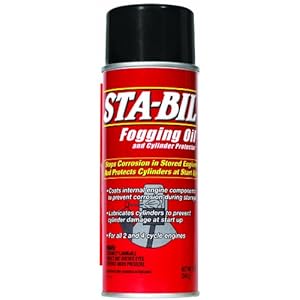

There are varying degrees of involvement for fogging an engine. You can go as far as removing the valve cover, oil pan, intake manifold, exhaust manifold, and spark plugs – or as little as just removing the spark plugs. It is also a VERY good idea to drain the oil and coolant before you try to store an engine. As we all know coolant tends to corrode aluminum as it degrades. It would not be a bad idea to try and flush all the coolant out before hand.
Step 1.) Remove anything external that you are willing to remove from the list above. (The more you remove the better the process will protect your engine.)
Step 2.) Take WD-40 and spray down the spark plug holes a decent amount. If you took anything else off spray all the ports at this time as well. If you took the oil pan off – spray the entire rotating assembly. If you removed the valve cover – spray the entire valve train assembly.
Step 3.) Rotate the engine ONE revolution and repeat Step 2. (You can spray less this time around.)
Step 4.) Rotate the engine ONE revolution. Now take the Fogging Oil and spray all the same ports / parts you already did in Step 2.
Step 5.) Rotate the engine ONE revolution and liberally respray all the ports / parts as before.
Step 6.) Reinstall all of the parts removed before the process began. If you don’t have or don’t want to put the intake and exhaust manifolds back on, be sure to cover the ports with tape or stuff the ports with plastic or cloth (preferable soaked in fogging oil).
Step 7.) If you prefer, you can cover the engine with an actual engine bag or just a “construction” style garbage bag. If you decide to do this (which I recommend) you need to be sure to try and seal the end of the bag off. This will help prevent moisture from collecting inside the bag. It is best to keep the engine in a dry environment for obvious reasons.
I understand this process seems simple, which it is, but it is an important process in storing an engine for an extended period of time. This process is good for around 1 year and should be redone annually. This can save you from major headaches later down the road. Keep in mind when you run the vehicle it will smoke quite a bit. Below I provided a picture that shows why type of smoke to expect - and that there will be a lot...
A snowmobile running the fogging oil out of its system.

If you have any questions, concerns, or want me to add or change something just let me know and I will take it into consideration.
PS - I WILL ADD MORE PICTURES WHEN I FOG ANOTHER ENGINE.
The most common thing to happen to any engine while sitting is the iron piston rings rusting to the iron cylinder walls. Don’t get me wrong, other parts can rust and seize an engine just the same but this seems to be the fastest occurring problem. A lot has to do with the nature of the internals heating up to extreme temperatures in excess of 1,000* F then cooling down to ambient in a short time. Water vapor is a byproduct of the combustion process; it ends up getting left over in the combustion chamber as soon as you shut the engine off.
The only way to truly “prevent” this left over water in your engine from wreaking havoc is to fog your engine. This practice has been done for decades in storing various watercrafts. It’s obvious why you would need to worry about a boat sitting in the water or elements being untouched for a long period of time. Moisture is all around as well as varying temperatures. Now think about the same thing that happens to where you are storing your engine, be it in a garage, shed, storage unit, or ect… Then take into consideration that oils naturally absorb water. So obviously you can have accelerated problems depending on your climate or even no problems at all.
The typical process to fog an engine is to do cycles of spraying fogging oil into the intake or vacuum port and waiting until the engine bogs and finishing with making the engine stall from spraying it. This isn’t recommended into today’s EFI engines such as Hondas. There are too many sensors not to mention the catalytic converter that could get gummed up from the process and it could cost more than it’s worth. This and what if you already pulled the engine out? Maybe you just bought the engine and are going to wait to install it in a vehicle? This is where I will do my best to help you out.
The first step is to get a list of a few items to help you out:
- Marine Fogging Oil – More than one can if you want to be extra cautious.
- WD-40 (Water Displacement Formula 40) – One large size can should suffice, but it never hurts to have more.
- Various tools to remove spark plugs and anything else you may want to remove.
- Engine storage bag or heavy duty garbage bag (black 55 gallon)
There are varying degrees of involvement for fogging an engine. You can go as far as removing the valve cover, oil pan, intake manifold, exhaust manifold, and spark plugs – or as little as just removing the spark plugs. It is also a VERY good idea to drain the oil and coolant before you try to store an engine. As we all know coolant tends to corrode aluminum as it degrades. It would not be a bad idea to try and flush all the coolant out before hand.
Step 1.) Remove anything external that you are willing to remove from the list above. (The more you remove the better the process will protect your engine.)
Step 2.) Take WD-40 and spray down the spark plug holes a decent amount. If you took anything else off spray all the ports at this time as well. If you took the oil pan off – spray the entire rotating assembly. If you removed the valve cover – spray the entire valve train assembly.
Step 3.) Rotate the engine ONE revolution and repeat Step 2. (You can spray less this time around.)
Step 4.) Rotate the engine ONE revolution. Now take the Fogging Oil and spray all the same ports / parts you already did in Step 2.
Step 5.) Rotate the engine ONE revolution and liberally respray all the ports / parts as before.
Step 6.) Reinstall all of the parts removed before the process began. If you don’t have or don’t want to put the intake and exhaust manifolds back on, be sure to cover the ports with tape or stuff the ports with plastic or cloth (preferable soaked in fogging oil).
Step 7.) If you prefer, you can cover the engine with an actual engine bag or just a “construction” style garbage bag. If you decide to do this (which I recommend) you need to be sure to try and seal the end of the bag off. This will help prevent moisture from collecting inside the bag. It is best to keep the engine in a dry environment for obvious reasons.
I understand this process seems simple, which it is, but it is an important process in storing an engine for an extended period of time. This process is good for around 1 year and should be redone annually. This can save you from major headaches later down the road. Keep in mind when you run the vehicle it will smoke quite a bit. Below I provided a picture that shows why type of smoke to expect - and that there will be a lot...
A snowmobile running the fogging oil out of its system.
If you have any questions, concerns, or want me to add or change something just let me know and I will take it into consideration.
PS - I WILL ADD MORE PICTURES WHEN I FOG ANOTHER ENGINE.


Honda-Tech Member
Joined: Feb 2002
Posts: 1,210
Likes: 4
From: MIAMI
Re: Write-Up: DIY Engine Storage
Thanks for teaching me something new.
I have never had to store an engine for any long period, but it could be a really expensive lesson without this kind of wisdom.
I have never had to store an engine for any long period, but it could be a really expensive lesson without this kind of wisdom.


Thread Starter
DO IT ON ALL FOURS
Joined: Sep 2007
Posts: 7,632
Likes: 15
From: IN Your Mind
Re: Write-Up: DIY Engine Storage
Thank you all and you are welcome!
The purpose of the Fogging Oil is to lubricate areas that pouring oil wouldn't. Since it is propelled by compressed air, it has a "fogging" effect. This coats everything just as the fog is thick; insuring everything is protected. WD-40 or any type of penetrant will not protect it long enough to be done alone. The purpose of the WD-40 first, yup you guessed it, is to displace any moisture that may still be inside the engine.
Don't get me wrong, spraying just WD-40 is better than doing nothing though...
The purpose of the Fogging Oil is to lubricate areas that pouring oil wouldn't. Since it is propelled by compressed air, it has a "fogging" effect. This coats everything just as the fog is thick; insuring everything is protected. WD-40 or any type of penetrant will not protect it long enough to be done alone. The purpose of the WD-40 first, yup you guessed it, is to displace any moisture that may still be inside the engine.
Don't get me wrong, spraying just WD-40 is better than doing nothing though...
Trending Topics

Honda-Tech Member
Joined: Sep 2005
Posts: 583
Likes: 0
From: upstate, ny, us
Re: Write-Up: DIY Engine Storage
One thing that I do most times is, before hand, save up all the little bags of silica gel that come in the box with things like new sneakers, and toss in a bunch with the engine in a bag.
My dad worked for a shipping company for a while and got me a bunch of those in a large 1lb size, they suck up tons of moisture.
The other thing I always try to make sure of is that any openings are closed tight because I've had mice make nests in any place they can.
I had to rebuild a trans because they thought my diff was a good place to stash some food.
My dad worked for a shipping company for a while and got me a bunch of those in a large 1lb size, they suck up tons of moisture.
The other thing I always try to make sure of is that any openings are closed tight because I've had mice make nests in any place they can.
I had to rebuild a trans because they thought my diff was a good place to stash some food.
Thread Starter
DO IT ON ALL FOURS
Joined: Sep 2007
Posts: 7,632
Likes: 15
From: IN Your Mind
Re: Write-Up: DIY Engine Storage
I try to cater to the masses when I do write-ups. Not many people have access to the packets that you speak of let alone buy enough "sneakers" to be of any use. The other side to that is for the forgetful person that may not even look at their engine for a year or more, may forget they are even in there. This is why I can't recommend ANYONE do this. It would be too easy to leave them in there and potentially destroy the engine. Also, I stated to be sure to cover the ports already. Thanks for your stories and for looking at my write-up.
Honda-Tech Member
Joined: Sep 2005
Posts: 583
Likes: 0
From: upstate, ny, us
Re: Write-Up: DIY Engine Storage
I dont actually put them in the engine. I bag it like you described and throw a few in the bag. And ive found them in alot of goods ive purchased from clothing to housewares. I just have a big zip loc bag i toss them in when i find them.


Thread
Thread Starter
Forum
Replies
Last Post
Smash03
All Motor / Naturally Aspirated
3
May 23, 2006 08:18 PM
