


DIY posting a d block


Thread Starter
Honda-Tech Member
Joined: May 2011
Posts: 33
Likes: 0
 DIY posting a d block
so im going to show you how easy to is to post a block for resisting sleve cracking due to high RPM
NOT boost, since i wont be using the exact critical spots for protecting against boost. This is only
for stibility with rpm's.
im only going to a 75.5 mm bore with this build so ill still have lots of sleves left to dispurse the
load from the posts. i think really thats the only way this works. If you have thin sleves your so much
more prone to crack them, and posting them wont be as effective because you will only be pushing on a small
spot on the sleves maybe 5/16" surface area so with out a thick sleve to dispurse the load you
might end up being more prone to cracking then not posting the block.
i do think a properly installed block guard would be more effective (again only for reving) but that requires
time and money seeing how it has to be made to fit your motor and welded in and milled flat again. you
also need a bore and hone but you will need that after posting the block anyway
so after some reading i have noticed you should put 2 posts per sleve on the intake side and only 1 post per sleve
on the exhaust side. Since the motor rotates towards the intake side so that side has more load on it.(hence the 2
studs on that side)
there are a few site with how to's on them. its a very easy, quite, relaxing job. here is a link to someone
elses how to that i found helpfull even tho it is very stright forward anyway
Block "posting" a D16A1
First take your block move it to a nice clean warm spot. (I chose my kitchen table)
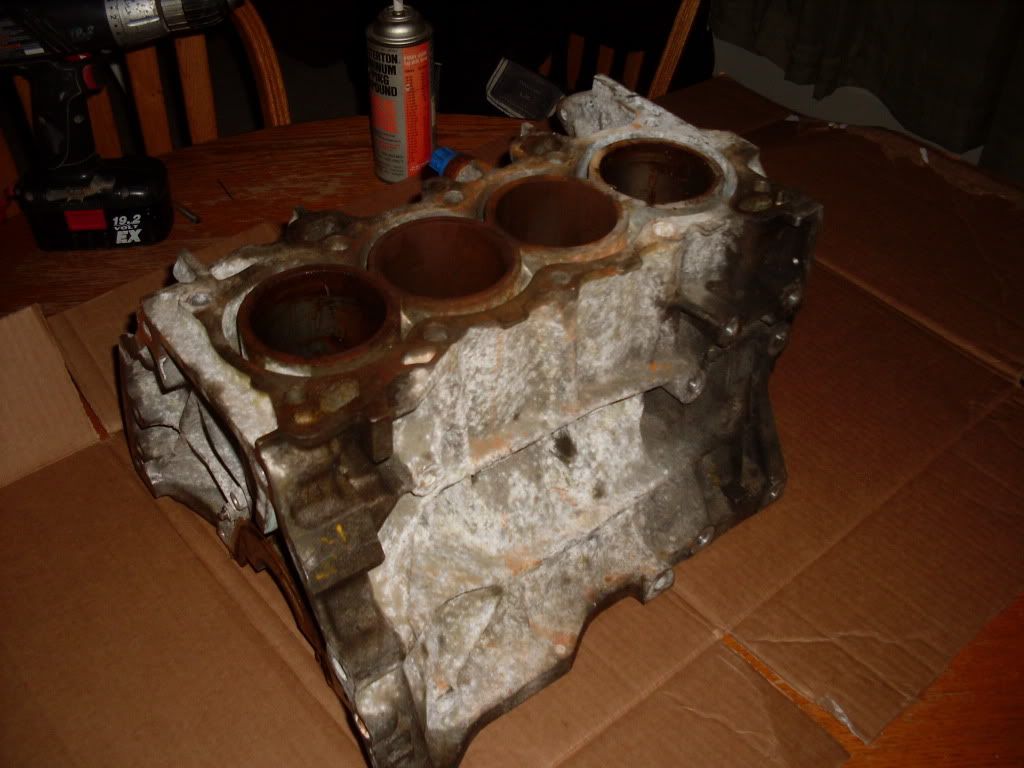
Next mark the spots on you block you want to drill. Try your hardest to keep them all the same distence
from the top of the block and in the center of the sleves mark 2 spots per sleve on the intake side and only
one on the exhaust side.
on the intake side i went 1 3/4" down and the second set of holes was 2 3/4" down also centering each hole on
the sleve
on the exhaust side i only went 1 3/4" down.
**You should put them 2" down and centered on the sleves***
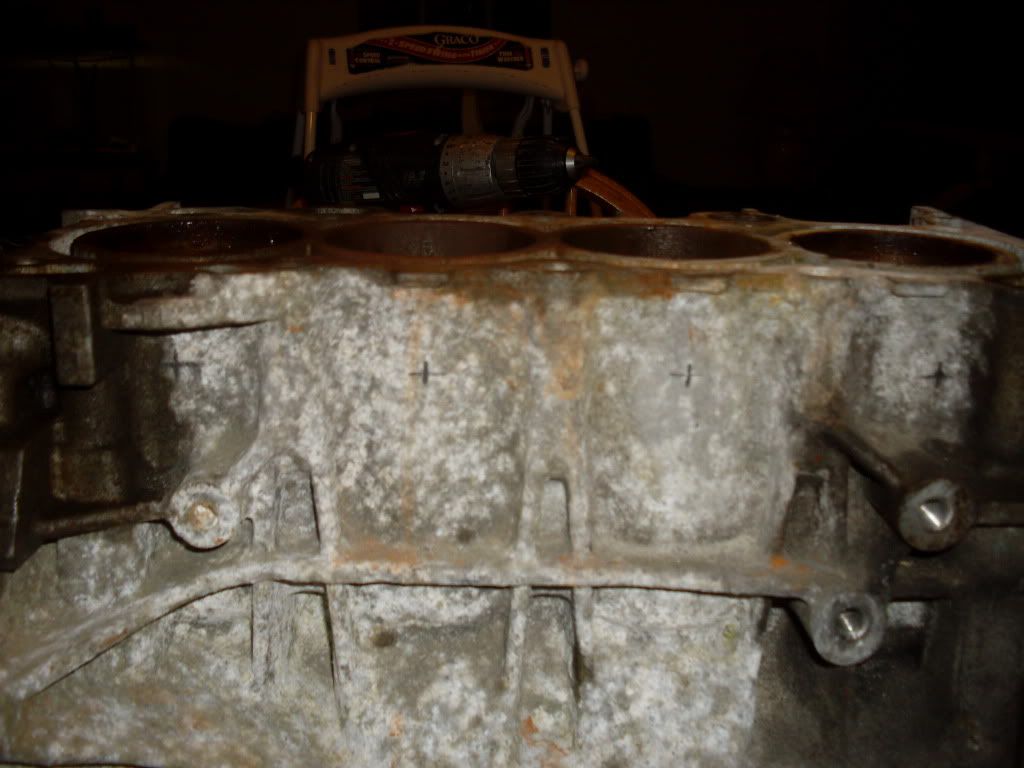
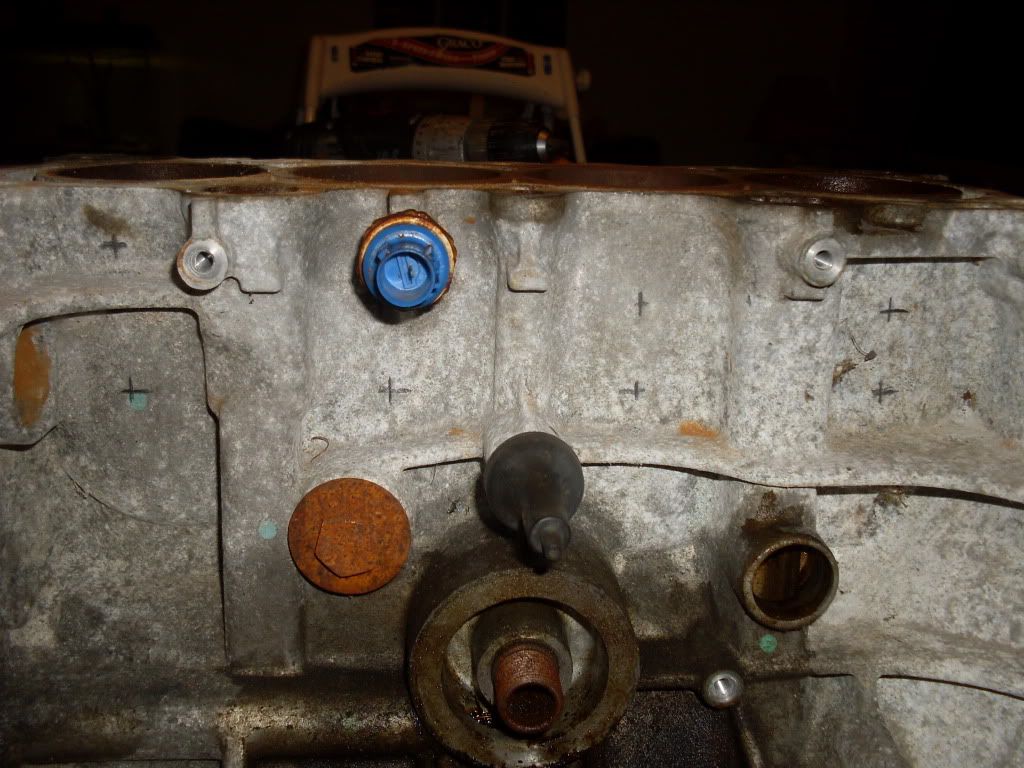
Next Center punch the holes(carefully dont crack the block its only 1/8" - 3/16" thick) drill pilot holes
using a 1/16 - 1/8 drill bit
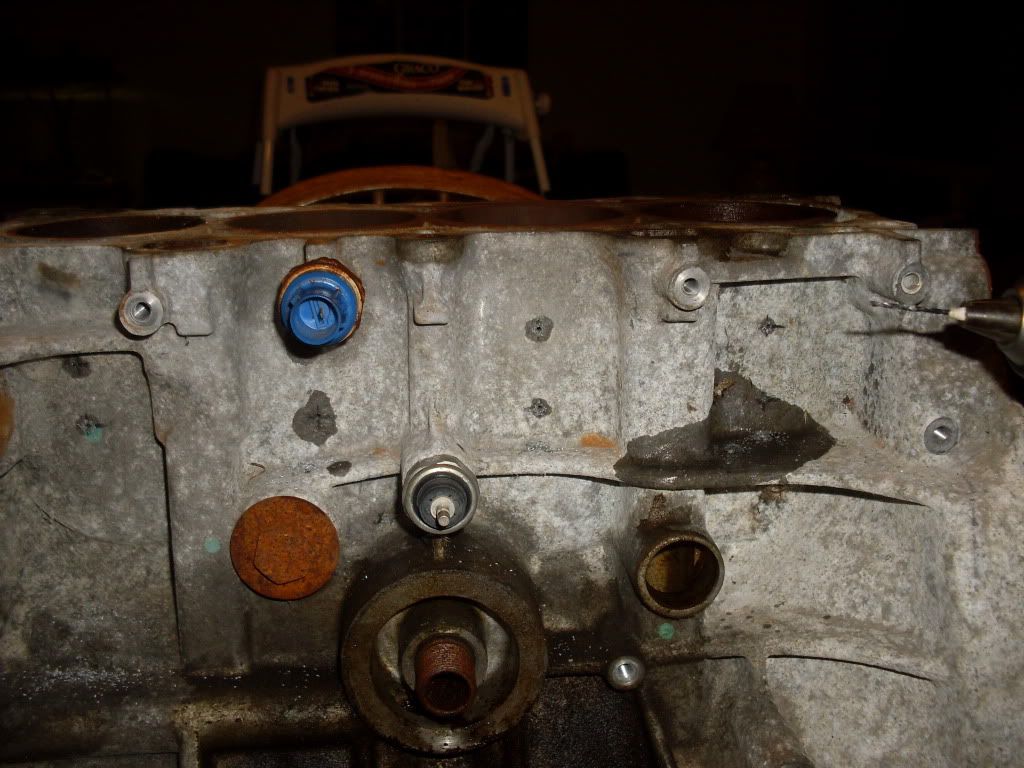
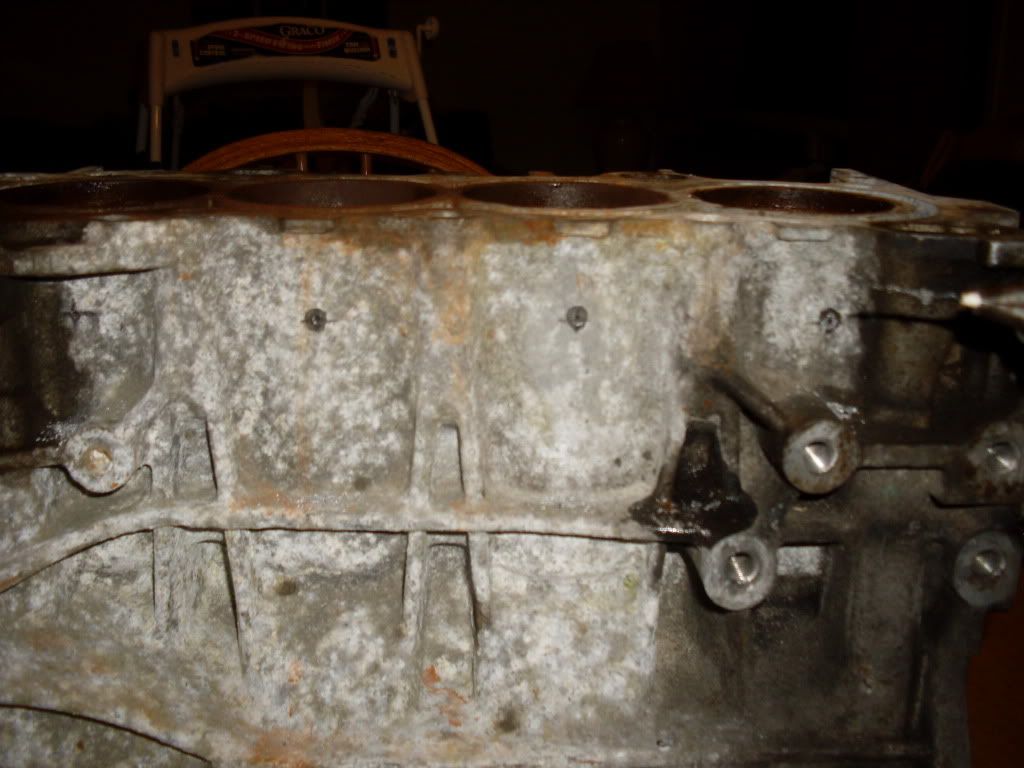
then start drilling using the proper size drill bit for the tap you are going to use
**you need to use a fine thread tap so you can get at least 4 full thread in the block**
I used a 3/8-24 (3/8-fine) tap so the drill bit i used for that was a size 21/64th
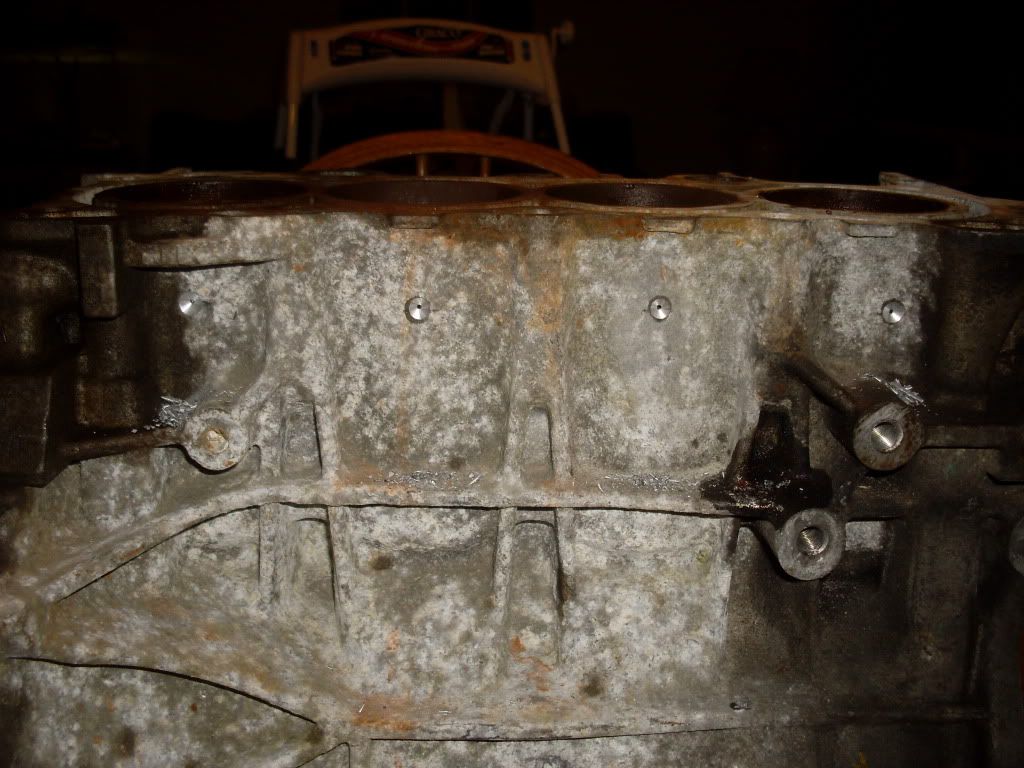
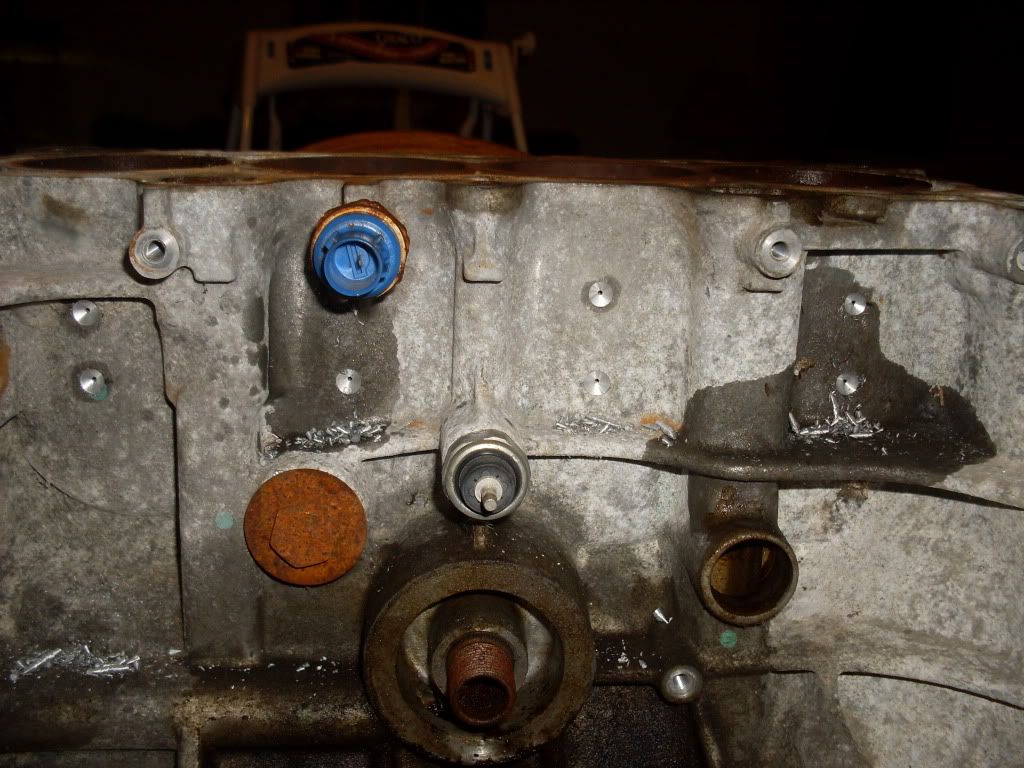
NOT boost, since i wont be using the exact critical spots for protecting against boost. This is only
for stibility with rpm's.
im only going to a 75.5 mm bore with this build so ill still have lots of sleves left to dispurse the
load from the posts. i think really thats the only way this works. If you have thin sleves your so much
more prone to crack them, and posting them wont be as effective because you will only be pushing on a small
spot on the sleves maybe 5/16" surface area so with out a thick sleve to dispurse the load you
might end up being more prone to cracking then not posting the block.
i do think a properly installed block guard would be more effective (again only for reving) but that requires
time and money seeing how it has to be made to fit your motor and welded in and milled flat again. you
also need a bore and hone but you will need that after posting the block anyway
so after some reading i have noticed you should put 2 posts per sleve on the intake side and only 1 post per sleve
on the exhaust side. Since the motor rotates towards the intake side so that side has more load on it.(hence the 2
studs on that side)
there are a few site with how to's on them. its a very easy, quite, relaxing job. here is a link to someone
elses how to that i found helpfull even tho it is very stright forward anyway
Block "posting" a D16A1
First take your block move it to a nice clean warm spot. (I chose my kitchen table)
Next mark the spots on you block you want to drill. Try your hardest to keep them all the same distence
from the top of the block and in the center of the sleves mark 2 spots per sleve on the intake side and only
one on the exhaust side.
on the intake side i went 1 3/4" down and the second set of holes was 2 3/4" down also centering each hole on
the sleve
on the exhaust side i only went 1 3/4" down.
**You should put them 2" down and centered on the sleves***
Next Center punch the holes(carefully dont crack the block its only 1/8" - 3/16" thick) drill pilot holes
using a 1/16 - 1/8 drill bit
then start drilling using the proper size drill bit for the tap you are going to use
**you need to use a fine thread tap so you can get at least 4 full thread in the block**
I used a 3/8-24 (3/8-fine) tap so the drill bit i used for that was a size 21/64th
Thread Starter
Honda-Tech Member
Joined: May 2011
Posts: 33
Likes: 0
Re: DIY posting a d block
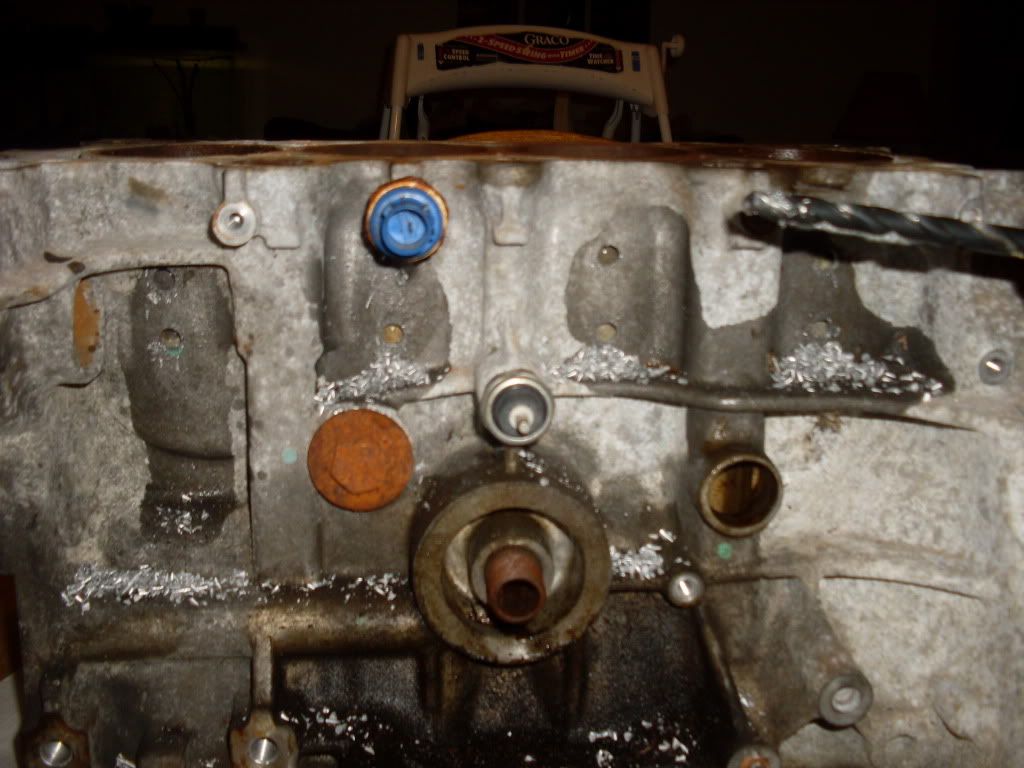
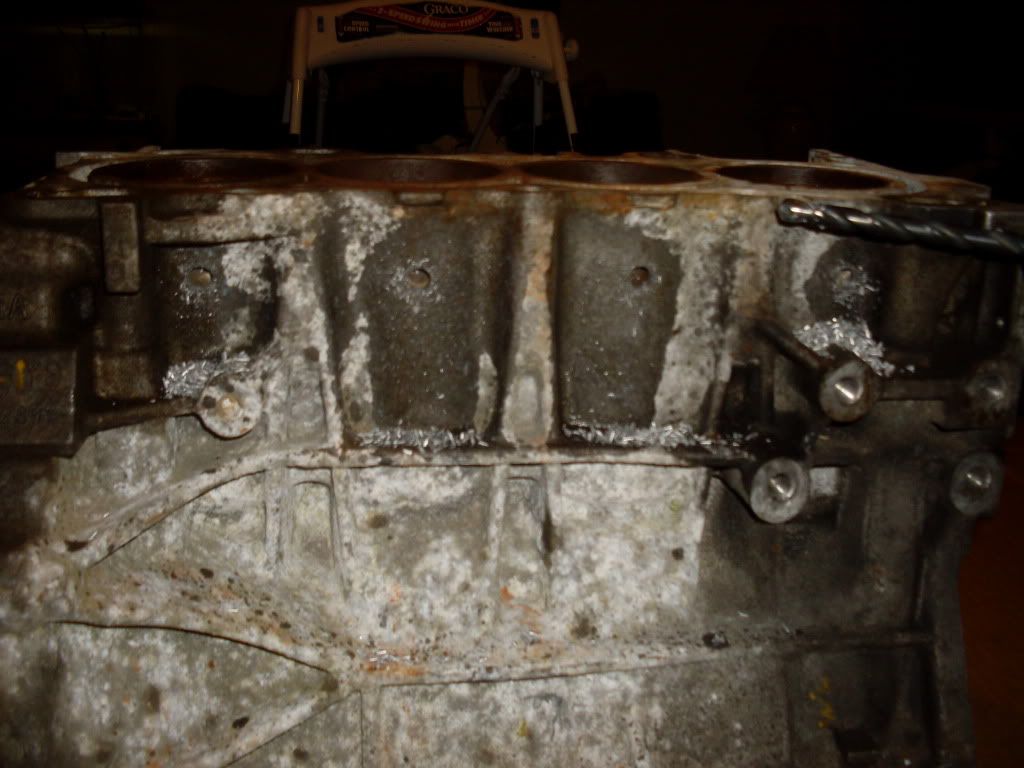
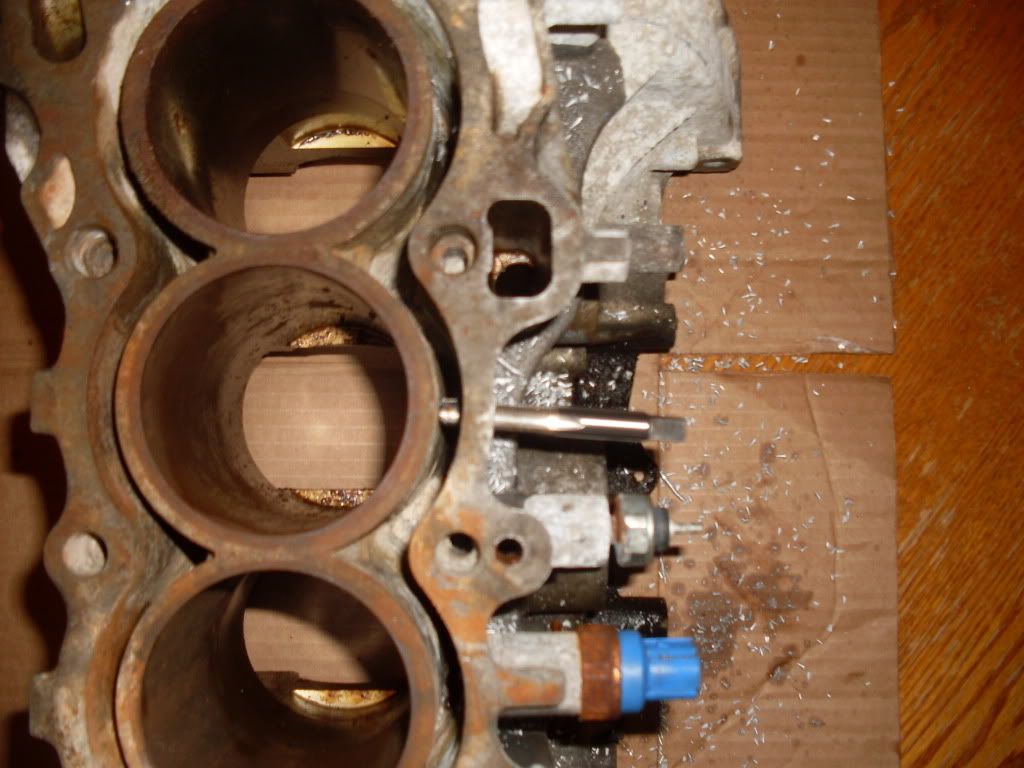
then you start to tap the holes using the tap that goes with the size hole you just drilled
REMBER to keep the tap lined up STRIGHT to your sleve wall
qutoe from the site i linked to at the top
"a bore/hone job is in order to make sure everything runs true. The stock sleeves are apparently
accurate to .0001", so installing anything that touches them (posts or a blockguard) requires
boring/honing to true everything up."
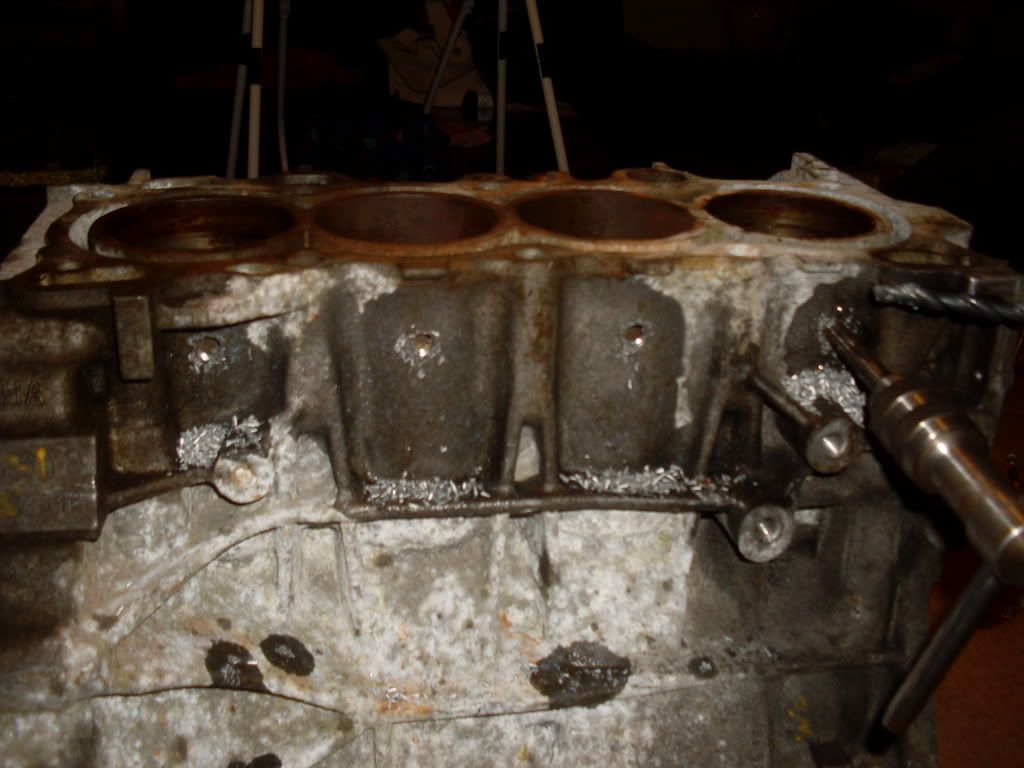
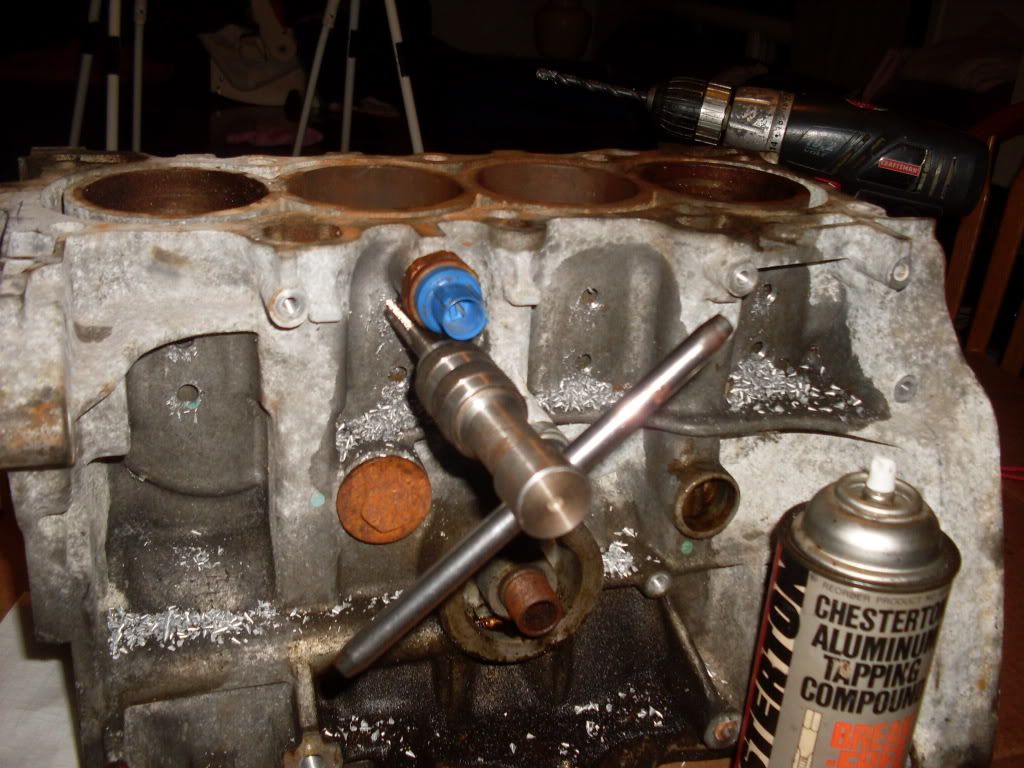
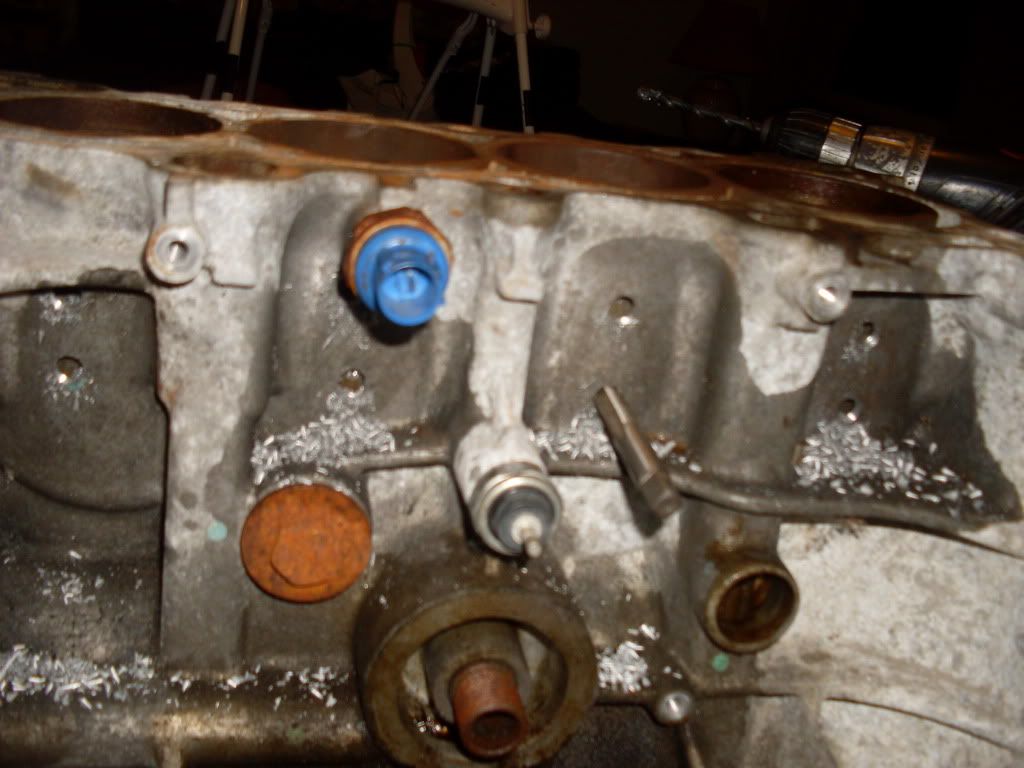
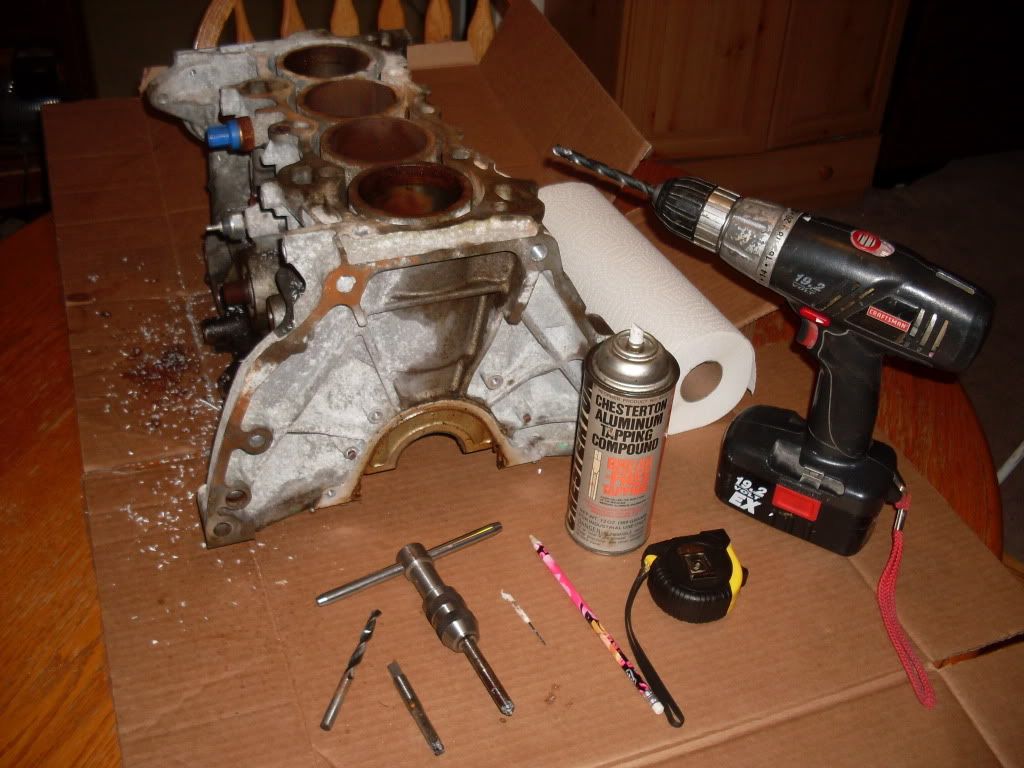
these are the tools i used to do this job. i work at a machine shop i could have used all the proper gear
but i did this at home to show you that, you can do it with the simplest tools anyone should have.
In a few days ill show you how to take a 3/8" peice of alu. rod and run a die down to to make threaded rod that
we can cut down using a hand grinder and a vice in the size studs we need (1") and then slot the tops for a
flat blade screw driver. I'll show you how to torque them (ONLY 2 FT-LBs) and liquid alu. them in place and
seals them


Thread Starter
Honda-Tech Member
Joined: May 2011
Posts: 33
Likes: 0

Trending Topics


Honda-Tech Member
Joined: Aug 2004
Posts: 4,167
Likes: 2
From: Atlanta
Re: DIY posting a d block
What about "gunbore" drill bits? Thats what I think they called them in aviation. The tip of the bit is nearly flat so instead of "drilling", it has more of a spotfacing effect.
Thread Starter
Honda-Tech Member
Joined: May 2011
Posts: 33
Likes: 0
Re: DIY posting a d block
yes you could out flats on the sleves. that is a very good idea but you cant contore the studs because you have to turn them so the highs would hit the sleve befor you just it to set in the coup you made on the stud.
you would use an 3/8 endmill for that job you could out it in the drill buy tou have to be carfull that when your milling the sleve flat spots to hold the drill still and stright so you dont end up reaming the taped holes in your block
you would use an 3/8 endmill for that job you could out it in the drill buy tou have to be carfull that when your milling the sleve flat spots to hold the drill still and stright so you dont end up reaming the taped holes in your block

Thread
Thread Starter
Forum
Replies
Last Post
