


Tire pressure with larger than stock wheels?


Thread Starter
Honda-Tech Member
Joined: Feb 2005
Posts: 1,439
Likes: 0
From: Oregon, USA
 Tire pressure with larger than stock wheels?
Hey guys,
So I am running 17s on my EP3 with 215/45/17 Falken Ziex ZE912 tires. I am running the tire pressure that Honda recommends and the tires always look low on air and I feel like the car can seem squishy at times, ha ha.. Anyone have any insight as to a safe tire pressure for larger tire sizes that doesn't screw with the cars handling dynamics? I have heard that Yokohama has a guide with all of these recommendations but I can't find it anywhere. I don't want BS answers, I am hoping someone has actually researched or tested this.
I just want to get the most efficiency and performance out of my EP3 and I know the tires are an important, yet overlooked aspect.
Thanks,
Square_1
So I am running 17s on my EP3 with 215/45/17 Falken Ziex ZE912 tires. I am running the tire pressure that Honda recommends and the tires always look low on air and I feel like the car can seem squishy at times, ha ha.. Anyone have any insight as to a safe tire pressure for larger tire sizes that doesn't screw with the cars handling dynamics? I have heard that Yokohama has a guide with all of these recommendations but I can't find it anywhere. I don't want BS answers, I am hoping someone has actually researched or tested this.
I just want to get the most efficiency and performance out of my EP3 and I know the tires are an important, yet overlooked aspect.
Thanks,
Square_1
Honda-Tech Member
Joined: Jun 2009
Posts: 459
Likes: 0
From: Florida
Re: Tire pressure with larger than stock wheels?
That is tire size of a RSX. Recommended pressure is 31 PSI. But in a section of the manual it says to run 34 PSI if you go over 137 MPH (under high speed driving).
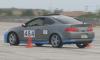
I have 225s and run 37 in front and 34 in rear. better more than less. when I Auto-X its 40 in front.
I have 225s and run 37 in front and 34 in rear. better more than less. when I Auto-X its 40 in front.


Honda-Tech Member
Joined: Sep 2003
Posts: 8,117
Likes: 1
From: Toronto, Canada but from Montreal
Re: Tire pressure with larger than stock wheels?
Im also running 215-45-17
Last edited by DaveSi677; Mar 23, 2011 at 06:16 AM. Reason: add a little more detail on tire size

Honda-Tech Member


Joined: Mar 2004
Posts: 4,834
Likes: 37
From: Looking for SloMofo....
Re: Tire pressure with larger than stock wheels?
I used an Auto X'ers method for determing optimal pressure. The fine point between tire roll and over inflation. For me it is 33 PSI.

Honda-Tech Member
Joined: Jan 2004
Posts: 2,792
Likes: 0
From: Cincinnati, OH

Trending Topics
Honda-Tech Member
Joined: Jun 2009
Posts: 459
Likes: 0
From: Florida
Honda-Tech Member
Joined: Mar 2004
Posts: 4,834
Likes: 37
From: Looking for SloMofo....
Re: Tire pressure with larger than stock wheels?
Right. Not scientific, but seems to work. Been awhile, but if i remember correct the idea is to mark the side walls to see how much it rolls over during hard cornering. Too much roll equals less than optimal traction. Too much air will also hinder traction. Its a trial and error deal. You chalk it, go out for a run, then come back and check it. Add or subtract air,then chalk it and run again. Keep doing it until you find the sweet spot.
Honda-Tech Member
Joined: Jan 2004
Posts: 2,792
Likes: 0
From: Cincinnati, OH
Re: Tire pressure with larger than stock wheels?
^^ To add to this,
You can also use chalk to verify that you have the right tire pressure. Draw a line across the surface of the tire. Roll the vehicle in straight line so that the tire turns a couple of revolutions. Check the chalk marks. If the chalk marks is worn off all the way across the tire surface then you have the right tire pressure. If your tires are over inflated then your results will probably look something like this:

If your tires are under inflated they will look something like this:

Over inflated tires reduce the tires contact patch with the road and therefore reduces traction for turning, braking, inclement weather etc. Over inflated tires can cause serious steering control problems especially at higher speeds. Over inflated tires wear out faster and cause more wear and tear on the vehicles suspension parts because they can't absorb the shocks as well from abnormalities in the road (pot holes etc.).
Under inflated tires are said to be the leading cause of tire failure. Under inflation increases rolling resistance and heat. There is less "air" to support the load (overloaded tire) and the sidewalls have to make up for it. The increased sidewall flexing and generated heat causes damage to the tire and can cause blowouts and tread separation. Obviously the increase friction and heat reduces fuel mileage. The sidewall strength is reduced and can cause handling problems. Tire contact patch is also reduced - further compromising the handling and traction characteristics of the tire.
Bottom line - make sure your tires are set at the "correct" tire pressure for your vehicle. Don't try to out smart the engineers who designed the thing (most people are not qualified to do so.)
You can also use chalk to verify that you have the right tire pressure. Draw a line across the surface of the tire. Roll the vehicle in straight line so that the tire turns a couple of revolutions. Check the chalk marks. If the chalk marks is worn off all the way across the tire surface then you have the right tire pressure. If your tires are over inflated then your results will probably look something like this:
If your tires are under inflated they will look something like this:
Over inflated tires reduce the tires contact patch with the road and therefore reduces traction for turning, braking, inclement weather etc. Over inflated tires can cause serious steering control problems especially at higher speeds. Over inflated tires wear out faster and cause more wear and tear on the vehicles suspension parts because they can't absorb the shocks as well from abnormalities in the road (pot holes etc.).
Under inflated tires are said to be the leading cause of tire failure. Under inflation increases rolling resistance and heat. There is less "air" to support the load (overloaded tire) and the sidewalls have to make up for it. The increased sidewall flexing and generated heat causes damage to the tire and can cause blowouts and tread separation. Obviously the increase friction and heat reduces fuel mileage. The sidewall strength is reduced and can cause handling problems. Tire contact patch is also reduced - further compromising the handling and traction characteristics of the tire.
Bottom line - make sure your tires are set at the "correct" tire pressure for your vehicle. Don't try to out smart the engineers who designed the thing (most people are not qualified to do so.)
Thread Starter
Honda-Tech Member
Joined: Feb 2005
Posts: 1,439
Likes: 0
From: Oregon, USA
Re: Tire pressure with larger than stock wheels?
Good info man!
^^ To add to this,
You can also use chalk to verify that you have the right tire pressure. Draw a line across the surface of the tire. Roll the vehicle in straight line so that the tire turns a couple of revolutions. Check the chalk marks. If the chalk marks is worn off all the way across the tire surface then you have the right tire pressure. If your tires are over inflated then your results will probably look something like this:
If your tires are under inflated they will look something like this:
Over inflated tires reduce the tires contact patch with the road and therefore reduces traction for turning, braking, inclement weather etc. Over inflated tires can cause serious steering control problems especially at higher speeds. Over inflated tires wear out faster and cause more wear and tear on the vehicles suspension parts because they can't absorb the shocks as well from abnormalities in the road (pot holes etc.).
Under inflated tires are said to be the leading cause of tire failure. Under inflation increases rolling resistance and heat. There is less "air" to support the load (overloaded tire) and the sidewalls have to make up for it. The increased sidewall flexing and generated heat causes damage to the tire and can cause blowouts and tread separation. Obviously the increase friction and heat reduces fuel mileage. The sidewall strength is reduced and can cause handling problems. Tire contact patch is also reduced - further compromising the handling and traction characteristics of the tire.
Bottom line - make sure your tires are set at the "correct" tire pressure for your vehicle. Don't try to out smart the engineers who designed the thing (most people are not qualified to do so.)
You can also use chalk to verify that you have the right tire pressure. Draw a line across the surface of the tire. Roll the vehicle in straight line so that the tire turns a couple of revolutions. Check the chalk marks. If the chalk marks is worn off all the way across the tire surface then you have the right tire pressure. If your tires are over inflated then your results will probably look something like this:
If your tires are under inflated they will look something like this:
Over inflated tires reduce the tires contact patch with the road and therefore reduces traction for turning, braking, inclement weather etc. Over inflated tires can cause serious steering control problems especially at higher speeds. Over inflated tires wear out faster and cause more wear and tear on the vehicles suspension parts because they can't absorb the shocks as well from abnormalities in the road (pot holes etc.).
Under inflated tires are said to be the leading cause of tire failure. Under inflation increases rolling resistance and heat. There is less "air" to support the load (overloaded tire) and the sidewalls have to make up for it. The increased sidewall flexing and generated heat causes damage to the tire and can cause blowouts and tread separation. Obviously the increase friction and heat reduces fuel mileage. The sidewall strength is reduced and can cause handling problems. Tire contact patch is also reduced - further compromising the handling and traction characteristics of the tire.
Bottom line - make sure your tires are set at the "correct" tire pressure for your vehicle. Don't try to out smart the engineers who designed the thing (most people are not qualified to do so.)
Honda-Tech Member
Joined: Mar 2004
Posts: 4,834
Likes: 37
From: Looking for SloMofo....
Re: Tire pressure with larger than stock wheels?
^^ To add to this,
You can also use chalk to verify that you have the right tire pressure. Draw a line across the surface of the tire. Roll the vehicle in straight line so that the tire turns a couple of revolutions. Check the chalk marks. If the chalk marks is worn off all the way across the tire surface then you have the right tire pressure. If your tires are over inflated then your results will probably look something like this:
If your tires are under inflated they will look something like this:
Over inflated tires reduce the tires contact patch with the road and therefore reduces traction for turning, braking, inclement weather etc. Over inflated tires can cause serious steering control problems especially at higher speeds. Over inflated tires wear out faster and cause more wear and tear on the vehicles suspension parts because they can't absorb the shocks as well from abnormalities in the road (pot holes etc.).
Under inflated tires are said to be the leading cause of tire failure. Under inflation increases rolling resistance and heat. There is less "air" to support the load (overloaded tire) and the sidewalls have to make up for it. The increased sidewall flexing and generated heat causes damage to the tire and can cause blowouts and tread separation. Obviously the increase friction and heat reduces fuel mileage. The sidewall strength is reduced and can cause handling problems. Tire contact patch is also reduced - further compromising the handling and traction characteristics of the tire.
Bottom line - make sure your tires are set at the "correct" tire pressure for your vehicle. Don't try to out smart the engineers who designed the thing (most people are not qualified to do so.)
You can also use chalk to verify that you have the right tire pressure. Draw a line across the surface of the tire. Roll the vehicle in straight line so that the tire turns a couple of revolutions. Check the chalk marks. If the chalk marks is worn off all the way across the tire surface then you have the right tire pressure. If your tires are over inflated then your results will probably look something like this:
If your tires are under inflated they will look something like this:
Over inflated tires reduce the tires contact patch with the road and therefore reduces traction for turning, braking, inclement weather etc. Over inflated tires can cause serious steering control problems especially at higher speeds. Over inflated tires wear out faster and cause more wear and tear on the vehicles suspension parts because they can't absorb the shocks as well from abnormalities in the road (pot holes etc.).
Under inflated tires are said to be the leading cause of tire failure. Under inflation increases rolling resistance and heat. There is less "air" to support the load (overloaded tire) and the sidewalls have to make up for it. The increased sidewall flexing and generated heat causes damage to the tire and can cause blowouts and tread separation. Obviously the increase friction and heat reduces fuel mileage. The sidewall strength is reduced and can cause handling problems. Tire contact patch is also reduced - further compromising the handling and traction characteristics of the tire.
Bottom line - make sure your tires are set at the "correct" tire pressure for your vehicle. Don't try to out smart the engineers who designed the thing (most people are not qualified to do so.)

Trial User
Joined: Mar 2011
Posts: 1
Likes: 0
Re: Tire pressure with larger than stock wheels?
If you want it the way the tire-manufacturers calculate it, you can use spreadsheet I made.
In next map on my skydrive of hotmail you can find it with examples.
Download and open them in Excell-like programm to work with it, and dont open it directly in the browser, then it wont work because of protection and data validation I used in it.
http://cid-a526e0eee092e6dc.office.l...0tyre-pressure
From this link you can navigate my complete public map of hotmail for more.
If you cant work it out, give me the details,and I will do it for you.
Found this topic googling for tire-pressure.
I live in Holland and once got hold of the system the European tyre-manufacturers use to determine the advice pressures and worked it out.
Thats why I wont introduce myself in an opening-topic.
hope my information will be of help here.
In next map on my skydrive of hotmail you can find it with examples.
Download and open them in Excell-like programm to work with it, and dont open it directly in the browser, then it wont work because of protection and data validation I used in it.
http://cid-a526e0eee092e6dc.office.l...0tyre-pressure
From this link you can navigate my complete public map of hotmail for more.
If you cant work it out, give me the details,and I will do it for you.
Found this topic googling for tire-pressure.
I live in Holland and once got hold of the system the European tyre-manufacturers use to determine the advice pressures and worked it out.
Thats why I wont introduce myself in an opening-topic.
hope my information will be of help here.

Thread
Thread Starter
Forum
Replies
Last Post
sporty240
Honda Civic / Del Sol (1992 - 2000)
23
Aug 25, 2005 06:25 AM
adrian1281
Honda Civic / Del Sol (1992 - 2000)
4
Jun 28, 2003 08:39 AM
silverCRXTC
Honda CRX / EF Civic (1988 - 1991)
2
Jun 1, 2003 10:02 PM
