


polishing the runners in your sk2 pro IM


 Re: polishing the runners in your sk2 pro IM
are you gonna be doing it yourself and why?
many people rouned their IMs and lost power because they heard that port and polish is good.
it should be done by a pro and tested on a flow bench.
or someone local with experience. but have the car dynoed before and after to see the gains losses and get your money back in case of loss in power...
many people rouned their IMs and lost power because they heard that port and polish is good.
it should be done by a pro and tested on a flow bench.
or someone local with experience. but have the car dynoed before and after to see the gains losses and get your money back in case of loss in power...

Honda-Tech Member
Joined: May 2008
Posts: 4,062
Likes: 1
Re: polishing the runners in your sk2 pro IM
you will prolly get alot of different opinions on the "polishing" question.
heres mine...it doesnt matter if the surface is perfectly smooth or slightly rough (cast). there is a boundary along the walls and the air flows inside of this boundary.
in other words its not gonna hurt to polish it but i doubt it will help either, the air doesnt know the difference.
heres mine...it doesnt matter if the surface is perfectly smooth or slightly rough (cast). there is a boundary along the walls and the air flows inside of this boundary.
in other words its not gonna hurt to polish it but i doubt it will help either, the air doesnt know the difference.

Honda-Tech Member
Joined: Jan 2004
Posts: 782
Likes: 0
From: Western Washington
Re: polishing the runners in your sk2 pro IM
If you could move the injectors towards the plenum than I would say keep it a little rough so the fuel & air can mix better..

Thread Starter
Honda-Tech Member
Joined: Aug 2010
Posts: 747
Likes: 0
From: ASRacing, PA
Re: polishing the runners in your sk2 pro IM
yeah i did hear that injectors that spray further back in the runners, should keep the runner cast rough or w/e so it mixes better to polished it dosent. i was just wondering cus just thinking about how friction works on air flow just that tiny bit of cast roughness, id figure would slow the air flow a bit at the walls.

Joined: Mar 2010
Posts: 324
Likes: 0
From: miserable mitten
Re: polishing the runners in your sk2 pro IM
Before the investment was made on new 5-axis CNC machines, Jim (Kinsler) wanted to learn about the difference as well. So we did either 4 or 5 manifolds: one hand ported like normal, the other 3 or 4 were identical in every way except they we're CNC'd at another shop, each with different cutting paths and overstep. Since everything we do is CNC'd now, it goes without saying what won, but the most interesting thing was how the overstep in itself affected performance.
We came to the conclusion that the smoother the runner is, the more friction the air has passing through it. Since the air has nowhere to roll as if forms the boundary layer, the boundary layer "thickens" the longer it is. The CNC'd runners had minute dimples and ridges from the cutting path/tool that we concluded gave the air an area to roll as it tumbled down the runner, reducing the boundary layer.
And I can't help but to compare it to the dimples on a golf ball.
Regardless of the science, the hand ported mani made 840 hp vs. the cnc'd mani's 860 hp, and that was enough for us.
I also recall in the early 2000's, a friend of mine was all excited to have his ITR manifold Extrude-honed. It lost HP and he was pissed.
Honda-Tech Member
Joined: Jan 2004
Posts: 782
Likes: 0
From: Western Washington
Re: polishing the runners in your sk2 pro IM
Trending Topics
Honda-Tech Member
Joined: May 2008
Posts: 4,062
Likes: 1
Re: polishing the runners in your sk2 pro IM
I acknowledge that I know nothing specifically about S2s pro intake, but I have to believe these principals would apply to anything. Up until 2006, we used to just CNC mill the port windows and throttle bores in our manifolds and the runner material in between was all hand ported and blended with a "tootsie roll" finish. So it wasn't "polished" but it was smooth with noticeable surface scratches.
Before the investment was made on new 5-axis CNC machines, Jim (Kinsler) wanted to learn about the difference as well. So we did either 4 or 5 manifolds: one hand ported like normal, the other 3 or 4 were identical in every way except they we're CNC'd at another shop, each with different cutting paths and overstep. Since everything we do is CNC'd now, it goes without saying what won, but the most interesting thing was how the overstep in itself affected performance.
We came to the conclusion that the smoother the runner is, the more friction the air has passing through it. Since the air has nowhere to roll as if forms the boundary layer, the boundary layer "thickens" the longer it is. The CNC'd runners had minute dimples and ridges from the cutting path/tool that we concluded gave the air an area to roll as it tumbled down the runner, reducing the boundary layer.
And I can't help but to compare it to the dimples on a golf ball.
Regardless of the science, the hand ported mani made 840 hp vs. the cnc'd mani's 860 hp, and that was enough for us.
I also recall in the early 2000's, a friend of mine was all excited to have his ITR manifold Extrude-honed. It lost HP and he was pissed.
Before the investment was made on new 5-axis CNC machines, Jim (Kinsler) wanted to learn about the difference as well. So we did either 4 or 5 manifolds: one hand ported like normal, the other 3 or 4 were identical in every way except they we're CNC'd at another shop, each with different cutting paths and overstep. Since everything we do is CNC'd now, it goes without saying what won, but the most interesting thing was how the overstep in itself affected performance.
We came to the conclusion that the smoother the runner is, the more friction the air has passing through it. Since the air has nowhere to roll as if forms the boundary layer, the boundary layer "thickens" the longer it is. The CNC'd runners had minute dimples and ridges from the cutting path/tool that we concluded gave the air an area to roll as it tumbled down the runner, reducing the boundary layer.
And I can't help but to compare it to the dimples on a golf ball.
Regardless of the science, the hand ported mani made 840 hp vs. the cnc'd mani's 860 hp, and that was enough for us.
I also recall in the early 2000's, a friend of mine was all excited to have his ITR manifold Extrude-honed. It lost HP and he was pissed.



Honda-Tech Member
Joined: Apr 2008
Posts: 903
Likes: 0
From: Near a River, NSW, Australia
Re: polishing the runners in your sk2 pro IM
I acknowledge that I know nothing specifically about S2s pro intake, but I have to believe these principals would apply to anything. Up until 2006, we used to just CNC mill the port windows and throttle bores in our manifolds and the runner material in between was all hand ported and blended with a "tootsie roll" finish. So it wasn't "polished" but it was smooth with noticeable surface scratches.
Before the investment was made on new 5-axis CNC machines, Jim (Kinsler) wanted to learn about the difference as well. So we did either 4 or 5 manifolds: one hand ported like normal, the other 3 or 4 were identical in every way except they we're CNC'd at another shop, each with different cutting paths and overstep. Since everything we do is CNC'd now, it goes without saying what won, but the most interesting thing was how the overstep in itself affected performance.
We came to the conclusion that the smoother the runner is, the more friction the air has passing through it. Since the air has nowhere to roll as if forms the boundary layer, the boundary layer "thickens" the longer it is. The CNC'd runners had minute dimples and ridges from the cutting path/tool that we concluded gave the air an area to roll as it tumbled down the runner, reducing the boundary layer.
And I can't help but to compare it to the dimples on a golf ball.
Regardless of the science, the hand ported mani made 840 hp vs. the cnc'd mani's 860 hp, and that was enough for us.
I also recall in the early 2000's, a friend of mine was all excited to have his ITR manifold Extrude-honed. It lost HP and he was pissed.
Before the investment was made on new 5-axis CNC machines, Jim (Kinsler) wanted to learn about the difference as well. So we did either 4 or 5 manifolds: one hand ported like normal, the other 3 or 4 were identical in every way except they we're CNC'd at another shop, each with different cutting paths and overstep. Since everything we do is CNC'd now, it goes without saying what won, but the most interesting thing was how the overstep in itself affected performance.
We came to the conclusion that the smoother the runner is, the more friction the air has passing through it. Since the air has nowhere to roll as if forms the boundary layer, the boundary layer "thickens" the longer it is. The CNC'd runners had minute dimples and ridges from the cutting path/tool that we concluded gave the air an area to roll as it tumbled down the runner, reducing the boundary layer.
And I can't help but to compare it to the dimples on a golf ball.
Regardless of the science, the hand ported mani made 840 hp vs. the cnc'd mani's 860 hp, and that was enough for us.
I also recall in the early 2000's, a friend of mine was all excited to have his ITR manifold Extrude-honed. It lost HP and he was pissed.
Thread Starter
Honda-Tech Member
Joined: Aug 2010
Posts: 747
Likes: 0
From: ASRacing, PA
Re: polishing the runners in your sk2 pro IM
i was just intrested in the idea to see what everyone thought. if i would do anything id just do it myself. beleive me i have comfidence in myself that id be able to. all i was looking for is nothing like a smooth shine finish just a lil smoother say running some 280 300 grit sand paper or one of those port polish ***** and use a short bit. but as i am reading the post i am just gonna stick with not doing it. the whole not letting the air roll on its self makes since.
 Re: polishing the runners in your sk2 pro IM
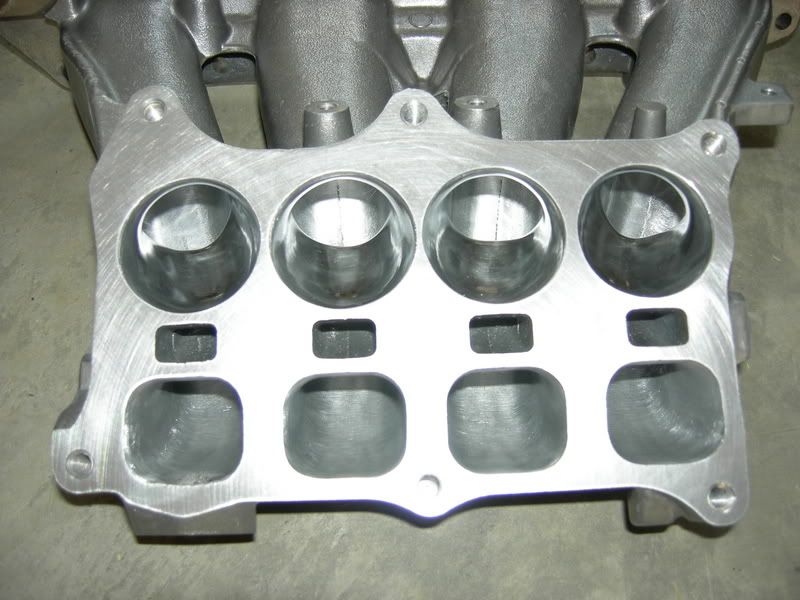
Some Pics of my polished GSR manifold.


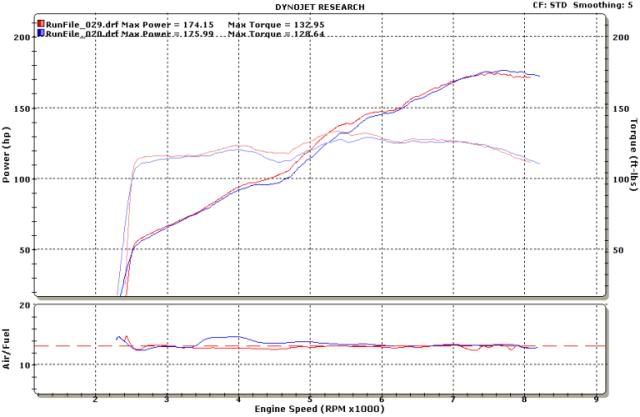
The gains with manifold change on stock GSR cams.
Most of the gains came in the mid range. Made the car really fun.
Tuned on a Hondata S300 in a P72 ECU with IAB relay.

I'm curious why did the CNC make more power than the hand ported? All the shops I have been in contact with that CNC manifolds reshape the runners with a taper. That speeds up the air and creates more power.
When a shop hand ports they typically don't go to the extremes of reshaping the runners by hand, just making them shiny.
Now a polished CNC’d manifold you'll have the best of both.
OH and my car did make power.
The gains with manifold change on stock GSR cams.
Most of the gains came in the mid range. Made the car really fun.
Tuned on a Hondata S300 in a P72 ECU with IAB relay.
I'm curious why did the CNC make more power than the hand ported? All the shops I have been in contact with that CNC manifolds reshape the runners with a taper. That speeds up the air and creates more power.
When a shop hand ports they typically don't go to the extremes of reshaping the runners by hand, just making them shiny.
Now a polished CNC’d manifold you'll have the best of both.
OH and my car did make power.

All Motor Mentor
Joined: Aug 2004
Posts: 6,987
Likes: 1
From: 902, Nova Scotia, Canada
Re: polishing the runners in your sk2 pro IM
I remember Omni (Steve) saying something a couple years ago that having your intake manifolt ITR style Extrude-honed was typically good for an 8% power increase if I remember correctly. Was it an ITR motor that he lost power on? Was it across the whole power band?

Honda-Tech Member
Joined: Jul 2005
Posts: 1,734
Likes: 2
From: Canada
Re: polishing the runners in your sk2 pro IM
good stuff.
On a couple manifolds I have had my hands on i noticed the casting marks and flashing (excess material in the area where 2 mold halves, or dies, meet) were really bad. these would have been parts that came off the mold at the end of a long, hot day, or near the end of the molds life. With these conditions gains would definitely be seen after cleaning up the casting and a slight polishing, but as many people have mentioned, there are things going on at the boundary layer that aren't necessarily common sense.
as a general rule of thumb, when working with mild setups, remove any obstruction but don't change the size or shape
changing the surface finish probably won't make a noticeable difference on most setups
sc at kfi's example showed a 2% increase at the mid 800- hp level, a 2% increase at 200 hp is only 4hp and that is probably being generous.
although i have only taken one fluid dynamics course at school, some of it is applicable to this type of thing. I could see the larger mass of air flow in a boosted setup being the reason that a polish shows gains.
since there is more air pressure and flow the boundary layer is reduced. Since the boundary layer is shorter, the air has less time to accelerate from no movement at the surface of the plenum wall, to the flow velocity in the center area. thus more restriction in the boundary layer requires more force to over come and less force is used in the acceleration of the intake charge into the cylinder.
On a couple manifolds I have had my hands on i noticed the casting marks and flashing (excess material in the area where 2 mold halves, or dies, meet) were really bad. these would have been parts that came off the mold at the end of a long, hot day, or near the end of the molds life. With these conditions gains would definitely be seen after cleaning up the casting and a slight polishing, but as many people have mentioned, there are things going on at the boundary layer that aren't necessarily common sense.
as a general rule of thumb, when working with mild setups, remove any obstruction but don't change the size or shape
changing the surface finish probably won't make a noticeable difference on most setups
sc at kfi's example showed a 2% increase at the mid 800- hp level, a 2% increase at 200 hp is only 4hp and that is probably being generous.
although i have only taken one fluid dynamics course at school, some of it is applicable to this type of thing. I could see the larger mass of air flow in a boosted setup being the reason that a polish shows gains.
since there is more air pressure and flow the boundary layer is reduced. Since the boundary layer is shorter, the air has less time to accelerate from no movement at the surface of the plenum wall, to the flow velocity in the center area. thus more restriction in the boundary layer requires more force to over come and less force is used in the acceleration of the intake charge into the cylinder.
Honda-Tech Member
Joined: May 2008
Posts: 4,062
Likes: 1


Honda-Tech Member


Joined: Mar 2008
Posts: 5,474
Likes: 46
From: Salem, Or
Re: polishing the runners in your sk2 pro IM
I did a mild clean up on a p75 im that was on a b20b motor for my buddy, I used the cheap 80grit rolls on a die grinder and it turned out pretty good. motor pulls alot better on the top end now. Id say it made a few more whp at least.

Honda-Tech Member
Joined: Jun 2010
Posts: 33
Likes: 0

Honda-Tech Member
Joined: Jan 2010
Posts: 550
Likes: 1
From: norcal
Re: polishing the runners in your sk2 pro IM
I think most of the real engine builders I know polish the runners because that is what customers like to see. they like "shiny" hahah.... but it really does not help performance
Honda-Tech Member
Joined: Jan 2010
Posts: 550
Likes: 1
From: norcal
Re: polishing the runners in your sk2 pro IM
I acknowledge that I know nothing specifically about S2s pro intake, but I have to believe these principals would apply to anything. Up until 2006, we used to just CNC mill the port windows and throttle bores in our manifolds and the runner material in between was all hand ported and blended with a "tootsie roll" finish. So it wasn't "polished" but it was smooth with noticeable surface scratches.
Before the investment was made on new 5-axis CNC machines, Jim (Kinsler) wanted to learn about the difference as well. So we did either 4 or 5 manifolds: one hand ported like normal, the other 3 or 4 were identical in every way except they we're CNC'd at another shop, each with different cutting paths and overstep. Since everything we do is CNC'd now, it goes without saying what won, but the most interesting thing was how the overstep in itself affected performance.
We came to the conclusion that the smoother the runner is, the more friction the air has passing through it. Since the air has nowhere to roll as if forms the boundary layer, the boundary layer "thickens" the longer it is. The CNC'd runners had minute dimples and ridges from the cutting path/tool that we concluded gave the air an area to roll as it tumbled down the runner, reducing the boundary layer.
And I can't help but to compare it to the dimples on a golf ball.
Regardless of the science, the hand ported mani made 840 hp vs. the cnc'd mani's 860 hp, and that was enough for us.
I also recall in the early 2000's, a friend of mine was all excited to have his ITR manifold Extrude-honed. It lost HP and he was pissed.
Before the investment was made on new 5-axis CNC machines, Jim (Kinsler) wanted to learn about the difference as well. So we did either 4 or 5 manifolds: one hand ported like normal, the other 3 or 4 were identical in every way except they we're CNC'd at another shop, each with different cutting paths and overstep. Since everything we do is CNC'd now, it goes without saying what won, but the most interesting thing was how the overstep in itself affected performance.
We came to the conclusion that the smoother the runner is, the more friction the air has passing through it. Since the air has nowhere to roll as if forms the boundary layer, the boundary layer "thickens" the longer it is. The CNC'd runners had minute dimples and ridges from the cutting path/tool that we concluded gave the air an area to roll as it tumbled down the runner, reducing the boundary layer.
And I can't help but to compare it to the dimples on a golf ball.
Regardless of the science, the hand ported mani made 840 hp vs. the cnc'd mani's 860 hp, and that was enough for us.
I also recall in the early 2000's, a friend of mine was all excited to have his ITR manifold Extrude-honed. It lost HP and he was pissed.
great post, can't argue with THE GODFATHER of B series

Thread
Thread Starter
Forum
Replies
Last Post
B18 CYA
All Motor / Naturally Aspirated
16
Dec 13, 2005 01:05 PM
