


SOHC Cable Transmission Codes...


Thread Starter
Honda-Tech Member
Joined: Oct 2006
Posts: 255
Likes: 0
From: Bremerton, Wa, USA
 SOHC Cable Transmission Codes...
Anyone know a quick way I could check to see if my tranny is for sure an SI while its out of the car?
Ive searched and posted on the topic before, but have never really gotten a straight answer
Ive searched and posted on the topic before, but have never really gotten a straight answer

Honda-Tech Member
Joined: Nov 2003
Posts: 1,755
Likes: 2
From: Alberta, Canada
Re: (IHEARTMYHONDA91)
I needed to know this once too.
So i searched and in 3 minutes I had the answer. You must have forgotten to click the "archived content" button.
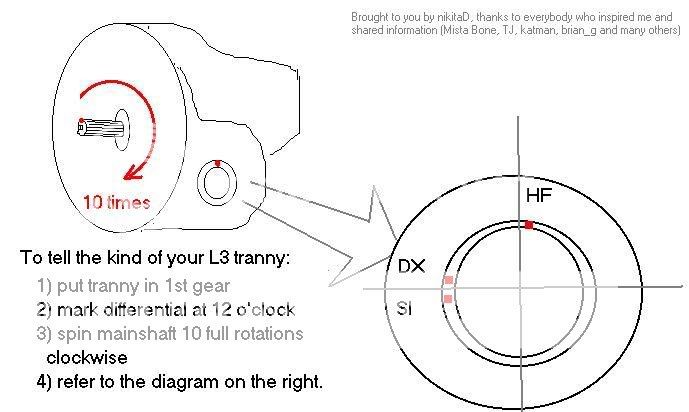
Here are the results of my test.
Mark both.
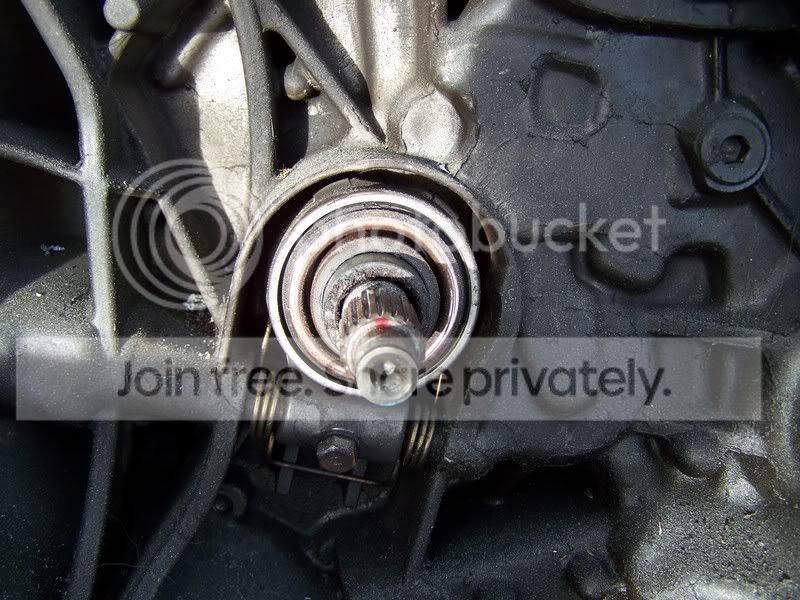

Check after 10 rotations of mainshaft.
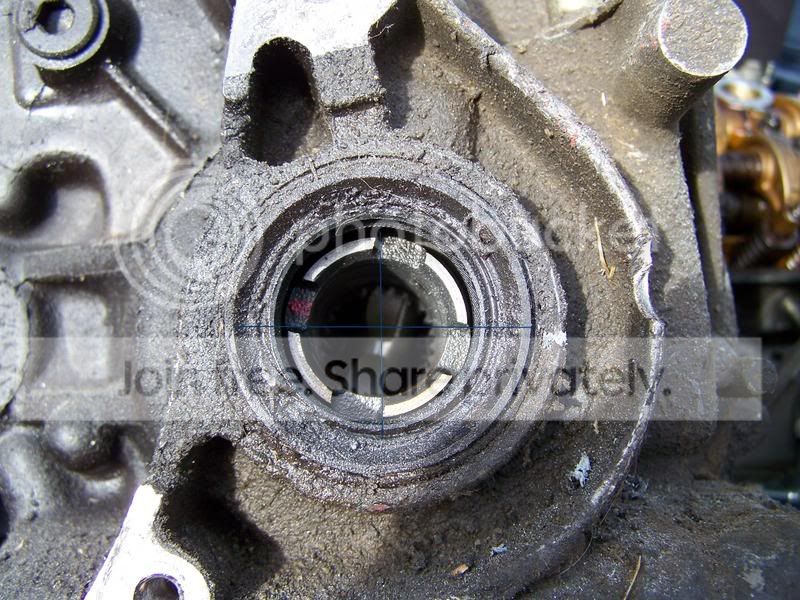
Mystery solved.
So i searched and in 3 minutes I had the answer. You must have forgotten to click the "archived content" button.
Here are the results of my test.
Mark both.
Check after 10 rotations of mainshaft.
Mystery solved.


Honda-Tech Member
Joined: Nov 2003
Posts: 1,755
Likes: 2
From: Alberta, Canada
Re: (7808)
<TABLE WIDTH="90%" CELLSPACING=0 CELLPADDING=0 ALIGN=CENTER><TR><TD>Quote, originally posted by 7808 »</TD></TR><TR><TD CLASS="quote">that they all had the same 1st gear</TD></TR></TABLE>
*twirls finger in air*
All the USDM Si and dx trans all had the same 1-5 (hell even reverse was the same) gears and the only difference was the painful 3.888 Final drive that killed the dx trans.
Please note this is only true with 88-91 L3 transmissions. a 92-95 dx trans is not the same ratios as a 92-95 si trans.
*twirls finger in air*
All the USDM Si and dx trans all had the same 1-5 (hell even reverse was the same) gears and the only difference was the painful 3.888 Final drive that killed the dx trans.
Please note this is only true with 88-91 L3 transmissions. a 92-95 dx trans is not the same ratios as a 92-95 si trans.

Trending Topics
Honda-Tech Member
Joined: Nov 2003
Posts: 1,755
Likes: 2
From: Alberta, Canada
Re: (7808)
When old muscle cars used to swap out their rear end, it was changing their final drive.
A higher number final drive will accelerate through the gears more quickly (more mechanical advantage) and a lower number will hurt acceleration properties as the engine struggles to climb each 100 rpm (less mechanical advantage)
Final Drive is the ultimate decider of your acceleration and top speed:
Higher FD: faster acceleration, lower top speed
Lower FD: slower acceleration, higher top speed
Does this help at all?
A higher number final drive will accelerate through the gears more quickly (more mechanical advantage) and a lower number will hurt acceleration properties as the engine struggles to climb each 100 rpm (less mechanical advantage)
Final Drive is the ultimate decider of your acceleration and top speed:
Higher FD: faster acceleration, lower top speed
Lower FD: slower acceleration, higher top speed
Does this help at all?
 Re: (7808)
<TABLE WIDTH="90%" CELLSPACING=0 CELLPADDING=0 ALIGN=CENTER><TR><TD>Quote, originally posted by 7808 »</TD></TR><TR><TD CLASS="quote">how is the final drive calculated</TD></TR></TABLE>
Take the number of teeth on the ring gear(attached to the differential) and divide it by the number of teeth on the countershaft. The countershaft is the one with the teeth that ride on the ring gear
For example:
Ring gear 68 teeth...divided by 16 teeth on the countershaft = a 4.25 Final Drive Ratio
Take the number of teeth on the ring gear(attached to the differential) and divide it by the number of teeth on the countershaft. The countershaft is the one with the teeth that ride on the ring gear
For example:
Ring gear 68 teeth...divided by 16 teeth on the countershaft = a 4.25 Final Drive Ratio

Thread
Thread Starter
Forum
Replies
Last Post
Sinner
Honda CRX / EF Civic (1988 - 1991)
14
Oct 12, 2004 12:20 PM
