


engine overheat....head gasket? PLLLLLSSSSS help.!!!


Thread Starter
Honda-Tech Member
Joined: Aug 2008
Posts: 74
Likes: 1
From: myrtle beach, SC, USA
 engine overheat....head gasket? PLLLLLSSSSS help.!!!
I have a d16y8 engine.. the coolant is bubbling and overflows in radiator everytime the engine becomes hot..
I already changed the head gasket and resurfaced the cylineder head.. I already chnage the thermostat. but the problem still persist. Actually, I already changed it twice, after i suspected that I messed the installation.. bUT still its the same problem.. the coolant boils when the engine heats..
I do have an old radiator.. and I suspect that its the radiator.. is it possible?
but the signs seems shows blown head gasket.
pls. helllppp!!!!!!
I already changed the head gasket and resurfaced the cylineder head.. I already chnage the thermostat. but the problem still persist. Actually, I already changed it twice, after i suspected that I messed the installation.. bUT still its the same problem.. the coolant boils when the engine heats..
I do have an old radiator.. and I suspect that its the radiator.. is it possible?
but the signs seems shows blown head gasket.
pls. helllppp!!!!!!


Seagull Management
Joined: Jun 2008
Posts: 15,150
Likes: 26
From: Miramichi, NB, Canada
Re: engine overheat....head gasket? PLLLLLSSSSS help.!!! (hondaStarter)
I still say bad headgasket, this a textbook example of why I recommend people pull the engine when a head gasket blows the first time. My advice is don't waste anymore time with it, pull the engine and drop something else in.
Thread Starter
Honda-Tech Member
Joined: Aug 2008
Posts: 74
Likes: 1
From: myrtle beach, SC, USA
Re: engine overheat....head gasket? PLLLLLSSSSS help.!!! (redline870)
thanks for the response. I think i have a bad radiator cap because its rubber came off, i just tried to fix it. and the hoses are not that hard even the engine is hot.. i will try it tommorow..
But even if the radiator cap is off, the coolant is overflowing when the engine becomes hot.
But even if the radiator cap is off, the coolant is overflowing when the engine becomes hot.
Thread Starter
Honda-Tech Member
Joined: Aug 2008
Posts: 74
Likes: 1
From: myrtle beach, SC, USA
Re: engine overheat....head gasket? PLLLLLSSSSS help.!!! (hondaStarter)
thanks.. i will try to bleed first tommorow and replace the radiator cap.. if it doesnt work.. i will definitely replace the engine..
pls. tell me the textbook way of bleeding the cooling system.
and one more question.. the radiator bubbles only when the engine becomes hot and it bubbles really big, it burst.. pls. advice
pls. tell me the textbook way of bleeding the cooling system.
and one more question.. the radiator bubbles only when the engine becomes hot and it bubbles really big, it burst.. pls. advice

Trending Topics

Honda-Tech Member
Joined: May 2008
Posts: 531
Likes: 0
From: the sticks, ny
Re: engine overheat....head gasket? PLLLLLSSSSS help.!!! (hondaStarter)
yeah when the engine gets hot it should come out of the radiator without the cap. thats why you have a cap. if the rubber came off then i would definately replace the cap. im curious if that simple thing is your problem only cuz the same thing happened to me so let me know if it works out for u.
Honda-Tech Member
Joined: May 2008
Posts: 531
Likes: 0
From: the sticks, ny
Re: engine overheat....head gasket? PLLLLLSSSSS help.!!! (94EG8)
i dont understand why you would replace the engine if you have a bad headgasket. thats like saying someone gets a headache and the doctor says to go in for brain surgery before trying asprin. as long as u use a precision straight edge to check for warpage, and torque everything to spec in the head u should be fine. plus a rebuild of the engine could always be done but not everyone has the time, money, and resources for that. get as much life out of an engine as possible.
Seagull Management
Joined: Jun 2008
Posts: 15,150
Likes: 26
From: Miramichi, NB, Canada
Re: engine overheat....head gasket? PLLLLLSSSSS help.!!! (hondaStarter)
whoa, hold on now. You don't have the rubber piece in the rad cap, you really need that to keep coolant from coming out, and to let cooling system pressurize. Coolant will come out the top of the rad when the engine starts warming up if you don't have the cap on. Replace the rad cap, they're worth next to nothing. See what happens, report back
Seagull Management
Joined: Jun 2008
Posts: 15,150
Likes: 26
From: Miramichi, NB, Canada
Re: engine overheat....head gasket? PLLLLLSSSSS help.!!! (redline870)
<TABLE WIDTH="90%" CELLSPACING=0 CELLPADDING=0 ALIGN=CENTER><TR><TD>Quote, originally posted by redline870 »</TD></TR><TR><TD CLASS="quote">i dont understand why you would replace the engine if you have a bad headgasket</TD></TR></TABLE>
You would if you'd seen the amount of times i've seen guys put 5 head gaskets in the same engine.
You would if you'd seen the amount of times i've seen guys put 5 head gaskets in the same engine.
Honda-Tech Member
Joined: May 2008
Posts: 531
Likes: 0
From: the sticks, ny
Re: engine overheat....head gasket? PLLLLLSSSSS help.!!! (hondaStarter)
check the coolant to see what color it is. this is a honda not a chevy so the color should not be dark brown or black from contamination of oil. check for coolant in the oil or vice versa oil in the coolant. also check to see if you can see any carbon deposits from the exhaust in the coolant. and to bleed it off wait til it cools, top off the radiator, squeeze the upper hose to work some of the air off, then start the engine and let it warm up. repeat the process until u open the radiator cap when its cold and the fluid is right at the top.
Seagull Management
Joined: Jun 2008
Posts: 15,150
Likes: 26
From: Miramichi, NB, Canada
Re: engine overheat....head gasket? PLLLLLSSSSS help.!!! (redline870)
<TABLE WIDTH="90%" CELLSPACING=0 CELLPADDING=0 ALIGN=CENTER><TR><TD>Quote, originally posted by redline870 »</TD></TR><TR><TD CLASS="quote">but what would cause a head gasket to go bad so many times besides head warpage or stretched studs?</TD></TR></TABLE>
No one, including my local honda dealership can give me a straight answer on that, I've seen people plane the head, not plane the head, use new headbolts, old headbolts, honda head gasket, fel-pro and 3 layer steel gaskets. Nothing really made much of a difference except for the 3 layer steel, The engine that was in was pulled about 6 - 8 months after it was done in favor of a Z6 swap and we kinda think it was starting to burn coolant again at that time but we never really looked into it. I have heard the aluminum block deck surface can warp, I've never really checked, but i have 3 D15B7s in a corner of my garage half apart with blown head gaskets that i suppose i could check before they go for scrap aluminum. Even when the do seal right though the have a tendency to burn oil after a head gasket is replaced.
No one, including my local honda dealership can give me a straight answer on that, I've seen people plane the head, not plane the head, use new headbolts, old headbolts, honda head gasket, fel-pro and 3 layer steel gaskets. Nothing really made much of a difference except for the 3 layer steel, The engine that was in was pulled about 6 - 8 months after it was done in favor of a Z6 swap and we kinda think it was starting to burn coolant again at that time but we never really looked into it. I have heard the aluminum block deck surface can warp, I've never really checked, but i have 3 D15B7s in a corner of my garage half apart with blown head gaskets that i suppose i could check before they go for scrap aluminum. Even when the do seal right though the have a tendency to burn oil after a head gasket is replaced.
Honda-Tech Member
Joined: May 2008
Posts: 531
Likes: 0
From: the sticks, ny
Re: engine overheat....head gasket? PLLLLLSSSSS help.!!! (94EG8)
i got a jdm type r b18c. if the headgasket went on that would u recommend replacing or rebuilding that? or is this a characteristic of the d series engines.
Seagull Management
Joined: Jun 2008
Posts: 15,150
Likes: 26
From: Miramichi, NB, Canada
Re: engine overheat....head gasket? PLLLLLSSSSS help.!!! (redline870)
<TABLE WIDTH="90%" CELLSPACING=0 CELLPADDING=0 ALIGN=CENTER><TR><TD>Quote, originally posted by redline870 »</TD></TR><TR><TD CLASS="quote">i got a jdm type r b18c. if the headgasket went on that would u recommend replacing or rebuilding that? or is this a characteristic of the d series engines.</TD></TR></TABLE>
Its really a characteristic of aluminum block engines, But d-series enignes, D15B7s and D15B8s in particular have a serious problem with head gaskets, honda actually has a TSB on it. On a B18C yeah i'd probably try to save the engine, but thats something thats worth screwing around with an possibly rebuilding. Its very hard to justify the cost of rebuilding a stock SOHC D-series when you can buy a used low mileage clean JDM SOHC vtec engine with all the accessories so cheaply. especially if you were paying someone else to do the labour for you, think about it, you would need to pull the engine and put it back in to rebuild it if you were doing anything more than just replacing the headgasket, plus the labour of rebuilding the engine itself, vs the cost of a used JDM engine and the labour to put it in. Now for an ITR engine, those aren't exactly cheap and you could probably rebuild it cost effectively.
Its really a characteristic of aluminum block engines, But d-series enignes, D15B7s and D15B8s in particular have a serious problem with head gaskets, honda actually has a TSB on it. On a B18C yeah i'd probably try to save the engine, but thats something thats worth screwing around with an possibly rebuilding. Its very hard to justify the cost of rebuilding a stock SOHC D-series when you can buy a used low mileage clean JDM SOHC vtec engine with all the accessories so cheaply. especially if you were paying someone else to do the labour for you, think about it, you would need to pull the engine and put it back in to rebuild it if you were doing anything more than just replacing the headgasket, plus the labour of rebuilding the engine itself, vs the cost of a used JDM engine and the labour to put it in. Now for an ITR engine, those aren't exactly cheap and you could probably rebuild it cost effectively.
Thread Starter
Honda-Tech Member
Joined: Aug 2008
Posts: 74
Likes: 1
From: myrtle beach, SC, USA
thank you for all your advice guys.. i will try the least expensive first . because i really dont have the money.. but im really tired of this engine.. i will update you what will happen.
Thread Starter
Honda-Tech Member
Joined: Aug 2008
Posts: 74
Likes: 1
From: myrtle beach, SC, USA
hi, i already replaced the radiator cap. and its still the same.. the coolant is boiling, when the engine becomes hot and it will burst out from the reservoir.. in really tired of this car, pls help!!!
and pls advise if i did the proper bleeding, I drove the car for 5 minutes without the radiator cap. then i added coolant with the heater on.. and keep repeating the process for 30 minutes.. i really need your help guys.. pls help..
and pls advise if i did the proper bleeding, I drove the car for 5 minutes without the radiator cap. then i added coolant with the heater on.. and keep repeating the process for 30 minutes.. i really need your help guys.. pls help..

Honda-Tech Member
Joined: Jan 2007
Posts: 1,421
Likes: 1
From: Tampa, FL
Re: (hondaStarter)
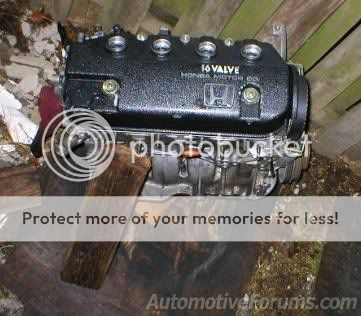
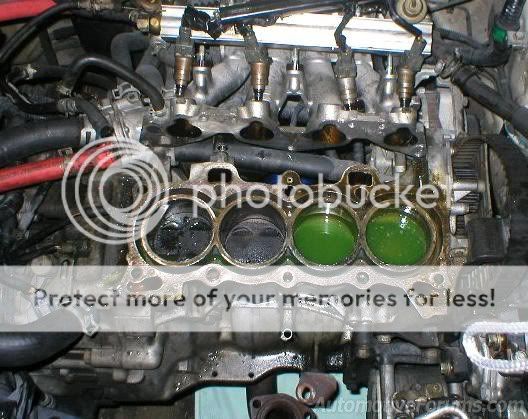
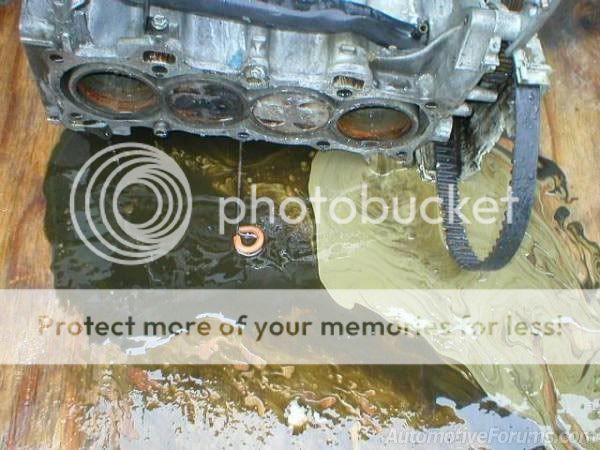
Some of you have seen these pics already, but here's a reason why sometimes it's not worth fixing a headgasket. Here's my old piece of **** D15B7 that blew 3 headgaskets in 1 year. Head resurfaced and all each time. Finally swapped engine and all is perfect. My first blown headgasket caused my radiator to litterally EXPLODE because of all the pressure that was going into it from the cylinders/bad headgasket.

Honda-Tech Member
Joined: Aug 2007
Posts: 631
Likes: 0
From: HELL, CA, US
i dont think you are suppose to drive the car with the radiator cap off to bleed the system.
What you do is have it parked....pop the hood...take off the radiator cap (car being cold or cold enough to where the pressure of the coolant wont burst in your face). Turn on your car (with rad cap off) and wait till fan turns on, let the fan cycle about 3-5 times. (bubbles should come out the coolant, u should be able to see it) u can also give it some gas with ur hand from the bay, just dont revv too much, keep it at like 3-4k RPM max. that should help take out the big bubbles.
Some correct me if im wrong. but thats how i read on how to do it and thats how i did it.
What you do is have it parked....pop the hood...take off the radiator cap (car being cold or cold enough to where the pressure of the coolant wont burst in your face). Turn on your car (with rad cap off) and wait till fan turns on, let the fan cycle about 3-5 times. (bubbles should come out the coolant, u should be able to see it) u can also give it some gas with ur hand from the bay, just dont revv too much, keep it at like 3-4k RPM max. that should help take out the big bubbles.
Some correct me if im wrong. but thats how i read on how to do it and thats how i did it.
Honda-Tech Member
Joined: Jan 2007
Posts: 1,421
Likes: 1
From: Tampa, FL
Re: (SinsEvil666)
<TABLE WIDTH="90%" CELLSPACING=0 CELLPADDING=0 ALIGN=CENTER><TR><TD>Quote, originally posted by SinsEvil666 »</TD></TR><TR><TD CLASS="quote">i dont think you are suppose to drive the car with the radiator cap off to bleed the system.
What you do is have it parked....pop the hood...take off the radiator cap (car being cold or cold enough to where the pressure of the coolant wont burst in your face). Turn on your car (with rad cap off) and wait till fan turns on, let the fan cycle about 3-5 times. (bubbles should come out the coolant, u should be able to see it) u can also give it some gas with ur hand from the bay, just dont revv too much, keep it at like 3-4k RPM max. that should help take out the big bubbles.
Some correct me if im wrong. but thats how i read on how to do it and thats how i did it.</TD></TR></TABLE>

Some engines have a air bleeder screw. My D15B7 in that pic did have an air bleeder screw but my new D16Y7 doesn't. Either way, the method you mentioned is correct.
What you do is have it parked....pop the hood...take off the radiator cap (car being cold or cold enough to where the pressure of the coolant wont burst in your face). Turn on your car (with rad cap off) and wait till fan turns on, let the fan cycle about 3-5 times. (bubbles should come out the coolant, u should be able to see it) u can also give it some gas with ur hand from the bay, just dont revv too much, keep it at like 3-4k RPM max. that should help take out the big bubbles.
Some correct me if im wrong. but thats how i read on how to do it and thats how i did it.</TD></TR></TABLE>
Some engines have a air bleeder screw. My D15B7 in that pic did have an air bleeder screw but my new D16Y7 doesn't. Either way, the method you mentioned is correct.
Seagull Management
Joined: Jun 2008
Posts: 15,150
Likes: 26
From: Miramichi, NB, Canada
Re: (sageuvagony)
<TABLE WIDTH="90%" CELLSPACING=0 CELLPADDING=0 ALIGN=CENTER><TR><TD>Quote, originally posted by sageuvagony »</TD></TR><TR><TD CLASS="quote">
Some engines have a air bleeder screw. My D15B7 in that pic did have an air bleeder screw but my new D16Y7 doesn't. Either way, the method you mentioned is correct.</TD></TR></TABLE>
Yeah, the 5th gen civics all had bleeder screws, the 6th gens don't. I have no idea why. Personally I liked having the bleeder screw.
Some engines have a air bleeder screw. My D15B7 in that pic did have an air bleeder screw but my new D16Y7 doesn't. Either way, the method you mentioned is correct.</TD></TR></TABLE>
Yeah, the 5th gen civics all had bleeder screws, the 6th gens don't. I have no idea why. Personally I liked having the bleeder screw.

Honda-Tech Member
Joined: Mar 2008
Posts: 2,199
Likes: 0
From: LS/VTEC SuCkS TX, USA
since no body else said it i will the best way to determine if you have ablown headgasket is to compression test the motor if your compression is fine the its not blown if its low on 2 cylinders next to each other then it is defenitely blown that aside. check everything else first they are all cheaper than a headgasket. Also is white smoke present in your exhuast
Honda-Tech Member
Joined: May 2008
Posts: 531
Likes: 0
From: the sticks, ny
Re: engine overheat....head gasket? PLLLLLSSSSS help.!!! (hondaStarter)
hey i didnt mean drive it with no cap, i meant let it sit there and idle until it warms up. and if you have replaced the cap, thermostat, and headgasket then im betting u have a warped head or something causing the headgasket to leak internally. did u check for head warpage with a precision straight edge when replacing the head gasket?
Thread Starter
Honda-Tech Member
Joined: Aug 2008
Posts: 74
Likes: 1
From: myrtle beach, SC, USA
thanks for all the response guys.. it really helped me.. and i will try the compression test..
But finally i fround the problem.. its the radiator itself.. it is clogged. i found out when i get the radiator from my other honda civic and put it in my EX. It worked!!
After 20 minutes of driving, the coolant doesnt boil anymore and the coolant level did not change.. and the temperature stays normal.. The radiator really was the problem, i think because it can no longer cool down the coolant.
thanks guys
But finally i fround the problem.. its the radiator itself.. it is clogged. i found out when i get the radiator from my other honda civic and put it in my EX. It worked!!
After 20 minutes of driving, the coolant doesnt boil anymore and the coolant level did not change.. and the temperature stays normal.. The radiator really was the problem, i think because it can no longer cool down the coolant.
thanks guys

Thread
Thread Starter
Forum
Replies
Last Post
philkehn
Honda Civic / Del Sol (1992 - 2000)
30
Jun 17, 2010 02:39 AM
94ls
Tech / Misc
5
May 17, 2009 03:23 PM
