


Installed ATE Super Blue... Questions...


Thread Starter
B*a*n*n*e*d
Joined: Sep 2005
Posts: 6,303
Likes: 1
From: Wilmington, NC
 Installed ATE Super Blue... Questions...
Well, we installed Russell's brake lines, and ATE Super Blue brake fluid tonight... Meh... What's going on:
- Pedal is INCREDIBLY soft initially, but grabs great at full load. It has little to no response for the first 50% though. We bled the brakes twice, the first time, it did have some considerable amount of air, the second time, none.
Is there a particular procedure for bleeding? Is there a special way to do it with ABS?
The entire system was dry when the brake lines were removed (i.e. The master cylinder went dry), does this mean we will have to remove the master cylinder to bench bleed it, and refill the brake system/bleed again?
This was my first shot at this, I'm sure I messed up.
Any input is greatly appreciated.
- Pedal is INCREDIBLY soft initially, but grabs great at full load. It has little to no response for the first 50% though. We bled the brakes twice, the first time, it did have some considerable amount of air, the second time, none.
Is there a particular procedure for bleeding? Is there a special way to do it with ABS?
The entire system was dry when the brake lines were removed (i.e. The master cylinder went dry), does this mean we will have to remove the master cylinder to bench bleed it, and refill the brake system/bleed again?
This was my first shot at this, I'm sure I messed up.
Any input is greatly appreciated.

Senior Member
Joined: Aug 2001
Posts: 18,261
Likes: 0
From: USA
Re: Installed ATE Super Blue... Questions... (GO-FIGHT-KILL)
For some reason it takes time with the ATE... Why I dunno
drive it for a day, bleed. drive it again for a day and bleed again repeat as nessary.
When I did mine years ago it took two weeks to get the pedal just right. be patient and don't get fustrated.
drive it for a day, bleed. drive it again for a day and bleed again repeat as nessary.
When I did mine years ago it took two weeks to get the pedal just right. be patient and don't get fustrated.

Honda-Tech Member
Joined: Dec 2001
Posts: 18,151
Likes: 2
From: Hollywood Babylon
some ppl prefer different ways of bleeding the brakes. i think the manual says to bleed the farthest caliper from the master cyl, and work your way to the closest caliper to the master cyl.
one thing i found helpful is make sure the bleed hose is IMMERSED in fluid, that way you will avoid pulling any air back into the system if you dont close the bleeder in time when pulling the pedal back up. if its immersed it will only pull in fluid and not air and you will also be able to see any air bubbles leaving the system. close the bleeder just before the bottom of the pedal stroke, and dont over stroke the pedal (dont floor it as hard as you can) as it can damage the master cyl. make sure to keep the master cyl pretty full to avoid sucking in air. if the system was dry, youll have to be very thorough and it will take awhile to get it going. HTH
one thing i found helpful is make sure the bleed hose is IMMERSED in fluid, that way you will avoid pulling any air back into the system if you dont close the bleeder in time when pulling the pedal back up. if its immersed it will only pull in fluid and not air and you will also be able to see any air bubbles leaving the system. close the bleeder just before the bottom of the pedal stroke, and dont over stroke the pedal (dont floor it as hard as you can) as it can damage the master cyl. make sure to keep the master cyl pretty full to avoid sucking in air. if the system was dry, youll have to be very thorough and it will take awhile to get it going. HTH
Thread Starter
B*a*n*n*e*d
Joined: Sep 2005
Posts: 6,303
Likes: 1
From: Wilmington, NC
Cool, so I should just keep driving on it, and bleeding every day or so? Ultimately, all that can be wrong, is air in the system, correct?
I just don't want to waste time doing all of this, if I did it incorrectly to begin with.
I just don't want to waste time doing all of this, if I did it incorrectly to begin with.

Honda-Tech Member
Joined: Aug 2004
Posts: 12,098
Likes: 1
From: blavica
Start from the farthest caliper away and bleed there first, then the next farthest and so on. I'd be willing to bet there is still some air in there.
Make sure someone is near the resovior (sp) and don't let the fluid get low (and let more air into the system)
Edit: As for the proceedure...
One person in the car, one opening and closing the bleeder. When the bleeder is open, push the pedal all the way down to the floor, when you friend closes the bleeder, only then let go of the pedal. Do this 3-4 times per caliper (or more if the air keeps coming) and from the farthest to the closest.
Make sure someone is near the resovior (sp) and don't let the fluid get low (and let more air into the system)
Edit: As for the proceedure...
One person in the car, one opening and closing the bleeder. When the bleeder is open, push the pedal all the way down to the floor, when you friend closes the bleeder, only then let go of the pedal. Do this 3-4 times per caliper (or more if the air keeps coming) and from the farthest to the closest.

Honda-Tech Member
Joined: Jan 2003
Posts: 974
Likes: 0
From: Seattle, WA, USA
Re: Installed ATE Super Blue... Questions... (GO-FIGHT-KILL)
<TABLE WIDTH="90%" CELLSPACING=0 CELLPADDING=0 ALIGN=CENTER><TR><TD>Quote, originally posted by GO-FIGHT-KILL »</TD></TR><TR><TD CLASS="quote"> does this mean we will have to remove the master cylinder to bench bleed it, and refill the brake system/bleed again?
</TD></TR></TABLE>
I had this happen to me, and I had air trapped in the MC. I bench bled my MC, and problem was gone. I was told to never leave the MC dry.
</TD></TR></TABLE>
I had this happen to me, and I had air trapped in the MC. I bench bled my MC, and problem was gone. I was told to never leave the MC dry.
Trending Topics


Honda-Tech Member
Joined: Feb 2003
Posts: 1,141
Likes: 2
From: Brownsburg, IN, United States
Re: (RTW DC2R)
<TABLE WIDTH="90%" CELLSPACING=0 CELLPADDING=0 ALIGN=CENTER><TR><TD>Quote, originally posted by RTW DC2R »</TD></TR><TR><TD CLASS="quote">
one thing i found helpful is make sure the bleed hose is IMMERSED in fluid, that way you will avoid pulling any air back into the system if you dont close the bleeder in time when pulling the pedal back up. if its immersed it will only pull in fluid and not air and you will also be able to see any air bubbles leaving the system. close the bleeder just before the bottom of the pedal stroke, and dont over stroke the pedal (dont floor it as hard as you can) as it can damage the master cyl. make sure to keep the master cyl pretty full to avoid sucking in air. if the system was dry, youll have to be very thorough and it will take awhile to get it going. HTH</TD></TR></TABLE>
Your saying you close the bleeder screw everytime you make one cycle with the pedal?
I just put some water or whatever liquid thats convenient, IE old brake fluid. in a bottle. Make sure the hose is in liquid. This makes its eaiser for the master cylinder to pull new brake fluid through the reservoir instead of pulling air back up through the line. Which is what RTW DC2 stated
I've honestly let my system run dry (rebuilt both front calps, and just let the fluid drain into some pans) and havn't had any issues bleeding it after this.
one thing i found helpful is make sure the bleed hose is IMMERSED in fluid, that way you will avoid pulling any air back into the system if you dont close the bleeder in time when pulling the pedal back up. if its immersed it will only pull in fluid and not air and you will also be able to see any air bubbles leaving the system. close the bleeder just before the bottom of the pedal stroke, and dont over stroke the pedal (dont floor it as hard as you can) as it can damage the master cyl. make sure to keep the master cyl pretty full to avoid sucking in air. if the system was dry, youll have to be very thorough and it will take awhile to get it going. HTH</TD></TR></TABLE>
Your saying you close the bleeder screw everytime you make one cycle with the pedal?
I just put some water or whatever liquid thats convenient, IE old brake fluid. in a bottle. Make sure the hose is in liquid. This makes its eaiser for the master cylinder to pull new brake fluid through the reservoir instead of pulling air back up through the line. Which is what RTW DC2 stated
I've honestly let my system run dry (rebuilt both front calps, and just let the fluid drain into some pans) and havn't had any issues bleeding it after this.

Joined: Mar 2002
Posts: 230
Likes: 0
Re: Installed ATE Super Blue... Questions... (GO-FIGHT-KILL)
How was the pedal after bleeding, before the car was cranked?
Reason I ask is because I am in the same boat. After my car was stolen, front calipers removed, and it sat dry for a year, I am having some issues. After the first bleeding (1 liter of ATE), the pedal was as strong as it could be. Once I finally got the car cranked, the pedal went to the floor and was soft. I not sure if there is air in the ABS or I am having MC problems.
One man bleeding method I am usually forced to do (everybody disappears as soon as I start working on my car):
-Get a bleeder gun (like $30 years ago)
-Hook the gun up so that it sucks fluid out of the bottle
-Pump it several times until the gun's exit hose only has fluid in it (no air bubbles)
-Attach the gun's exit hose up to the caliper bleeder screw
-Loosen the bleeder screw
-Siphon (I use an $0.99 bottle pump, but a turkey baster or even a hose pipe could work) fluid out of the master cylinder(not completely dry, but get it low)
-Do a lot of pumps with the gun (I can do 12 before the MC is full)
-Once the MC fills up, siphon it back down
-Tighten the bleeder screw, move on to the next caliper and repeat
The idea is that you are forcing clean brake fluid(with no air bubbles) from the
caliper, through the brake lines, and up into the master cylinder.
If I remember correctly, the Helms suggests you bleed int he following order:
1) Passenger side rear
2) Driver side front
3) Driver side rear
4) Passenger side front
Reason I ask is because I am in the same boat. After my car was stolen, front calipers removed, and it sat dry for a year, I am having some issues. After the first bleeding (1 liter of ATE), the pedal was as strong as it could be. Once I finally got the car cranked, the pedal went to the floor and was soft. I not sure if there is air in the ABS or I am having MC problems.
One man bleeding method I am usually forced to do (everybody disappears as soon as I start working on my car):
-Get a bleeder gun (like $30 years ago)
-Hook the gun up so that it sucks fluid out of the bottle
-Pump it several times until the gun's exit hose only has fluid in it (no air bubbles)
-Attach the gun's exit hose up to the caliper bleeder screw
-Loosen the bleeder screw
-Siphon (I use an $0.99 bottle pump, but a turkey baster or even a hose pipe could work) fluid out of the master cylinder(not completely dry, but get it low)
-Do a lot of pumps with the gun (I can do 12 before the MC is full)
-Once the MC fills up, siphon it back down
-Tighten the bleeder screw, move on to the next caliper and repeat
The idea is that you are forcing clean brake fluid(with no air bubbles) from the
caliper, through the brake lines, and up into the master cylinder.
If I remember correctly, the Helms suggests you bleed int he following order:
1) Passenger side rear
2) Driver side front
3) Driver side rear
4) Passenger side front
Thread Starter
B*a*n*n*e*d
Joined: Sep 2005
Posts: 6,303
Likes: 1
From: Wilmington, NC
My pedal felt VERY stiff when the car was off... But as soon as I started driving, it was soft as could be.
The damn thing stops hard past 50% pedal pressure, but the first 50%, there is little to nothing.
The damn thing stops hard past 50% pedal pressure, but the first 50%, there is little to nothing.

 Re: (Dave_B)
<TABLE WIDTH="90%" CELLSPACING=0 CELLPADDING=0 ALIGN=CENTER><TR><TD>Quote, originally posted by Dave_B »</TD></TR><TR><TD CLASS="quote">Start from the farthest caliper away and bleed there first, then the next farthest and so on. I'd be willing to bet there is still some air in there.
Make sure someone is near the resovior (sp) and don't let the fluid get low (and let more air into the system)
Edit: As for the proceedure...
One person in the car, one opening and closing the bleeder. When the bleeder is open, push the pedal all the way down to the floor, when you friend closes the bleeder, only then let go of the pedal. Do this 3-4 times per caliper (or more if the air keeps coming) and from the farthest to the closest.</TD></TR></TABLE>What he said Remember, never let the resovior run low during the bleeding process. If you do let it run too low, air get back into the system and you'll find yourself bleeding all over again.
Make sure someone is near the resovior (sp) and don't let the fluid get low (and let more air into the system)
Edit: As for the proceedure...
One person in the car, one opening and closing the bleeder. When the bleeder is open, push the pedal all the way down to the floor, when you friend closes the bleeder, only then let go of the pedal. Do this 3-4 times per caliper (or more if the air keeps coming) and from the farthest to the closest.</TD></TR></TABLE>What he said
Remember, never let the resovior run low during the bleeding process. If you do let it run too low, air get back into the system and you'll find yourself bleeding all over again.

Solbros Owns Me
Joined: Jun 2002
Posts: 14,462
Likes: 6
From: Vancouver, WA, USA
Re: (CW-ITR)
don't flush brakes without a Vacula
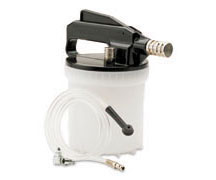
It sucks the fluid from the lines. After tightening the bleeder screw after the last bleed- wait a few seconds, then open it again to gravity bleed the few bubbles that collect. You will almost ALWAYS get a few bubbles out after this.
I have never had a problem bleeding brakes- you just need the proper tool
It sucks the fluid from the lines. After tightening the bleeder screw after the last bleed- wait a few seconds, then open it again to gravity bleed the few bubbles that collect. You will almost ALWAYS get a few bubbles out after this.
I have never had a problem bleeding brakes- you just need the proper tool

Thread Starter
B*a*n*n*e*d
Joined: Sep 2005
Posts: 6,303
Likes: 1
From: Wilmington, NC
This is getting rather annoying... Bled my brakes again the normal way, no air, kept having to add fluid.
So we used the Motive pressure bleeder. And immediately, we got some significant air from the system. So we proceded to sequence all the way around the car over and over... Not a damn bit after the initial batch of air.
There is no air in the system.
The brakes feel no different, and I'm on the verge of flushing this **** out, and going with something else. I'm not staying late after work every day, to bleed my brakes in hopes of the car actually braking like it's supposed it. That's bullshit.
So we used the Motive pressure bleeder. And immediately, we got some significant air from the system. So we proceded to sequence all the way around the car over and over... Not a damn bit after the initial batch of air.
There is no air in the system.
The brakes feel no different, and I'm on the verge of flushing this **** out, and going with something else. I'm not staying late after work every day, to bleed my brakes in hopes of the car actually braking like it's supposed it. That's bullshit.

Honda-Tech Member
Joined: Aug 2003
Posts: 2,123
Likes: 0
From: Type R KING, STILL
Re: (GO-FIGHT-KILL)
Just give it a few days. I have bleed over 5 cars with this stuff and all different results from the same way of performing the flush. I say wait it out and before you know it it will be back to the way it was. all 5 cars (some mushy some real tight) all ended up feeling pretty close after a few days of regular street daily driving.

Honda-Tech Member
Joined: Jul 2002
Posts: 5,122
Likes: 1
From: Faaar East Coast, USA
Re: (DVC2008)
I never got my 97 hatch brakes to feel right after using this ****. I did the rsx front and rear brakes with the ate superblue and bled 10 times at least, never a firm pedal. I say try a different fluid

Honda-Tech Member
Joined: Apr 2000
Posts: 2,051
Likes: 0
From: Kansas City
GO-FIGHT-KILL
I understand your frustration of fighting a soft pedal, we've all been there and it's not fun. But fluids don't compress (well they do compress to an extent, but not enough to argue the point when talking about brakes). ATE is acting like a fluid should, it's not causing your problem.
Did you bench bleed the mc? You won't necessarily get air out of the mc just by bleeding at the calipers. How confident are you that the new brake line fittings are tight? Are there any signs of leaks at the fittings? Have you ever rebuilt your caliper seals?
When you bleed your brakes the "normal way," what do you mean by that? Do you use the 2 man system? Do you immerse the hose in brake fluid? Do you loop the line before immersing in brake fluid? Who knows, maybe there's a problem in your method. Could you be cracking the bleed valves open too far, that air is getting past the threads? Also, if the hose that fits on each bleed valve doesn't create an extremely tight fit, air can travel up the valve.
Did you bench bleed the mc? You won't necessarily get air out of the mc just by bleeding at the calipers. How confident are you that the new brake line fittings are tight? Are there any signs of leaks at the fittings? Have you ever rebuilt your caliper seals?
When you bleed your brakes the "normal way," what do you mean by that? Do you use the 2 man system? Do you immerse the hose in brake fluid? Do you loop the line before immersing in brake fluid? Who knows, maybe there's a problem in your method. Could you be cracking the bleed valves open too far, that air is getting past the threads? Also, if the hose that fits on each bleed valve doesn't create an extremely tight fit, air can travel up the valve.
Senior Member
Joined: Aug 2001
Posts: 18,261
Likes: 0
From: USA
Re: (GO-FIGHT-KILL)
<TABLE WIDTH="90%" CELLSPACING=0 CELLPADDING=0 ALIGN=CENTER><TR><TD>Quote, originally posted by GO-FIGHT-KILL »</TD></TR><TR><TD CLASS="quote">This is getting rather annoying... </TD></TR></TABLE>
What did I say before,
<TABLE WIDTH="90%" CELLSPACING=0 CELLPADDING=0 ALIGN=CENTER><TR><TD>Quote, originally posted by Bbasso »</TD></TR><TR><TD CLASS="quote">
When I did mine years ago it took two weeks to get the pedal just right. be patient and don't get fustrated.
</TD></TR></TABLE>
Once it's right, you will be happy worth the work.
What did I say before,
<TABLE WIDTH="90%" CELLSPACING=0 CELLPADDING=0 ALIGN=CENTER><TR><TD>Quote, originally posted by Bbasso »</TD></TR><TR><TD CLASS="quote">
When I did mine years ago it took two weeks to get the pedal just right. be patient and don't get fustrated.
</TD></TR></TABLE>
Once it's right, you will be happy worth the work.
Honda-Tech Member
Joined: Dec 2001
Posts: 18,151
Likes: 2
From: Hollywood Babylon
Re: (GO-FIGHT-KILL)
<TABLE WIDTH="90%" CELLSPACING=0 CELLPADDING=0 ALIGN=CENTER><TR><TD>Quote, originally posted by GO-FIGHT-KILL »</TD></TR><TR><TD CLASS="quote">This is getting rather annoying... Bled my brakes again the normal way, no air, kept having to add fluid.
So we used the Motive pressure bleeder. And immediately, we got some significant air from the system. So we proceded to sequence all the way around the car over and over... Not a damn bit after the initial batch of air.
There is no air in the system.
The brakes feel no different, and I'm on the verge of flushing this **** out, and going with something else. I'm not staying late after work every day, to bleed my brakes in hopes of the car actually braking like it's supposed it. That's bullshit.</TD></TR></TABLE>
its NOT the fluid. either something is wrong, or your bleeding skillz are the suck
So we used the Motive pressure bleeder. And immediately, we got some significant air from the system. So we proceded to sequence all the way around the car over and over... Not a damn bit after the initial batch of air.
There is no air in the system.
The brakes feel no different, and I'm on the verge of flushing this **** out, and going with something else. I'm not staying late after work every day, to bleed my brakes in hopes of the car actually braking like it's supposed it. That's bullshit.</TD></TR></TABLE>
its NOT the fluid. either something is wrong, or your bleeding skillz are the suck

Honda-Tech Member
Joined: Mar 2001
Posts: 8,119
Likes: 0
From: WV, USA
Re: (RTW DC2R)
<TABLE WIDTH="90%" CELLSPACING=0 CELLPADDING=0 ALIGN=CENTER><TR><TD>Quote, originally posted by RTW DC2R »</TD></TR><TR><TD CLASS="quote">
its NOT the fluid. either something is wrong, or your bleeding skillz are the suck</TD></TR></TABLE>
yessir. Explain "the normal way" and we'll help you from there.
its NOT the fluid. either something is wrong, or your bleeding skillz are the suck
</TD></TR></TABLE>yessir. Explain "the normal way" and we'll help you from there.

Honda-Tech Member
Joined: Jun 2002
Posts: 9,925
Likes: 0
From: Milwaukee, WI, USA
Re: (RTW DC2R)
<TABLE WIDTH="90%" CELLSPACING=0 CELLPADDING=0 ALIGN=CENTER><TR><TD>Quote, originally posted by RTW DC2R »</TD></TR><TR><TD CLASS="quote">
its NOT the fluid. either something is wrong, or your bleeding skillz are the suck</TD></TR></TABLE>
Cosigned.
ATE Superblue makes your pedal soft about as much as Jessica Simpson's bewbs make me limp.
Maybe you screwed up the master by letting it go dry?
its NOT the fluid. either something is wrong, or your bleeding skillz are the suck
</TD></TR></TABLE>Cosigned.
ATE Superblue makes your pedal soft about as much as Jessica Simpson's bewbs make me limp.
Maybe you screwed up the master by letting it go dry?

Banned
Joined: Jul 2006
Posts: 2,996
Likes: 0
From: United States of Texas, USA
Re: (Erik95LS)
<TABLE WIDTH="90%" CELLSPACING=0 CELLPADDING=0 ALIGN=CENTER><TR><TD>Quote, originally posted by RTW DC2R »</TD></TR><TR><TD CLASS="quote">its NOT the fluid. either something is wrong, or your bleeding skillz are the suck </TD></TR></TABLE>
<TABLE WIDTH="90%" CELLSPACING=0 CELLPADDING=0 ALIGN=CENTER><TR><TD>Quote, originally posted by Erik95LS »</TD></TR><TR><TD CLASS="quote">yessir. Explain "the normal way" and we'll help you from there.</TD></TR></TABLE>
Yea, more info.
ABS? You said MC was dry, if ABS module was also, you got a hellava uphill battle. Hang in there.
<TABLE WIDTH="90%" CELLSPACING=0 CELLPADDING=0 ALIGN=CENTER><TR><TD>Quote, originally posted by Erik95LS »</TD></TR><TR><TD CLASS="quote">yessir. Explain "the normal way" and we'll help you from there.</TD></TR></TABLE>
Yea, more info.
ABS? You said MC was dry, if ABS module was also, you got a hellava uphill battle. Hang in there.
Thread Starter
B*a*n*n*e*d
Joined: Sep 2005
Posts: 6,303
Likes: 1
From: Wilmington, NC
'Normal' bleeding method:
- Two man system
- Furthest caliper away from the master cylinder
- Bleed line is submerged in fluid in the bleeder bottle
- 'Pump... Hold it'
- Open bleeder enough to allow fluid out
- Closes bleeder
I'm just going to bench bleed the master cylinder. Hopefully that helps.
- Two man system
- Furthest caliper away from the master cylinder
- Bleed line is submerged in fluid in the bleeder bottle
- 'Pump... Hold it'
- Open bleeder enough to allow fluid out
- Closes bleeder
I'm just going to bench bleed the master cylinder. Hopefully that helps.