


h22 secondaires open or open only with vtec


Thread Starter
Joined: Feb 2007
Posts: 15
Likes: 0
From: mcdonough, ga, 30252
 h22 secondaires open or open only with vtec
on a mostly stock setup ecept bolt ons, will it give more power to leave them hooked as stock to come on with vtec, or open at all times, only people who know about h22 first hand answer

Honda-Tech Member
Joined: May 2006
Posts: 1,989
Likes: 0
From: upstate NY
Re: h22 secondaires open or open only with vtec (jim100)
you are asking one of those questions with no clear answer. the dual runner manifold is designed to give you better throttle response at lower RPM's. some people claim better performance from removing the butterflies, but thats counterintuitive.
 Re: h22 secondaires open or open only with vtec (bluedlude)
the secondaries on b18c1's work with vtec to give a smooth torque curve throughout the entire rpm range. when you leave them open at all times you typically lose low and mid range power, much like you would if you were using a single stage manifold without bigger cams and a raised vtec. i'd assume the h22's work the same way.


moderator emeritus
Joined: Oct 2002
Posts: 16,357
Likes: 6
From: Cantonment, FL
Re: (alphajesse)
<TABLE WIDTH="90%" CELLSPACING=0 CELLPADDING=0 ALIGN=CENTER><TR><TD>Quote, originally posted by alphajesse »</TD></TR><TR><TD CLASS="quote">A stock H22 usually does best with the IAB opening in the low-mid 4k range. With VTEC just a little bit higher.
Open all the time gains nothing and ruins low RPM performance.</TD></TR></TABLE>
meh, i never felt any negative effects from it.....after tuning atleast.
Open all the time gains nothing and ruins low RPM performance.</TD></TR></TABLE>
meh, i never felt any negative effects from it.....after tuning atleast.
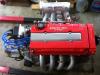
Honda-Tech Member

Joined: Apr 2003
Posts: 6,919
Likes: 5
From: In the garage
Re: h22 secondaires open or open only with vtec (bluedlude)
<TABLE WIDTH="90%" CELLSPACING=0 CELLPADDING=0 ALIGN=CENTER><TR><TD>Quote, originally posted by bluedlude »</TD></TR><TR><TD CLASS="quote"> the dual runner manifold is designed to give you better throttle response at lower RPM's. </TD></TR></TABLE>
The dual stage runner design has nothing to do with throttle response.
The dual stage runner design has nothing to do with throttle response.
Trending Topics
Thread Starter
Joined: Feb 2007
Posts: 15
Likes: 0
From: mcdonough, ga, 30252
Re: h22 secondaires open or open only with vtec (bluedlude)
well i had them open all the tim since install a month ago and was slow at the shop and hooked them up the way they were factory and noticed a little more power and responce in the low end. i have a friend with gst swap and he told me to leave them open all the time that was why i was asking, but i think i found the answer thanks
moderator emeritus
Joined: Oct 2002
Posts: 16,357
Likes: 6
From: Cantonment, FL
Re: h22 secondaires open or open only with vtec (jim100)
you cant have them open all the time without tuning them. Gotta add more fuel to make up for the larger volume of air traveling through the IM. Just taking them out or removing them without tuning will result in a loss of power down low.
Honda-Tech Member
Joined: Apr 2003
Posts: 6,919
Likes: 5
From: In the garage
Re: h22 secondaires open or open only with vtec (bluedlude)
<TABLE WIDTH="90%" CELLSPACING=0 CELLPADDING=0 ALIGN=CENTER><TR><TD>Quote, originally posted by bluedlude »</TD></TR><TR><TD CLASS="quote">are you kidding me!!</TD></TR></TABLE>
I don't know how to take this comment. Throttle response would be dictated more by the amount of airflow the manifold/throttle body can move. The throttle body is more in control of this in this case then the length of the intake runners. The purpose of the dual stage intake is clearly explained by Honda as providing a "Best of both worlds" torque curve. Good around town low end torque, good high rpm power.
I don't know how to take this comment. Throttle response would be dictated more by the amount of airflow the manifold/throttle body can move. The throttle body is more in control of this in this case then the length of the intake runners. The purpose of the dual stage intake is clearly explained by Honda as providing a "Best of both worlds" torque curve. Good around town low end torque, good high rpm power.
Honda-Tech Member
Joined: Apr 2003
Posts: 6,919
Likes: 5
From: In the garage
Re: (alphajesse)
<TABLE WIDTH="90%" CELLSPACING=0 CELLPADDING=0 ALIGN=CENTER><TR><TD>Quote, originally posted by alphajesse »</TD></TR><TR><TD CLASS="quote">Even tuning the fact that they might be open all the time will not make up for the reduced intake velocity. If tuning could fix that, Honda wouldn't have bothered with the expense of engineering the IAB system.</TD></TR></TABLE>
The IAB system wasn't designed with performance in mind... Do you see any of the "race" type engines with this setup? Why people bother trying to disable it, wire the crap closed/open, etc is beyond me.
The IAB system wasn't designed with performance in mind... Do you see any of the "race" type engines with this setup? Why people bother trying to disable it, wire the crap closed/open, etc is beyond me.
Honda-Tech Member
Joined: May 2006
Posts: 1,989
Likes: 0
From: upstate NY
Re: (Hybrid93Eg)
<TABLE WIDTH="90%" CELLSPACING=0 CELLPADDING=0 ALIGN=CENTER><TR><TD>Quote, originally posted by Hybrid93Eg »</TD></TR><TR><TD CLASS="quote">The IAB system wasn't designed with performance in mind ... Do you see any of the "race" type engines with this setup? </TD></TR></TABLE>
it wasnt designed for performance, it was designed for throttle response. why dont race cars have it? how often is a track car below 5000RPM?
<TABLE WIDTH="90%" CELLSPACING=0 CELLPADDING=0 ALIGN=CENTER><TR><TD>Quote, originally posted by Hybrid93Eg »</TD></TR><TR><TD CLASS="quote">Why people bother trying to disable it, wire the crap closed/open, etc is beyond me.</TD></TR></TABLE>
agreed
it wasnt designed for performance, it was designed for throttle response. why dont race cars have it? how often is a track car below 5000RPM?
<TABLE WIDTH="90%" CELLSPACING=0 CELLPADDING=0 ALIGN=CENTER><TR><TD>Quote, originally posted by Hybrid93Eg »</TD></TR><TR><TD CLASS="quote">Why people bother trying to disable it, wire the crap closed/open, etc is beyond me.</TD></TR></TABLE>
agreed
Honda-Tech Member
Joined: Apr 2003
Posts: 6,919
Likes: 5
From: In the garage
Re: (bluedlude)
<TABLE WIDTH="90%" CELLSPACING=0 CELLPADDING=0 ALIGN=CENTER><TR><TD>Quote, originally posted by bluedlude »</TD></TR><TR><TD CLASS="quote">
it wasnt designed for performance, it was designed for throttle response. why dont race cars have it? how often is a track car below 5000RPM?
</TD></TR></TABLE>
No. Explain to me how the IABS have anything to do with throttle response..
it wasnt designed for performance, it was designed for throttle response. why dont race cars have it? how often is a track car below 5000RPM?
</TD></TR></TABLE>
No. Explain to me how the IABS have anything to do with throttle response..
Honda-Tech Member
Joined: May 2006
Posts: 1,989
Likes: 0
From: upstate NY
Re: (Hybrid93Eg)
First things first, were comparing the same exact manifold, one with the butterflies opening, and one with the plates removed, both with the same size TB. at low RPM your engine will take more time to fill the runners and plenum, hence the IAB's. they decrease the volume at lower RPM and increase it at higher RPM.
if they arent made for improving throttle response then what are they for?
if they arent made for improving throttle response then what are they for?
Honda-Tech Member
Joined: Apr 2003
Posts: 6,919
Likes: 5
From: In the garage
Re: (bluedlude)
<TABLE WIDTH="90%" CELLSPACING=0 CELLPADDING=0 ALIGN=CENTER><TR><TD>Quote, originally posted by bluedlude »</TD></TR><TR><TD CLASS="quote">First things first, were comparing the same exact manifold, one with the butterflies opening, and one with the plates removed, both with the same size TB. at low RPM your engine will take more time to fill the runners and plenum, hence the IAB's. they decrease the volume at lower RPM and increase it at higher RPM.
if they arent made for improving throttle response then what are they for?</TD></TR></TABLE>
This is what I like. People who stick so firmly to thier opinions, yet they demonstrate no understanding of how things actually work.
First, you need to understand what an IAB manifold is. You have two "paths" the air can take (known as runners). One set of runners is longer then the other. Whats the purpose of different runner lengths? Ever look at a B20 manifold? What do you notice? There is a reason its called the "giraffe" and thats because its so tall and long. Now, go look at a type r intake manifold. Notice how short the runners are? Short and fat, right? ok. Now, your theroy says that larger plenum = longer to fill and therfore kills throttle response. You contradicted yourself and didn't even know it. Take a look at the following...
1). The IABS are closed by "Default". Close = longer runners.
2). The IABS open at higher rpm. Determined by the ECU.
3). Open IABS = shorter intake runners.
4). Shorter intake runners = less volume.
5). Longer intake runner = more volume.
So, if your theroy was even remotely correct, why would longer runners be BETTER for lower rpm operation? What would make then superior over the shorter runners? See where this is going?
The whole purpose for the design of IABS was already explained. Apparently you didn't pay attention. They allow TWO intake runner paths. One for low rpm, one for high rpm. The idea behind it was simple, optimize low rpm operation and have the ability to shorten the runners for higher end rpm operation. Same idea in essence as the purpose behind vtec. Had nothing to do with, and still doesn't have anything to do with, throttle response.
if they arent made for improving throttle response then what are they for?</TD></TR></TABLE>
This is what I like. People who stick so firmly to thier opinions, yet they demonstrate no understanding of how things actually work.
First, you need to understand what an IAB manifold is. You have two "paths" the air can take (known as runners). One set of runners is longer then the other. Whats the purpose of different runner lengths? Ever look at a B20 manifold? What do you notice? There is a reason its called the "giraffe" and thats because its so tall and long. Now, go look at a type r intake manifold. Notice how short the runners are? Short and fat, right? ok. Now, your theroy says that larger plenum = longer to fill and therfore kills throttle response. You contradicted yourself and didn't even know it. Take a look at the following...
1). The IABS are closed by "Default". Close = longer runners.
2). The IABS open at higher rpm. Determined by the ECU.
3). Open IABS = shorter intake runners.
4). Shorter intake runners = less volume.
5). Longer intake runner = more volume.
So, if your theroy was even remotely correct, why would longer runners be BETTER for lower rpm operation? What would make then superior over the shorter runners? See where this is going?
The whole purpose for the design of IABS was already explained. Apparently you didn't pay attention. They allow TWO intake runner paths. One for low rpm, one for high rpm. The idea behind it was simple, optimize low rpm operation and have the ability to shorten the runners for higher end rpm operation. Same idea in essence as the purpose behind vtec. Had nothing to do with, and still doesn't have anything to do with, throttle response.
Honda-Tech Member
Joined: May 2006
Posts: 1,989
Likes: 0
From: upstate NY
Re: (Hybrid93Eg)
<TABLE WIDTH="90%" CELLSPACING=0 CELLPADDING=0 ALIGN=CENTER><TR><TD>Quote, originally posted by Hybrid93Eg »</TD></TR><TR><TD CLASS="quote">
1). The IABS are closed by "Default". Close = longer runners.
2). The IABS open at higher rpm. Determined by the ECU.
3). Open IABS = shorter intake runners.
4). Shorter intake runners = less volume.
5). Longer intake runner = more volume.
</TD></TR></TABLE>
*singing* "one of these things, is not like the other. one of these things does not belong..."
1). The IABS are closed by "Default". Close = longer runners.
2). The IABS open at higher rpm. Determined by the ECU.
3). Open IABS = shorter intake runners.
4). Shorter intake runners = less volume.
5). Longer intake runner = more volume.
</TD></TR></TABLE>
*singing* "one of these things, is not like the other. one of these things does not belong..."

Junior Member
Joined: Nov 2006
Posts: 417
Likes: 0
From: san diego, ca, usa
Re: (bluedlude)
usually on a stock h22 if you leave them open you will notice a lack of power at low end because the air fuel ratios are already programmed on the ecu for when they open it trows more fuel you should have a problem just leaving them open and tuning it like that
Honda-Tech Member
Joined: Apr 2003
Posts: 6,919
Likes: 5
From: In the garage
Re: (miguel91911)
<TABLE WIDTH="90%" CELLSPACING=0 CELLPADDING=0 ALIGN=CENTER><TR><TD>Quote, originally posted by miguel91911 »</TD></TR><TR><TD CLASS="quote">usually on a stock h22 if you leave them open you will notice a lack of power at low end because the air fuel ratios are already programmed on the ecu for when they open it trows more fuel you should have a problem just leaving them open and tuning it like that</TD></TR></TABLE>
Apparently you have never looked at a stock map and have no understanding of what it does.
There is no "additional fuel" added for when the IABS open up. Its progressive, just like the rest of the map.
The ECU has no "air fuel ratios" programmed in it. Nothing of the sort. It has fuel tables, and ignition tables. It doesn't care about air fuel ratios except for maintaining fuel mileage. Under WOT, its going to do nothing for mainting air/fuel ratios. It reads the maps and thats it. Hence the need to "tune" the ECU when major modifications are performed. Even slightly modifications such as I/H/E can benefit from tuning.
Apparently you have never looked at a stock map and have no understanding of what it does.
There is no "additional fuel" added for when the IABS open up. Its progressive, just like the rest of the map.
The ECU has no "air fuel ratios" programmed in it. Nothing of the sort. It has fuel tables, and ignition tables. It doesn't care about air fuel ratios except for maintaining fuel mileage. Under WOT, its going to do nothing for mainting air/fuel ratios. It reads the maps and thats it. Hence the need to "tune" the ECU when major modifications are performed. Even slightly modifications such as I/H/E can benefit from tuning.

Honda-Tech Member
Joined: Mar 2002
Posts: 9,854
Likes: 4
From: Southern California, U.S.A.
Re: h22 secondaires open or open only with vtec (jim100)
Here is a pretty good graph that illustrates the benefit of dual stage intake manifolds, and the cost of having the butterflies open all of the time. The nasty dips at 4,100 and 5,200 RPM are with the butterflies open all of the time.


Honda-Tech Member
Joined: Jan 2003
Posts: 10,170
Likes: 3
From: So Cal
Im going to add my .02 that the IAB's have an effect on throttle response. Whether thats what they were designed for or not, i have no idea, i dont speak japanese.
Air has mass , so it takes time to get moving. By changing the volume and distance that the air mass has to travel before it enters the cylinder it effects throttle response.
Hence individual throttle bodies having better throttle response characteristics than a manifold.
Air has mass , so it takes time to get moving. By changing the volume and distance that the air mass has to travel before it enters the cylinder it effects throttle response.
Hence individual throttle bodies having better throttle response characteristics than a manifold.
Honda-Tech Member
Joined: Apr 2003
Posts: 6,919
Likes: 5
From: In the garage
Re: (Combustion Contraption)
<TABLE WIDTH="90%" CELLSPACING=0 CELLPADDING=0 ALIGN=CENTER><TR><TD>Quote, originally posted by Combustion Contraption »</TD></TR><TR><TD CLASS="quote">Im going to add my .02 that the IAB's have an effect on throttle response. Whether thats what they were designed for or not, i have no idea, i dont speak japanese.
Air has mass , so it takes time to get moving. By changing the volume and distance that the air mass has to travel before it enters the cylinder it effects throttle response.
Hence individual throttle bodies having better throttle response characteristics than a manifold.</TD></TR></TABLE>
ITB's I would think have better throttle response from a more "direct" path the air must travel. Not that the runners are any shorter. Less turns and curves and thus less resistance in the path the air travels. I was no physics major or anything, so I can't argue too well about air movement. I'm pretty sure though that the larger chamber isn't going to do anything for air movement since the air is already moving. Its going to create a vac and once the throttle is cracked open, its going to allow it to fill the vacant chamber. Throttle body size would have a MUCH MUCH greater effect on throttle response for this reason.
Air has mass , so it takes time to get moving. By changing the volume and distance that the air mass has to travel before it enters the cylinder it effects throttle response.
Hence individual throttle bodies having better throttle response characteristics than a manifold.</TD></TR></TABLE>
ITB's I would think have better throttle response from a more "direct" path the air must travel. Not that the runners are any shorter. Less turns and curves and thus less resistance in the path the air travels. I was no physics major or anything, so I can't argue too well about air movement. I'm pretty sure though that the larger chamber isn't going to do anything for air movement since the air is already moving. Its going to create a vac and once the throttle is cracked open, its going to allow it to fill the vacant chamber. Throttle body size would have a MUCH MUCH greater effect on throttle response for this reason.
Honda-Tech Member
Joined: Jan 2003
Posts: 10,170
Likes: 3
From: So Cal
Of course the larger runner/chamber influences the incoming charge. If you pull a steady 20" of vacuum through a 3" pipe the air speed is lower than that same vacuum applied to a 1" pipe. Youll choke the motor sooner on a 1" pipe for sure, but while engine speed is low, the 1" will provide grear air speed for throttle response.
Honda-Tech Member
Joined: Apr 2003
Posts: 6,919
Likes: 5
From: In the garage
Re: (Combustion Contraption)
<TABLE WIDTH="90%" CELLSPACING=0 CELLPADDING=0 ALIGN=CENTER><TR><TD>Quote, originally posted by Combustion Contraption »</TD></TR><TR><TD CLASS="quote">Of course the larger runner/chamber influences the incoming charge. If you pull a steady 20" of vacuum through a 3" pipe the air speed is lower than that same vacuum applied to a 1" pipe. Youll choke the motor sooner on a 1" pipe for sure, but while engine speed is low, the 1" will provide grear air speed for throttle response.</TD></TR></TABLE>
Correct, I see your point in regards to size of runners. The IAB manifolds though have the same size diameter runners for the long and short sides... so how is it going to effect throttle response?
Correct, I see your point in regards to size of runners. The IAB manifolds though have the same size diameter runners for the long and short sides... so how is it going to effect throttle response?