


Testing Spark Plug Wires for resistance


Thread Starter
Honda-Tech Member
Joined: Aug 2004
Posts: 1,045
Likes: 0
From: CaliFoenEyeAy
 Testing Spark Plug Wires for resistance
I know the shop manuals say that the spark plug wires should be good below 25,000 ohms or so BUT for performance wise...what is acceptable?
People preach about NGK and OEM wires or what not but is that just their bandwagon opinions? I have always used black oem wires just because that's what i trust (never a loose plug or broken on). But has anyone tested the resistance of cheap $20 eBay special wires compared to OEM? or 7mm wires compared to the thickness of a 9.5mm wire?
People preach about NGK and OEM wires or what not but is that just their bandwagon opinions? I have always used black oem wires just because that's what i trust (never a loose plug or broken on). But has anyone tested the resistance of cheap $20 eBay special wires compared to OEM? or 7mm wires compared to the thickness of a 9.5mm wire?

Honda-Tech Member
Joined: May 2006
Posts: 1,890
Likes: 0
From: USA
Re: Testing Spark Plug Wires for resistance (Supahr_Ed)
<TABLE WIDTH="90%" CELLSPACING=0 CELLPADDING=0 ALIGN=CENTER><TR><TD>Quote, originally posted by Supahr_Ed »</TD></TR><TR><TD CLASS="quote">I know the shop manuals say that the spark plug wires should be good below 25,000 ohms or so BUT for performance wise...what is acceptable?
People preach about NGK and OEM wires or what not but is that just their bandwagon opinions? I have always used black oem wires just because that's what i trust (never a loose plug or broken on). But has anyone tested the resistance of cheap $20 eBay special wires compared to OEM? or 7mm wires compared to the thickness of a 9.5mm wire?</TD></TR></TABLE>
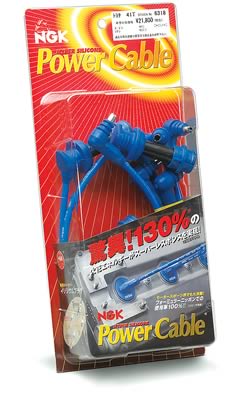
magnacore although perhaps bias to there product made some interesting comments in regard to what your talking about you might want to look into there website and read up on there therory might answer some of your questions
for the record the only wires i have ever run appart from NGK were magnacore BUT having said that the fit was not half as good as the NGK ones but personally i like these!
Modified by richard7968 at 4:01 PM 3/22/2007
People preach about NGK and OEM wires or what not but is that just their bandwagon opinions? I have always used black oem wires just because that's what i trust (never a loose plug or broken on). But has anyone tested the resistance of cheap $20 eBay special wires compared to OEM? or 7mm wires compared to the thickness of a 9.5mm wire?</TD></TR></TABLE>
magnacore although perhaps bias to there product made some interesting comments in regard to what your talking about you might want to look into there website and read up on there therory might answer some of your questions
for the record the only wires i have ever run appart from NGK were magnacore BUT having said that the fit was not half as good as the NGK ones but personally i like these!
Modified by richard7968 at 4:01 PM 3/22/2007

Member
Joined: May 2002
Posts: 5,197
Likes: 1
From: Atl. Beach, fl, duval
Re: Testing Spark Plug Wires for resistance (Supahr_Ed)
<TABLE WIDTH="90%" CELLSPACING=0 CELLPADDING=0 ALIGN=CENTER><TR><TD>Quote, originally posted by Supahr_Ed »</TD></TR><TR><TD CLASS="quote">I know the shop manuals say that the spark plug wires should be good below 25,000 ohms or so BUT for performance wise...what is acceptable?
People preach about NGK and OEM wires or what not but is that just their bandwagon opinions? I have always used black oem wires just because that's what i trust (never a loose plug or broken on). But has anyone tested the resistance of cheap $20 eBay special wires compared to OEM? or 7mm wires compared to the thickness of a 9.5mm wire?</TD></TR></TABLE> For $20.00 you can purchase an Ohlm/ Volt tester and educate us.
People preach about NGK and OEM wires or what not but is that just their bandwagon opinions? I have always used black oem wires just because that's what i trust (never a loose plug or broken on). But has anyone tested the resistance of cheap $20 eBay special wires compared to OEM? or 7mm wires compared to the thickness of a 9.5mm wire?</TD></TR></TABLE> For $20.00 you can purchase an Ohlm/ Volt tester and educate us.

B*a*n*n*e*d
Joined: Mar 2002
Posts: 7,765
Likes: 1
Re: Testing Spark Plug Wires for resistance (DonF)
Is less resistance better?
According to Ohm's Law I = V / R
where
I is electrical current. Units = amperes
V is electrical potential difference. Units = Volts
R is electrical resistance. Units = Ohms
So at the typical ignition voltage of 30,000V and typical wire resistance of 5,000 ohms you have 170 miliamps going through the spark plug. That is plenty of current.
According to Ohm's Law I = V / R
where
I is electrical current. Units = amperes
V is electrical potential difference. Units = Volts
R is electrical resistance. Units = Ohms
So at the typical ignition voltage of 30,000V and typical wire resistance of 5,000 ohms you have 170 miliamps going through the spark plug. That is plenty of current.

Honda-Tech Member
Joined: May 2002
Posts: 15,814
Likes: 8
From: Dallas, TX, USA
Re: Testing Spark Plug Wires for resistance (Master of the Universe)
I ran a set of Ractive plug wires on the dyno on a car once, with 0 resistance. The ******* spark was huge, but the dyno didn't work, the timing light didn't work, the dyno computer didn't work, and the car shut off at 5k.... 
Member
Joined: May 2002
Posts: 5,197
Likes: 1
From: Atl. Beach, fl, duval
Re: Testing Spark Plug Wires for resistance (tony1)
<TABLE WIDTH="90%" CELLSPACING=0 CELLPADDING=0 ALIGN=CENTER><TR><TD>Quote, originally posted by tony1 »</TD></TR><TR><TD CLASS="quote">I ran a set of Ractive plug wires on the dyno on a car once, with 0 resistance. The ******* spark was huge, but the dyno didn't work, the timing light didn't work, the dyno computer didn't work, and the car shut off at 5k.... </TD></TR></TABLE> Ah, good old solid core wires, maybe you did not have enough dwell on the points. Open them up to .045, maybe the condensor was bad and not storing enough of the voltage. LOL Did you try a smaller main jet? They will never know.
Actually i thought resistance in the wires and plug increased the spark ( jumped a wider gap) but reduced duration.
</TD></TR></TABLE> Ah, good old solid core wires, maybe you did not have enough dwell on the points. Open them up to .045, maybe the condensor was bad and not storing enough of the voltage. LOL Did you try a smaller main jet? They will never know.Actually i thought resistance in the wires and plug increased the spark ( jumped a wider gap) but reduced duration.
Thread Starter
Honda-Tech Member
Joined: Aug 2004
Posts: 1,045
Likes: 0
From: CaliFoenEyeAy
Re: Testing Spark Plug Wires for resistance (DonF)
<TABLE WIDTH="90%" CELLSPACING=0 CELLPADDING=0 ALIGN=CENTER><TR><TD>Quote, originally posted by DonF »</TD></TR><TR><TD CLASS="quote"> For $20.00 you can purchase an Ohm/ Volt tester and educate us. </TD></TR></TABLE>
Well actually I have one, Im just to cheap to go shopping around for wires. Im only asking because I have to custom make some wires for an old car of mine (the type that you have to silicone into a coil). I purchase some wires that and they gave out 5 ohms.
I apologize but the sarcasm confuses me... i just thought maybe someone would be helpful enough to educate me.
Well actually I have one, Im just to cheap to go shopping around for wires.
Im only asking because I have to custom make some wires for an old car of mine (the type that you have to silicone into a coil). I purchase some wires that and they gave out 5 ohms.I apologize but the sarcasm confuses me... i just thought maybe someone would be helpful enough to educate me.
Trending Topics
B*a*n*n*e*d
Joined: Mar 2002
Posts: 7,765
Likes: 1
Re: Testing Spark Plug Wires for resistance (Supahr_Ed)
There needs to be some sort of resistance in wires used in motors with ECU's otherwise the flyback RF noise interferes with the operation of the ECU. There are two main ways to supress RF noise from the spark plugs. One is to increase the resistance of the spark wires (sort of like a "volume" control). The other is to increase the inductance of they wire, i.e. wind the conductor in a spiral. This creates a high frequency filter that resists high frequency current thus suppress RF noise.
Thread Starter
Honda-Tech Member
Joined: Aug 2004
Posts: 1,045
Likes: 0
From: CaliFoenEyeAy
Re: Testing Spark Plug Wires for resistance (Master of the Universe)
would you know how to tell if the wires go bad? There were many times where I would see a high horsepower car have irratic spark (during runs on the dyno) due to the wires..but I guess there can be other reasons for it also.
B*a*n*n*e*d
Joined: Mar 2002
Posts: 7,765
Likes: 1
Re: Testing Spark Plug Wires for resistance (Supahr_Ed)
1. If the resistance is too high, meaning higher than the specified range then there may be a break(s) somewhere in the conductor.
2. If there is a break-down in the wire jacket, you will have arcing. This can be seen if you rev the motor in the dark. You should see sparks flying from the wire to a ground source such as the valve cover etc.
2. If there is a break-down in the wire jacket, you will have arcing. This can be seen if you rev the motor in the dark. You should see sparks flying from the wire to a ground source such as the valve cover etc.


Joined: May 2002
Posts: 3
Likes: 1
From: banned NC
Re: Testing Spark Plug Wires for resistance (Master of the Universe)
<TABLE WIDTH="90%" CELLSPACING=0 CELLPADDING=0 ALIGN=CENTER><TR><TD>Quote, originally posted by Master of the Universe »</TD></TR><TR><TD CLASS="quote">Is less resistance better?
According to Ohm's Law I = V / R
where
I is electrical current. Units = amperes
V is electrical potential difference. Units = Volts
R is electrical resistance. Units = Ohms
So at the typical ignition voltage of 30,000V and typical wire resistance of 5,000 ohms you have 170 miliamps going through the spark plug. That is plenty of current.</TD></TR></TABLE>
looks like 6 amps to me.
According to Ohm's Law I = V / R
where
I is electrical current. Units = amperes
V is electrical potential difference. Units = Volts
R is electrical resistance. Units = Ohms
So at the typical ignition voltage of 30,000V and typical wire resistance of 5,000 ohms you have 170 miliamps going through the spark plug. That is plenty of current.</TD></TR></TABLE>
looks like 6 amps to me.

Honda-Tech Member
Joined: Mar 2004
Posts: 15,050
Likes: 3
Re: Testing Spark Plug Wires for resistance (Master of the Universe)
<TABLE WIDTH="90%" CELLSPACING=0 CELLPADDING=0 ALIGN=CENTER><TR><TD>Quote, originally posted by Master of the Universe »</TD></TR><TR><TD CLASS="quote">There needs to be some sort of resistance in wires used in motors with ECU's otherwise the flyback RF noise interferes with the operation of the ECU. There are two main ways to supress RF noise from the spark plugs. One is to increase the resistance of the spark wires (sort of like a "volume" control). The other is to increase the inductance of they wire, i.e. wind the conductor in a spiral. This creates a high frequency filter that resists high frequency current thus suppress RF noise.</TD></TR></TABLE>
But don't forget the fact that introducting that inductor will create a delay in the spark, the impedance of purely inductive loads causes current to lag voltage by 90 degrees, the resistance of the wire would have to be raised high to balance that effect out.
Rocket knows his RF stuff
But don't forget the fact that introducting that inductor will create a delay in the spark, the impedance of purely inductive loads causes current to lag voltage by 90 degrees, the resistance of the wire would have to be raised high to balance that effect out.
Rocket knows his RF stuff
B*a*n*n*e*d
Joined: Mar 2002
Posts: 7,765
Likes: 1
Re: Testing Spark Plug Wires for resistance (dfoxengr)
<TABLE WIDTH="90%" CELLSPACING=0 CELLPADDING=0 ALIGN=CENTER><TR><TD>Quote, originally posted by dfoxengr »</TD></TR><TR><TD CLASS="quote">
looks like 6 amps to me.</TD></TR></TABLE>
Doh
looks like 6 amps to me.</TD></TR></TABLE>
Doh
B*a*n*n*e*d
Joined: Mar 2002
Posts: 7,765
Likes: 1
Re: Testing Spark Plug Wires for resistance (mgags7)
<TABLE WIDTH="90%" CELLSPACING=0 CELLPADDING=0 ALIGN=CENTER><TR><TD>Quote, originally posted by mgags7 »</TD></TR><TR><TD CLASS="quote">
But don't forget the fact that introducting that inductor will create a delay in the spark, the impedance of purely inductive loads causes current to lag voltage by 90 degrees, the resistance of the wire would have to be raised high to balance that effect out.</TD></TR></TABLE>
I'll have to look into that. I don't think the inductance of spiral core wires is high enough to cause ignition delay. I would be easy to test. Just set timing with high resistance wires and then switch to spiral core wires and see if the timing change.
But don't forget the fact that introducting that inductor will create a delay in the spark, the impedance of purely inductive loads causes current to lag voltage by 90 degrees, the resistance of the wire would have to be raised high to balance that effect out.</TD></TR></TABLE>
I'll have to look into that. I don't think the inductance of spiral core wires is high enough to cause ignition delay. I would be easy to test. Just set timing with high resistance wires and then switch to spiral core wires and see if the timing change.


Thread
Thread Starter
Forum
Replies
Last Post
