


What about these welds?


Thread Starter
Honda-Tech Member
Joined: Jun 2006
Posts: 978
Likes: 0
From: Abbotsford, BC
 What about these welds?
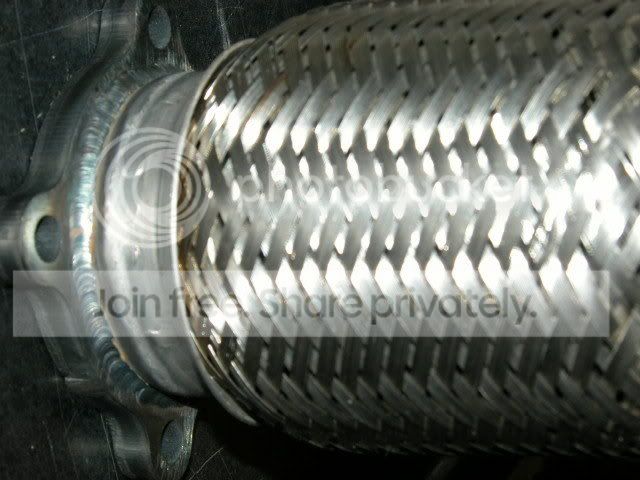
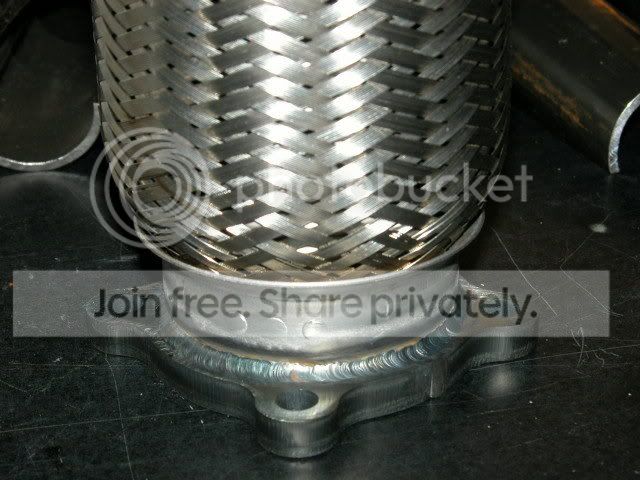
I've never had any instruction on tig welding, in fact I havent even watched another person tig before, but I used to do industrial mig welding, concrete pipes and welding concrete pumps to truck chassis, I know how to weld but tig is new to me. I think people will say my filler rod is too small but when I cut my welds to check for penetration I find penetration is much better with the small filler rod than larger filler rod which gives the nicer stacked dimes effect. I used a syncrowave 200, at 90 amps, 1/16 red tungsten, 18chf, 1/16 er 70 s2 filler, gas lens, #6cup.

Thread Starter
Honda-Tech Member
Joined: Jun 2006
Posts: 978
Likes: 0
From: Abbotsford, BC
Re: What about these welds? (DoctorVtec)
Thanks! I am looking for some critisism though, with validity of course, I want to get better, I am planning on going to school sometime next year for tig welding but theres no reason why I cant start getting better now  I appreciate compliments though
I appreciate compliments though
Thread Starter
Honda-Tech Member
Joined: Jun 2006
Posts: 978
Likes: 0
From: Abbotsford, BC
Re: What about these welds? (dave@passenger)
Oh yeah thats a 2.5" flex joint mated to a 2.5" t3 outlet flange, 3/8 thick mildsteel laser cut. I used about 18" of filler on that weld, single pass.

Joined: May 2006
Posts: 16
Likes: 0
From: Victoria, BC, Canada
Re: What about these welds? (dave@passenger)
Looking good. "Hi" from across the pond over here on the island. 
Nothing wrong with 1/16th filler; I use .035" for 16ga tubing, and occasionally 1/16th for flanges like that.
I keep meaning to get ahold of you regarding your TD cams; unfortunately I keep getting sidetracked and never find time to work on the Jetta.
Nothing wrong with 1/16th filler; I use .035" for 16ga tubing, and occasionally 1/16th for flanges like that.
I keep meaning to get ahold of you regarding your TD cams; unfortunately I keep getting sidetracked and never find time to work on the Jetta.
Thread Starter
Honda-Tech Member
Joined: Jun 2006
Posts: 978
Likes: 0
From: Abbotsford, BC
Re: What about these welds? (snoot_works)
I use .045 on my downpipes, they are 16g. I wouldn't mind trying some .035 though. Call me or shoot me an email about the cams when you have the time

Trending Topics

Junior Member

Joined: Nov 2004
Posts: 219
Likes: 0
From: Uhrichsville, Ohio, U.S.A
Those look good to me. I too prefer to use a smaller fill rod, it seems that my beads are more uniform that way. But one quick question, Why are you welding a flex to a turbine outlet flange?

Thread Starter
Honda-Tech Member
Joined: Jun 2006
Posts: 978
Likes: 0
From: Abbotsford, BC
Re: (TGrant)
<TABLE WIDTH="90%" CELLSPACING=0 CELLPADDING=0 ALIGN=CENTER><TR><TD>Quote, originally posted by TGrant »</TD></TR><TR><TD CLASS="quote">Those look good to me. I too prefer to use a smaller fill rod, it seems that my beads are more uniform that way. But one quick question, Why are you welding a flex to a turbine outlet flange?</TD></TR></TABLE>
Because I also use these outlet flanges for exhaut connections, this pieces gets welded to the bottom of a downpipe, than I have another flange on the exhaust, this make the downpipe a bolt in, bolt out deal, no clamps and crimps, I would like to do v band but its a lot more expensive.
Because I also use these outlet flanges for exhaut connections, this pieces gets welded to the bottom of a downpipe, than I have another flange on the exhaust, this make the downpipe a bolt in, bolt out deal, no clamps and crimps, I would like to do v band but its a lot more expensive.


Honda-Tech Member
Joined: Jun 2004
Posts: 426
Likes: 0
From: Kent, WA, USA
Re: What about these welds? (synik)
for fillet welds, I like to tack/fuse everything all around first and then use .045 filler rod. That way I don't have any drop through on the tubing because it'll take more time to heat up compared to the thinner filler.
Thread Starter
Honda-Tech Member
Joined: Jun 2006
Posts: 978
Likes: 0
From: Abbotsford, BC
Re: What about these welds? (damnraz)
<TABLE WIDTH="90%" CELLSPACING=0 CELLPADDING=0 ALIGN=CENTER><TR><TD>Quote, originally posted by damnraz »</TD></TR><TR><TD CLASS="quote">for fillet welds, I like to tack/fuse everything all around first and then use .045 filler rod. That way I don't have any drop through on the tubing because it'll take more time to heat up compared to the thinner filler. </TD></TR></TABLE>
Hmmm good to know I will try this, does this work good for welding 16g tube by any chance? I am having a bit of a struggle getting my 16g tube welds to look as nice as my fillet welds.
Hmmm good to know I will try this, does this work good for welding 16g tube by any chance? I am having a bit of a struggle getting my 16g tube welds to look as nice as my fillet welds.

Honda-Tech Member
Joined: Jun 2006
Posts: 224
Likes: 0
Re: What about these welds? (dave@passenger)
From what i've learned from my short experience in welding, it seems to me that using smaller filler rod is easier, thicker stuff has a tendency to have a higher melting point then most of the stuff you weld consistently. However on your welds, the bead looks great to me, it could just use some color, it looks like you dont move fast enough. Remember the filler will cool the puddle as well as the argon, so as soon as you dip move in a consistent pace, dont let the arc hoover around to long.
I've beat my self up for grey welds, concave welds, blowing holes when tacking and picked everyones brain I could in order to improve on my welding skills. However the most important thing was practice, and the more i practice the better I get.
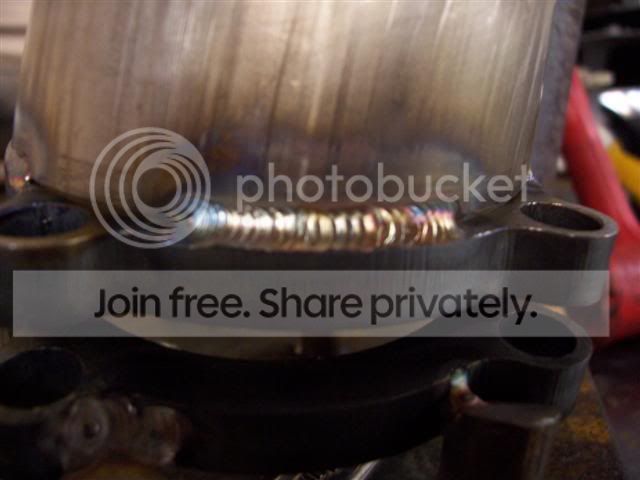
This is the most recent picture I have on my computer of my welds with filler.
Not only all of the above is important but the most important thing is prepping the material properly. Wire wheel + acetone = good clean welds
I've beat my self up for grey welds, concave welds, blowing holes when tacking and picked everyones brain I could in order to improve on my welding skills. However the most important thing was practice, and the more i practice the better I get.
This is the most recent picture I have on my computer of my welds with filler.
Not only all of the above is important but the most important thing is prepping the material properly. Wire wheel + acetone = good clean welds


Honda-Tech Member
Joined: Jun 2004
Posts: 426
Likes: 0
From: Kent, WA, USA
Re: What about these welds? (TurboSI56)
<TABLE WIDTH="90%" CELLSPACING=0 CELLPADDING=0 ALIGN=CENTER><TR><TD>Quote, originally posted by TurboSI56 »</TD></TR><TR><TD CLASS="quote">From what i've learned from my short experience in welding, it seems to me that using smaller filler rod is easier, thicker stuff has a tendency to have a higher melting point then most of the stuff you weld consistently. However on your welds, the bead looks great to me, it could just use some color, it looks like you dont move fast enough. Remember the filler will cool the puddle as well as the argon, so as soon as you dip move in a consistent pace, dont let the arc hoover around to long.
I've beat my self up for grey welds, concave welds, blowing holes when tacking and picked everyones brain I could in order to improve on my welding skills. However the most important thing was practice, and the more i practice the better I get
This is the most recent picture I have on my computer of my welds with filler.
Not only all of the above is important but the most important thing is prepping the material properly. Wire wheel + acetone = good clean welds </TD></TR></TABLE>
actually using thicker filler is the way to go, what are you trying to do w/ a fillet weld is not allow penetration through the tubing but as a reinforcement. If you notice while you're welding a fillet like the guy above, if he were to tack and use thin filler, let's say .025 or some sort he can see that while he's welding it's getting a bit concave b/c the metal wants to go where the heat is, which is the arc. I recommended him to fuse it first all around and run a thicker filler so that way the weld can cool off faster than the thinner filler can. This also prevents air bubbles between the fuse and the filler itself. Also having color is not really a great thing, but since it's SS it shouldn't matter, what the argon does is get's all the contaminates like oxygen away from the heat affected zone so you won't get color, and you'd have a clean weld w/o any contaminates on the inside and the surface area of the parent material. What I'd recommend for his setup is to use a size 12 ceramic cup, 1/16 collet, tungsten, and back purge set around 20-25cfm, if you're purging through the tube also, I'd set that one up around 5-10cfm. Also for welding 16G stuff, I don't know very well. I weld in the aerospace industry that uses thin-walled 321 SS, CP-TI and other TI alloys, 625 inconel that are usually around .020-.65+ thousandths of an inch. But for stainless, I'd try using some thick filler and don't be afraid to feed a lot of wire into the puddle and move on to the next bead, that way you can build up on that bead and not have to worry about going over and over dozens of times, also grind your butt joints about 45 degree's and leave about .030-.040 thousands of an inch to work with and maybe even more, depending on how comfortable you are welding that kind of thickness, run a root pass and build up on it.
I've beat my self up for grey welds, concave welds, blowing holes when tacking and picked everyones brain I could in order to improve on my welding skills. However the most important thing was practice, and the more i practice the better I get
This is the most recent picture I have on my computer of my welds with filler.
Not only all of the above is important but the most important thing is prepping the material properly. Wire wheel + acetone = good clean welds
</TD></TR></TABLE>actually using thicker filler is the way to go, what are you trying to do w/ a fillet weld is not allow penetration through the tubing but as a reinforcement. If you notice while you're welding a fillet like the guy above, if he were to tack and use thin filler, let's say .025 or some sort he can see that while he's welding it's getting a bit concave b/c the metal wants to go where the heat is, which is the arc. I recommended him to fuse it first all around and run a thicker filler so that way the weld can cool off faster than the thinner filler can. This also prevents air bubbles between the fuse and the filler itself. Also having color is not really a great thing, but since it's SS it shouldn't matter, what the argon does is get's all the contaminates like oxygen away from the heat affected zone so you won't get color, and you'd have a clean weld w/o any contaminates on the inside and the surface area of the parent material. What I'd recommend for his setup is to use a size 12 ceramic cup, 1/16 collet, tungsten, and back purge set around 20-25cfm, if you're purging through the tube also, I'd set that one up around 5-10cfm. Also for welding 16G stuff, I don't know very well. I weld in the aerospace industry that uses thin-walled 321 SS, CP-TI and other TI alloys, 625 inconel that are usually around .020-.65+ thousandths of an inch. But for stainless, I'd try using some thick filler and don't be afraid to feed a lot of wire into the puddle and move on to the next bead, that way you can build up on that bead and not have to worry about going over and over dozens of times, also grind your butt joints about 45 degree's and leave about .030-.040 thousands of an inch to work with and maybe even more, depending on how comfortable you are welding that kind of thickness, run a root pass and build up on it.
Thread Starter
Honda-Tech Member
Joined: Jun 2006
Posts: 978
Likes: 0
From: Abbotsford, BC
My welds are grey/blue because its mild steel not stainless, I prefer mild steel because it doesn't expand as much as stainless, so it resists cracking and doesn't move as much when hot. I ceramic coat my parts after to resist corrosion and heat.

Thread
Thread Starter
Forum
Replies
Last Post
Justin Olson
Welding / Fabrication
6
Aug 31, 2007 06:30 PM