


best brake set up for EK


Thread Starter
Junior Member
Joined: Dec 2005
Posts: 402
Likes: 0
From: markham, on, canada
 best brake set up for EK
Im looking for a good street/track brake set up. Im currently using stock Si brakes drilled slotted rotors and Hawk pads, lines at all 4 corners. There still seems to be some kinda slip and a really nasty smell after braking. I think the pads are overheating....
anyways im not really in the market for a big brake kit because i still want to use my 15inchers, any other combo or pads and rotors? or maybe even fluid?
anything would be helpful
thanks in advance
anyways im not really in the market for a big brake kit because i still want to use my 15inchers, any other combo or pads and rotors? or maybe even fluid?
anything would be helpful
thanks in advance

Honda-Tech Member
Joined: Sep 2005
Posts: 6,922
Likes: 1
From: CA, United States
you can do a ep3 rear disc conversion...use the 02-03 ep3 rear rotrs and you choose from a DC5 or ep3 caliper...other than that its a straight bolt on...also upgrade your brake lines... did you use the si/teg brake booster and master cylinder? what kind of tires are you running?


Honda-Tech Member
Joined: Jan 2005
Posts: 4,505
Likes: 1
From: NOOOOOOOooooo, Ooo
Re: (gottalovethe4door)
<TABLE WIDTH="90%" CELLSPACING=0 CELLPADDING=0 ALIGN=CENTER><TR><TD>Quote, originally posted by gottalovethe4door »</TD></TR><TR><TD CLASS="quote">wilwood has a front brake setup, i think 11.9" or something... should fit 15" rims, might need spacer...</TD></TR></TABLE>
It's actully 11". And yes, you'll need space to clear some rims. I recommand you also get extend stunts.
It's actully 11". And yes, you'll need space to clear some rims. I recommand you also get extend stunts.
Thread Starter
Junior Member
Joined: Dec 2005
Posts: 402
Likes: 0
From: markham, on, canada
Re: (kaiba)
anyone with exp with the willwood set up? how is it in the cold? Obv i dont plan on racing in the winter, however i would like it to stop my car when im moving. Also i've heard the big brake kit upgrades aren't very responsive for street use at all for ex: they take a while to heat up which is good but until then the braking capacity isn't very good.
thoughts on that?
thoughts on that?
Trending Topics
Honda-Tech Member
Joined: Jan 2005
Posts: 4,505
Likes: 1
From: NOOOOOOOooooo, Ooo
Re: (sirguy01)
<TABLE WIDTH="90%" CELLSPACING=0 CELLPADDING=0 ALIGN=CENTER><TR><TD>Quote, originally posted by sirguy01 »</TD></TR><TR><TD CLASS="quote">anyone with exp with the willwood set up? how is it in the cold? Obv i dont plan on racing in the winter, however i would like it to stop my car when im moving. Also i've heard the big brake kit upgrades aren't very responsive for street use at all for ex: they take a while to heat up which is good but until then the braking capacity isn't very good.
thoughts on that?</TD></TR></TABLE>
It depend on what kind of pad.
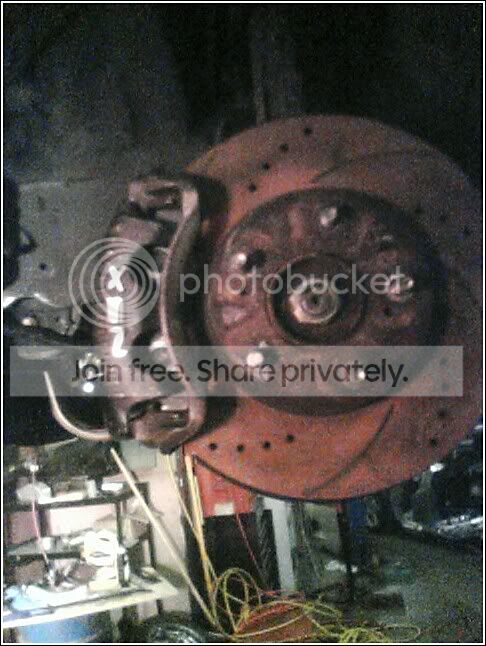
I'm running the fastbrake.com 11" with wilwood 4 pot and love it. Can't complain about it. Well ofcourse i did upgrade my master cylinder and brake booster from the integra 91-93 non-abs along with 4040 proportioning valve.
**** stop on a nickle.
thoughts on that?</TD></TR></TABLE>
It depend on what kind of pad.
I'm running the fastbrake.com 11" with wilwood 4 pot and love it. Can't complain about it. Well ofcourse i did upgrade my master cylinder and brake booster from the integra 91-93 non-abs along with 4040 proportioning valve.
**** stop on a nickle.


Member
Joined: May 2005
Posts: 1,829
Likes: 1
From: Norcal
slotted and drilled rotors have less metal than solid ones; think of it as they are weaker because they have less heatsinking abilities.
upgrade your pads to the HP+ and see how quickly those fade. and go back to solid/blank rotors. It wont look as cool but it will perform better.
Also if your brakes are heating up quite and retaining that heat a bit then taking off the heatshield/dustshield will help them cool down alot.
what fluid are you using?
upgrade your pads to the HP+ and see how quickly those fade. and go back to solid/blank rotors. It wont look as cool but it will perform better.
Also if your brakes are heating up quite and retaining that heat a bit then taking off the heatshield/dustshield will help them cool down alot.
what fluid are you using?

Honda-Tech Member
Joined: Apr 2005
Posts: 4,080
Likes: 0
From: Los Angeles/ DFW, USA
Re: (chrisw85)
hahaha i love my setup..... 01 Gsr booster and bmc(1"), 4040 prop valve from a si, ITR Brakes/5 lUG, Hawk brake pads, Earls Stainless Steel Braided brake lines........ 

Honda-Tech Member
Joined: Aug 2004
Posts: 4,196
Likes: 0
From: Nah man, Yemen

"The Black Label Racing (BLR) mini 6-pot big brake kit is made out of forged aluminum. This is to dissipate heat under extreme braking temperature, to reduce brake fade when under racing conditions. To keep unsprung rate down to a minimum, forged aluminum is used as the material for this caliper. This complete front brake system is designed to fit under most 16" wheels. Kit includes a 6-pot anodized colored caliper, adaptor brackets, a pair of 282mm (11.1 inch) one-piece slotted rotors, street 'sport' brake pads, steel braided brake lines, mounting hardware, extended wheel studs, and bleeder lines. This kit is specifically designed for Honda Civics with factory 9.3" sized rotor/brakes/spindle. Kit supports these Honda Civics: 88-91 Honda Civic/CRX (STD/HF/Si), 92-95 Civic NON-ABS models (CX/DX/VX/LX/Si/EX), 96-00 Civic NON-ABS models (CX/DX/LX/EX). NOTE: Some 16" rims MAY need a wheel spacer & extended wheel studs depending on the spoke design in order for proper clearances between caliper face and inner wheel spoke"

Honda-Tech Member
Joined: Apr 2005
Posts: 792
Likes: 0
From: CO
Re: (chrisw85)
<TABLE WIDTH="90%" CELLSPACING=0 CELLPADDING=0 ALIGN=CENTER><TR><TD>Quote, originally posted by chrisw85 »</TD></TR><TR><TD CLASS="quote">slotted and drilled rotors have less metal than solid ones; think of it as they are weaker because they have less heatsinking abilities.
upgrade your pads to the HP+ and see how quickly those fade. and go back to solid/blank rotors. It wont look as cool but it will perform better.
Also if your brakes are heating up quite and retaining that heat a bit then taking off the heatshield/dustshield will help them cool down alot.
what fluid are you using?</TD></TR></TABLE>
You have to take into consideration that slotted/crossdrilled cool down quicker than blanks, as well as heat up quicker. When your at a curvy track and not getting at real high speeds crossdrilled/slotted can help cause you wont get into dangerous temps and they will cool quicker.
If your using pads not designed for your application like a combo of street pads on crossdrilled(not cast made) then fade will be a bitch and your rotors will crack pretty quick at the track. A two piece rotor with a cast made crossdrilled/slotted and brembo or race type calipers with there pads, are quite effective. Also you must upgrade to better fluid and lines for the higher temps you will have. I personally use Castrol SRF with a wet boiling point of 500 degrees .
.
The aluminum hat allows expansion on the rotors when they get up real high in the temps and the pads that brembo design for these rotor's/calipers work good at low temp with the street pad (race pads when at the track). TWO PIECE ROTORS that are crossdrilled/slotted are made to save on rotational mass allowing for a bigger rotor and pad for a higher brake torque(bigger brake pistons) and bigger pads with he same weight.
Honestly though, if your not going to a real curvy track with long straight aways(high speed street driving ) you would be better off with a blank two piece rotor.
I will say this again One piece crossdrilled rotors are crap.
Ninja edit: O yeah your master cylinder will need to be upgraded, and maybe a adjustable proportional valve if your brake bias get thrown off with bigger front brakes and stock rears.
upgrade your pads to the HP+ and see how quickly those fade. and go back to solid/blank rotors. It wont look as cool but it will perform better.
Also if your brakes are heating up quite and retaining that heat a bit then taking off the heatshield/dustshield will help them cool down alot.
what fluid are you using?</TD></TR></TABLE>
You have to take into consideration that slotted/crossdrilled cool down quicker than blanks, as well as heat up quicker. When your at a curvy track and not getting at real high speeds crossdrilled/slotted can help cause you wont get into dangerous temps and they will cool quicker.
If your using pads not designed for your application like a combo of street pads on crossdrilled(not cast made) then fade will be a bitch and your rotors will crack pretty quick at the track. A two piece rotor with a cast made crossdrilled/slotted and brembo or race type calipers with there pads, are quite effective. Also you must upgrade to better fluid and lines for the higher temps you will have. I personally use Castrol SRF with a wet boiling point of 500 degrees
.The aluminum hat allows expansion on the rotors when they get up real high in the temps and the pads that brembo design for these rotor's/calipers work good at low temp with the street pad (race pads when at the track). TWO PIECE ROTORS that are crossdrilled/slotted are made to save on rotational mass allowing for a bigger rotor and pad for a higher brake torque(bigger brake pistons) and bigger pads with he same weight.
Honestly though, if your not going to a real curvy track with long straight aways(high speed street driving
) you would be better off with a blank two piece rotor. I will say this again One piece crossdrilled rotors are crap.
Ninja edit: O yeah your master cylinder will need to be upgraded, and maybe a adjustable proportional valve if your brake bias get thrown off with bigger front brakes and stock rears.


Member
Joined: May 2005
Posts: 1,829
Likes: 1
From: Norcal
Rapid cooling of the metal will thermal stress fatigue the metal; this thermal 'load' is spread across less metal mass on cross drilled and/or slotted rotors versus non drilled/slotted, so there is a greater chance that the slotted/drilled rotors with less mass will crack and stress more. Heatsinks are good--they allow more metal to dissapate and absorb the heat. In otherwords, if you dont have more metal mass to spread the load across, the smaller individual portions end up having to deal with more of the heat. But perhaps my logic here does not apply in the strictist sense. Maybe someone from the NASA/SCCA racing scene will chime in on their experiences.
Dont fix brake temp problems by getting drilled or slotted rotors, do it properly and vent/duct the brakes with cooling.
Dont fix brake temp problems by getting drilled or slotted rotors, do it properly and vent/duct the brakes with cooling.
Honda-Tech Member
Joined: Apr 2005
Posts: 792
Likes: 0
From: CO
Re: (chrisw85)
<TABLE WIDTH="90%" CELLSPACING=0 CELLPADDING=0 ALIGN=CENTER><TR><TD>Quote, originally posted by chrisw85 »</TD></TR><TR><TD CLASS="quote">Rapid cooling of the metal will thermal stress fatigue the metal; this thermal 'load' is spread across less metal mass on cross drilled and/or slotted rotors versus non drilled/slotted, so there is a greater chance that the slotted/drilled rotors with less mass will crack and stress more. Heatsinks are good--they allow more metal to dissapate and absorb the heat. In otherwords, if you dont have more metal mass to spread the load across, the smaller individual portions end up having to deal with more of the heat. But perhaps my logic here does not apply in the strictist sense. Maybe someone from the NASA/SCCA racing scene will chime in on their experiences.
Dont fix brake temp problems by getting drilled or slotted rotors, do it properly and vent/duct the brakes with cooling.</TD></TR></TABLE>
Its all relative, I am going of experience and knowledge from teachers that have been on race teams (Nascar,F1, La Mans). Yes, more metal= more heat absorption/dissipation but when you can have too look at all angles not just that one perspective. The biggest reason for crossdrilled is to have a bigger rotor with less weight. A bigger rotor means you can have bigger calipers(more metal) and bigger pads with out more weight. For example, in Nascar/F1 you get up to speeds of 200+ and are your the brakes for long periods of time. Thats why they use blanks. In Le Mans your not getting that high of a speed and are on and off the brakes a lot so you will see crossdrilled rotors. For a street car its all about looks period (Porsche) since you will never use your brakes to there limit.
Im not talking about 11'' or 12'' brembo's that are drilled after being made. Those suck ***** and that subject has been beaten to death.
Will the OP ever use an expensive brake kit (AP racing, Brembo, ect...) to its full potential? Probably not, but that doesn't mean a proper setup is no good when you compare it to a bad one .
Dont fix brake temp problems by getting drilled or slotted rotors, do it properly and vent/duct the brakes with cooling.</TD></TR></TABLE>
Its all relative, I am going of experience and knowledge from teachers that have been on race teams (Nascar,F1, La Mans). Yes, more metal= more heat absorption/dissipation but when you can have too look at all angles not just that one perspective. The biggest reason for crossdrilled is to have a bigger rotor with less weight. A bigger rotor means you can have bigger calipers(more metal) and bigger pads with out more weight. For example, in Nascar/F1 you get up to speeds of 200+ and are your the brakes for long periods of time. Thats why they use blanks. In Le Mans your not getting that high of a speed and are on and off the brakes a lot so you will see crossdrilled rotors. For a street car its all about looks period (Porsche) since you will never use your brakes to there limit.
Im not talking about 11'' or 12'' brembo's that are drilled after being made. Those suck ***** and that subject has been beaten to death.
Will the OP ever use an expensive brake kit (AP racing, Brembo, ect...) to its full potential? Probably not, but that doesn't mean a proper setup is no good when you compare it to a bad one
. 


Honda-Tech Member
Joined: Jan 2002
Posts: 26,519
Likes: 3
From: Los Angeles, CA, USA
Re: best brake set up for EK (sirguy01)
Go with the following:
99-00 Si front and rear disc brakes, PBR or better brake pads, Brembo rotors, Goodridge brake lines, an Si Master Cylinder and some good DOT4 brake fluid.
99-00 Si front and rear disc brakes, PBR or better brake pads, Brembo rotors, Goodridge brake lines, an Si Master Cylinder and some good DOT4 brake fluid.

Honda-Tech Member
Joined: Apr 2005
Posts: 835
Likes: 0
From: MA
Re: best brake set up for EK (sirguy01)
may i suggest going to lowes, buying central vac tubing for the garage dust collectors, a couple collector funnels for the same system, zipties, and hoseclamps, and making some airducts for brake cooling?, my buddy did this on his gsr after a shitty day at limerock, next time he went, he was all smiles 

Honda-Tech Member
Joined: Apr 2004
Posts: 699
Likes: 0
From: Hercules, ca
my setup:
usdm itr 5lug conversion
brembo blanks ft & rr
aem pads ft & rr
earls stainless steel lines
90-93 integ RS brake booster
94-97 integ RS brake master cylinder
stock si 40/40 prop valve
stopping power is right on the dime!
usdm itr 5lug conversion
brembo blanks ft & rr
aem pads ft & rr
earls stainless steel lines
90-93 integ RS brake booster
94-97 integ RS brake master cylinder
stock si 40/40 prop valve
stopping power is right on the dime!

Honda-Tech Member
Joined: Sep 2003
Posts: 8,117
Likes: 1
From: Toronto, Canada but from Montreal
Re: (fasthatchb18c1)
I am sorry but in F1 they don't use the same kind of material for their brakes. They you carbon brakes and they are not crossdrilled or slotted!


