


Question about which compression ring is which on OEM rings


Thread Starter
Honda-Tech Member
Joined: Sep 2006
Posts: 115
Likes: 4
 Question about which compression ring is which on OEM rings
alright, just got my block/crank/pistons/rods back from the machine shop today, wow it looks nice. anywho these are OS CTR pistons, and all new OEM Rings. I need to be able to tell the difference between the 1st and 2nd compression ring, which is which? One has a little chome edge, the other is black and feels slightly stiffer. I know the lay them in with the numbers facing upwards, but dont know which one to go on which slot. Also ive read alot of info, but it seems alot of people have different opinions about this, should i place all teh rings 180 degress apart at the wrist pins, or should i use the OEM placement? thanks!
Thread Starter
Honda-Tech Member
Joined: Sep 2006
Posts: 115
Likes: 4
Re: Question about which compression ring is which on OEM rings (B16Aek)
also, if i do use the OEM way, when they say front of engine, they are referring to front as in where the flywheel is, correct? and if looking at this diagram, its as if we were looking at a cylinder with exhaust being at the bottom and intake being at the top of the picture? am i getting this right?

Modified by B16Aek at 11:36 PM 10/5/2006
Modified by B16Aek at 11:36 PM 10/5/2006

Honda-Tech Member
Joined: Feb 2002
Posts: 2,692
Likes: 1
From: Behind The Camera,, FL, USA
Re: Question about which compression ring is which on OEM rings (B16Aek)
I am pretty sure the helms is assuming you are standing at the timing belt side
of the motor looking down at the diag. as cyl #1. in this diagram it
seems to suggest that the arrow is pointing to the exhaust side of the cylinder
head. I base that on the idea that piston ring gaps are sharp and you do not
want to install the gaps on the thrust surface; i.e. where the piston makes the
most friction against the wall. As you can see, its on a 45deg angle from the
thrust surfaces, 90 degrees apart from one another and 180 deg apart from
the oil ring. Hope this helps.
of the motor looking down at the diag. as cyl #1.
in this diagram itseems to suggest that the arrow is pointing to the exhaust side of the cylinder
head. I base that on the idea that piston ring gaps are sharp and you do not
want to install the gaps on the thrust surface; i.e. where the piston makes the
most friction against the wall. As you can see, its on a 45deg angle from the
thrust surfaces, 90 degrees apart from one another and 180 deg apart from
the oil ring. Hope this helps.

Honda-Tech Member
Joined: Mar 2002
Posts: 551
Likes: 1
Re: Question about which compression ring is which on OEM rings (B16Aek)
The front of the engine is the crank pulley, timing belt/chain & accessory end, so you have it backwards (just think of a longitudinally-mounted engine.. the crank pulley, timing belt/chain and accessories are up front and the transmission is mounted to the back).
The diagram appears to be rotated 90 degrees from the diagram in the Helm manual. It seems that indicated way still keeps the ring gaps from being over thrust surfaces or the piston pin holes, but I'm not sure if it HAS to be like the diagram in the Helm manual or if the point is just to position the ring gaps relative to each other (and the piston pin holes and thrust surfaces). To put your diagram in the perspective of the engine as installed in the car you need to flip it upside down.
This is from the Helm manual:
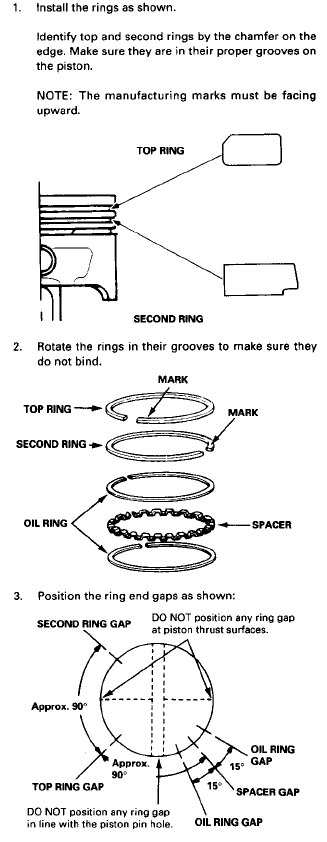
In this image, the arrow on the piston (that must face the front of the engine) would either be pointing up or down (parallel to the piston pin hole) so you see what I mean about the pistons in the two diagrams being rotated 90 degrees from each other.
Good luck!
Modified by DaiJekBok at 6:49 PM 10/5/2006
The diagram appears to be rotated 90 degrees from the diagram in the Helm manual. It seems that indicated way still keeps the ring gaps from being over thrust surfaces or the piston pin holes, but I'm not sure if it HAS to be like the diagram in the Helm manual or if the point is just to position the ring gaps relative to each other (and the piston pin holes and thrust surfaces). To put your diagram in the perspective of the engine as installed in the car you need to flip it upside down.
This is from the Helm manual:
In this image, the arrow on the piston (that must face the front of the engine) would either be pointing up or down (parallel to the piston pin hole) so you see what I mean about the pistons in the two diagrams being rotated 90 degrees from each other.
Good luck!
Modified by DaiJekBok at 6:49 PM 10/5/2006


Junior Member
Joined: Oct 2003
Posts: 516
Likes: 0
From: san jose, Ca, USA
Re: Question about which compression ring is which on OEM rings (-Darren-)
sorry bringing this back...
so does that mean that the compression rings gaps should face the exhaust side...
i'm lost...i see some put it on the intake and the manual seems to want them on the exhaust side...chime me in...
so does that mean that the compression rings gaps should face the exhaust side...
i'm lost...i see some put it on the intake and the manual seems to want them on the exhaust side...chime me in...
Trending Topics
Junior Member
Joined: Oct 2003
Posts: 516
Likes: 0
From: san jose, Ca, USA
Re: Question about which compression ring is which on OEM rings (pootie.teng)
no one has anything on this...cause i'm don't know which is the front of the engine...exhaust side or the timing belt, crank pulley side...help out yo...

Junior Member
Joined: Oct 2003
Posts: 516
Likes: 0
From: san jose, Ca, USA
Re: Question about which compression ring is which on OEM rings (Don Lackey)
thats what i thought too...but reading this is confusing me...who told these guys the front of the engine is the timing belt...
my other questions is i notice people also put the compression gaps on the intake side...why so...
my other questions is i notice people also put the compression gaps on the intake side...why so...

Joined: Mar 2004
Posts: 2,568
Likes: 0
From: Titusville, FL, US
Re: Question about which compression ring is which on OEM rings (pootie.teng)
<TABLE WIDTH="90%" CELLSPACING=0 CELLPADDING=0 ALIGN=CENTER><TR><TD>Quote, originally posted by pootie.teng »</TD></TR><TR><TD CLASS="quote">thats what i thought too...but reading this is confusing me...who told these guys the front of the engine is the timing belt...
</TD></TR></TABLE>
The first pic is from the Haynes manual, it is not as reliable as the Helms manual. That being said, look at the first pic, the Haynes, do you see the triangle on the top of the piston, and how it is pointing to the front of the engine. When you install stock pistons, guess what is on top of the piston, a triangle. And guess where that triangle points to when you install the piston. It points to the timing belt side of the engine. So according to that diagram, the front of the engine is the timing belt side of the engine. Have you ever heard of a front main seal or a rear main seal, well they are on the timing belt end and clutch end of the block respectively.
As for the second diagram, the piston pin is shown, which gives you your position of thrust angles. It shows you not to install the rings at any of the thrust positions. But I agree, it doesn't show you which side, exhaust or intake, that the compression rings are installed. I believe the most important factor is not installing the rings where the gaps are at any of the thrust surfaces, not which side, intake or exhaust, that they are installed.
Hopefully, a few guru's will enlighten us at to where they feel the gaps should be and their reason's behind the positioning.
</TD></TR></TABLE>
The first pic is from the Haynes manual, it is not as reliable as the Helms manual. That being said, look at the first pic, the Haynes, do you see the triangle on the top of the piston, and how it is pointing to the front of the engine. When you install stock pistons, guess what is on top of the piston, a triangle. And guess where that triangle points to when you install the piston. It points to the timing belt side of the engine. So according to that diagram, the front of the engine is the timing belt side of the engine. Have you ever heard of a front main seal or a rear main seal, well they are on the timing belt end and clutch end of the block respectively.
As for the second diagram, the piston pin is shown, which gives you your position of thrust angles. It shows you not to install the rings at any of the thrust positions. But I agree, it doesn't show you which side, exhaust or intake, that the compression rings are installed. I believe the most important factor is not installing the rings where the gaps are at any of the thrust surfaces, not which side, intake or exhaust, that they are installed.
Hopefully, a few guru's will enlighten us at to where they feel the gaps should be and their reason's behind the positioning.
Junior Member
Joined: Oct 2003
Posts: 516
Likes: 0
From: san jose, Ca, USA
Re: Question about which compression ring is which on OEM rings (Sam92Teg)
<TABLE WIDTH="90%" CELLSPACING=0 CELLPADDING=0 ALIGN=CENTER><TR><TD>Quote, originally posted by Sam92Teg »</TD></TR><TR><TD CLASS="quote">
The first pic is from the Haynes manual, it is not as reliable as the Helms manual. That being said, look at the first pic, the Haynes, do you see the triangle on the top of the piston, and how it is pointing to the front of the engine. When you install stock pistons, guess what is on top of the piston, a triangle. And guess where that triangle points to when you install the piston. It points to the timing belt side of the engine. So according to that diagram, the front of the engine is the timing belt side of the engine. Have you ever heard of a front main seal or a rear main seal, well they are on the timing belt end and clutch end of the block respectively.
As for the second diagram, the piston pin is shown, which gives you your position of thrust angles. It shows you not to install the rings at any of the thrust positions. But I agree, it doesn't show you which side, exhaust or intake, that the compression rings are installed. I believe the most important factor is not installing the rings where the gaps are at any of the thrust surfaces, not which side, intake or exhaust, that they are installed.
Hopefully, a few guru's will enlighten us at to where they feel the gaps should be and their reason's behind the positioning.</TD></TR></TABLE>
you are rite...never realized that the arrow refers to the arrow on the piston top...okay now i'm more lost then ever...hahaha...but yea hopefully them engine guru shows up on this thread and enlighten us...hahaha...
The first pic is from the Haynes manual, it is not as reliable as the Helms manual. That being said, look at the first pic, the Haynes, do you see the triangle on the top of the piston, and how it is pointing to the front of the engine. When you install stock pistons, guess what is on top of the piston, a triangle. And guess where that triangle points to when you install the piston. It points to the timing belt side of the engine. So according to that diagram, the front of the engine is the timing belt side of the engine. Have you ever heard of a front main seal or a rear main seal, well they are on the timing belt end and clutch end of the block respectively.
As for the second diagram, the piston pin is shown, which gives you your position of thrust angles. It shows you not to install the rings at any of the thrust positions. But I agree, it doesn't show you which side, exhaust or intake, that the compression rings are installed. I believe the most important factor is not installing the rings where the gaps are at any of the thrust surfaces, not which side, intake or exhaust, that they are installed.
Hopefully, a few guru's will enlighten us at to where they feel the gaps should be and their reason's behind the positioning.</TD></TR></TABLE>
you are rite...never realized that the arrow refers to the arrow on the piston top...okay now i'm more lost then ever...hahaha...but yea hopefully them engine guru shows up on this thread and enlighten us...hahaha...

Thread
Thread Starter
Forum
Replies
Last Post
SupaFly_Honda
All Motor / Naturally Aspirated
6
Oct 25, 2003 09:49 AM
