


Using 60 amp fuse..safe of dangerous?


Thread Starter
Honda-Tech Member
Joined: Oct 2004
Posts: 323
Likes: 0
From: VEGAS BABY, VEGAS, usa
 Using 60 amp fuse..safe of dangerous?
Here's why Im considering it and how. I have a amp wire that runs to the trunk and connects to a power dist block for other things to run off such as the amp and my poppers. They all have 30 amp fuses in it. Before the wire runs through the firewall there is also an inline fuse.
The reason I wanna put a 60 amp up front is cause the other day I think I was bumpin the sub too hard and it blew a fuse, but instead of blowing the fuse at the block in the trunk it popped the one by the battery rendering everthing else powerless hooked up to the dist block, most importantly my door poppers since I have shaved handles. My backup plans came through as I anticipted something like this happening, but want to prevent it in the future. Will a 60 amp be a bad idea if everythinkg else running off the power block is using a 30. I just want those fuses to blow respectively and not the main power line.
Sorry about the long post, Ideas?
The reason I wanna put a 60 amp up front is cause the other day I think I was bumpin the sub too hard and it blew a fuse, but instead of blowing the fuse at the block in the trunk it popped the one by the battery rendering everthing else powerless hooked up to the dist block, most importantly my door poppers since I have shaved handles. My backup plans came through as I anticipted something like this happening, but want to prevent it in the future. Will a 60 amp be a bad idea if everythinkg else running off the power block is using a 30. I just want those fuses to blow respectively and not the main power line.
Sorry about the long post, Ideas?

Junior Member
Joined: Dec 2005
Posts: 86
Likes: 0
From: Garaged in, PA, US
Re: Using 60 amp fuse..safe of dangerous? (djbrandonr)
The easiest way to do it. First off , the more accessories that you have pullin from the battery, the thicker the power wire you need (everyone has said that already). Second..add up the amperage that your accessories are pullin'to determine what size fuse to use. 
Thread Starter
Honda-Tech Member
Joined: Oct 2004
Posts: 323
Likes: 0
From: VEGAS BABY, VEGAS, usa
Re: Using 60 amp fuse..safe of dangerous? (EBP_SI)
<TABLE WIDTH="90%" CELLSPACING=0 CELLPADDING=0 ALIGN=CENTER><TR><TD>Quote, originally posted by EBP_SI »</TD></TR><TR><TD CLASS="quote">what size wire are you running from the battery to the block? that will determine your max fuse size</TD></TR></TABLE>
not sure how big, but regular size for an amp. Not the jumbo thick one but the regular size one you'd buy at any audio store. The inline fuse at the battery takes one of those cylindrical fuses and they make a 60 that'll fit.
not sure how big, but regular size for an amp. Not the jumbo thick one but the regular size one you'd buy at any audio store. The inline fuse at the battery takes one of those cylindrical fuses and they make a 60 that'll fit.

Honda-Tech Member
iTrader: (1)
Joined: Oct 2005
Posts: 9,716
Likes: 3
From: 99 probs but a stolen car aint 1, ca, cerritos/fullerton
Re: Using 60 amp fuse..safe of dangerous? (djbrandonr)
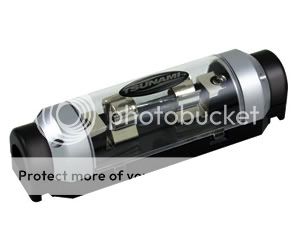
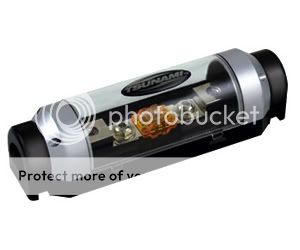
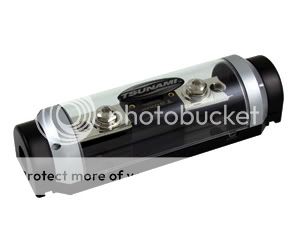
Here are a couple of diffrent styles fuse holders
first is our upgrade "a.g.u." fuse holder.
second is our"mini a.n.l." fuse holder
third is our "regular a.n.l." fuse holder
Last but not least is the regular "act" fuse holder.
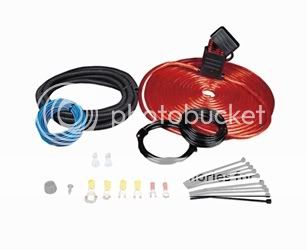
You should now be famililar with you fuse holder now. It might be kind of hard to find anything above a 60 amp fuse in a "a.g.u.". They are becoming rare. Not saying that there are none out there. Because there are cheap companies that make them most of the time. Most people are stepping up to the "mini a.n.l. and the a.n.l." They are more reliable and weather resintance. And there more suited for medium and high-end use. If I was you I would spring for a a.n.l. style fuse holder. The performance is way better. I seen a.g.u fuse holders fail lots of times, especialy the cheaper brands. Sometimes when you slide the fuse in the holder its not making 360 degrees contact with the fuse. And this results with less contact patch with your wire, arcing on the fuse tip, heat build up on the fuse, voltage drop, and fuse faliure. Have you ever had problems with your soundsystem shutting off and having no clue what happened? You look all over the place and everything looks good, even the main fuse? This is most common with thoses types of fuses. I recommend anything that going to pull over 60 amps to step up to a.n.l. Or get a high performance a.g.u. Not the $3 ones at the swapmeet or $5 bargain basement store or the ebay. opps I mean flea-bay special. It will save you time and trouble. Like fcm sig. " you get what you pay for"
Add all the fuses on your amps, processer, or what ever is on you line to the back. Then find a fuse for that rating to install next to the battery. The sum thats on your amp is not what your amp is really going to pull. But is most of the time the peak. Also make sure your not pulling more then your wire is capable of. There is a chart that I have for my shop. But here is a link to one. also note there is two standerds-iasca and awg. Go with the iasca. hope this sets you straight
http://www.the12volt.com/info/recwirsz.asp
first is our upgrade "a.g.u." fuse holder.
second is our"mini a.n.l." fuse holder
third is our "regular a.n.l." fuse holder
Last but not least is the regular "act" fuse holder.
You should now be famililar with you fuse holder now. It might be kind of hard to find anything above a 60 amp fuse in a "a.g.u.". They are becoming rare. Not saying that there are none out there. Because there are cheap companies that make them most of the time. Most people are stepping up to the "mini a.n.l. and the a.n.l." They are more reliable and weather resintance. And there more suited for medium and high-end use. If I was you I would spring for a a.n.l. style fuse holder. The performance is way better. I seen a.g.u fuse holders fail lots of times, especialy the cheaper brands. Sometimes when you slide the fuse in the holder its not making 360 degrees contact with the fuse. And this results with less contact patch with your wire, arcing on the fuse tip, heat build up on the fuse, voltage drop, and fuse faliure. Have you ever had problems with your soundsystem shutting off and having no clue what happened? You look all over the place and everything looks good, even the main fuse? This is most common with thoses types of fuses. I recommend anything that going to pull over 60 amps to step up to a.n.l. Or get a high performance a.g.u. Not the $3 ones at the swapmeet or $5 bargain basement store or the ebay. opps I mean flea-bay special. It will save you time and trouble. Like fcm sig. " you get what you pay for"
Add all the fuses on your amps, processer, or what ever is on you line to the back. Then find a fuse for that rating to install next to the battery. The sum thats on your amp is not what your amp is really going to pull. But is most of the time the peak. Also make sure your not pulling more then your wire is capable of. There is a chart that I have for my shop. But here is a link to one. also note there is two standerds-iasca and awg. Go with the iasca. hope this sets you straight
http://www.the12volt.com/info/recwirsz.asp

Joined: Dec 2001
Posts: 1,652
Likes: 0
From: Toronto, On, Canada
Re: Using 60 amp fuse..safe of dangerous? (djbrandonr)
<TABLE WIDTH="90%" CELLSPACING=0 CELLPADDING=0 ALIGN=CENTER><TR><TD>Quote, originally posted by djbrandonr »</TD></TR><TR><TD CLASS="quote">
not sure how big, but regular size for an amp. Not the jumbo thick one but the regular size one you'd buy at any audio store. The inline fuse at the battery takes one of those cylindrical fuses and they make a 60 that'll fit.</TD></TR></TABLE>
that is of absolutely no help what so ever. find out the size of the wire first
not sure how big, but regular size for an amp. Not the jumbo thick one but the regular size one you'd buy at any audio store. The inline fuse at the battery takes one of those cylindrical fuses and they make a 60 that'll fit.</TD></TR></TABLE>
that is of absolutely no help what so ever. find out the size of the wire first

Old Fart
Joined: May 2004
Posts: 26,173
Likes: 18
From: kelowna, bc, canada
Re: Using 60 amp fuse..safe of dangerous? (djbrandonr)
IMO the first thing I would do is run a power line for the amp itself, then another one for the distribution block for anything else.
The second thing I would do is install a mechanical way to get into the car.
As has been mentioned use ANL or ANL mini fuses, at least for the mains. 94
94
The second thing I would do is install a mechanical way to get into the car.
As has been mentioned use ANL or ANL mini fuses, at least for the mains.
94Trending Topics
Thread Starter
Honda-Tech Member
Joined: Oct 2004
Posts: 323
Likes: 0
From: VEGAS BABY, VEGAS, usa
Re: Using 60 amp fuse..safe of dangerous? (fcm)
sorry its been a while, been raining lately and other things. Heres the kinda fuse holder Im using.

The wire running back is about a 1/4"
The wire running back is about a 1/4"
Joined: Dec 2001
Posts: 1,652
Likes: 0
From: Toronto, On, Canada
Re: Using 60 amp fuse..safe of dangerous? (djbrandonr)
<TABLE WIDTH="90%" CELLSPACING=0 CELLPADDING=0 ALIGN=CENTER><TR><TD>Quote, originally posted by djbrandonr »</TD></TR><TR><TD CLASS="quote">The wire running back is about a 1/4"</TD></TR></TABLE>
The wire should have the size written on the insulation. ie, 8AWG, 4AWG etc.
The wire should have the size written on the insulation. ie, 8AWG, 4AWG etc.
Thread Starter
Honda-Tech Member
Joined: Oct 2004
Posts: 323
Likes: 0
From: VEGAS BABY, VEGAS, usa
Re: Using 60 amp fuse..safe of dangerous? (EBP_SI)
<TABLE WIDTH="90%" CELLSPACING=0 CELLPADDING=0 ALIGN=CENTER><TR><TD>Quote, originally posted by EBP_SI »</TD></TR><TR><TD CLASS="quote">The wire should have the size written on the insulation. ie, 8AWG, 4AWG etc. </TD></TR></TABLE>
oh yeah huh...10 GA
oh yeah huh...10 GA
Old Fart
Joined: May 2004
Posts: 26,173
Likes: 18
From: kelowna, bc, canada
Re: Using 60 amp fuse..safe of dangerous? (djbrandonr)
10ga cable has a current capacity of 60A, what is the make and model of the sub amp, [what is it's rated RMS output into a 4 ohm load]?
A 10ga power lead run to the rear, [say about 8'-10'] is good enough to supply current to a 100W amp, if your sub amp is bigger then 100W you will need a bigger power, [and ground] lead.
So as I said before, use the 10ga for the door solenoids and run a new, [appropriate sized] power cable for the amp, the fuse holder you have on the 10ga is OK for that, but use a wafer/ANL fuse and holder for the amp power, your current problems will go away. 94
94
A 10ga power lead run to the rear, [say about 8'-10'] is good enough to supply current to a 100W amp, if your sub amp is bigger then 100W you will need a bigger power, [and ground] lead.
So as I said before, use the 10ga for the door solenoids and run a new, [appropriate sized] power cable for the amp, the fuse holder you have on the 10ga is OK for that, but use a wafer/ANL fuse and holder for the amp power, your current problems will go away.
94

Thread
Thread Starter
Forum
Replies
Last Post
Traction
Audio / Security / Video
8
Dec 23, 2003 09:40 PM
