


BOV Selection


Thread Starter
Honda-Tech Member
Joined: Jan 2008
Posts: 338
Likes: 0
From: Hickory,nc
 BOV Selection
Wassup,
First time going boost and looking into some BOV. I've done some researched and HKS & Tial seems like the brand prefer, but I think I will get annoyed with the sound they give out quickly. HKS have a chirp & Tial sounds like a sneeze. I prefer something along those qualities, but with a loud Whoooosh sound.....Heard Turboxs RFL leaks. Kind of looking into Turbosmart Supersonic. Any other reference or preference?
First time going boost and looking into some BOV. I've done some researched and HKS & Tial seems like the brand prefer, but I think I will get annoyed with the sound they give out quickly. HKS have a chirp & Tial sounds like a sneeze. I prefer something along those qualities, but with a loud Whoooosh sound.....Heard Turboxs RFL leaks. Kind of looking into Turbosmart Supersonic. Any other reference or preference?

Honda-Tech Member
Joined: Aug 2007
Posts: 1,997
Likes: 9
From: Florida, usa
Re: BOV Selection
I wanna say it came off a SR20
this is when I had my del sol SOHC turbo, most my parts were from SR20 I didnt do the build tho, I got alot of compliments on that bov, pretty much had the type of sound you were describing
this is when I had my del sol SOHC turbo, most my parts were from SR20 I didnt do the build tho, I got alot of compliments on that bov, pretty much had the type of sound you were describing
 Re: BOV Selection
I have a synchronic on mine. Just has a whoosh sound. No flutters or squeek. It does blow off super easy since there really isn't much of a spring that holds it closed though.

Honda-Tech Member
Joined: Mar 2016
Posts: 4,063
Likes: 287
Re: BOV Selection
I've had the HKS ssqv, TurboXS RFL, and Greddy RS. I had zero leakage from the RFL, not sure where you got that from (I am sure google search may produce complaints).
I liked all 3 of them about equally. The RS and SSQV both gave the woosh-chirp, with the RFL giving no chirp at all. That one was more like opening a 3 liter soda bottle under high pressure.
I liked all 3 of them about equally. The RS and SSQV both gave the woosh-chirp, with the RFL giving no chirp at all. That one was more like opening a 3 liter soda bottle under high pressure.


Trending Topics
 Re: BOV Selection
It's all preferential, and each type has its advantages and drawbacks not just based upon style,but configuration. Start looking at sound files on an application similar to yours (as different vacuum points, give different sounds) and go for what you feel is correct. Going by us as a litmus-test just makes you more of a follower than one that wants to select for yourself.





Honda-Tech Member
Joined: May 2015
Posts: 284
Likes: 43
Re: BOV Selection
Im going to have to ask that you disregard the status quo, forget all the things companies that sell BOVs have said, and think about this with an open mind for a moment.
Compressor surge is a phenomenon in which the compressor is operating at a pressure that cannot be supported by the amount it is flowing. You have moved to the left of the surge line.
In a jet engine, if this surge is allowed to continue it will damage the compressor. In a centrifugal supercharger, if you dont have a bypass valve, you will damage the compressor. BUT, on a turbocharger, the surge you get from lifting off the throttle only lasts for a second at the most. There is not enough time for surging to build up any kind of resonance, and everything stays within tolerance. A well built turbo will handle the the added axial load and if it has surge ports the effect will be almost completely negated.
I have personally put together 3 turbo setups that ran without a BOV reliably. Admittedly Ive never run super high boost, but most do not anyway. Im just some guy though, what is more impressive is that turbo race cars almost never have any kind of BOV or bypass valve. Starting with Group B rally cars, running huge boost on small engines, they were notorious for their distinctive sound, a big part of which was the compressor surge. F1 cars in the 80s were running very, very high boost on very small engines, with compressors absurdly oversized for their turbines. These things surged hard. Even today, prototype and GT cars often run without a BOV and their engines/turbos survive 24 hour endurance events.
Hell, most of the early OEM turbocharged cars had no bypass valve from the factory. The Bypass valve only came into prevalence because the noise was annoying and/or disconcerting to drivers.
Compressor surge is a phenomenon in which the compressor is operating at a pressure that cannot be supported by the amount it is flowing. You have moved to the left of the surge line.
In a jet engine, if this surge is allowed to continue it will damage the compressor. In a centrifugal supercharger, if you dont have a bypass valve, you will damage the compressor. BUT, on a turbocharger, the surge you get from lifting off the throttle only lasts for a second at the most. There is not enough time for surging to build up any kind of resonance, and everything stays within tolerance. A well built turbo will handle the the added axial load and if it has surge ports the effect will be almost completely negated.
I have personally put together 3 turbo setups that ran without a BOV reliably. Admittedly Ive never run super high boost, but most do not anyway. Im just some guy though, what is more impressive is that turbo race cars almost never have any kind of BOV or bypass valve. Starting with Group B rally cars, running huge boost on small engines, they were notorious for their distinctive sound, a big part of which was the compressor surge. F1 cars in the 80s were running very, very high boost on very small engines, with compressors absurdly oversized for their turbines. These things surged hard. Even today, prototype and GT cars often run without a BOV and their engines/turbos survive 24 hour endurance events.
Hell, most of the early OEM turbocharged cars had no bypass valve from the factory. The Bypass valve only came into prevalence because the noise was annoying and/or disconcerting to drivers.
Re: BOV Selection
Im going to have to ask that you disregard the status quo, forget all the things companies that sell BOVs have said, and think about this with an open mind for a moment.
Compressor surge is a phenomenon in which the compressor is operating at a pressure that cannot be supported by the amount it is flowing. You have moved to the left of the surge line.
In a jet engine, if this surge is allowed to continue it will damage the compressor. In a centrifugal supercharger, if you dont have a bypass valve, you will damage the compressor. BUT, on a turbocharger, the surge you get from lifting off the throttle only lasts for a second at the most. There is not enough time for surging to build up any kind of resonance, and everything stays within tolerance. A well built turbo will handle the the added axial load and if it has surge ports the effect will be almost completely negated.
I have personally put together 3 turbo setups that ran without a BOV reliably. Admittedly Ive never run super high boost, but most do not anyway. Im just some guy though, what is more impressive is that turbo race cars almost never have any kind of BOV or bypass valve. Starting with Group B rally cars, running huge boost on small engines, they were notorious for their distinctive sound, a big part of which was the compressor surge. F1 cars in the 80s were running very, very high boost on very small engines, with compressors absurdly oversized for their turbines. These things surged hard. Even today, prototype and GT cars often run without a BOV and their engines/turbos survive 24 hour endurance events.
Hell, most of the early OEM turbocharged cars had no bypass valve from the factory. The Bypass valve only came into prevalence because the noise was annoying and/or disconcerting to drivers.
Compressor surge is a phenomenon in which the compressor is operating at a pressure that cannot be supported by the amount it is flowing. You have moved to the left of the surge line.
In a jet engine, if this surge is allowed to continue it will damage the compressor. In a centrifugal supercharger, if you dont have a bypass valve, you will damage the compressor. BUT, on a turbocharger, the surge you get from lifting off the throttle only lasts for a second at the most. There is not enough time for surging to build up any kind of resonance, and everything stays within tolerance. A well built turbo will handle the the added axial load and if it has surge ports the effect will be almost completely negated.
I have personally put together 3 turbo setups that ran without a BOV reliably. Admittedly Ive never run super high boost, but most do not anyway. Im just some guy though, what is more impressive is that turbo race cars almost never have any kind of BOV or bypass valve. Starting with Group B rally cars, running huge boost on small engines, they were notorious for their distinctive sound, a big part of which was the compressor surge. F1 cars in the 80s were running very, very high boost on very small engines, with compressors absurdly oversized for their turbines. These things surged hard. Even today, prototype and GT cars often run without a BOV and their engines/turbos survive 24 hour endurance events.
Hell, most of the early OEM turbocharged cars had no bypass valve from the factory. The Bypass valve only came into prevalence because the noise was annoying and/or disconcerting to drivers.
The early eighties bottles of turbocharged vehicles that did not have bypass valves actually had trouble charging issues several thousand miles after the particular car was released to the public. That was why turbocharged Vehicles received a bad rap for having low reliability because of the fact that the manufacturers disregarded certain small items that are considered to be crucial in these applications, like BOVs. Even Nissan with its 280 ZX sports car, did not have intercoolers in the first few models of release, however, it did suffer some overheating issues after Fifty to sixty Thousand Miles, and there turbocharger still had to be rebuilt on a regular basis. This is why for many years they did not have a turbocharged model until the z32 model came out in 1989.
If you want to go ahead and take that risk with your particular engine builds to be able to not run a particular blow off valve to protect the turbocharger from reversion, that is simply your choice. And, if the OP wants to listen to this particular non-sequitur advice, again he has to take the risk of destroying his turbo if you are wrong.
But to state your premise as fact from 3 builds that you've made, is really a show of lack of due diligence on your part.
All simply end it like this. Just because something can be done doesn't mean that it should be done.
Honda-Tech Member
Joined: May 2015
Posts: 284
Likes: 43
Re: BOV Selection
I think I made it pretty clear that my limited experience should only be taken with a grain of salt. I consider my setups part of an ongoing experiment.
Additionally, I left modern rally cars out of my examples because I know for a fact that they do use bypass valves. The ALS system makes it a necessity because, unlike in most setups, the turbo is going to continue to run even without the engine flowing. This is not unlike a centrifugal supercharger where the compressor is being driven mechanically. Continuous surge is, without a doubt, bad for the compressor.
Back in Group B, from what I can tell many of those early ALS cars only had the one bypass valve that was introducing air into the exhaust manifold. So that certainly wasnt helping get rid of surge. That turkey gobble sound was extreme, continuous compressor surge. Youre saying it tore **** up and thats not too hard for me to believe.
I had this brief conversation with Corky Bell, author of Maximum Boost a few years ago:
Im not disregarding your opinions or experiences in the race industry, just offering the counter argument that the compressor surge may not be the great destroyer of turbos that people believe. Obviously the companies making off the expensive billet aluminum bits and pieces want you to drop a couple hundred bucks on a BOV, so they are going to make sure everybody "knows" that a BOV is a necessity.
Question authority. Question yourself. Test ideas. Follow the evidence, wherever it leads. And perhaps even the most important rule of all: remember you could be wrong.
-Neil Tyson
Additionally, I left modern rally cars out of my examples because I know for a fact that they do use bypass valves. The ALS system makes it a necessity because, unlike in most setups, the turbo is going to continue to run even without the engine flowing. This is not unlike a centrifugal supercharger where the compressor is being driven mechanically. Continuous surge is, without a doubt, bad for the compressor.
Back in Group B, from what I can tell many of those early ALS cars only had the one bypass valve that was introducing air into the exhaust manifold. So that certainly wasnt helping get rid of surge. That turkey gobble sound was extreme, continuous compressor surge. Youre saying it tore **** up and thats not too hard for me to believe.
I had this brief conversation with Corky Bell, author of Maximum Boost a few years ago:
Originally Posted by Full_Tilt
Hey Corky,
I didnt want to start another thread about this, so I figured Id go straight the source.
Im curious to whether or not youve actually seen any damage caused by compressor surge, and if so at what kind of pressure ratio was this occurring.
I didnt want to start another thread about this, so I figured Id go straight the source.
Im curious to whether or not youve actually seen any damage caused by compressor surge, and if so at what kind of pressure ratio was this occurring.
Originally Posted by Corky Bell
Hi,
I have never seen a hint of damage to anything from compressor surge, and certainly not to the turbo.
I have never seen a surge valve on an endurance racer.
The idea of damage due to surge is a bunch of baloney.
regards
Corky
I have never seen a hint of damage to anything from compressor surge, and certainly not to the turbo.
I have never seen a surge valve on an endurance racer.
The idea of damage due to surge is a bunch of baloney.
regards
Corky
Question authority. Question yourself. Test ideas. Follow the evidence, wherever it leads. And perhaps even the most important rule of all: remember you could be wrong.
-Neil Tyson
Re: BOV Selection
Understood, and I appreciate your maturity in this discussion. I think that it does give the OP two different points of view to look into, although I am looking at Corky Bell as a major authority, turbocharging has come a long way to where he may need to revamp his theories. I know I have, and I'm only been at this about 18 years.


Honda-Tech Member
Joined: Nov 2014
Posts: 919
Likes: 0
From: Orange County, CA
Re: BOV Selection
Thanks bringing up that other side to the debate full tilt, I was considering it but figured I would get shut down pretty hard, and be a little hypocritical because I currently am fumbling 3 BOVs (temporarily lol)
The only solid testimony I could bring to the no-BOV argument is the countless examples I've seen of people not running them for extended periods of time without issue. Seems like europeans/240 communities actually really don't like BOVs or the sounds they make, as I've seen on quite a few forums most of users refusing to use them because they like the turbo flutter noise and don't see a need for them. IIRC, that budget boosting guy on youtube has like 4 cars that have been running for years (like 8 on one methinks) all with dozens of thousands of miles, and insist that you do not need BOV unless you are using one for specific reasons like ball-bearing wheel speed regulating.
All that said I definitely understand the reason behind using BOVs, and understand that there are a lot of reputable sources who suggest using one.
The only solid testimony I could bring to the no-BOV argument is the countless examples I've seen of people not running them for extended periods of time without issue. Seems like europeans/240 communities actually really don't like BOVs or the sounds they make, as I've seen on quite a few forums most of users refusing to use them because they like the turbo flutter noise and don't see a need for them. IIRC, that budget boosting guy on youtube has like 4 cars that have been running for years (like 8 on one methinks) all with dozens of thousands of miles, and insist that you do not need BOV unless you are using one for specific reasons like ball-bearing wheel speed regulating.
All that said I definitely understand the reason behind using BOVs, and understand that there are a lot of reputable sources who suggest using one.
Re: BOV Selection
^^ That is true. But what you consider an "extended" period of time, and what they do is completely different in the grand scheme. (You should see the number of turbos that get repaired from Europe vs. those in the U.S.) , all from reversion..
But again, this is why there is choice in the world. They are free to do as they wish. Hell, I've had some people run other wastegates on their setups as BOVs, because the BOVs can't keep their valves closed due to the amount of boost pressure they've run. (50psi +)
But again, this is why there is choice in the world. They are free to do as they wish. Hell, I've had some people run other wastegates on their setups as BOVs, because the BOVs can't keep their valves closed due to the amount of boost pressure they've run. (50psi +)
Honda-Tech Member
Joined: Mar 2016
Posts: 4,063
Likes: 287
Re: BOV Selection
There's more than 1 way to skin a cat, some are more efficient than others!
Honda-Tech Member
Joined: Mar 2016
Posts: 4,063
Likes: 287
Re: BOV Selection
The debacle contained here is on whether or not a BOV is necessary based on compressor surge actually being or NOT being hazardous to the turbo. It does pertain to the OP's question in a way that offers validity to BOV use or not, regardless of brand.
Honda-Tech Member
Joined: May 2015
Posts: 284
Likes: 43
Re: BOV Selection
To add to the above and move back towards the intended topic, I would go for something that has the least possibility of leaking, and isnt annoying.
At one point I used a factory Bosch bypass valve from a 3000GT.
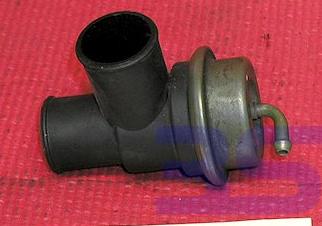
It was very quiet and worked well at ~8psi, but I later found out that they are notoriously leaky once you give it any real boost.
I replaced it with a Forge bypass valve, which has a similar design, but is billet aluminum and supposedly not leaky. If youre looking for something that just bypasses air without going out of its way to make some kind of whistle sound, you may consider a Forge.
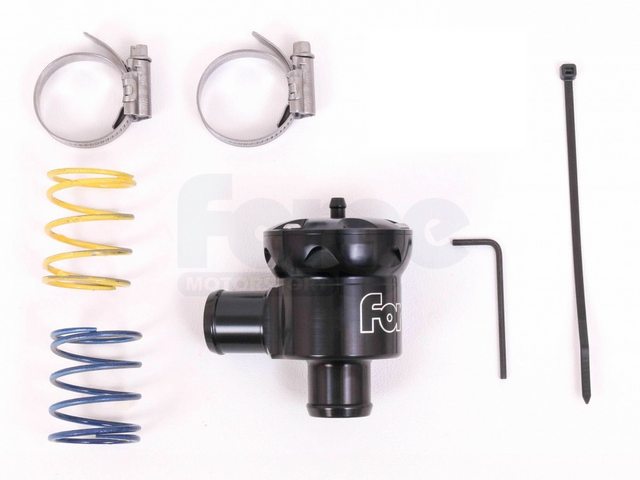
Turbo Recirculation Valve
They even have some with OEM flanges (Subaru, Mazda, DSM, etc.) if you didnt want to attach it with a hose/coupler.
At one point I used a factory Bosch bypass valve from a 3000GT.
It was very quiet and worked well at ~8psi, but I later found out that they are notoriously leaky once you give it any real boost.
I replaced it with a Forge bypass valve, which has a similar design, but is billet aluminum and supposedly not leaky. If youre looking for something that just bypasses air without going out of its way to make some kind of whistle sound, you may consider a Forge.
Turbo Recirculation Valve
They even have some with OEM flanges (Subaru, Mazda, DSM, etc.) if you didnt want to attach it with a hose/coupler.