


JS roll center adjuster>Anyone using it?


Honda-Tech Member
Joined: Jun 2003
Posts: 4,167
Likes: 0
From: Portland, OR
 Re: JS roll center adjuster>Anyone using it? (rallyeman)
<TABLE WIDTH="90%" CELLSPACING=0 CELLPADDING=0 ALIGN=CENTER><TR><TD>Quote, originally posted by rallyeman »</TD></TR><TR><TD CLASS="quote">Well, we are talking about autocross and track use here, so we are talking about a lowered car anyway! Right?</TD></TR></TABLE>
Not if you're running autocross in a stock class.
Not if you're running autocross in a stock class.

Honda-Tech Member
Joined: May 2002
Posts: 1,098
Likes: 2
From: Plymouth, MN
In theory, you could do this by swapping your upper A arms from one side to the other, and flipping them over. Then use a ball joint reemer to get the taper corrected, and have an inverted upper ball joint. Lowering the pivot point at the top would do the same thing and moving the bottom.
Now, how is the roll center found if the upper and lower arms are parallel? What if they intersect going away from the car instead of going through it? All in all, it looks like there are different ways to approach this. Does anyone address the same issues in the rear? That seems like it would be just as important.
Now, how is the roll center found if the upper and lower arms are parallel? What if they intersect going away from the car instead of going through it? All in all, it looks like there are different ways to approach this. Does anyone address the same issues in the rear? That seems like it would be just as important.

Thread Starter
Honda-Tech Member
Joined: May 2007
Posts: 122
Likes: 0
From: ATHENS, GREECE
Re: (Bakeoff)
<TABLE WIDTH="90%" CELLSPACING=0 CELLPADDING=0 ALIGN=CENTER><TR><TD>Quote, originally posted by Bakeoff »</TD></TR><TR><TD CLASS="quote">
Now, how is the roll center found if the upper and lower arms are parallel? What if they intersect going away from the car instead of going through it? All in all, it looks like there are different ways to approach this. Does anyone address the same issues in the rear? That seems like it would be just as important.</TD></TR></TABLE>
Well, is that possible? Having upper and lower arms completely parallel?
No idea how you can find IC and RC then..
Now, how is the roll center found if the upper and lower arms are parallel? What if they intersect going away from the car instead of going through it? All in all, it looks like there are different ways to approach this. Does anyone address the same issues in the rear? That seems like it would be just as important.</TD></TR></TABLE>
Well, is that possible? Having upper and lower arms completely parallel?
No idea how you can find IC and RC then..

Honda-Tech Member
Joined: Apr 2006
Posts: 486
Likes: 0
From: Portland, OR, USA
Re: (rallyeman)
<TABLE WIDTH="90%" CELLSPACING=0 CELLPADDING=0 ALIGN=CENTER><TR><TD>Quote, originally posted by rallyeman »</TD></TR><TR><TD CLASS="quote">
Well, is that possible? Having upper and lower arms completely parallel?
No idea how you can find IC and RC then.. </TD></TR></TABLE>
those look pretty paralelle to me.
Well, is that possible? Having upper and lower arms completely parallel?
No idea how you can find IC and RC then..
</TD></TR></TABLE>those look pretty paralelle to me.

Honda-Tech Member
Joined: Jun 2004
Posts: 7,539
Likes: 5
From: Sherman Oaks, CA, United States
Re: (rallyeman)
<TABLE WIDTH="90%" CELLSPACING=0 CELLPADDING=0 ALIGN=CENTER><TR><TD>Quote, originally posted by rallyeman »</TD></TR><TR><TD CLASS="quote">Well, is that possible? Having upper and lower arms completely parallel?
No idea how you can find IC and RC then.. </TD></TR></TABLE>
While it is possible to have parallel control arms, you wouldn't have a camber curve at all. You would also lose track width in bump as well.
And if the control arms
<TABLE WIDTH="90%" CELLSPACING=0 CELLPADDING=0 ALIGN=CENTER><TR><TD>Quote, originally posted by Bakeoff »</TD></TR><TR><TD CLASS="quote">... intersect going away from the car instead of going through it...</TD></TR></TABLE>
you would actually gain positive camber in bump, instead of the negative camber that we want.
No idea how you can find IC and RC then..
</TD></TR></TABLE>While it is possible to have parallel control arms, you wouldn't have a camber curve at all. You would also lose track width in bump as well.
And if the control arms
<TABLE WIDTH="90%" CELLSPACING=0 CELLPADDING=0 ALIGN=CENTER><TR><TD>Quote, originally posted by Bakeoff »</TD></TR><TR><TD CLASS="quote">... intersect going away from the car instead of going through it...</TD></TR></TABLE>
you would actually gain positive camber in bump, instead of the negative camber that we want.

Honda-Tech Member
Joined: Feb 2006
Posts: 189
Likes: 3
From: Ontario, Canada
Re: (TunerN00b)
<TABLE WIDTH="90%" CELLSPACING=0 CELLPADDING=0 ALIGN=CENTER><TR><TD>Quote, originally posted by TunerN00b »</TD></TR><TR><TD CLASS="quote">
While it is possible to have parallel control arms, you wouldn't have a camber curve at all. You would also lose track width in bump as well.</TD></TR></TABLE>
This would be true if your UCA and LCA were parallel and the same length, which they are not. Lateral scrub (track width changes) is mostly dependent on how parallel to the ground and how long your LCA is.
<TABLE WIDTH="90%" CELLSPACING=0 CELLPADDING=0 ALIGN=CENTER><TR><TD>Quote, originally posted by kb58 »</TD></TR><TR><TD CLASS="quote">What's not explained is why you need these. You need them only if you've lowered your car. By lowering the car in the first place, it puts the RC much lower than it was originally designed for. This product simply "repoints" the lower arms, raising the RC back up to near where it was orginally. You would NOT want to add these to a stock ride-height car.
About why raising the RC is good, it's a relative thing. You aren't raising the RC per se, you just putting it back where it belongs. If you raise you RC above the stock value thinking it'll automatically make the car handle better, that's wrong. If you raise the RC high up, around the CG, say, then the car won't roll at all. Seems like a good thing, right? The trouble is, since the car doesn't roll, how can shocks, springs, and anti-roll bars tune the handling? They can't. Plus, it's going to cause a lot of scrub.
All this spew aside, add them only if you've lowered your car. And BTW, I hope those things are mega strong, because there's literally a ton of force trying to push those lower mounts sideways.</TD></TR></TABLE>
Having a lowered car (and as a result a lower RC) is not the justification for relocating the RC with this kit. Suspension designers want to maintain a constant distance between the CG and RC to have predictable handling because this distance analogous to the lever arm on a roll bar. You don't want to change this lever arm as the car squats or heaves or it will also change the cornering balance (roll distribution) when you start turning. So, infact it is normal and good that the RC is lower when you have a lowered car. kb58 hit it right by implying that the shorter the distance the RC is to the CG the less your springs and bars and dampers are going to have an effect on handling. But you don't want the RC back in the stock location (higher) if you've lowered the car, and hence the CG, because this will make the CG and RC closer together.
The problem that the J's RC kit solves is when the RC has been lowered below the ground. But this is not a problem into itself either, it's when the RC passes through the ground under cornering conditions that the driver will sense the car is losing traction before it actually has (handling is a combination of the driver getting the most out of the car, remember).
I would add though that adjusting the RC is another way of tuning the handling of the car but unless you know what the kinematics (geometry in motion) of your suspension are, I would not recommend messing around with it. Reading comments from weekend racers saying, 'yeah it felt awesome' doesn't say much about the merits of just throwing it on the car.
While it is possible to have parallel control arms, you wouldn't have a camber curve at all. You would also lose track width in bump as well.</TD></TR></TABLE>
This would be true if your UCA and LCA were parallel and the same length, which they are not. Lateral scrub (track width changes) is mostly dependent on how parallel to the ground and how long your LCA is.
<TABLE WIDTH="90%" CELLSPACING=0 CELLPADDING=0 ALIGN=CENTER><TR><TD>Quote, originally posted by kb58 »</TD></TR><TR><TD CLASS="quote">What's not explained is why you need these. You need them only if you've lowered your car. By lowering the car in the first place, it puts the RC much lower than it was originally designed for. This product simply "repoints" the lower arms, raising the RC back up to near where it was orginally. You would NOT want to add these to a stock ride-height car.
About why raising the RC is good, it's a relative thing. You aren't raising the RC per se, you just putting it back where it belongs. If you raise you RC above the stock value thinking it'll automatically make the car handle better, that's wrong. If you raise the RC high up, around the CG, say, then the car won't roll at all. Seems like a good thing, right? The trouble is, since the car doesn't roll, how can shocks, springs, and anti-roll bars tune the handling? They can't. Plus, it's going to cause a lot of scrub.
All this spew aside, add them only if you've lowered your car. And BTW, I hope those things are mega strong, because there's literally a ton of force trying to push those lower mounts sideways.</TD></TR></TABLE>
Having a lowered car (and as a result a lower RC) is not the justification for relocating the RC with this kit. Suspension designers want to maintain a constant distance between the CG and RC to have predictable handling because this distance analogous to the lever arm on a roll bar. You don't want to change this lever arm as the car squats or heaves or it will also change the cornering balance (roll distribution) when you start turning. So, infact it is normal and good that the RC is lower when you have a lowered car. kb58 hit it right by implying that the shorter the distance the RC is to the CG the less your springs and bars and dampers are going to have an effect on handling. But you don't want the RC back in the stock location (higher) if you've lowered the car, and hence the CG, because this will make the CG and RC closer together.
The problem that the J's RC kit solves is when the RC has been lowered below the ground. But this is not a problem into itself either, it's when the RC passes through the ground under cornering conditions that the driver will sense the car is losing traction before it actually has (handling is a combination of the driver getting the most out of the car, remember).
I would add though that adjusting the RC is another way of tuning the handling of the car but unless you know what the kinematics (geometry in motion) of your suspension are, I would not recommend messing around with it. Reading comments from weekend racers saying, 'yeah it felt awesome' doesn't say much about the merits of just throwing it on the car.

Junior Member
Joined: Jan 2006
Posts: 90
Likes: 0
From: Surrey, BC, Canada
I dunno if this has been said already but does it not also change your dynamic camber? (which is linked to the roll center).
I am not a mechanical design expert, but I know for certain on a macstrut car this will allow you to slam the car and compensate for the positive camber gain that may occur.
I am not sure if you can achieve the same thing with the un-equal length double A-arm setup.
Anyways these are critical for extreme lowering on most mactrut cars for the reduction/elimination of positive camber.
I am not a mechanical design expert, but I know for certain on a macstrut car this will allow you to slam the car and compensate for the positive camber gain that may occur.
I am not sure if you can achieve the same thing with the un-equal length double A-arm setup.
Anyways these are critical for extreme lowering on most mactrut cars for the reduction/elimination of positive camber.
Honda-Tech Member
Joined: Feb 2006
Posts: 189
Likes: 3
From: Ontario, Canada
Re: (vworcivic)
Yes, any change in the control arm incline or length would change the camber curve. I would guess that you would have a slight increase in camber gain by lowering the LBJ.
So everyone knows, i'm looking at the kinematics of an EF civic front and there is a very slim chance the RC is passing below ground with the stock suspension geometry and stock size wheels. One interesting thing to note is that near stock ride height the RC moves in proportion to the CG (ride height) but by the time it's lowered 2-3 inches the RC moves about half as much as the CG. This means that just by lowering your car will increase the front roll stiffness (typically more understeer). Raising the RC with the J's kit will make the front roll even stiffer! To know what this is doing to the balance of the car though you'd have to look at what is going on in the rear as well. This makes me think that running alot of rake in these wishbone civics is not a good thing. But maybe you can trade off the increased roll stiffness with losing the front bar. Hmm...
<TABLE WIDTH="90%" CELLSPACING=0 CELLPADDING=0 ALIGN=CENTER><TR><TD>Quote, originally posted by vworcivic »</TD></TR><TR><TD CLASS="quote">I dunno if this has been said already but does it not also change your dynamic camber? (which is linked to the roll center).
I am not a mechanical design expert, but I know for certain on a macstrut car this will allow you to slam the car and compensate for the positive camber gain that may occur.
I am not sure if you can achieve the same thing with the un-equal length double A-arm setup.
Anyways these are critical for extreme lowering on most mactrut cars for the reduction/elimination of positive camber.</TD></TR></TABLE>
Great application for mcpherson struts though!
<TABLE WIDTH="90%" CELLSPACING=0 CELLPADDING=0 ALIGN=CENTER><TR><TD>Quote, originally posted by rallyeman »</TD></TR><TR><TD CLASS="quote">
Well, is that possible? Having upper and lower arms completely parallel?
No idea how you can find IC and RC then.. </TD></TR></TABLE>
Your IC is in infinity so extend the line from the tire contact parallel to the lower arm is what I would do. But this isn't importanct because the RC location isn't important when you're going straight. As soon as you turn and the body rolls, your arms are no longer parallel in a SLA suspension and you can find IC and RC like you normally would.
<TABLE WIDTH="90%" CELLSPACING=0 CELLPADDING=0 ALIGN=CENTER><TR><TD>Quote, originally posted by pos_cd5 »</TD></TR><TR><TD CLASS="quote">
those look pretty paralelle to me.</TD></TR></TABLE>
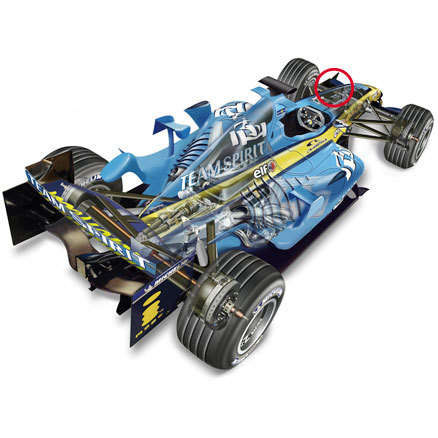
Getting off topic here but did you know that F1 cars actually have positive camber gain? This is so that they have more mechanical grip at lower speeds (higher ride height because of less down force) with more neg. camber but have a upright tire at high speeds because most of their grip is contributed by aero and they don't want to compromise straight line traction (braking).
So everyone knows, i'm looking at the kinematics of an EF civic front and there is a very slim chance the RC is passing below ground with the stock suspension geometry and stock size wheels. One interesting thing to note is that near stock ride height the RC moves in proportion to the CG (ride height) but by the time it's lowered 2-3 inches the RC moves about half as much as the CG. This means that just by lowering your car will increase the front roll stiffness (typically more understeer). Raising the RC with the J's kit will make the front roll even stiffer! To know what this is doing to the balance of the car though you'd have to look at what is going on in the rear as well. This makes me think that running alot of rake in these wishbone civics is not a good thing. But maybe you can trade off the increased roll stiffness with losing the front bar. Hmm...
<TABLE WIDTH="90%" CELLSPACING=0 CELLPADDING=0 ALIGN=CENTER><TR><TD>Quote, originally posted by vworcivic »</TD></TR><TR><TD CLASS="quote">I dunno if this has been said already but does it not also change your dynamic camber? (which is linked to the roll center).
I am not a mechanical design expert, but I know for certain on a macstrut car this will allow you to slam the car and compensate for the positive camber gain that may occur.
I am not sure if you can achieve the same thing with the un-equal length double A-arm setup.
Anyways these are critical for extreme lowering on most mactrut cars for the reduction/elimination of positive camber.</TD></TR></TABLE>
Great application for mcpherson struts though!
<TABLE WIDTH="90%" CELLSPACING=0 CELLPADDING=0 ALIGN=CENTER><TR><TD>Quote, originally posted by rallyeman »</TD></TR><TR><TD CLASS="quote">
Well, is that possible? Having upper and lower arms completely parallel?
No idea how you can find IC and RC then.. </TD></TR></TABLE>
Your IC is in infinity so extend the line from the tire contact parallel to the lower arm is what I would do. But this isn't importanct because the RC location isn't important when you're going straight. As soon as you turn and the body rolls, your arms are no longer parallel in a SLA suspension and you can find IC and RC like you normally would.
<TABLE WIDTH="90%" CELLSPACING=0 CELLPADDING=0 ALIGN=CENTER><TR><TD>Quote, originally posted by pos_cd5 »</TD></TR><TR><TD CLASS="quote">
those look pretty paralelle to me.</TD></TR></TABLE>
Getting off topic here but did you know that F1 cars actually have positive camber gain? This is so that they have more mechanical grip at lower speeds (higher ride height because of less down force) with more neg. camber but have a upright tire at high speeds because most of their grip is contributed by aero and they don't want to compromise straight line traction (braking).

Honda-Tech Member
Joined: Sep 2002
Posts: 5,517
Likes: 1
From: ME
Re: (Bakeoff)
<TABLE WIDTH="90%" CELLSPACING=0 CELLPADDING=0 ALIGN=CENTER><TR><TD>Quote, originally posted by Bakeoff »</TD></TR><TR><TD CLASS="quote">In theory, you could do this by swapping your upper A arms from one side to the other, and flipping them over. Then use a ball joint reemer to get the taper corrected, and have an inverted upper ball joint. Lowering the pivot point at the top would do the same thing and moving the bottom.
</TD></TR></TABLE>
Bringing this back...
Interesting idea, not sure it would work though.
Are you saying that the balljoint would install into the spindle from the bottom, putting the nut on top? The part that receives the balljoint taper is offset to the outside of the car, not the inside so the upright part of the spindle would be in the way of the upper arm...or maybe I'm missing the whole thing.
Aren't there slight height differences between 92-95 civic spindles and 94+ integra?
</TD></TR></TABLE>
Bringing this back...
Interesting idea, not sure it would work though.
Are you saying that the balljoint would install into the spindle from the bottom, putting the nut on top? The part that receives the balljoint taper is offset to the outside of the car, not the inside so the upright part of the spindle would be in the way of the upper arm...or maybe I'm missing the whole thing.
Aren't there slight height differences between 92-95 civic spindles and 94+ integra?


Thread
Thread Starter
Forum
Replies
Last Post
