


Pros and cons of having a O2 sensor by the Turbo


Thread Starter
Honda-Tech Member
Joined: Dec 2001
Posts: 639
Likes: 0
From: cool, africa, space
 Pros and cons of having a O2 sensor by the Turbo
To make the install a little easier i was thining of buying these V-band adaptors. My turbo has a 3" V-band housing
Now would the sensor get the correct readings, if it going to be too hot for the Bosch O2 sensor
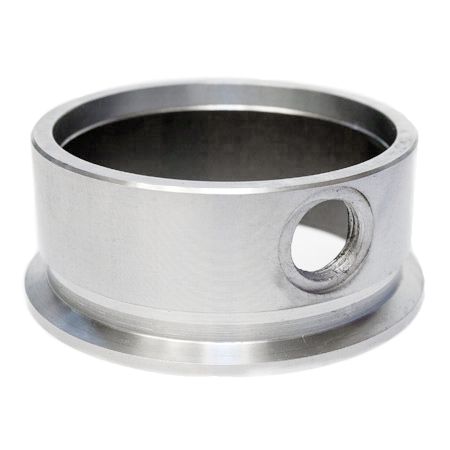
http://www.atpturbo.com/Mercha...-FLS3
Now would the sensor get the correct readings, if it going to be too hot for the Bosch O2 sensor
http://www.atpturbo.com/Mercha...-FLS3

Honda-Tech Member
Joined: Feb 2005
Posts: 1,364
Likes: 0
From: Heinola, Finland
Re: Pros and cons of having a O2 sensor by the Turbo (Quickgti1.8t)
Probably not going to be too hot. As long as its not between manifold and turbo you should be fine and the sensor needs to be hot to get a reading.
Mine is about 5-10cm away from the turbine side.
Mine is about 5-10cm away from the turbine side.

Honda-Tech Member
Joined: Jun 2002
Posts: 5,551
Likes: 1
From: USA
Re: Pros and cons of having a O2 sensor by the Turbo (Flashmn)
here is a quote from the ngk wideband install instructions... I found it to pertain to this topic.
"Below are recommended guidelines for installing the AFR sensor. Some exhaust configurations may make it difficult to meet each of the recommendations exactly, and some compromise in mounting may be required. The sensor does not necessarily have to precisely meet every mounting guideline below to operate, but please understand that the better you conform to these rules, the longer the sensor will last and the more accurate the results will be.
The AFR sensor should be located between 12” and 48” from the engine, upstream of any catalyst device if so equipped. The closer the sensor is to the engine, the more likely it will be overheated, possibly shortening its life. The further it is from the engine, the more likely condensed water will get into the sensor and thermally shock it, again possibly shortening its life. The sensor should be mounted at least ten exhaust diameters upstream of the exhaust exit (ex. for a 3” exhaust pipe, that is 30”). If the sensor is mounted between one and ten exhaust diameters from the exhaust exit, the AFR measured will be leaner than the actual AFR by as much as 2 AFR at low engine speeds (i.e. less than 3000 rpm).
Make sure there are no leaks in the exhaust system, as this will create an artificially lean (higher) AFR reading. Also, install the sensor upstream of any factory air-injection if so equipped, as this too will cause a false lean reading.
In turbocharged applications, it is recommended that the sensor be installed downstream of the turbine. This is due to the fact that the high pressures before the turbine can distort the AFR reading. Apply the same installation guidelines as described above, but take into consideration that the sensor needs to be downstream of the turbine."
"Below are recommended guidelines for installing the AFR sensor. Some exhaust configurations may make it difficult to meet each of the recommendations exactly, and some compromise in mounting may be required. The sensor does not necessarily have to precisely meet every mounting guideline below to operate, but please understand that the better you conform to these rules, the longer the sensor will last and the more accurate the results will be.
The AFR sensor should be located between 12” and 48” from the engine, upstream of any catalyst device if so equipped. The closer the sensor is to the engine, the more likely it will be overheated, possibly shortening its life. The further it is from the engine, the more likely condensed water will get into the sensor and thermally shock it, again possibly shortening its life. The sensor should be mounted at least ten exhaust diameters upstream of the exhaust exit (ex. for a 3” exhaust pipe, that is 30”). If the sensor is mounted between one and ten exhaust diameters from the exhaust exit, the AFR measured will be leaner than the actual AFR by as much as 2 AFR at low engine speeds (i.e. less than 3000 rpm).
Make sure there are no leaks in the exhaust system, as this will create an artificially lean (higher) AFR reading. Also, install the sensor upstream of any factory air-injection if so equipped, as this too will cause a false lean reading.
In turbocharged applications, it is recommended that the sensor be installed downstream of the turbine. This is due to the fact that the high pressures before the turbine can distort the AFR reading. Apply the same installation guidelines as described above, but take into consideration that the sensor needs to be downstream of the turbine."

Honda-Tech Member
Joined: May 2002
Posts: 15,814
Likes: 8
From: Dallas, TX, USA
Re: Pros and cons of having a O2 sensor by the Turbo (twkdCD595)
The bosch sensors are fragile to begin with, i wouldn't dare mount one that close to the turbine for any length of time.


Honda-Tech Member
Joined: Oct 2004
Posts: 2,088
Likes: 0
From: All over ATL
Re: Pros and cons of having a O2 sensor by the Turbo (TiAL)
<TABLE WIDTH="90%" CELLSPACING=0 CELLPADDING=0 ALIGN=CENTER><TR><TD>Quote, originally posted by TiAL »</TD></TR><TR><TD CLASS="quote">mine is right before the flexpipe</TD></TR></TABLE>
That's where i'd put mine on my next setup and have an e-cutout after the flexpipe before the cat.
My tuner put the bung for the wideband 18" after the turbo because he said for longevity it would be good, yet still get an accurate reading.
That's where i'd put mine on my next setup and have an e-cutout after the flexpipe before the cat.
My tuner put the bung for the wideband 18" after the turbo because he said for longevity it would be good, yet still get an accurate reading.
Trending Topics


Honda-Tech Member
Joined: Dec 2004
Posts: 2,776
Likes: 0
From: Halifax, NS Canada
i dont know if being to close caused it, but my wideband sensor was close to the flange at the top of my vband downpipe... it was a topmount, so the runners of the manifold were long enough to be within specs... I still burnt out my sensor after a month of being street tuned and a few passes on the dyno....
Ill probably put it down by the flex pipe over winter.
Ill probably put it down by the flex pipe over winter.

Thread
Thread Starter
Forum
Replies
Last Post
1320vickers
Forced Induction
5
Feb 17, 2019 09:09 AM
