When you click on links to various merchants on this site and make a purchase, this can result in this site earning a commission. Affiliate programs and affiliations include, but are not limited to, the eBay Partner Network.
Just put some on my car and a pretty knowledgeable buddy told me that there needs to be a minimum 2 inch gap between the tire and fender and thats the best way to make sure the load is correct. I put them on and they feel sort of soft compared to my old AMR's with softer springs. Just trying to get some feedback so I can have it as close to set up before I go to the track so I only have to make minimal adjustments. Its in a 250whp all motor 94 coupe. I followed the directions on tightening it where its a half- three quarter turn past touching the spring.
Edit: I know you dont use the spring to adjust height and use the base, before anyone ask, I was just trying to justify his statement and receive any feedback.
I have the Blox pro drag suspension on my car. Since it is double adjustable I feel the tire gap is not important. Its the spring pre-load.
I haven't corner balanced yet, but I adjusted the spring rate adjuster until it bottomed out on the spring. Then I turned it 2 full rotations to get a pre-set pre-load on the spring. Then put it on the car and adjusted the height until it looked good and matched both sides. So far this has worked extremely well. It did well on both my all motor B series, all motor J series and Turbo B series. I cut a 1.5 60' on the all motor J series and just over the weekend I did a 1.5 60' on the turbo B series.
Even though I had good luck with my cheap method of spring rate pre-load, you should still get it corner balanced and take full advantage of the suspension. I still plan to get mine done and try to get my 60' even lower.
the gap has nothing to do with load. it only has to do with clearance to make sure nothing rubs.
load refers to spring rates, weight, and how much the car drops under braking. for example, softer springs may require a 3" gap, while stiff springs may only need a 1-1.5" gap. remember, drag slicks expand at speed, and the car will dip while braking. so you need enough clearance to compensate for that, plus potential for bumps.
in most cases, ignore the gap at first. set the suspension up how you want it for ride height, alignment, etc. then modify the fenders to create the desired clearance gap.
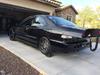
Another note on this, I noticed some pictures of some real fast cars that are tucking the tires a little bit. Basically no fender gap. Here is a one. I don't know if they did this specifically for the photo shoot or they actually run at the track this way. As long as there is not clearance issues/rubbing and everything is straight, it wont matter and will work fine.
Another note on this, I noticed some pictures of some real fast cars that are tucking the tires a little bit. Basically no fender gap. Here is a one. I don't know if they did this specifically for the photo shoot or they actually run at the track this way. As long as there is not clearance issues/rubbing and everything is straight, it wont matter and will work fine.
They run a 3 piece front end so the fenders are wider to accommodate the wider tires. You wont be able to go that low on a stock front end.
They run a 3 piece front end so the fenders are wider to accommodate the wider tires. You wont be able to go that low on a stock front end.
Of course not. But that's not the question here. You can see the rear tires are tucking as well. There is no gap. If that is the way they have it set up for the track, then that answers the guys question. No 2" gap needed for proper load. I am not a stranger to wide front ends. I use a wide front end on my race car as you can see from my avatar. I understand perfectly well how they work and how stock fenders would work.
Now, if the question is, "On a stock front end, a 2" gap is needed to prevent fender to tire contact?" Then yes, that is a valid point. But the question is about spring load vs fender gap. So the answer is No, no fender gap is needed to get proper load. You must corner balance to get proper load for each spring. Bottom line.
I'm at 13.5 inches from top of hub to quarter panel and 12.25 inches in front. I took and backed them all the way out and went up the thickness of one of the spanners that was included and kept the lower lock ring as stationary as possible but the car just seems to be very bouncy and not exactly stuff, is this the valving of the dampener? My old amrs never did it even with the tire deflection of bias ply tires. Just wondering if I'm doing this wrong or what
You have to wonder if that car has re-worked wheel wells? I run a three piece front end and I am not low at all but I noticed a little slice on my slick last event. If you look at the front wheel wells you will notice a sharp ridge at the top of the wheel well that I will have to cut. If my car was as low as the car in the pic it would cut right into my slick.
I also only noticed this problem now that my trap speeds are in the 170's and I really have to brake harder than ever. That down force squats the front enough now to touch the wheel well. So I would be careful how low you go unless you re-work the wheel which some real fast guys do.
You have to wonder if that car has re-worked wheel wells? I run a three piece front end and I am not low at all but I noticed a little slice on my slick last event. If you look at the front wheel wells you will notice a sharp ridge at the top of the wheel well that I will have to cut. If my car was as low as the car in the pic it would cut right into my slick.
I also only noticed this problem now that my trap speeds are in the 170's and I really have to brake harder than ever. That down force squats the front enough now to touch the wheel well. So I would be careful how low you go unless you re-work the wheel which some real fast guys do.
It probably does. I think most big race teams running big slicks re-work the wells. When I got my car tuned at T1, back when Tony still did Hondas, he told me I needed to get rid of that ridge because it was cutting into the dyno tires. I ended up not doing it because my dyno tires were nitto extreme drag 26" tall. My slicks were only 24.5" and had no rubbing issues.
It probably does. I think most big race teams running big slicks re-work the wells. When I got my car tuned at T1, back when Tony still did Hondas, he told me I needed to get rid of that ridge because it was cutting into the dyno tires. I ended up not doing it because my dyno tires were nitto extreme drag 26" tall. My slicks were only 24.5" and had no rubbing issues.
Yes I just noticed that on my car two events ago that I had a little slice in my slick, the ridge in the wheel well had not been touched. So my plan is to cut reliefs into the ridge and pound/fold the ridge to make more room. There is about an additional inch if you flatten that ridge out. When I saw re-worked wheel wells I mean like cut up wheels and replaced wheel wells and shock tower work in order to get the cars super low.
It's also done because of the hard braking done at high mph runs. I never had this issue until I started running 170 plus trap speeds and really have to hit the brakes to slow down. Because of this it squats the fronts just enough at this point to contact the driver side fender ridge.
Yes I just noticed that on my car two events ago that I had a little slice in my slick, the ridge in the wheel well had not been touched. So my plan is to cut reliefs into the ridge and pound/fold the ridge to make more room. There is about an additional inch if you flatten that ridge out. When I saw re-worked wheel wells I mean like cut up wheels and replaced wheel wells and shock tower work in order to get the cars super low.
It's also done because of the hard braking done at high mph runs. I never had this issue until I started running 170 plus trap speeds and really have to hit the brakes to slow down. Because of this it squats the fronts just enough at this point to contact the driver side fender ridge.
What suspension are you running? My car is doing the same thing on braking and in between shifts. My friend told me I needed to adjust the front springs to make it a bit more stiff. Mine are 12k up front and should be pretty stiff, but they are several years old, so it probably needs to be adjusted.
What suspension are you running? My car is doing the same thing on braking and in between shifts. My friend told me I needed to adjust the front springs to make it a bit more stiff. Mine are 12k up front and should be pretty stiff, but they are several years old, so it probably needs to be adjusted.
Strange Engineering with 750 pound springs up front. I still have the factory wheel well spine so I for sure will be altering that LOL. It was only on the driver side though.



 Blox drag preload question