


oil catch can question


Thread Starter
Honda-Tech Member
Joined: Jan 2003
Posts: 469
Likes: 0
From: Atlanta, Ga, USA
 oil catch can question
I know where an oil catch can goes and how to get it there but what i dont know is how they work and what they do. I tried searching but all i got is how to locate one and classified ads. How essential and beneficial are they for F/I cars and when horsepower levels would they be recomended? Whatever info would be appreciated.


Joined: Jan 2003
Posts: 1,964
Likes: 0
Re: oil catch can question (vinuneuro)
https://honda-tech.com/zerothread?id=646586
https://honda-tech.com/zerothread?id=613293
https://honda-tech.com/zerothread?id=514615
All from typing 'catch can' in the search function, and clicking archived. BTW, there is 5 or more pages worth of stuff that comes up.
They catch oil from your block that is released under boost from the crankcase.
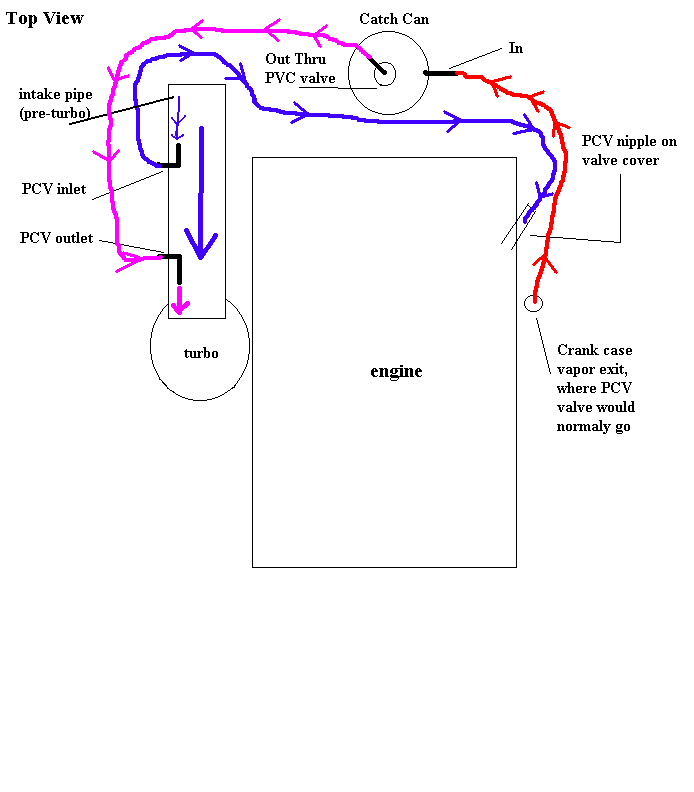
On fi car
on na car
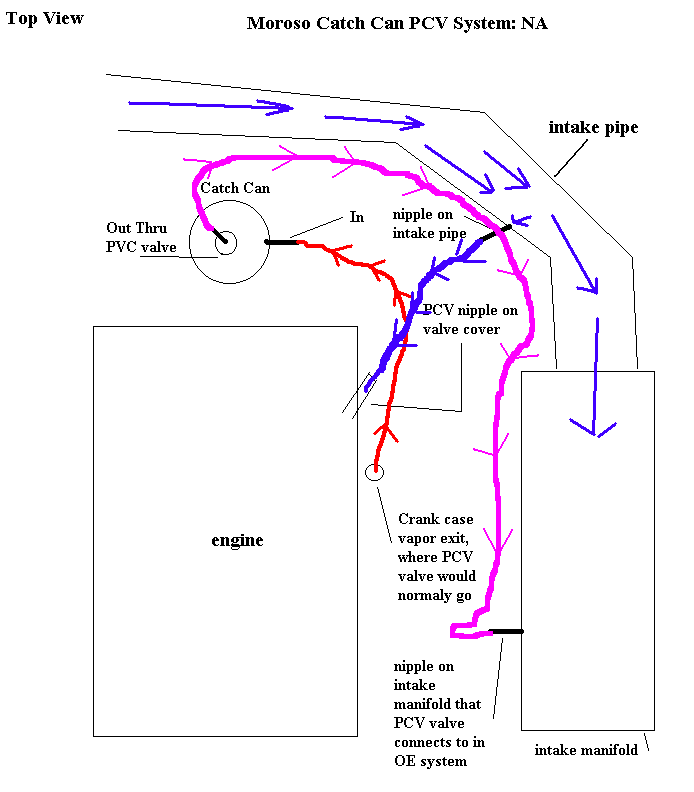
Though I'm not doing it that way - no gunk in the mani and turbo for me.
https://honda-tech.com/zerothread?id=613293
https://honda-tech.com/zerothread?id=514615
All from typing 'catch can' in the search function, and clicking archived. BTW, there is 5 or more pages worth of stuff that comes up.
They catch oil from your block that is released under boost from the crankcase.
On fi car
on na car
Though I'm not doing it that way - no gunk in the mani and turbo for me.


Honda-Tech Member
Joined: Mar 2002
Posts: 439
Likes: 0
From: Ann Arbor, MI, USA
Re: oil catch can question (slashDEVslashNULL)
<TABLE WIDTH="90%" CELLSPACING=0 CELLPADDING=0 ALIGN=CENTER><TR><TD>Quote, originally posted by slashDEVslashNULL »</TD></TR><TR><TD CLASS="quote">
On fi car
</TD></TR></TABLE>
How is this supposed to work, precisely? In an OEM PCV setup, the intake manifold has more vacuum than the intake due to the throttle plate. What this means is that the intake manifold is sucking clean air from the intake through the crankcase and eventually to the intake manifold.
In this diagram, both the inlet and the outlet of the PCV system are utilizing the same vacuum source. So... how is the air supposed to flow from one end to the other? Magic?
On fi car
</TD></TR></TABLE>
How is this supposed to work, precisely? In an OEM PCV setup, the intake manifold has more vacuum than the intake due to the throttle plate. What this means is that the intake manifold is sucking clean air from the intake through the crankcase and eventually to the intake manifold.
In this diagram, both the inlet and the outlet of the PCV system are utilizing the same vacuum source. So... how is the air supposed to flow from one end to the other? Magic?
Trending Topics

Joined: Feb 2003
Posts: 151
Likes: 0
From: rockville, md, usa
Re: oil catch can question (Kidd_Stylez)
oil catch cans are used for na motors as well. under load they help the rings seal because they're helping maintain the vacuum. and also it keeps the im a hell of alot cleaner.
Joined: Jan 2003
Posts: 1,964
Likes: 0
Re: oil catch can question (qtiger)
<TABLE WIDTH="90%" CELLSPACING=0 CELLPADDING=0 ALIGN=CENTER><TR><TD>Quote, originally posted by qtiger »</TD></TR><TR><TD CLASS="quote">
How is this supposed to work, precisely? In an OEM PCV setup, the intake manifold has more vacuum than the intake due to the throttle plate. What this means is that the intake manifold is sucking clean air from the intake through the crankcase and eventually to the intake manifold.
In this diagram, both the inlet and the outlet of the PCV system are utilizing the same vacuum source. So... how is the air supposed to flow from one end to the other? Magic?</TD></TR></TABLE>
pure genius
How is this supposed to work, precisely? In an OEM PCV setup, the intake manifold has more vacuum than the intake due to the throttle plate. What this means is that the intake manifold is sucking clean air from the intake through the crankcase and eventually to the intake manifold.
In this diagram, both the inlet and the outlet of the PCV system are utilizing the same vacuum source. So... how is the air supposed to flow from one end to the other? Magic?</TD></TR></TABLE>
pure genius

Honda-Tech Member
Joined: Jan 2002
Posts: 4,426
Likes: 0
From: Prescott Arizona
Re: oil catch can question (slashDEVslashNULL)
<TABLE WIDTH="90%" CELLSPACING=0 CELLPADDING=0 ALIGN=CENTER><TR><TD>Quote, originally posted by slashDEVslashNULL »</TD></TR><TR><TD CLASS="quote">
pure genius</TD></TR></TABLE>
agreed......
Rob
pure genius</TD></TR></TABLE>
agreed......
Rob
Joined: Jan 2003
Posts: 1,964
Likes: 0
Re: oil catch can question (Kidd_Stylez)
<TABLE WIDTH="90%" CELLSPACING=0 CELLPADDING=0 ALIGN=CENTER><TR><TD>Quote, originally posted by Kidd_Stylez »</TD></TR><TR><TD CLASS="quote">thanks "slash..."</TD></TR></TABLE>
no prob
no prob

Joined: Oct 2002
Posts: 126
Likes: 0
From: Los Angeles, CA, USA
Re: oil catch can question (qtiger)
<TABLE WIDTH="90%" CELLSPACING=0 CELLPADDING=0 ALIGN=CENTER><TR><TD>Quote, originally posted by qtiger »</TD></TR><TR><TD CLASS="quote">
How is this supposed to work, precisely? In an OEM PCV setup, the intake manifold has more vacuum than the intake due to the throttle plate. What this means is that the intake manifold is sucking clean air from the intake through the crankcase and eventually to the intake manifold.
In this diagram, both the inlet and the outlet of the PCV system are utilizing the same vacuum source. So... how is the air supposed to flow from one end to the other? Magic?</TD></TR></TABLE>
Do you think there is an area where the laws of physics cease to exist in this intake pipe resulting in the creating of a section of outer space where vacuum pulls from every direction simultaneously?
The system works on pressure displacement and air flow, just like the stock PCV system. The vacuum source in this instance is the turbo. A high volume of air is flowing towards the turbo. With the opening in the 'L' fitting directed into the direction of airflow air is forced into the system. Air is further encouraged to flow into the system by the negative pressure resulting from the opening of the second 'L' fitting being directed towards the turbo. The result is a positive pressure being exerted at one end of the system (intake) and a negative pressure being exerted at the other (exhaust end).
How is this supposed to work, precisely? In an OEM PCV setup, the intake manifold has more vacuum than the intake due to the throttle plate. What this means is that the intake manifold is sucking clean air from the intake through the crankcase and eventually to the intake manifold.
In this diagram, both the inlet and the outlet of the PCV system are utilizing the same vacuum source. So... how is the air supposed to flow from one end to the other? Magic?</TD></TR></TABLE>
Do you think there is an area where the laws of physics cease to exist in this intake pipe resulting in the creating of a section of outer space where vacuum pulls from every direction simultaneously?
The system works on pressure displacement and air flow, just like the stock PCV system. The vacuum source in this instance is the turbo. A high volume of air is flowing towards the turbo. With the opening in the 'L' fitting directed into the direction of airflow air is forced into the system. Air is further encouraged to flow into the system by the negative pressure resulting from the opening of the second 'L' fitting being directed towards the turbo. The result is a positive pressure being exerted at one end of the system (intake) and a negative pressure being exerted at the other (exhaust end).

Thread
Thread Starter
Forum
Replies
Last Post